 Sudden Valley Siding
 Siding Built for Fairhaven's Coastal Exposure
Fairhaven sits close enough to Bellingham Bay that the weather off the water shapes how a house ages. Homes here don't just deal with rain — they deal with rain carried sideways on wind, salt-laden air drifting up from the shoreline, and long stretches of the year when surfaces barely get a chance to fully dry out before the next system rolls in. Siding that would hold up fine forty miles inland can start showing problems on a Fairhaven exterior years earlier, simply because the exposure is more constant and more corrosive.
Sudden Valley Siding Company works this part of Whatcom County regularly, and we install one product on the homes we side: James Hardie fiber cement. Not because it's the only siding on the market, but because after years of servicing exteriors in this specific climate, it's the one system we're comfortable standing behind for coastal-adjacent Whatcom County homes.
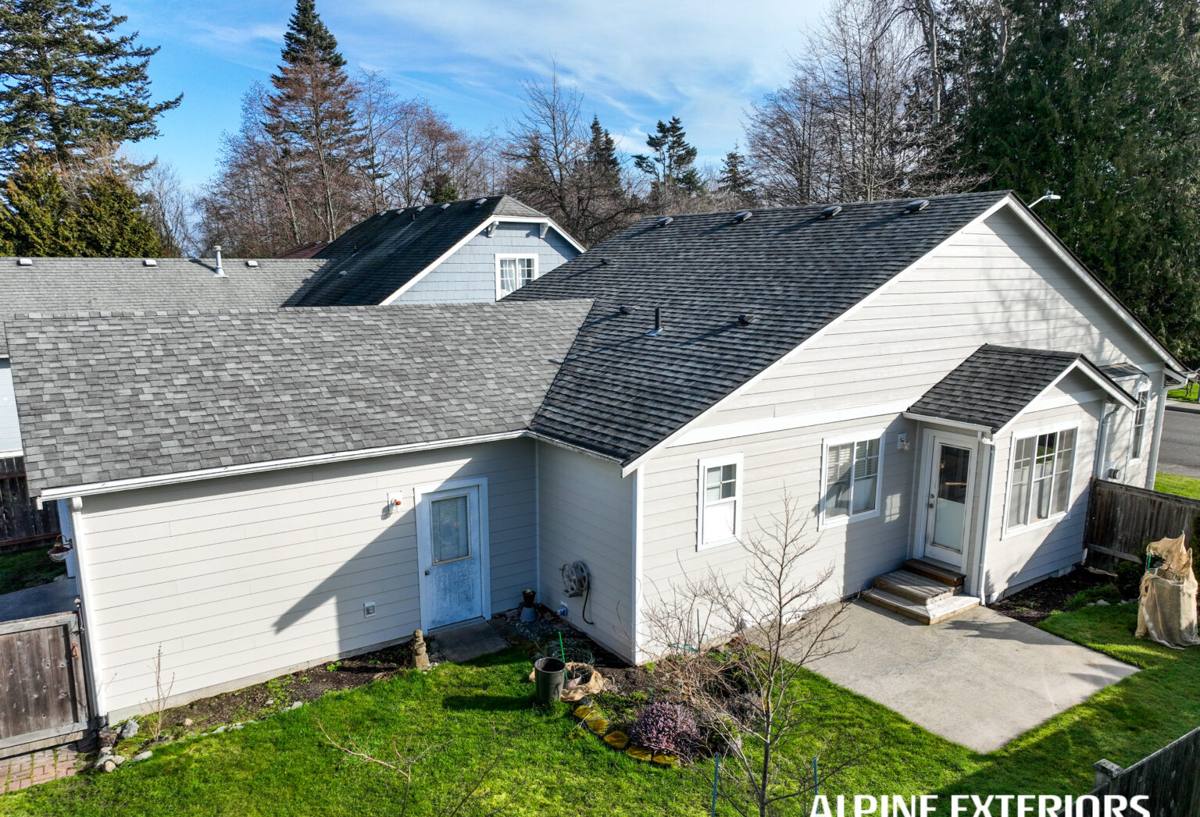
What Fairhaven's Climate Actually Does to a House
Salt Air and Moisture Together
Salt air alone is corrosive to fasteners, flashing, and unprotected wood fiber. Combine that with the region's high humidity and frequent rain, and you get a slow, steady cycle of moisture intrusion and dry-out that stresses siding materials, seams, and paint or coating layers. Materials that rely on a factory or field-applied finish to keep moisture out are only as good as that finish — and coastal air wears finishes down faster than a typical inland exposure.
Driving Rain and Wind-Driven Exposure
Fairhaven's proximity to open water means storms often arrive with real wind behind them. Rain doesn't just fall on a wall here, it gets pushed into it — into seams, under trim, around window and door openings. Any weak point in the siding system, whether it's a poor lap joint, a caulk failure, or a material that swells and shifts with moisture, becomes an entry point for water. Once water gets behind siding, the damage usually isn't visible until it's already significant.
Moss, Algae, and the Long Damp Season
Western Washington's moss season is long, and Fairhaven's tree cover and marine humidity make it longer still on north-facing and shaded walls. Moss and algae growth on siding isn't just a cosmetic nuisance — sustained organic growth holds moisture against the surface, which accelerates whatever breakdown process the underlying material is prone to. Siding that resists moisture absorption in the first place has a real advantage here, because there's less for moss to feed on and less material degradation happening underneath it.
Why We Standardized on James Hardie for This Area
James Hardie fiber cement is engineered specifically to handle moisture cycling, and Hardie makes climate-specific product lines (HZ5 and HZ10) built for exactly the wet, marine-influenced conditions found in the Pacific Northwest. That engineering matters more in Fairhaven than it would in a drier region, because the material is being tested by real conditions almost year-round, not just during a rainy stretch.
A few specific reasons this product fits coastal Whatcom County work:
- Non-combustible core — fiber cement doesn't feed a fire the way wood-based products can, which matters for insurance and long-term peace of mind regardless of coastal exposure.
- Factory-applied ColorPlus finish — baked-on color and coating that resists fading and moisture intrusion far better than field-applied paint, which is important where salt air and UV both work against a finish.
- Dimensional stability — fiber cement doesn't swell, warp, or rot the way wood-based siding can when it's cycling through wet and dry conditions repeatedly.
- Resistance to moss and mildew staining — the material itself doesn't provide the same food source or moisture retention that organic growth thrives on.
- Strong transferable warranty — backed by a manufacturer with a long track record specifically in fiber cement, which matters when you're planning to own the home for years or eventually sell it.
We don't install LP SmartSide, vinyl, Cemplank, Allura, primed spruce, or cedar. Some of those products have real strengths, and we're honest about that when homeowners ask — but none of them, in our professional judgment, hold up as consistently in this specific climate as Hardie does when installed correctly. Standardizing on one product also means our crews install it constantly, rather than switching systems from job to job, which shows up in the quality of the finished work.
How Our Siding Process Works in Fairhaven
Assessment First
Every job starts with a real look at the existing exterior — not just the siding itself, but the sheathing, flashing details around windows and doors, and any areas where past moisture intrusion has already done damage. In a coastal-adjacent neighborhood like Fairhaven, we pay particular attention to north- and west-facing walls, areas under tree cover, and any spot where trim or flashing has been neglected, since those are where problems tend to concentrate first.
Installation to Manufacturer Spec
James Hardie's performance depends heavily on correct installation — proper clearances, fastening patterns, joint treatment, and flashing integration. This is where a lot of siding installs go wrong industry-wide, regardless of the product. Our crews install to Hardie's published specifications because a product engineered for this climate only delivers on that engineering if it's put on correctly.
Attention to Water Management
Given how much of Fairhaven's siding stress comes from wind-driven rain, we treat water management — house wrap, flashing, kick-out flashing at rooflines, proper caulking at penetrations — as part of the siding job, not a separate afterthought. Siding is one piece of a larger system that has to work together to keep water out.
Comparing Siding Options for a Coastal Whatcom County Home
| Factor | James Hardie Fiber Cement | Wood-Based Products (LP SmartSide, cedar) | Vinyl |
|---|---|---|---|
| Moisture resistance | Engineered for wet climates, dimensionally stable | Vulnerable to swelling, rot, and moisture intrusion over time | Doesn't absorb moisture, but seams and fasteners can still let water behind it |
| Salt air / coastal exposure | Holds finish well with factory-applied coating | Finish and substrate both degrade faster near salt air | Can become brittle over time; color can fade in UV and salt exposure |
| Fire resistance | Non-combustible core | Combustible | Can melt or deform under heat exposure |
| Moss/algae resistance | Doesn't feed organic growth the way organic-based products can | More susceptible, especially untreated or aging surfaces | Resistant to growth itself, but doesn't address underlying wall moisture |
| Long-term maintenance | Occasional cleaning; factory finish reduces repainting needs | Regular painting/staining and moisture monitoring required | Low maintenance but limited repair options if damaged |
Beyond Siding: Roofing, Windows, and Decks
Siding doesn't work in isolation. On a Fairhaven property, the roofline, window flashing, and deck structures all interact with the same wind-driven rain and moisture cycling that affects the walls. We handle roofing, windows, and decks alongside siding work because a house is one connected system — a well-installed Hardie exterior can still let water in if the roof-to-wall flashing or a window's weather barrier isn't done right. When we're on a property for a siding project, we look at how these systems tie together, not just the wall surface itself.
What to Watch For on an Existing Exterior
- Dark streaking or persistent moss growth on north-facing or shaded walls
- Soft or spongy spots when pressing on wood-based siding, especially near the ground or under windows
- Peeling, chalking, or fading paint that's returning faster than it used to
- Gaps or separation at seams, corners, or trim boards
- Staining or discoloration below window sills, a common sign of water tracking down the wall
- Visible warping or cupping in individual siding boards
Why a Local Crew Matters Here
Whatcom County's coastal-adjacent neighborhoods don't all behave the same way — a wall exposure that's fine in a more sheltered part of the county can be a problem spot in Fairhaven simply because of wind direction and proximity to the water. A crew that works this specific area regularly recognizes those patterns: which walls take the brunt of the weather, where moss tends to establish first, and which older installation practices in this region tend to fail early. That local pattern recognition is part of what makes an installation last, on top of using a product engineered for the conditions in the first place.
What the Process Looks Like
For most Fairhaven projects, the sequence is straightforward: an on-site assessment of your current exterior and any problem areas, a conversation about scope (siding alone, or siding alongside roofing, window, or deck work), a written estimate, and a installation timeline that accounts for weather windows — since installing fiber cement correctly means working around wet conditions rather than through them. We're upfront about what we find during the assessment, including anything that needs to be addressed before new siding goes on, like damaged sheathing or flashing that's already failed.
If your Fairhaven home's siding is showing its age, holding onto moisture, or just wasn't built for the amount of weather this part of Whatcom County sees, we're happy to take a look and give you a straightforward assessment — no pressure, no obligation. Fill out the form below to schedule a free estimate.