 Sudden Valley Siding
 What LP SmartSide Actually Is
LP SmartSide is an engineered wood siding product. At its core, it's strand-based wood — similar in concept to OSB (oriented strand board) — pressed together with resins and waxes, then coated with a resin-saturated overlay called SmartGuard for moisture and fungal resistance. It comes in lap boards, panels, and trim, and it's manufactured to look like cedar clapboard or shingle siding without the cost or the maintenance headaches that come with real wood.
We get asked about LP SmartSide a lot, usually from homeowners who've priced it out against fiber cement and want to know why we don't install it. This page is our honest answer. We're not going to tell you it's a bad product — it isn't. We're going to tell you why, after years of installing and repairing siding around Sudden Valley and the rest of Whatcom County, we standardized on James Hardie fiber cement instead.
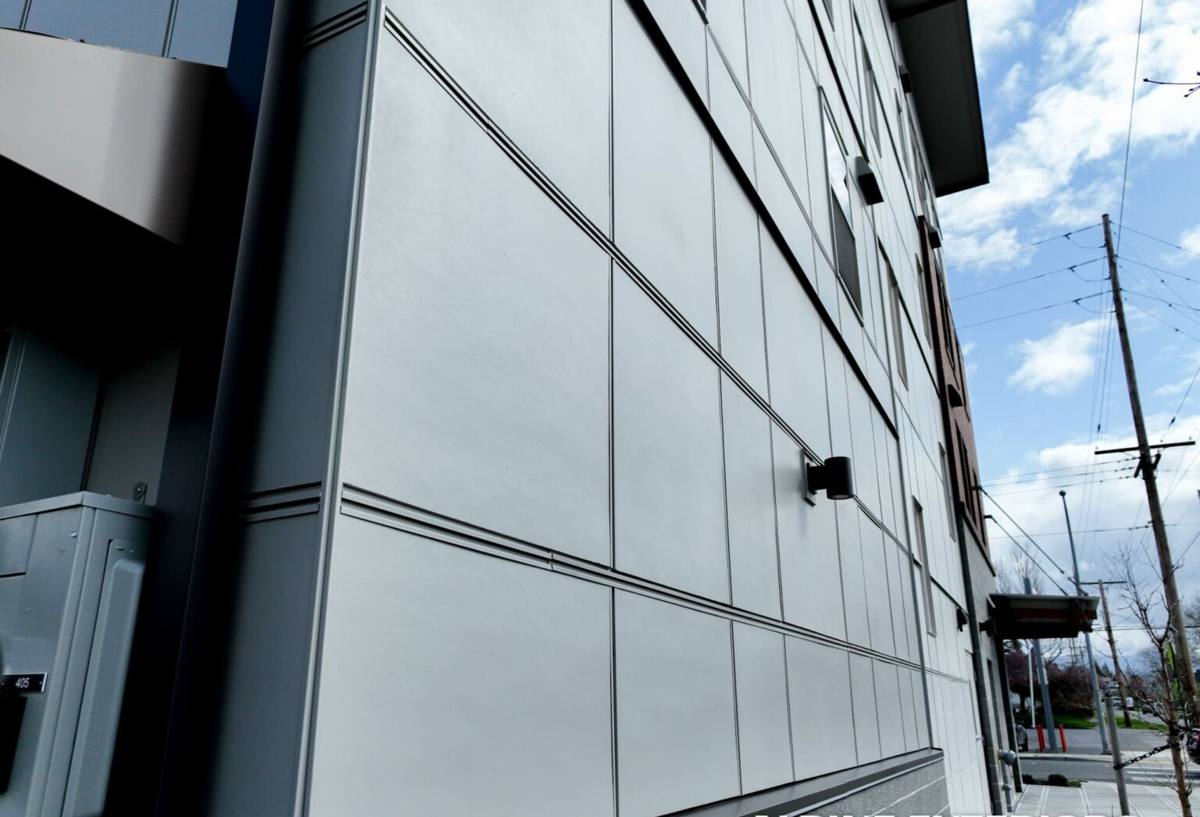
What LP SmartSide Gets Right
Credit where it's due. LP SmartSide has real advantages that make it a reasonable choice for a lot of homes and a lot of budgets:
- Lower material cost than fiber cement in most markets, which matters on larger homes or tight budgets.
- Lighter weight than fiber cement, which can mean faster installation and less strain on the crew.
- Easier to cut and nail — it doesn't require the silica-dust precautions fiber cement does, and it doesn't dull blades the same way.
- Decent impact resistance for an engineered wood product, better than most vinyl.
- Wide range of textures and profiles, including lap, panel, and shingle-style looks.
If a homeowner has done their research and wants LP SmartSide with full understanding of the trade-offs below, that's a legitimate choice. It's just not the choice we're willing to put our name behind.
The Core Trade-Off: It's Still Wood
SmartGuard treatment and resin saturation are real engineering improvements over untreated wood, but they don't change the fundamental material. LP SmartSide is a wood-strand product, and wood-strand products share wood's core vulnerability: they're dimensionally stable and durable right up until moisture gets past the surface treatment and into the substrate. Once that happens, the same strand structure that gives the board its strength also gives it a lot of surface area for that moisture to travel through and for rot or swelling to take hold.
Fiber cement doesn't have this vulnerability in the same way. It's made from cellulose fiber, sand, and Portland cement — a mineral-based product that doesn't rot, swell, or feed fungal growth the way a wood-strand board can. That single material difference is the reason a lot of our conversations with homeowners start with LP SmartSide and end with Hardie.
Where Moisture Gets In
On a properly installed, well-maintained LP SmartSide home, moisture intrusion is rare. The problem is that "properly installed and well-maintained" is doing a lot of work in that sentence. The failure points we see most often are:
- Cut ends that weren't field-sealed with the manufacturer-specified sealant before installation.
- Butt joints and seams where caulking has failed or was never applied correctly.
- Fastener heads that weren't set correctly, leaving a path for water to track along the shank.
- Areas where paint has worn thin or chalked, exposing the substrate underneath to direct weather.
How Sudden Valley's Climate Tests That Trade-Off
This is where the product's weak point meets our specific weather, and it's the real reason this matters for homeowners here rather than being a generic caution.
Sudden Valley sits on Lake Whatcom, and homes here deal with a combination that's tougher on siding than most people realize: driving rain off the lake and the surrounding hills, salt-laden air carried in from Bellingham Bay and the Puget Sound corridor, and a long, wet moss season that can run from fall through spring. That combination means siding here doesn't just get rained on — it gets rained on sideways, it stays damp longer between dry spells, and it accumulates organic growth (moss, algae, lichen) that holds moisture against the surface even after the rain stops.
For an engineered wood product, that's a demanding environment. Moss and algae growth on a painted wood-strand surface isn't just cosmetic — it holds moisture against the coating, which accelerates coating breakdown, which shortens the window before the substrate underneath is exposed. Homeowners in Sudden Valley who choose LP SmartSide need to be more diligent about washing, inspecting, and repainting than homeowners in a drier inland climate would. That's not a defect in the product — it's just physics meeting Whatcom County weather.
Installation Sensitivity
LP SmartSide's warranty and performance both depend heavily on installation being done exactly to spec — arguably more so than fiber cement, because the consequences of a missed step (an unsealed cut end, a skipped caulk joint) show up as rot rather than just a cosmetic issue.
Correct installation requires:
- Field-sealing every cut end with the manufacturer's specified sealant before the board goes up — not after.
- Maintaining proper clearance from grade, decks, patios, and roof lines so the siding isn't sitting in a splash zone.
- Correct fastener type, spacing, and depth — overdriven nails create moisture entry points.
- Proper flashing and caulking at every joint, corner, and penetration.
- Painting or priming any field-cut edges before they're exposed to weather.
Every one of those steps is a place where a rushed crew or an inexperienced installer can create a problem that won't show up for a year or two — long after the job is finished and paid for. Fiber cement has installation requirements too, but the cost of getting one wrong is generally lower, because the material itself isn't feeding on the moisture that gets in.
Comparing the Two Materials Side by Side
| Factor | LP SmartSide | James Hardie Fiber Cement |
|---|---|---|
| Core material | Engineered wood strand with resin overlay | Cellulose fiber, sand, and Portland cement |
| Moisture vulnerability | Moderate — depends on coating integrity and sealed cut ends | Low — mineral-based, doesn't rot or swell |
| Combustibility | Combustible (wood-based) | Non-combustible |
| Typical maintenance | Regular repainting, moss/algae washing, caulk inspection | Factory ColorPlus finish reduces repainting cycle significantly |
| Installation tolerance for error | Low — unsealed cuts and joints are common failure points | Moderate — more forgiving of minor lapses |
| Upfront material cost | Generally lower | Generally higher |
| Typical warranty structure | Limited, often prorated after early years | Long-term, non-prorated on ColorPlus finish and substrate |
Warranty Structure: Read the Fine Print
Both products come with manufacturer warranties, but the structures are worth understanding before you compare price tags. Many engineered wood siding warranties, LP SmartSide included, shift to a prorated payout after the first several years — meaning the manufacturer's contribution toward a repair or replacement shrinks over time, and the homeowner covers more of the cost the longer the siding has been up. Warranties can also carry conditions around maintenance documentation, meaning you may need proof of regular painting and cleaning to keep coverage intact.
James Hardie's warranty on their ColorPlus factory-finished products is structured differently, with strong, largely non-prorated coverage on both the substrate and the finish over a long service life, and it's transferable if you sell the home — something buyers and their inspectors increasingly ask about in this market.
Realistic Maintenance Checklist for LP SmartSide Owners
If you already have LP SmartSide, or you're weighing it for a new project, this is what keeping it healthy in a Whatcom County climate actually looks like:
- Inspect caulked joints, corners, and penetrations at least once a year for cracking or separation.
- Wash the siding annually to remove moss, algae, and organic buildup, especially on north-facing and shaded walls.
- Watch for chalking or thinning paint and plan to repaint before the coating fully breaks down, not after.
- Check clearance from soil, mulch beds, decks, and roof lines — trim back anything that's crept closer than it should be.
- Look closely at cut ends and butt joints for any sign of swelling, darkening, or soft spots.
- Address any moisture staining immediately — with this material, delay is what turns a small repair into a section replacement.
Why We Standardized on James Hardie
We made a decision, several years back, to only install James Hardie fiber cement siding. It wasn't because LP SmartSide or other engineered wood products are unusable — plenty of homes wear them fine for years, especially with diligent owners. It's because we install siding on homes that sit through the exact conditions described above: salt air drifting in off the water, driving rain that hits walls at an angle instead of falling straight down, and a moss season that doesn't really end here.
Given that environment, we wanted to stand behind a product that doesn't ask homeowners to fight the climate every year just to keep the substrate protected. James Hardie's HZ product lines are engineered specifically for climate zones like ours, the ColorPlus factory finish takes the repainting cycle off the table for a long stretch, and the material itself is non-combustible and doesn't rot. When we tell a homeowner in Sudden Valley their siding is done right, we want that to hold up with ordinary care, not intensive maintenance.
That's the honest version of why we don't install LP SmartSide. It's a legitimate product for the right situation. We just decided our situation — this lake, this rain, this air — called for something else.
Making the Right Call for Your Home
If you're comparing siding materials for a project in Sudden Valley or elsewhere in Whatcom County, the right question isn't "which is cheaper" — it's "which matches how much maintenance I actually want to do for the next twenty years, and how this specific site's exposure to rain, wind, and moisture stacks up." A sheltered wall under deep eaves behaves very differently than a lake-facing wall that takes weather head-on, and that difference matters more with engineered wood than it does with fiber cement.
We're happy to walk your home, look at your specific exposure, and give you a straight answer — even if that answer points you toward a different product than what we install. If you'd like a free, no-pressure estimate and an honest read on what your siding needs, the form below gets you started.