 Sudden Valley Siding
 Siding Built for Silver Beach's Wet Side of the Mountain
Silver Beach sits in the Sudden Valley area of Whatcom County, tucked against the hills and water that make this part of Washington beautiful — and hard on a home's exterior. Homes here deal with a combination most siding was never designed for: damp marine air drifting in off the water, driving rain that comes in sideways during fall and winter storms, and long stretches of shade and moisture that turn north-facing walls and fence lines green with moss almost every year. If you've owned a home in this area for more than a few winters, you already know what that combination does to paint, trim, and anything with a seam that isn't sealed right.
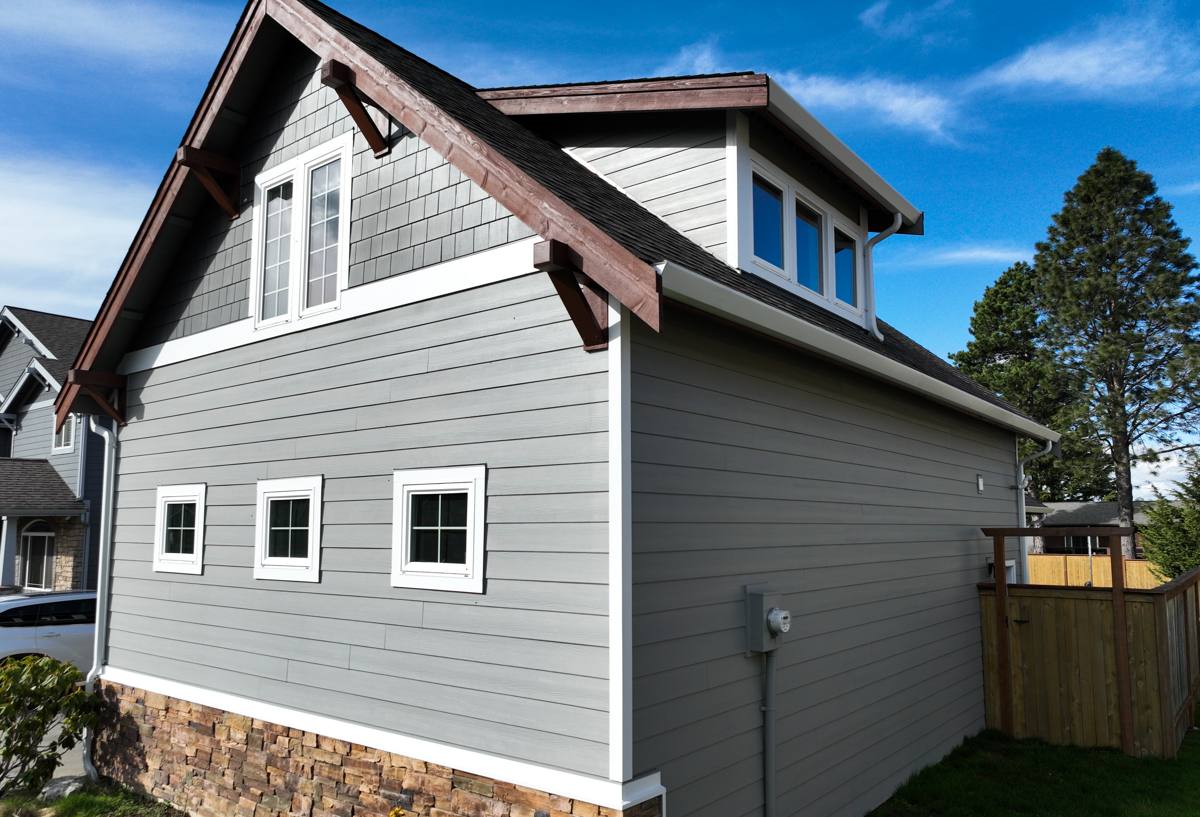
We're a local siding, roofing, window, and deck contractor, and we install one siding product: James Hardie fiber cement. That's not a marketing angle — it's a standard we hold because of what we've seen happen to other materials in exactly this kind of climate. This page walks through what Silver Beach homes are up against, how we approach siding work here, and why Hardie is the only product we put our name behind.
What This Climate Actually Does to a House
Moisture That Doesn't Let Up
Whatcom County doesn't get the kind of hard freezes that crack siding outright. Instead, it gets something slower and, in some ways, more damaging: sustained dampness. Wood and wood-composite siding products absorb moisture at the surface and at every cut edge, seam, and fastener hole. When that moisture doesn't get a chance to fully dry out between rain events — which is common through a Whatcom County fall and winter — it works its way in gradually. Paint fails from the inside out. Edges swell. Panels cup or bow. None of this happens overnight; it happens over years, which is exactly why it's easy to underestimate when a house is new.
Moss, Algae, and the North Side of the House
Shaded walls, roof lines, and anything near mature trees or a lake-influenced microclimate tend to grow moss and algae faster here than in drier parts of the state. That growth holds moisture against the siding surface even longer than rain alone would, which accelerates whatever the underlying material is already prone to — rot in wood, and gradual softening in most wood-composite products. Moss growth also affects paint appearance faster on porous or organic siding faces than it does on properly primed and painted fiber cement.
Wind-Driven Rain
Storms coming off the water can push rain nearly horizontal against exposed walls, particularly on homes without deep eave overhangs. That kind of exposure punishes any siding system with weak seams, poor flashing details, or gaps at trim and window transitions. It's one of the main reasons we're as focused on installation detail — flashing, caulking, lap spacing, fastener placement — as we are on the product itself.
Why We Only Install James Hardie Fiber Cement
Fiber cement is cement, sand, and cellulose fiber, cured into a rigid board. It doesn't absorb and swell the way wood-based products do, it won't feed rot, and it holds paint and factory finish far longer than organic materials in a wet climate. James Hardie is the manufacturer we standardized on specifically because of how their products are engineered and backed:
- Non-combustible core — meaningful in a state where wildfire smoke and ember exposure have become a real seasonal concern, even west of the mountains.
- ColorPlus factory finish — baked-on color that resists fading and chipping far better than field-applied paint, which matters when a wall stays damp and shaded for months at a time.
- HZ5 and HZ10 product engineering — Hardie builds region-specific formulations for climate zones; we use the versions engineered for wetter, harsher exposure rather than a generic national product.
- A strong, transferable limited warranty — one that's meaningful because the underlying material is genuinely durable, not because it's papering over a weaker product.
We don't install LP SmartSide, vinyl, Cemplank, Allura, primed spruce, or cedar. Each of those has a place in the market and each has genuine strengths — but we've made a professional call that, for the way homes get hit by weather in this part of Whatcom County, fiber cement from James Hardie is the product we're willing to warranty our workmanship against.
A Straight Look at Why We Passed on the Alternatives
Vinyl Siding
Vinyl is inexpensive, lightweight, and low-maintenance in mild climates. Its weakness here is physical: it expands and contracts significantly with temperature swings, its seams and J-channels rely on overlap rather than a rigid seal, and wind-driven rain can find its way behind panels over time, especially at corners and trim. It also doesn't hold up as well aesthetically — it can fade, warp in sustained heat reflection, and it's difficult to repair invisibly since color-matching aged vinyl is nearly impossible.
Wood-Composite Siding (LP SmartSide and Similar)
Engineered wood products have improved a lot over the decades and perform reasonably well in moderate climates with disciplined maintenance. The trade-off is that they're still wood at heart — an OSB or strand-based core with a resin-treated surface. In a climate with this much sustained dampness and shade, any breach in the surface coating (a nick, an unsealed cut edge, a fastener that backs out slightly) gives moisture a path into a material that will swell and eventually break down. It's manageable, but it requires vigilance most homeowners don't want to sign up for.
Primed Spruce and Cedar
Real wood siding has a look many homeowners love, and cedar in particular has natural rot-resistant qualities. But both require regular repainting or refinishing, and in a climate with a long moss season and limited drying time between storms, that maintenance interval shrinks. Cedar is also increasingly expensive and variable in quality as old-growth stock becomes scarcer.
Cemplank and Allura (Other Fiber Cement Brands)
These are legitimate fiber cement competitors, and the base material behaves similarly to Hardie's. Our reasoning here is less about the raw material and more about consistency: standardizing on one manufacturer means one warranty structure, one set of installation specifications we train to, one color and trim system that matches across every job, and a manufacturer with a long track record and strong dealer support in the Pacific Northwest.
Quick Comparison
| Material | Moisture Behavior in This Climate | Maintenance Burden | Typical Lifespan |
|---|---|---|---|
| Vinyl | Seams vulnerable to wind-driven rain intrusion | Low, but limited repair options | 15-25 years |
| Wood-Composite (LP SmartSide) | Good if coating stays intact; risk at cuts/edges | Moderate — coating checks, caulking | 20-30 years |
| Cedar / Primed Spruce | Absorbs moisture; needs consistent sealing | High — repainting/staining cycle | 20-40 years with upkeep |
| James Hardie Fiber Cement | Does not swell, rot, or feed moss growth | Low — periodic cleaning, no repainting | 30-50+ years |
How We Approach a Siding Project in Silver Beach
Assessment First
Every project starts with a real look at the house — not just the siding surface, but what's underneath. We check for existing moisture damage, soft spots around windows and doors, condition of the house wrap or building paper, and how the current trim and flashing details are handling water. On an older home, this step often uncovers issues that need to be addressed before new siding goes on, not after.
Weather Barrier and Flashing Detail
In a climate that throws this much wind-driven rain at a house, the water-resistive barrier and flashing details matter as much as the siding itself. We install per Hardie's published specifications: proper overlap, correctly flashed windows and doors, and attention to the transitions where most leaks actually originate — not through the field of the siding, but at penetrations and edges.
Fastening and Joint Spacing
Hardie's installation guidelines are specific about fastener type, placement, and joint gaps for a reason — get it wrong and you introduce the exact vulnerabilities fiber cement is supposed to eliminate. We follow those specs closely, including the correct clearance from grade and roof lines, which matters in a wet climate where standing moisture at the base of a wall is a common failure point.
Color and Trim Coordination
ColorPlus finishes come in a range of factory colors designed to hold up under UV and moisture exposure without fading or needing repaint. We help homeowners choose colors and trim combinations that work with the wooded, water-adjacent character of the Sudden Valley area while keeping long-term maintenance low.
Beyond Siding: Roofing, Windows, and Decks
Siding rarely fails in isolation. A roof that's shedding water improperly, windows with failed flashing, or a deck ledger board holding moisture against the house all interact with how well siding performs. Because we handle roofing, windows, and decks in addition to siding, we can look at a Silver Beach home as one connected system rather than treating the exterior as a series of unrelated projects. That matters most at the details — roof-to-wall transitions, window flashing integration, and deck attachment points — where different trades' work has to line up correctly or moisture finds a way in regardless of how good any one component is on its own.
Signs It's Time to Have Your Siding Looked At
- Paint that's peeling, bubbling, or chalking heavily, especially on north- or shade-facing walls
- Visible moss or algae growth that keeps coming back after cleaning
- Soft spots, warping, or cupping when you press on the siding surface
- Gaps opening up at trim boards, corners, or window and door edges
- Water stains or discoloration on interior walls near exterior corners
- Siding that was installed more than 20-25 years ago and hasn't been reassessed
What Local Actually Means for This Kind of Work
A crew that works across Whatcom County regularly sees how this specific mix of marine air, driving rain, and long wet seasons plays out on real houses over time — which siding details hold up and which ones fail first. That's different from installation knowledge that comes from a training manual written for a national market. It shows up in small decisions: how much clearance to leave at grade, how to handle a wall that stays shaded most of the day, and which trim details are worth the extra time given what this climate does to a house over a decade or two.
What a Project Typically Involves
Cost Factors
Every home is different, and we don't quote sight-unseen, but the main factors that drive cost on a Silver Beach siding project are generally the same ones that drive cost anywhere: the size and complexity of the home, how much of the existing wall assembly needs repair before new siding goes on, trim and detail complexity around windows and rooflines, and the specific Hardie product line and color selected. A straightforward re-side costs less than a project that also involves repairing water damage discovered underneath the old siding — which is common enough on older homes in this area that we always plan for the possibility.
Timeline
Most single-family siding projects run from a few days to a couple of weeks depending on home size and how much prep work is needed. Weather windows matter here more than in drier climates — we schedule around forecasted rain where possible, since fiber cement installs best in dry conditions and a wet-climate schedule has to build in some flexibility.
Get a Free, No-Pressure Estimate
If your Silver Beach home is due for new siding, or you're just not sure whether what you're looking at is normal wear or something that needs attention, we're happy to take a look. There's no cost and no pressure — just a straightforward assessment from a crew that installs one product, understands why, and knows this climate. Use the form below to request your free estimate.