 Sudden Valley Siding
 Why This Decision Trips Up So Many Homeowners
Every siding call starts the same way: something looks wrong on the exterior, and the homeowner wants to know if it's a quick fix or the start of a bigger project. The honest answer is that it depends on what's underneath the siding, not just what you can see from the driveway. In Whatcom County, where driving rain off the water, salt-laden air, and a long moss season work on a house nearly year-round, small problems left alone tend to compound faster than they would in a drier climate. This guide walks through how to tell the difference, what actually gets repaired versus replaced, and why the material you're working with changes the math.
What "Repair" Actually Means
A true repair addresses an isolated, contained problem: a cracked board from a fallen branch, a section of trim that pulled away from a window, a few pieces damaged during a re-roof. Repair only makes sense when the damage is localized and the siding around it is still sound — meaning no widespread moisture intrusion, no soft or delaminating panels nearby, and a house wrap or weather barrier that's still doing its job underneath.
Good Candidates for Repair
- A single cracked or impact-damaged board on an otherwise healthy wall
- Loose or popped nails causing a board to bow slightly
- Damaged trim, corner boards, or fascia isolated to one area
- Caulking failure around windows and doors with no wood rot behind it
- Minor paint or finish wear on siding that is structurally sound
What "Replacement" Actually Means
Replacement isn't just a bigger repair — it's a different scope of work entirely, because it usually means pulling siding off in whole sections (or the whole house) to inspect and address what's happening at the sheathing and moisture-barrier level. If we find rot, mold, or a failed water-resistive barrier under one section, there's a good chance the same conditions exist elsewhere on the house, especially on walls facing the prevailing weather. Patching over that kind of problem doesn't fix it; it just hides it for another season.
Signs You're Looking at a Replacement, Not a Patch
- Soft, spongy, or crumbling siding when you press on it
- Visible warping, buckling, or bulging across multiple boards
- Persistent moss or algae growth that keeps returning after cleaning
- Paint that won't hold no matter how often it's redone
- Rot or staining at butt joints, corners, or below window sills
- Siding that's original to a home built more than 25-30 years ago, especially untreated wood products
Why the Material Matters More Than the Damage
The same visible problem — say, a stained, swollen section near the bottom of a wall — means something very different depending on what the siding is made of. This is where a lot of homeowners get steered wrong, because the repair-or-replace answer for one product doesn't transfer to another.
Wood and Primed Spruce Siding
Untreated or primed wood siding is the most repair-resistant material we deal with, in the sense that it rarely stays "repaired." Wood absorbs moisture at cut edges and fastener holes, and once water gets behind the paint film, it doesn't dry evenly — it swells, splits, and invites rot from the inside out. A patch on one board often just shifts the problem to the board next to it within a year or two, because the underlying moisture cycle hasn't changed.
Vinyl Siding
Vinyl is easy to patch when a single panel cracks or blows off in wind, since panels interlock and individual pieces can often be swapped. The catch is color matching — vinyl fades unevenly over the years, so a replacement panel from the same product line can still look noticeably different, especially on a south- or west-facing wall that's taken more sun. Vinyl also becomes brittle with age and UV exposure, so repairs on older vinyl siding tend to crack the surrounding panels during the swap.
LP SmartSide and Engineered Wood
Engineered wood products perform reasonably well when the factory finish and caulking are intact, but they share wood's core vulnerability: the strand-based core will swell and deteriorate once moisture gets past the coating, particularly at cut edges and butt joints that weren't properly sealed during installation. Isolated repairs are possible, but because moisture damage in these products tends to spread along the panel rather than stay contained, what looks like a small problem during inspection is often larger once we open it up.
Fiber Cement (James Hardie)
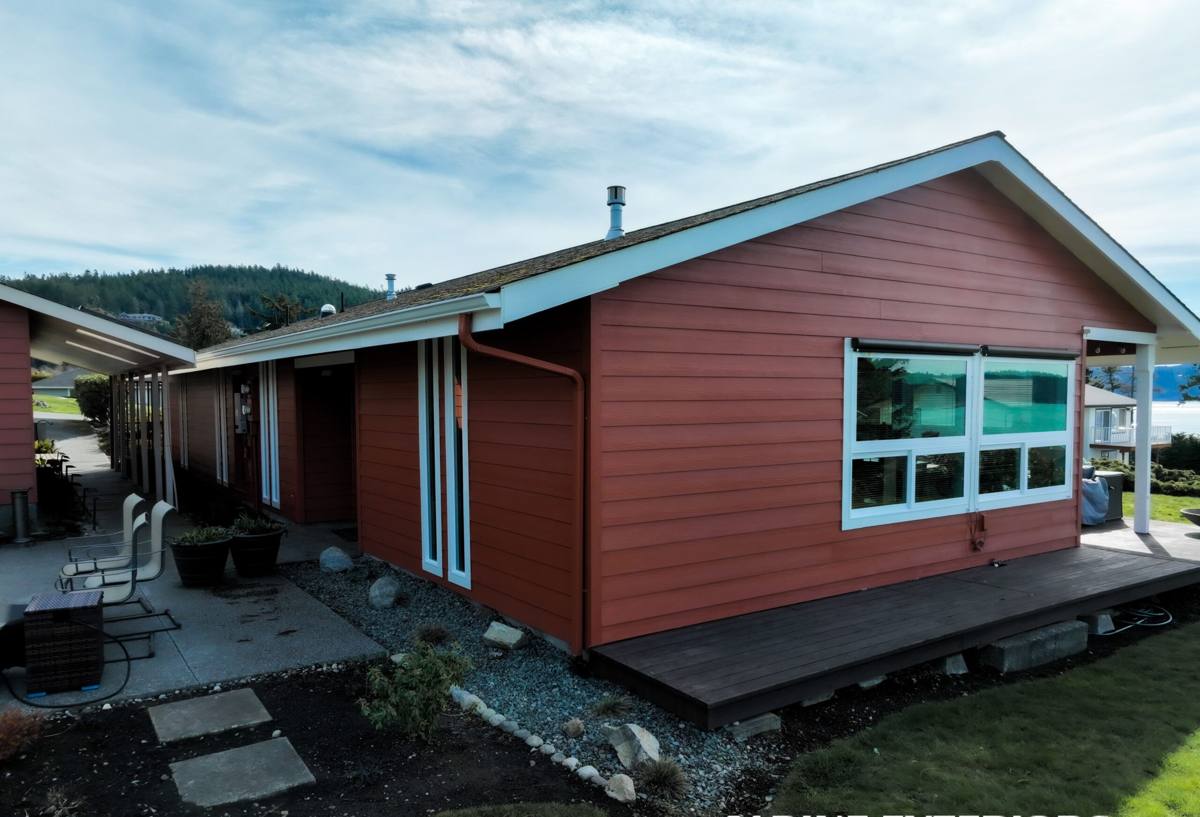
This is the one material where isolated repair is usually a genuinely safe long-term fix, not a stopgap. Fiber cement doesn't absorb and swell the way wood-based products do, so damage tends to stay exactly where it happened — a cracked board from an impact, for example — rather than spreading moisture to the boards around it. That's a big part of why we standardized on James Hardie: when a homeowner calls about a single damaged board on a Hardie home, the answer is very often "we can just replace that piece," instead of "we need to open up the wall and see how far this has traveled."
A Side-by-Side Look at Repair Reliability
| Siding Material | Isolated Repairs Hold Up? | Common Failure Pattern |
|---|---|---|
| Primed spruce / raw wood | Rarely long-term | Moisture enters at cuts and fasteners, spreads to adjacent boards |
| Cedar | Sometimes, with diligent upkeep | Cupping, splitting, and finish failure recur without frequent refinishing |
| Vinyl | Usually, but color mismatch is common | Fading, brittleness, and cracking with age |
| LP SmartSide / engineered wood | Case by case | Edge and seam swelling once the factory seal is breached |
| Fiber cement (James Hardie) | Generally yes | Damage stays localized; doesn't swell or rot |
How Whatcom County's Climate Changes the Calculus
Sudden Valley sits in a climate that's hard on exteriors even by Pacific Northwest standards. Between the moisture off Lake Whatcom, salt-tinged air moving inland from the coast, and long stretches of driving rain through fall and winter, siding here spends more of the year wet than dry. Add to that a moss and algae season that can run eight months or more in shaded, north-facing areas under the tree canopy common in this neighborhood, and you get conditions that expose weak points in a siding system faster than they'd show up in a drier region. A repair that would hold for a decade in a low-moisture climate might only buy a couple of seasons here if the underlying material isn't suited to constant wet-dry cycling.
What a Proper Inspection Should Check
Before we tell a homeowner whether they need a repair or a replacement, we're looking at more than the damaged spot itself.
- Whether the sheathing behind the siding is dry and solid, or soft and discolored
- Whether the house wrap or weather barrier is intact and properly lapped
- How the damage compares to the condition of siding elsewhere on the house
- Whether flashing at windows, doors, and roof lines is doing its job
- The age and product line of the existing siding, since that tells us what to expect from the material going forward
- Whether moss, algae, or moisture staining is isolated or spread across multiple walls
The Cost Conversation: Repair vs. Replace
Repairs are cheaper up front, which is exactly why they're tempting to default to. But a repair on a material that's already failing system-wide isn't really cheaper — it's a deferred replacement with an extra bill attached. The honest way to think about it is: repair when the damage is contained and the surrounding material is proven sound, and plan for replacement when the material itself is the problem, not just the one spot you noticed. A short conversation with a contractor who isn't trying to upsell you either direction is worth more here than any online estimate range.
Where James Hardie Fits Into This Decision
We install James Hardie fiber cement exclusively, and this repair-versus-replace question is a big part of why. Hardie's ColorPlus factory finish and non-combustible fiber cement composition mean the product resists the swell-and-spread failure pattern that drives most premature siding replacements in this region. When damage does happen — storm impact, a fallen branch, an accidental ding during other exterior work — it's realistic to fix that section without worrying that we're papering over a problem that's already loose behind the wall. That reliability, combined with a strong transferable warranty and product lines engineered for wet coastal climates, is why it's the only siding system we put on homes.
If you're not sure whether what you're looking at is a quick fix or the first sign of something bigger, we're happy to take a look. We offer free, no-pressure estimates for Sudden Valley homeowners — walk us through what you're seeing, and we'll give you a straight answer about what it actually needs.