 Sudden Valley Siding
 Siding Contractor Serving Geneva, WA
Geneva sits in the part of Whatcom County where an exterior either handles the weather or it doesn't, and there's not much middle ground. Homes here spend a good part of the year under damp, moisture-laden air, get hit with rain that comes in sideways as often as it falls straight down, and deal with a moss and mildew season that can stretch across most of the calendar year on shaded walls. We work siding, roofing, window, and deck projects across this stretch of Whatcom County, and the pattern we see on tear-offs and repair calls in Geneva is consistent enough that it shaped which products we're willing to put our name behind.
That's not a marketing line. It's the reason this company installs one siding system, James Hardie fiber cement, instead of offering a menu of brands and letting price decide the answer.
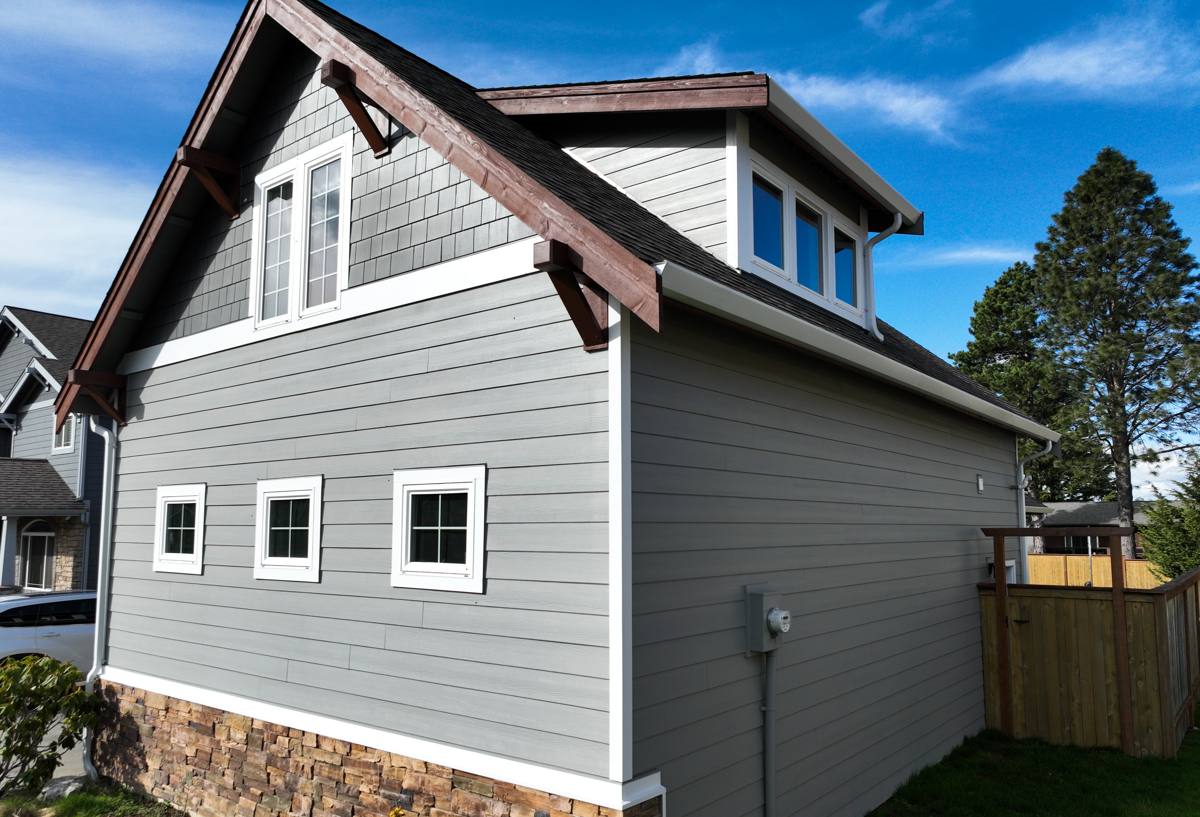
What Geneva's Climate Does to Exterior Materials
Salt Air and Marine Moisture
Whatcom County's marine air doesn't stay near the water's edge. It moves inland and settles into neighborhoods like Geneva, carrying a steady load of moisture that keeps exposed fasteners, hardware, and painted surfaces damp longer than homeowners in drier parts of the state ever have to think about. That kind of exposure is a slow, quiet process. It rarely shows up as an obvious failure in year one or two; it shows up as corroded fasteners, chalky finish, and softened trim several years down the road, after the damage is already done.
Driving Rain
Rain in this part of Whatcom County tends to arrive on wind, not straight down. That distinction matters more than it sounds like it should. A siding system, house wrap, and flashing detail that would perform fine somewhere with calmer, more vertical rainfall can still let water in here specifically because wind is pushing it sideways into lap joints, trim seams, and any wall penetration that wasn't detailed with that angle in mind.
A Long Moss Season
Mild temperatures, tree cover, and consistent dampness add up to extended moss and mildew growth on north-facing and shaded walls throughout the Geneva area. Any siding material with even slight porosity, or one that holds moisture against the substrate instead of shedding it, becomes a surface moss can establish on. It typically shows up first in the places homeowners check least often: behind shrubs, under eaves, and on the shaded side of the house.
Why We Install Only James Hardie Fiber Cement
We don't install vinyl siding, LP SmartSide, Cemplank, Allura, primed spruce, or cedar. That's a deliberate professional standard, not a limitation on what we're capable of installing. Here's what pushed us toward standardizing on one system:
- Non-combustible core: Fiber cement doesn't feed a fire the way wood-based siding products can, which matters for household safety and can matter for insurance considerations as well.
- Factory-applied ColorPlus finish: The color coat is cured under controlled factory conditions rather than brushed on at the job site, so it holds up against fading, chalking, and moisture intrusion far longer than field-applied paint does in a climate this wet.
- Climate-engineered HZ product lines: Hardie builds region-specific HZ formulations for areas with heavy sustained moisture, which fits Whatcom County's weather pattern better than a one-size-fits-all national siding spec.
- Dimensional stability: Fiber cement doesn't swell, cup, or warp the way engineered wood products can after repeated wet-season moisture cycles.
- Strong transferable warranty: Hardie backs its products with one of the more substantial warranty structures in the industry, provided the installation follows manufacturer spec.
LP SmartSide, vinyl, Cemplank, Allura, primed spruce, and cedar are all legitimate products, and plenty of contractors install them well. We made a professional call that in a climate this consistently wet and moisture-heavy, standing behind one system we trust completely serves our customers better than offering a cheaper alternative that quietly shifts maintenance risk onto them a few years down the road.
What Other Products Trade Off in This Climate
LP SmartSide is an engineered wood product with a resin-treated strand core, and it performs reasonably in drier regions. In a climate with this much sustained rain and humidity, engineered wood siding tends to be more sensitive to moisture intrusion at cut edges and fastener penetrations than fiber cement is. Vinyl is affordable and low-maintenance in a general sense, but it can warp under sun exposure, crack in cold snaps, and trap moisture behind the panel if house wrap and flashing aren't handled with real care, an easy detail to get wrong and a hard one to catch from the outside. Cedar and primed spruce are attractive natural materials, but they need ongoing painting or sealing to keep moisture out, and in a climate that stays wet this much of the year, that maintenance schedule tends to slip in a way that shortens the material's real-world lifespan.
What a Correct Hardie Installation Actually Requires
Buying the right material is only half the job. A James Hardie installation that performs the way it's engineered to needs correct fastening patterns, proper clearance from grade and hardscaping, joints that are lapped and sealed correctly, and house wrap and flashing that work together as one connected system rather than as separate steps done in isolation. Rushed or corner-cut installation is one of the most common reasons a good product develops a bad reputation on paper, and it's why we treat install detail with the same seriousness as the material choice itself.
Repair vs. Full Replacement
Not every siding issue on a Geneva home means a full tear-off. Isolated impact damage, a section that's failed around a window, or trim that's come loose can often be repaired and matched into existing Hardie siding without redoing the whole house. But when moisture has been tracking behind the wall assembly for a while, or the existing siding is an older product that's simply reached the end of its service life, a patch usually just postpones a bigger job. We'll tell you plainly which situation you're actually in before we recommend anything.
Siding Cost Factors in Geneva
| Factor | What It Affects | Why It Matters Here |
|---|---|---|
| Home size and wall complexity | Total material and labor | More dormers, trim, and roof intersections create more places for wind-driven rain to find a way in |
| Tear-off vs. overlay | Labor scope and substrate access | Tear-off exposes hidden moisture damage that's common under older siding after years of this climate |
| Substrate condition | Repair costs before new siding goes on | Trapped moisture behind failing siding can rot sheathing and framing before it's ever visible from outside |
| Trim and color selection | Material cost and finish longevity | ColorPlus factory finishes outlast field-applied paint against sustained moisture and UV exposure |
| Site access and lot terrain | Labor time and equipment needs | Sloped lots and mature tree cover common around Geneva can add staging and setup time |
Real numbers depend on the specific house, which is why we walk the property before quoting instead of pricing off square footage alone.
Signs Your Geneva Home Needs Exterior Attention
- Moss or dark staining that comes back quickly after cleaning, especially on shaded or north-facing walls
- Soft or spongy siding, particularly near the base of the wall or around window and door trim
- Peeling paint, bubbling, or visible warping on siding boards
- Cracked, chipped, or missing sections after storms or wind events
- Visible gaps at seams, corners, or trim joints where water can track in
- Rising heating bills that may point to a wall assembly that's no longer sealing properly
Roofing, Windows, and Decks Alongside Your Siding
Siding problems rarely start with the siding itself. A roof valley that's leaking, a window that was flashed incorrectly, or a deck ledger board trapping moisture against the house can all surface as siding damage even though the siding is just where the water finally shows itself. Because we also handle roofing, window, and deck work, we can walk a Geneva property as one connected exterior system and trace a problem back to its actual source instead of re-siding over a leak that's still there underneath.
That matters most on older homes where several exterior systems are aging out at once. Addressing them together, or at least sequencing the work with an eye toward how they interact, tends to hold up better than treating each one as an isolated project.
Why a Local Crew Matters in Geneva
A lot of what makes exterior work hold up in Geneva comes down to judgment calls that generic, one-size-fits-all installation doesn't account for: how much rain exposure a given wall orientation actually gets, where moss is likely to establish itself first, how much clearance siding needs above grade given how wet the ground stays here, and how flashing needs to be layered so water sheds correctly through an entire wet season rather than just during a dry-weather walkthrough.
Crews who work this part of Whatcom County regularly see these patterns repeat from house to house. That familiarity shows up in small on-site decisions, fastener placement, caulk versus flashing, where a J-channel actually needs to go, that homeowners rarely see but absolutely feel in how the home performs over the following decade.
If your Geneva home needs new siding, roofing, windows, decking, or just an honest look at what's actually going on behind an aging exterior, we're glad to take a look. Reach out using the form below to schedule a free, no-pressure estimate.