 Sudden Valley Siding
 What Allura Fiber Cement Actually Is
Allura makes fiber cement siding — the same basic material category as James Hardie. Both companies mix Portland cement, sand, and cellulose fiber into a board that's cured, cut to plank or panel profiles, and shipped to job sites across the country. If you've been told fiber cement is fiber cement no matter who makes it, that's close to true at the raw-material level. Where the products actually diverge is in manufacturing consistency, factory finish systems, and how each company backs its product once it's on a wall. Those differences matter more in Whatcom County than they do in a dry climate, because our siding spends a lot more of the year wet.
We get asked about Allura fairly often, usually by homeowners comparing bids where one contractor specified Hardie and another specified Allura at a lower price. This page explains what we found when we evaluated Allura as a product line, and why we ultimately chose not to install it.
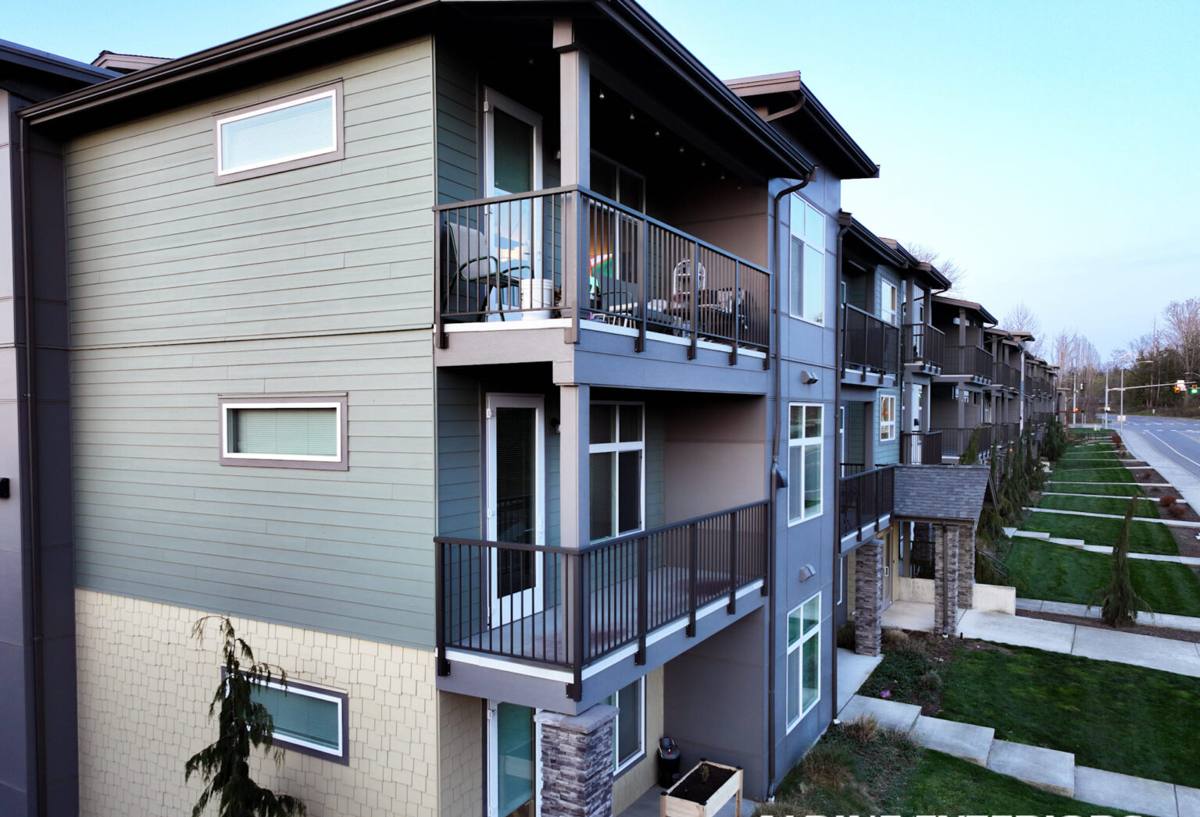
What Allura Gets Right
Credit where it's due. Allura is a legitimate fiber cement product, not a knockoff. It's non-combustible, resists rot and insect damage the way any cement-based siding does, and holds paint better than wood over the long run. For a homeowner comparing fiber cement to vinyl or engineered wood, Allura is a real step up in durability. Our issue isn't that Allura is a bad material — it's that when we compared it head-to-head against James Hardie on the specifics that matter for this region, Hardie came out ahead on enough fronts that carrying two fiber cement lines stopped making sense for our crews.
Where the Two Products Are Genuinely Similar
- Both are Portland cement-based composite siding, not vinyl or wood
- Both come in lap, panel, and trim profiles
- Both are non-combustible and won't feed a wildfire the way wood siding can
- Both require fiber-cement-rated blades, fasteners, and installation practices — you can't treat either one like wood siding
Where Whatcom County's Climate Changes the Calculus
Sudden Valley sits against Lake Whatcom, inside a county that pulls damp, salt-influenced marine air off the Puget Sound corridor for most of the year. Add driving rain off the lake, long stretches of low winter sun that never fully dries north-facing walls, and a moss season that can run from October into May, and you get a climate that's genuinely hard on exterior products. Any fiber cement siding will outlast wood or vinyl here — but "will it survive" isn't the bar we hold ourselves to. We're looking at which product holds its factory finish, sheds moss and mildew staining, and stays dimensionally stable through dozens of freeze-thaw and wet-dry cycles a year, on a house that might not get repainted for fifteen or twenty years.
That's the lens we used on Allura, and it's the same lens we'd encourage any Whatcom County homeowner to use when comparing bids, regardless of which contractor is doing the comparing.
Factory Finish: The Detail That Decides How the House Looks in Year 10
This is the biggest practical difference between the two product lines, and it's the one homeowners feel the longest. James Hardie's ColorPlus finish is a baked-on, multi-coat factory finish engineered specifically around fiber cement's expansion and moisture behavior, with a documented streak-free warranty on the finish itself. Allura offers factory-finished options as well, but the finish systems and the length and terms of the coverage behind them are structured differently, and in our evaluation the track record and warranty backing weren't as strong a match for a coastal-influenced, high-moss climate like ours.
Finish quality isn't cosmetic trivia — it's the difference between a house that still looks freshly painted in year twelve and one that's showing chalking, fading, or moss staining in the caulk lines and butt joints by year seven. In a climate that grows moss on roofs, decks, and fences without much encouragement, a finish that sheds moisture cleanly and resists organic staining is worth more here than in most parts of the country.
Comparing the Two Systems
| Factor | James Hardie | Allura |
|---|---|---|
| Factory finish | ColorPlus baked-on finish, engineered for fiber cement movement | Factory-finish options available, different warranty structure |
| Product engineering | Climate-specific HZ formulations (HZ5 for our region) | General-purpose fiber cement formulation |
| Warranty on siding substrate | Long-term, transferable to a subsequent homeowner | Manufacturer warranty available, terms vary by product line |
| Distributor/installer network in our region | Well established locally, easy to source matching trim and accessories | Less consistently stocked locally, longer lead times on matching components |
Installation Sensitivity Matters More Than the Brand Name
Fiber cement siding of any brand fails early for one of a short list of reasons: fasteners driven too deep or too shallow, insufficient clearance at the ground and roof lines, caulk used where a gap should have been left, or panels installed without the manufacturer's specified weather-resistive barrier and flashing details. This is true of Hardie and true of Allura. Neither product forgives a rushed crew.
Where this becomes relevant to our decision: standardizing on one product line lets our crews build deep, repeatable expertise on that one system's fastening schedule, clearances, and flashing details, rather than switching specs between jobs and increasing the odds of a mistake. That's an internal quality-control reason as much as a product reason, but it's a real one, and it's part of why we don't run two fiber cement lines side by side.
Installation Details That Affect Every Fiber Cement Job
- Minimum clearance from grade, roofline, and decks — typically 6+ inches, more in wet-prone spots
- Correct fastener penetration into framing, not just sheathing
- Butt joints back-primed or factory-sealed, not left raw
- Weather-resistive barrier and proper flashing at every window, door, and penetration
- Caulk used only where the manufacturer specifies it, never as a substitute for correct flashing
Warranty Structure: Read Past the Headline Number
Every fiber cement manufacturer advertises a long warranty. The number on the brochure matters less than what's actually covered, what voids it, and whether it transfers if you sell the house. James Hardie's warranty is transferable to a subsequent owner within its term, which matters in a market where houses change hands well before siding wears out. It's also tied to installation by a contractor following Hardie's published specifications — which is one more reason we train our crews specifically on that system rather than splitting attention across two.
We're not going to characterize Allura's warranty terms in detail here since they're set by the manufacturer and can change — homeowners comparing bids should ask each contractor for the actual warranty document, not just the pitch, and read the transfer and installation-compliance clauses specifically.
Cost Factors Worth Understanding
Allura frequently prices a bit below Hardie on material cost alone, which is the number that shows up first in a bid comparison. It's a fair question to ask why we'd pass on a lower material cost. The honest answer is that material cost is one line item in a job that also includes labor, trim, finish longevity, and repaint timelines — and a siding job that needs repainting or finish touch-up five years sooner than expected erases a modest material savings quickly.
| Cost Factor | What to Ask About |
|---|---|
| Material price per square | What's included — trim, corner boards, fasteners, house wrap? |
| Finish warranty term | Does it cover fading and chalking, or only manufacturing defects? |
| Expected repaint interval | Factory-finished products should push this well past 10-15 years |
| Local parts availability | Can trim, touch-up paint, and replacement planks be sourced locally years later? |
| Installer certification | Is the crew trained and factory-certified on this specific product? |
Why We Standardized on James Hardie
We made the decision to install James Hardie exclusively rather than carrying multiple fiber cement brands. The HZ5 product line is engineered for climates with our combination of moisture, temperature swings, and freeze-thaw cycles. The ColorPlus finish system has a long track record in the Pacific Northwest specifically, which matters more to us than a general fiber cement warranty written for the national market. And running one product system means our crews aren't relearning fastening schedules and flashing details between jobs — they're doing the same install, correctly, every time.
That's not a knock on every homeowner who's had Allura installed elsewhere — it's a straightforward explanation of the standard we hold our own work to, and why we won't put our name on a product we haven't fully vetted for this specific climate.
A Checklist Before You Choose Any Fiber Cement Product
- Ask which specific product line and thickness is being quoted, not just "fiber cement"
- Get the actual manufacturer warranty document, not a verbal summary
- Confirm the installer is factory-trained or certified on that specific product
- Ask about clearance, fastening, and flashing details in writing
- Check whether the finish warranty is transferable if you sell the home
- Ask how long the product and matching trim have been locally available — this affects future repairs
If you're weighing siding options for a home in Sudden Valley or elsewhere in Whatcom County, we're glad to walk through what we install, why, and what it would look like on your house. Reach out for a free, no-pressure estimate — there's no obligation, and we'll give you a straight answer even if fiber cement isn't the right fit for your project.