 Sudden Valley Siding
 Exterior Work in Sehome, Built Around the Weather We Actually Get
Homes in the Sehome area sit inside one of the more demanding exterior-durability zones in Washington. It's not any single dramatic weather event that wears down a house here — it's the accumulation. Salt-tinged air moving in off the water, long stretches of driving rain through fall and winter, and a moss and algae season that can run most of the year on shaded or north-facing walls. Individually, none of these are extreme. Together, over ten or fifteen years, they're exactly what breaks down the wrong siding, roofing, and trim choices.
Sudden Valley Siding Company works throughout Whatcom County, and Sehome is part of our regular service area. We install siding, roofing, windows, and decks, and every material recommendation we make starts with the same question: how does this hold up specifically here, not in a national average climate, but in this corner of the Pacific Northwest.
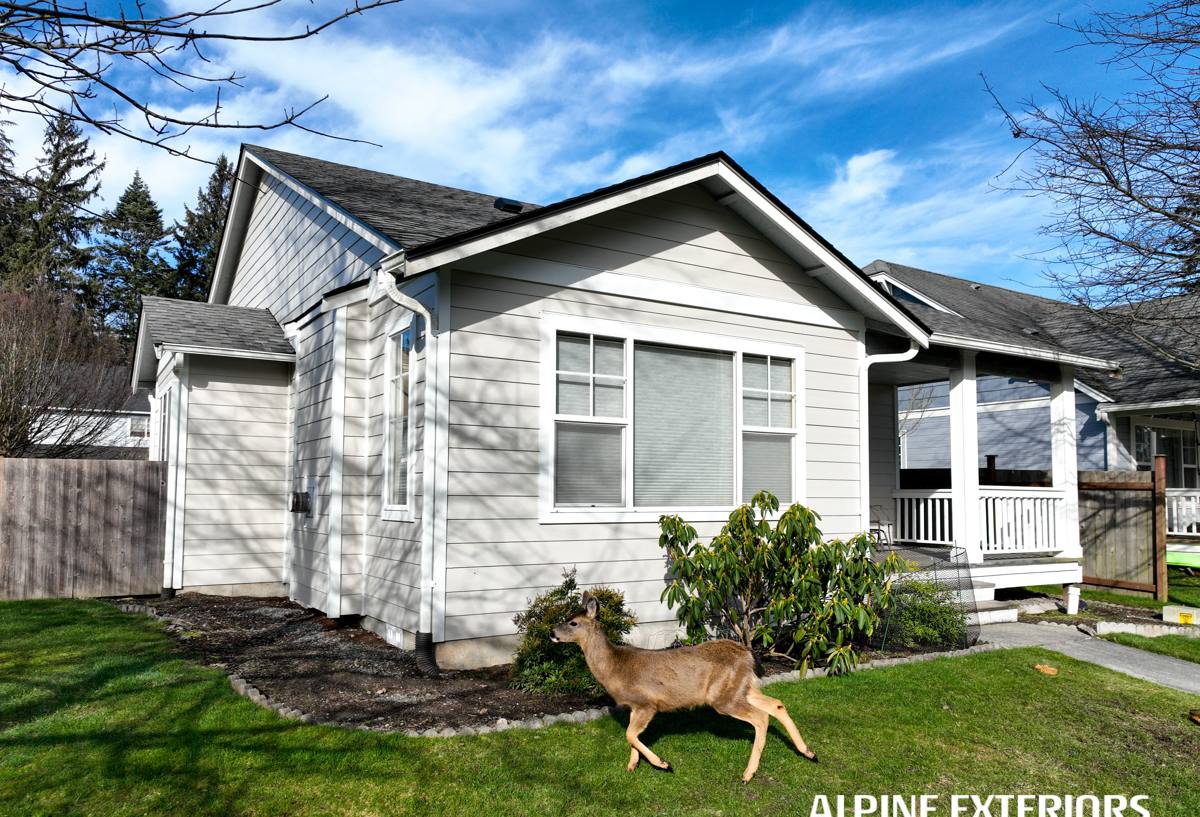
What Sehome Homes Are Actually Up Against
Salt Air and Moisture Exposure
Proximity to the water means airborne salt and near-constant moisture in the air, even on days without rain. That combination accelerates corrosion on exposed metal fasteners and flashing, and it keeps painted and untreated wood surfaces damp longer than they'd stay in a drier inland climate. Materials that aren't engineered for coastal-adjacent moisture exposure tend to show their weaknesses faster here than the manufacturer's general climate ratings would suggest.
Driving Rain
Whatcom County doesn't just get a lot of rain — a good portion of it arrives sideways, pushed by wind off the Sound and the Strait. Driving rain finds every gap in flashing, every under-caulked seam, and every piece of siding that wasn't lapped and fastened correctly. A roof and wall system that would perform fine in a calmer rainfall pattern can fail here specifically because of wind-driven intrusion at joints and penetrations.
Moss, Algae, and Prolonged Dampness
Shaded lots, tree cover, and long wet seasons add up to near-ideal growing conditions for moss and algae on roofing and on the north and east faces of homes. Beyond the cosmetic issue, moss holds moisture against roofing and siding surfaces far longer than open sun and airflow would allow, which shortens the useful life of anything underneath it that isn't moisture-stable.
Siding: Why We Only Install James Hardie
Sudden Valley Siding Company installs James Hardie fiber cement siding exclusively. We don't install vinyl, LP SmartSide, Cemplank, Allura, primed spruce, or cedar. That's a deliberate standard, not a default, and in a climate like Sehome's it comes down to how each material actually behaves under sustained moisture exposure.
Where the Other Products Fall Short Here
- Vinyl siding is affordable and low-maintenance in the sense that it doesn't need painting, but it's a thin plastic product that expands, contracts, and can warp or crack under our region's freeze-thaw swings and wind-driven rain. Seams are a weak point for water intrusion, and it isn't fire-resistant.
- LP SmartSide is engineered wood — better than old-style hardboard, but it's still wood-based, meaning it depends on flawless caulking, flashing, and paint maintenance to keep moisture out. In a climate with this much sustained dampness, any lapse in maintenance shows up as swelling or edge deterioration faster than it would in a drier region.
- Cemplank and Allura are both fiber cement, and structurally they're a reasonable category. Our objection isn't the material chemistry — it's that we've standardized our crews, warranty process, and color system around one product line so we can guarantee installation quality and stand behind the work without juggling multiple manufacturer specs and warranty terms.
- Primed spruce and cedar are traditional, attractive, and genuinely appropriate in some applications — but as raw or lightly primed wood, they require the most diligent, most frequent maintenance of anything on this list. In a moss-prone, high-moisture area, that maintenance burden is significant and unforgiving of gaps.
Why James Hardie
James Hardie fiber cement is non-combustible, dimensionally stable across wet and dry cycles, and doesn't support rot the way wood-based products can. The ColorPlus factory finish is baked on under controlled conditions rather than field-painted, which gives it better adhesion and UV resistance than most site-applied paint jobs — a real advantage against algae growth and fading in a climate this damp. Hardie's HZ5 product line is specifically engineered for cold, wet, freeze-prone climates like ours, and the company backs it with a strong transferable warranty. None of that matters, though, if the installation is sloppy — which is why correct flashing, gapping, and fastening matter as much as the product choice itself.
Siding Material Comparison
| Material | Moisture Performance in Our Climate | Maintenance Burden | Fire Resistance |
|---|---|---|---|
| James Hardie Fiber Cement | Engineered for wet, cold climates (HZ5); dimensionally stable | Low — factory finish, no painting cycle needed for years | Non-combustible |
| Vinyl | Seams vulnerable to wind-driven rain; can warp with temperature swings | Low, but limited repair options when damaged | Not fire-resistant |
| LP SmartSide | Wood-based; depends on caulking/paint integrity | Moderate to high — regular inspection and paint upkeep | Treated, but wood-based core |
| Cedar / Primed Spruce | Absorbs moisture without diligent sealing | High — frequent painting, sealing, moss treatment | Combustible |
Roofing for a Moss-Prone, High-Rainfall Area
Roofing in Sehome has to handle two things at once: shedding driving rain without leaks, and resisting the moss and algae growth that comes with shade and prolonged dampness. We look at ventilation, underlayment quality, and flashing detail as closely as the shingle or roofing material itself, because a roof that traps moisture underneath the surface layer will fail from the inside regardless of what's on top. Roof valleys, chimney flashing, and any point where the roofline meets a wall are the spots we inspect most carefully on this type of home, since that's where wind-driven rain most often finds a way in.
Windows: Sealing Out Wind-Driven Moisture
Older or poorly installed windows are a common source of hidden water damage in homes exposed to driving rain. It's rarely the glass itself — it's the flashing and sealing around the window opening. When we replace windows, proper integration with the surrounding wall assembly and siding is treated as part of the job, not an afterthought, because a beautiful new window installed with a gap in the flashing will leak into the wall cavity long before anyone notices from inside the house.
Decks: Built for Wet-Weather Durability
A deck in this climate spends a lot of its life wet. Material choice, proper spacing for drainage and airflow underneath, and fastener selection all affect how long a deck stays solid versus how soon it starts showing rot, staining, or fastener corrosion from salt-tinged air. We build and repair decks with those realities in mind rather than treating deck construction as a generic, one-climate-fits-all project.
Why a Local Crew Matters
Whatcom County's microclimates aren't uniform — wind exposure, shade cover, and proximity to water vary block by block, and that affects how a home should be detailed. A crew that works this area regularly develops a feel for which walls need extra attention to flashing, which rooflines collect moss fastest, and where driving rain typically causes problems. That local pattern recognition is hard to replace with a generic install checklist, and it's a big part of why we keep our work concentrated in this region instead of spreading thin across unfamiliar climates.
What a Sehome Exterior Project Typically Involves
- An on-site inspection of existing siding, roofing, trim, and any visible moisture or moss damage
- An honest assessment of whether repair, partial replacement, or full replacement makes sense
- A review of flashing and water-management details around windows, doors, and rooflines — not just the surface material
- Straightforward product and pricing options, with James Hardie fiber cement as our siding recommendation
- A realistic project timeline that accounts for our wet-season weather windows
Cost Factors to Expect
Every home is different, but the main variables that drive cost on a Sehome exterior project are consistent: the extent of any existing moisture damage that needs to be addressed before new material goes up, the complexity of the roofline and wall geometry, the amount of trim and flashing detail required, and the scope of the project — full siding replacement versus targeted repair, for example. We walk through these factors on-site rather than quoting blind, since a home with hidden rot behind old siding requires very different work than one that just needs a straightforward re-side.
If you're weighing your options for siding, roofing, windows, or a deck in Sehome, we're happy to take a look and give you a straightforward, no-pressure estimate — just fill out the form below.