 Sudden Valley Siding
 Why Window Replacement in Sehome Is Different From a Generic Job
Sehome sits close enough to Bellingham Bay that salt-laden air is a real factor in how fast window components age, and it shares the same marine weather pattern that defines this whole corner of Whatcom County: long stretches of driving rain, short summers, and a moss season that can run from fall through spring. Windows take this weather head-on more than almost any other part of the exterior. They're the one component with moving parts, seals, and gaps built into the wall by design, and every one of those details is a place water, salt, and organic growth can get a foothold if the original install or the materials weren't right for this climate.
A window replacement job that would hold up fine in a dry inland climate can fail early here — not because the window itself was bad, but because the flashing, sealant, or drainage detailing wasn't built for constant moisture exposure. That's the gap we work in. Sudden Valley Siding Company installs and flashes windows the way this climate actually demands, not the way a national install crew does it everywhere else in the country.
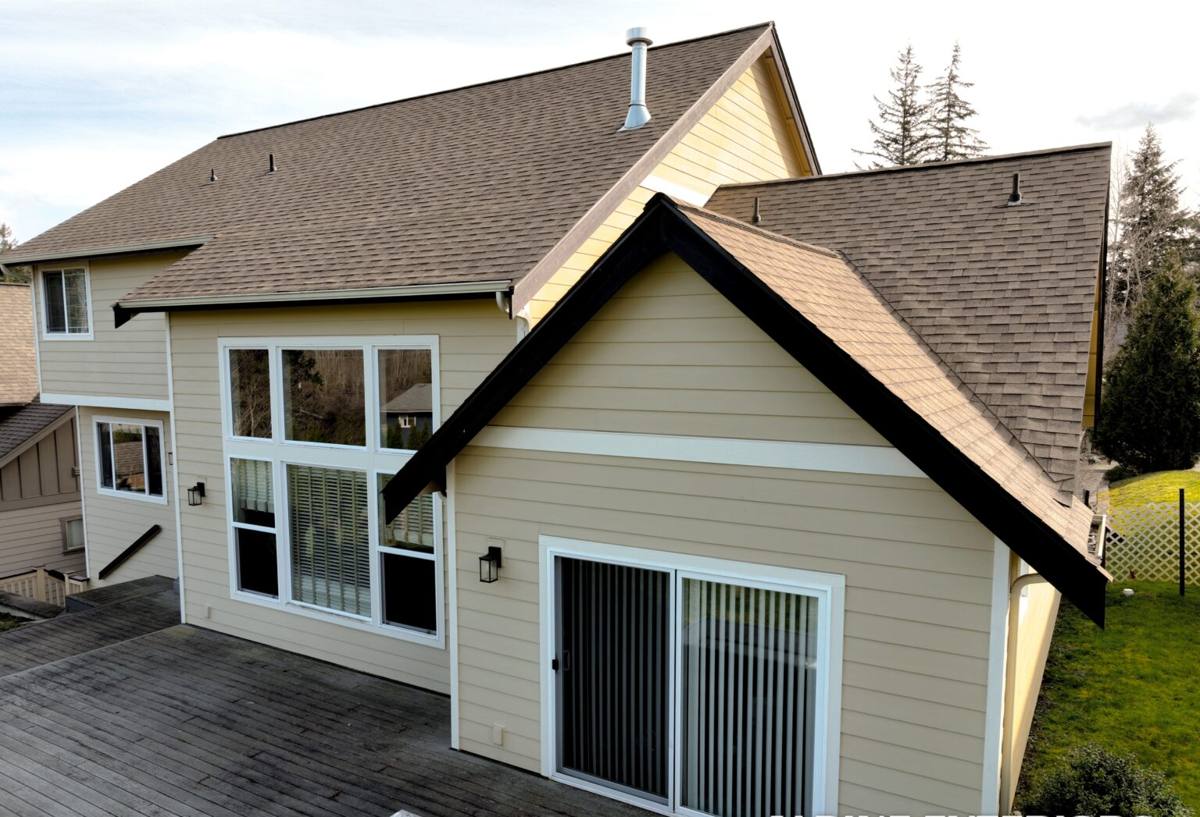
What a Correct Window Replacement Actually Involves
Swapping an old sash for a new one is the easy part. The work that determines whether a window lasts 20+ years or starts leaking in year three happens around the window, not in it.
Flashing and Water Management
Every window opening needs a flashing system that sheds water down and out, layered correctly with the house wrap or building paper so water is always directed outward, never trapped behind the cladding. In a climate with as much driving rain as Whatcom County sees, a shortcut here — reused old flashing, missing sill pans, or sealant used as a substitute for proper flashing — is the single most common cause of hidden rot we find when we open up a wall around an old window.
Sealant and Joint Detailing
Sealant is a backup to good flashing, not a replacement for it. We use exterior-grade sealants rated for constant wet-dry cycling and UV exposure, applied at the joints designed to be sealed — not smeared across gaps that should have been flashed properly in the first place.
Frame Material for a Marine Climate
Frame material matters more here than in a dry climate because it's dealing with near-constant moisture and, this close to the bay, some salt exposure. We walk homeowners through the real trade-offs rather than pushing one product:
| Frame Material | Moisture Behavior | Maintenance | Best Fit |
|---|---|---|---|
| Vinyl | Won't rot; seams and welds are the weak point if installed poorly | Low — occasional cleaning | Most budgets, reliable in wet climates |
| Fiberglass | Excellent — dimensionally stable, resists moisture and salt air well | Low | Homeowners wanting a longer-term, lower-maintenance upgrade |
| Wood-clad | Interior wood needs the exterior cladding intact — a failed seal exposes wood to rot | Higher — watch seals and touch-up paint | Homeowners prioritizing interior wood appearance |
| Aluminum | Prone to corrosion and pitting in salt-air exposure without a marine-grade finish | Moderate to high near the bay | Limited use; we're cautious recommending it this close to salt air |
We're not tied to one brand or material — we size the recommendation to the specific wall, exposure, and budget in front of us.
Signs a Sehome Home Needs Window Replacement, Not Just Repair
Not every window problem means full replacement. Here's what we actually look for before recommending it:
- Visible gaps, soft or discolored wood at the sill or jamb — a sign moisture has already gotten behind the frame
- Persistent fogging or moisture between double-pane glass, meaning the seal has failed
- Windows that are hard to open, don't latch fully, or have warped out of square
- Cold drafts at the frame edge even with the window fully closed
- Visible moss or dark streaking on the sill, trim, or lower corners of the frame — common on shaded or north-facing walls through a long moss season
- Single-pane or original-era windows that have never been upgraded and are clearly underperforming against current energy costs
If it's isolated hardware failure or a resealing issue, we'll say so — replacement isn't always the right call, and we'd rather tell a homeowner the honest, cheaper fix than sell a job that isn't needed yet.
How We Approach the Job
- On-site assessment. We look at the existing flashing, sill condition, and framing before quoting anything — not just the glass and sash.
- Material and product selection. We walk through frame material, glass package, and performance options based on that specific wall's sun/shade and rain exposure.
- Removal and opening inspection. Old windows come out carefully so we can check the rough opening for rot or moisture damage before anything new goes in — this is where hidden problems surface.
- Flashing and air-seal installation. New flashing, correctly layered with the water-resistive barrier, then the window itself, shimmed and squared.
- Insulation and interior/exterior sealing. Gaps are insulated, not just caulked shut, to control both drafts and condensation risk.
- Final trim and cleanup. Exterior trim and sealant finished to shed water correctly, site cleaned up, old windows hauled off.
What Drives the Cost
Every window job is priced around the specific opening and condition, but the same handful of factors move the number up or down on nearly every quote:
| Factor | Why It Matters |
|---|---|
| Frame material | Vinyl is typically the most budget-friendly; fiberglass and wood-clad cost more upfront but perform differently long term |
| Glass package | Low-E coatings and gas-filled double or triple pane glass change both price and energy performance |
| Opening condition | Rot or framing damage found during removal adds repair work before the new window can go in |
| Replacement vs. new-construction window | Whether the existing frame stays in place or the opening is rebuilt to the studs changes labor scope |
| Number of openings and access | Second-story or hard-to-access windows take more time and equipment |
We give straightforward, itemized quotes so a homeowner can see exactly what's driving the price — no vague lump-sum numbers.
Why a Crew That Already Works Sehome Matters
A window installed correctly in a dry, low-moisture region can still be installed wrong for this one. Crews that don't regularly work Whatcom County's marine climate often under-detail flashing or skip sill pans because it's never bitten them in a drier market. We work this area — Sudden Valley, Sehome, and the rest of the Bellingham area — enough to know which walls take the worst of the driving rain, which orientations grow moss fastest, and which older window details in this region tend to fail first. That's not something a crew passing through gets right on the first try.
It also means we're not disappearing after the invoice. If a seal needs a look two years down the road, we're still a local outfit working in the same neighborhoods.
Moss, Mold, and Keeping New Windows Performing
A long moss season doesn't just affect roofs and siding — it affects windows too, especially on shaded sills and lower sashes where moisture sits. Moss and algae growth on a sill or frame edge isn't just cosmetic; it holds moisture against the surface and, over years, accelerates wear on paint, sealant, and wood trim. Part of a correct install is detailing the sill so water sheds cleanly instead of pooling, which does more to prevent moss buildup long-term than any cleaning routine. We're happy to point out simple maintenance habits — keeping sills clear of debris, an occasional rinse on shaded elevations — that extend the life of the install without adding cost or hassle for the homeowner.
Energy Performance in a Marine Climate
Whatcom County doesn't see the extreme cold some regions do, but the moderate, wet climate has its own energy considerations. Condensation control matters as much as raw insulation value here — a window with a good Low-E coating and proper gas fill cuts both heat loss and the interior condensation that shows up on cold, damp mornings. We size glass packages to the climate we actually have rather than defaulting to whatever spec sheet looks best on paper, so homeowners aren't paying for performance features that don't matter here, or skipping ones that do.
If your Sehome home has windows showing their age, or you just want a straight answer on whether it's time to replace or repair, we're glad to take a look. Fill out the form below for a free, no-pressure estimate from the local crew that already works this area.