 Sudden Valley Siding
 Exterior Work Built for the Alger Climate
Alger sits along the I-5 corridor in the stretch of Northwest Washington where marine air off the Salish Sea meets low, timbered hills and a lot of standing tree cover. Homes out here don't get baked by sun or battered by hard freezes the way properties do east of the mountains. Instead, they face a slower, steadier kind of stress: months of damp air, driving rain that comes in sideways during winter storms, and a moss and algae season that can run from October well into spring. None of that is dramatic on any single day. Over ten or fifteen years, though, it's exactly the combination that finds every weak point in a home's exterior.
Sudden Valley Siding Company works this region regularly, and the properties around Alger have a pretty consistent profile: rural and semi-rural lots, a mix of older homes with original wood or early vinyl siding and newer construction, and a lot of tree cover close to the house. That tree cover is a mixed blessing — it looks great and helps with wind, but it also means shade, slow-drying siding, and organic debris in gutters and along trim, which is a direct contributor to moss growth and trapped moisture.
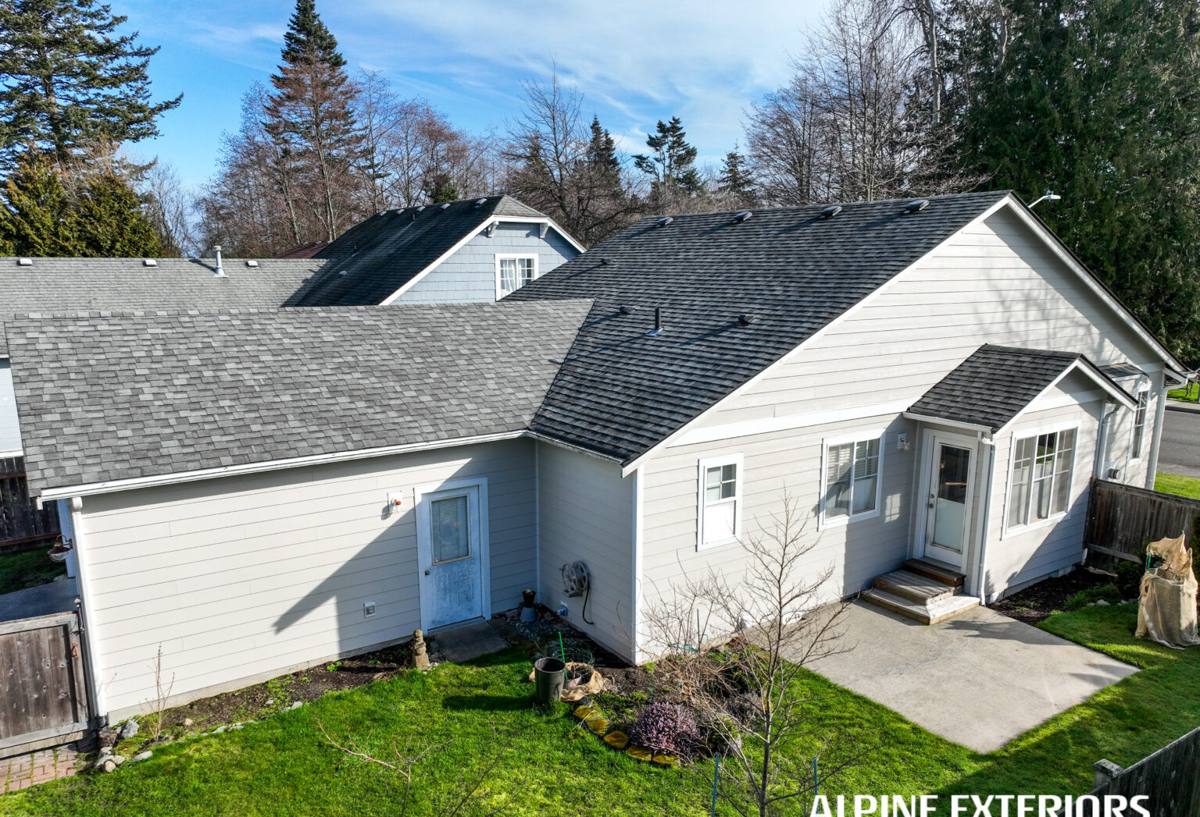
What Local Homes Are Actually Up Against
Salt Air and Corrosion
Properties closer to the water pick up salt-laden air that accelerates corrosion on fasteners, flashing, and any exposed metal trim. Over time this can compromise the small details — nail heads, J-channel, flashing seams — long before the siding material itself fails. It's one more reason installation detail matters as much as the product choice.
Driving Rain and Wind-Driven Moisture
Winter storms in this part of Washington don't just drop rain straight down — wind pushes it sideways into wall assemblies, especially on the west- and south-facing sides of a home. Siding systems that rely on face-sealed caulk joints or that trap moisture behind them are the first to show problems: staining, soft spots, and eventually rot in the sheathing underneath.
Moss, Algae, and Prolonged Dampness
Shaded lots and a long wet season are a perfect setup for moss and algae growth on siding, roofing, and decking. Beyond the cosmetic issue, sustained moisture contact is hard on any material that isn't dimensionally stable — wood swells and shrinks, some composite products can degrade, and paint or factory finishes can fail early if the substrate underneath is absorbing water.
Siding: Why We Only Install James Hardie
We get asked fairly often why we don't offer vinyl, LP SmartSide, or other fiber cement brands like Allura or Cemplank. It's a fair question, and the honest answer is that we made a standardization decision based on what holds up in exactly the conditions Alger sees every winter.
What We Moved Away From
- Vinyl siding is affordable and low-maintenance in mild climates, but it expands and contracts significantly with temperature swings, can warp or crack under impact in cold weather, and its seams and J-channel give wind-driven rain a path behind the panel if installation isn't precise.
- LP SmartSide is an engineered wood product. It performs reasonably well when detailing is perfect, but any wood-based substrate is more vulnerable to prolonged moisture exposure than fiber cement, and the long wet seasons here don't offer much margin for error on caulking and edge sealing.
- Other fiber cement brands (Allura, Cemplank) are legitimate products in the same general category as James Hardie, but they don't carry the same factory-applied finish warranty structure or the region-specific engineering that James Hardie offers for the Pacific Northwest.
- Primed spruce or cedar looks great initially but requires an ongoing maintenance commitment — repainting, caulking, and moisture monitoring — that most homeowners underestimate until the first signs of rot show up at trim boards and butt joints.
What James Hardie Gets Right for This Region
James Hardie fiber cement is non-combustible, dimensionally stable across temperature and humidity swings, and manufactured in climate-specific HZ formulations engineered for wetter regions like ours. The ColorPlus factory finish is baked on under controlled conditions, which gives it far more consistent, long-term color and moisture resistance than field-applied paint. It also carries a strong transferable warranty, which matters if you plan to sell the home down the road. It isn't the cheapest material on the shelf, but for a climate defined by sustained dampness rather than dramatic weather events, it's the product we're comfortable standing behind long-term.
Roofing, Windows, and Decks — The Rest of the Building Envelope
Siding doesn't work in isolation. A home's exterior is a system, and in a climate like Alger's, the roof, windows, and any exterior decking all interact with the same moisture and moss pressures.
Roofing
Roofs in this area deal with moss buildup, needle and leaf litter from nearby tree cover, and sustained dampness that shortens the life of underlayment if flashing and ventilation aren't done right. We look at roof condition as part of any siding project since water intrusion at the roofline is one of the most common causes of hidden siding and sheathing damage.
Windows
Older window installations are a frequent source of the same wind-driven rain problems that affect siding — poor flashing integration at the window-to-wall transition lets water track behind the exterior cladding. When we replace siding, we check window flashing details rather than just working around existing windows.
Decks
Exterior decks take the moss and algae problem head-on since they're horizontal, shaded, and constantly exposed to standing moisture. Material choice and proper drainage/spacing underneath the deck boards make a real difference in how long a deck stays safe and low-maintenance in this climate.
Comparing Siding Options for a Property Like Yours
| Factor | Vinyl | LP SmartSide | James Hardie Fiber Cement |
|---|---|---|---|
| Moisture tolerance in sustained damp climates | Moderate — seams vulnerable | Lower — wood substrate | High — engineered for wet climates |
| Dimensional stability (temperature swings) | Lower — expands/contracts | Moderate | High |
| Fire resistance | Low — melts/deforms | Moderate | Non-combustible |
| Finish longevity | Can fade/chalk over time | Requires repainting | Factory ColorPlus finish, long-term color hold |
| Maintenance burden | Low | Moderate to high | Low once installed correctly |
| Typical upfront cost | Lowest | Mid-range | Higher, offset by longevity and warranty |
Why a Local Crew Matters
A lot of exterior failures we see aren't material failures at all — they're installation failures. Flashing that wasn't lapped correctly, caulk used as a substitute for proper drainage planes, fastener patterns that don't account for wind exposure. In a climate as forgiving-looking but moisture-relentless as this one, those shortcuts don't show up in year one. They show up in year six or seven, usually as soft trim, staining, or a musty smell in an exterior wall.
Working with a crew that's based in this region and understands Whatcom and Skagit County weather patterns — not a crew flown in from a drier climate, and not a big-box installer working from a generic spec sheet — means the details get handled with this specific climate in mind from the start.
What to Check Before Hiring Anyone for Exterior Work
- Washington state contractor license and active insurance — ask to see both, not just hear about them
- Manufacturer training or certification for the specific siding product being installed
- A written scope of work that specifies flashing, house wrap or drainage plane details, and fastener schedule
- Clear warranty terms — separate labor warranty from manufacturer material warranty
- Local references or a local physical presence, not just a regional sales office
- Willingness to walk you through why they recommend a specific product for your specific site conditions
Our Process, Start to Finish
We start with an on-site look at your home's actual exposure — how much shade it gets, which walls take the worst weather, what condition the existing siding, trim, and flashing are in. From there we put together a straightforward scope and estimate, no pressure and no inflated "limited time" pricing tactics. If James Hardie is the right fit for your project — and for full siding replacements, it almost always is — we'll walk you through the product line and color options that suit the home. Installation follows manufacturer specifications for fastening, clearances, and flashing integration, because that's where long-term performance actually gets decided.
If you're in Alger and dealing with aging siding, moss buildup that won't quit, or signs of moisture damage around trim and windows, we're happy to take a look. Reach out for a free, no-pressure estimate — use the form below to get started.