 Sudden Valley Siding
 Exterior Work Built for Happy Valley's Climate
Happy Valley sits in the Sudden Valley area of Whatcom County, tucked against the timber and hillside terrain that surrounds Lake Whatcom. It's a beautiful place to own a home, but it's not an easy place to own siding, roofing, or trim. Western Washington's marine-influenced air, the long wet season, and heavy tree cover combine to put steady moisture pressure on every exterior surface for much of the year. Add in the salt-tinged air that drifts inland from the nearby Puget Sound coastline on windy days, and you have a climate that rewards materials chosen carefully and installed correctly — and punishes shortcuts.
We're a local exterior contractor working siding, roofing, windows, and decks across Whatcom County, including the Sudden Valley and Happy Valley neighborhoods. This page walks through what homes in this specific area tend to face, how we approach the work, and why we standardized on one siding product instead of offering a menu of options.
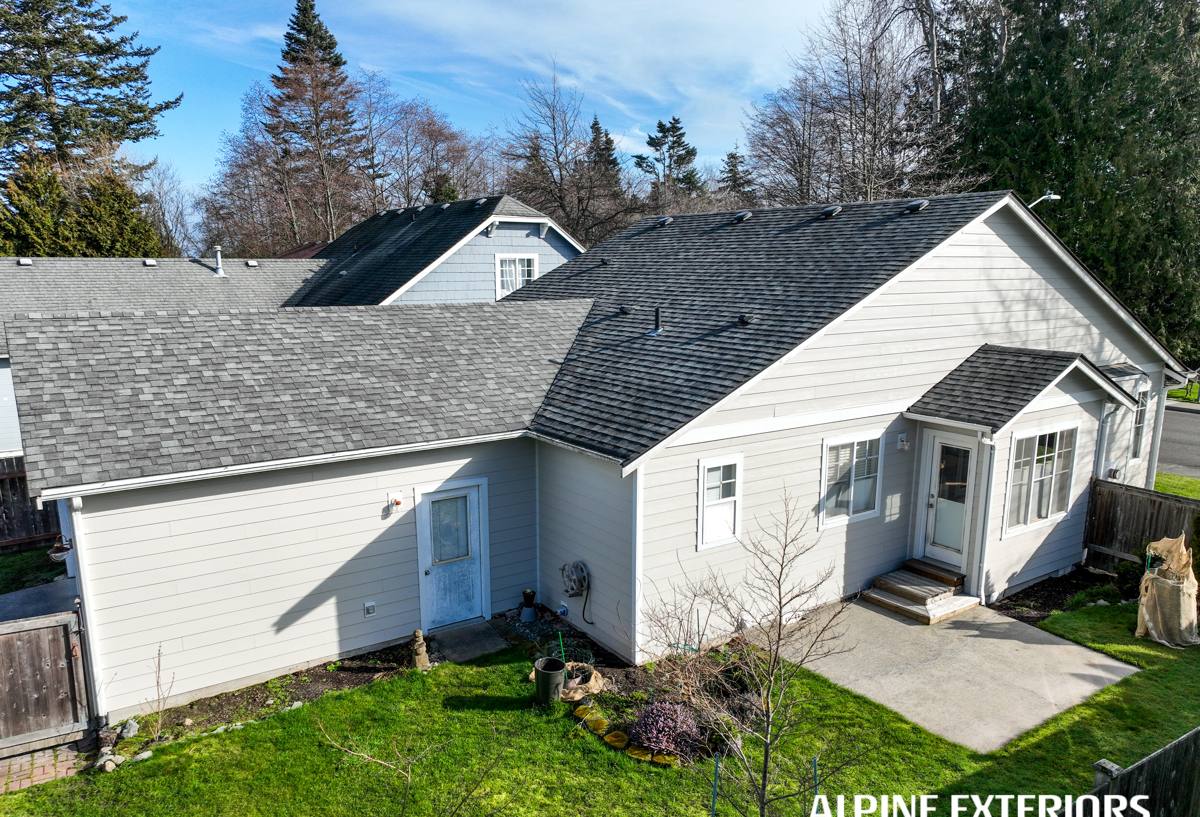
What the Local Climate Does to a House
Driving Rain and Wind-Driven Moisture
Storms coming off the water don't just drop rain straight down — wind pushes it sideways into wall assemblies, around window flashing, and up under lap siding edges that aren't properly sealed. Over years, that wind-driven rain finds every weak seam in a building envelope. Homes on more exposed lots around Sudden Valley, especially those with a clear line to prevailing weather, take this harder than sheltered lots tucked into the trees.
Moss, Mildew, and a Long Wet Season
Whatcom County doesn't get a short shoulder season between wet months — it gets a long one. Shaded north sides, tree-covered lots, and roof valleys that never fully dry out are where moss and mildew take hold first. On wood-based siding products, that sustained moisture is what eventually leads to soft spots, paint failure, and rot at the edges. It's less about any single storm and more about surfaces that rarely get a real chance to dry between rain events.
Salt Air and Metal Fatigue
Whatcom County's proximity to Puget Sound means salt-laden air is part of the regional picture, even inland toward the lake. Salt exposure accelerates corrosion on fasteners, flashing, and any exposed metal trim. It's a slower process than wind or rain damage, but it's cumulative, and it's one more reason we pay close attention to what fasteners and flashing metals go on a house, not just what siding panel goes over them.
Why We Only Install James Hardie Fiber Cement Siding
We get asked fairly often why we don't offer vinyl, LP SmartSide, Cemplank, Allura, or primed wood siding options. The honest answer is that we used to see all of these products fail in predictable ways in this exact climate, and we made a business decision to stop installing products we couldn't stand behind fully in Western Washington conditions.
Vinyl Siding
Vinyl is inexpensive and low-maintenance in the sense that it doesn't need repainting, but it's a thin plastic product that flexes, fades unevenly in UV exposure, and can crack in cold snaps. It also doesn't handle wind-driven rain well at seams and penetrations the way a rigid fiber cement panel does, and it has no real fire resistance.
Wood-Based and Engineered Wood Siding (LP SmartSide, Primed Spruce, Cedar)
These products look good going on and can perform well for a while, but wood and engineered-wood siding are organic materials in a climate that stays wet for months at a time. Cut edges, nail penetrations, and any gap in the factory coating become entry points for moisture. Once water gets behind the surface, these products can swell, delaminate, or rot — and by the time it's visible from the outside, the damage is often already done underneath.
Other Fiber Cement Brands (Cemplank, Allura)
These are legitimate fiber cement products and share the same basic chemistry as James Hardie. Our decision here is less about a defect in these brands and more about standardizing on one manufacturer with the specific climate-engineered product lines, factory finish warranty, and installation network we know inside and out. Consistency in one system lets our crew install to spec every time, rather than switching install details between brands.
Why James Hardie
James Hardie fiber cement is non-combustible, dimensionally stable in wet-dry cycling, and comes with a factory-applied ColorPlus finish that's engineered to hold color and resist the kind of moisture and UV exposure this region delivers. Hardie also builds region-specific HZ5 products formulated for cold, wet climates like ours, and backs the product with a strong transferable warranty — which matters if the home changes hands down the road.
How We Approach Siding Installation Locally
Correct installation matters more than the product label on the box. A great siding product installed poorly will still fail early; a good product installed to spec will outperform expectations. For every siding job in the Happy Valley and Sudden Valley area, our process includes:
- Inspecting and repairing the sheathing and weather barrier before any new siding goes on — covering rot over is never an option
- Correct rainscreen or drainage plane detailing so water that gets behind the siding has somewhere to go
- Manufacturer-specified fastener patterns, clearances, and caulking at joints and penetrations
- Proper flashing at windows, doors, and roof-to-wall transitions, which is where most water intrusion actually starts
- Corrosion-resistant fasteners and trim metals given the regional salt air exposure
Roofing, Windows, and Decks: The Rest of the Envelope
Siding doesn't work in isolation. A roof that's shedding granules or backing up water at the valleys will eventually undermine even a perfectly installed wall system. Windows with failed seals let moisture into framing around the rough opening. Decks, especially in shaded, moss-prone spots common around Sudden Valley, take direct weather exposure with no siding or overhang to protect them.
Roofing
We look at roof condition as part of any siding conversation, because a leaking roof-to-wall transition will ruin new siding from the top down. Moss buildup, granule loss, and soft decking are common findings on homes with heavy tree cover.
Windows
Old or poorly flashed windows are one of the most common sources of hidden water damage we find when we open up a wall. Replacing failing units with properly flashed, correctly installed new windows is often as important as the siding itself.
Decks
Decking exposed to sustained shade and moisture needs materials and fastening details that account for slow drying times. We build and repair decks with drainage, ledger flashing, and fastener choices suited to this climate, not a one-size-fits-all approach borrowed from drier regions.
Cost Factors Homeowners Should Understand
Every home and lot is different, so we don't quote prices without seeing the job, but the factors below are what actually move the number up or down.
| Factor | Why It Matters |
|---|---|
| Existing wall condition | Hidden rot or moisture damage found during tear-off adds repair scope before new siding goes on |
| Home size and wall complexity | More corners, gables, and trim details mean more labor and material cuts |
| Siding profile and color | Lap width, shingle-style panels, and factory ColorPlus finish options carry different material costs |
| Access and site conditions | Steep lots, tree cover, and limited staging area near the lake and hillside terrain around Sudden Valley can affect labor time |
| Window and trim scope | Replacing windows or trim alongside siding changes the total project scope |
Why Hiring Local Matters Here
A crew that works Whatcom County regularly understands how this specific climate behaves differently than siding jobs elsewhere in the state or country. We know which sides of a house take the worst of the wind-driven rain, how long moss-prone shade pockets stay wet, and what flashing details actually hold up here. That local knowledge shows up in the small decisions on a job — where to add extra flashing, how to detail a rainscreen gap, which fasteners to use — that don't show up on a spec sheet but make the difference in how a house performs ten years out.
A Simple Pre-Project Checklist
Before starting any siding, roofing, window, or deck project, we walk homeowners through the same basic checklist:
- Confirm current siding or decking material and its actual condition, not just its age
- Check for soft spots, moss buildup, or discoloration at wall bases, roof valleys, and shaded areas
- Inspect window and door flashing for gaps or failed sealant
- Review roof condition, especially at roof-to-wall transitions
- Discuss color and product line choices upfront, since ColorPlus finishes are factory-applied and not something we mix on site
If you're in Happy Valley, Sudden Valley, or anywhere else in Whatcom County and want a straight answer about what your home actually needs, we're glad to take a look. Reach out for a free, no-pressure estimate — there's a form right below this page.