 Sudden Valley Siding
 Exterior Work Built for This Part of Whatcom County
Homes in and around the Columbia area share a climate story with the rest of Sudden Valley and greater Whatcom County: long stretches of overcast, moisture-laden weather, driving rain that comes in sideways off the water more often than people expect, and a moss season that seems to start earlier and last longer every year. None of that is unique to one street or one subdivision, but it adds up differently depending on how a home is sited, how much tree cover shades the roofline, and which direction the prevailing wind and rain tend to hit. A siding, roofing, or window job that ignores those local realities tends to look fine for a year or two and then start showing problems right where the weather actually load-tests it.
We're a local exterior contractor, not a regional franchise dispatching whoever's available that week. When we come out to a home in the Columbia area, we're looking at the same conditions we deal with across our own service territory — established tree canopy holding moisture against north-facing walls, gutters and downspouts that have to handle real volume during fall and winter storms, and salt-tinged air working on fasteners and finishes over time. That local pattern recognition is worth more than it sounds like on paper.
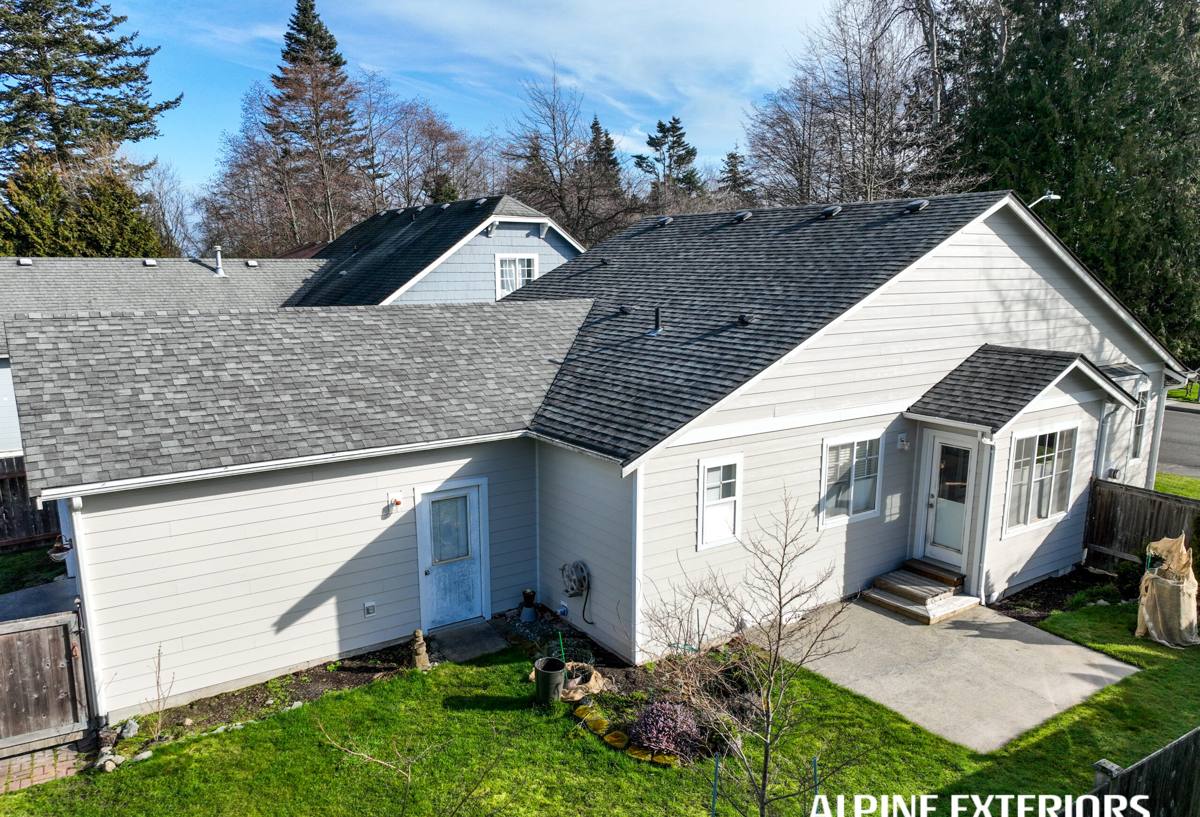
What the Climate Actually Does to Siding
Moisture Is the Long Game
Whatcom County doesn't get the kind of dramatic weather events that make headlines. It gets the slow, patient kind: months of damp air, drizzle that never quite stops, and humidity that keeps wood-based products from ever fully drying out between rain events. That's the environment where lesser siding materials struggle — not in one storm, but across years of never getting a real chance to dry.
Salt Air's Slow Corrosion
Proximity to Puget Sound waters means salt-laden air reaches further inland than most homeowners assume. Salt accelerates corrosion on fasteners, flashing, and any metal trim components, and it can degrade cheaper paint finishes faster than manufacturers' warranties account for. It's a slow process, which is exactly why it gets overlooked until a repaint or a repair reveals how much damage has already happened underneath.
Moss, Algae, and the North Wall Problem
Any wall that stays shaded and damp for long stretches — often the north or northeast side of a house, especially near tree lines — becomes a magnet for moss and algae growth. On some siding materials that's a cosmetic nuisance you can pressure-wash away. On others, sustained moss growth traps moisture against the surface and starts a slower structural problem that's much harder to reverse.
Why We Only Install James Hardie Fiber Cement
We made a deliberate decision as a company to install only James Hardie fiber cement siding — not vinyl, not LP SmartSide, not Cemplank, not Allura, not primed spruce or cedar. That's not a marketing position; it's a standard we hold because of what we've seen this climate do to alternatives over time.
- Vinyl can warp or crack in cold snaps and tends to show its seams and fade unevenly under years of damp, low-light conditions.
- Wood-based and engineered wood products (including LP SmartSide) rely on treated wood substrates that need consistent maintenance and drying time to perform — something this climate doesn't reliably provide.
- Cedar and primed spruce are genuinely attractive materials, but real wood in a marine, high-moisture climate requires an ongoing maintenance commitment most homeowners underestimate when they choose it.
- Other fiber cement brands (Cemplank, Allura) are legitimate products, but we standardized on one manufacturer so we can guarantee installation training, product consistency, and warranty support without gaps.
James Hardie fiber cement is non-combustible, dimensionally stable in swings between wet and dry, and factory-finished with ColorPlus technology — a baked-on finish that resists the fading and chipping that comes from field-applied paint. Hardie's HZ5 product line is engineered specifically for the kind of freeze-thaw and moisture-cycling conditions this region sees. None of that makes it maintenance-free, but it shifts the maintenance burden from "constant vigilance" to "periodic check-ins," which is a realistic ask for most homeowners.
Comparing Siding Materials for This Climate
| Material | Moisture Resistance | Maintenance Needs | Typical Lifespan Here |
|---|---|---|---|
| James Hardie fiber cement | Excellent | Periodic cleaning, minimal upkeep | 30+ years with proper install |
| Vinyl | Fair | Low, but prone to warping/fading | 15-25 years, variable |
| Cedar / primed spruce | Poor to fair without upkeep | High — regular sealing/painting | 10-20 years depending on care |
| LP SmartSide / engineered wood | Fair, substrate-dependent | Moderate — moisture monitoring needed | 20-30 years with diligent maintenance |
These are general patterns, not guarantees — actual performance depends heavily on installation quality, site conditions, and upkeep. But the pattern holds across the homes we see: materials that tolerate sustained moisture without a maintenance routine attached to them hold up better here, year after year.
More Than Siding: A Full Exterior Approach
Siding doesn't work in isolation. A house is a system, and in a climate like this, the roof, the windows, and even the decking all interact with the same moisture and weather patterns that siding has to manage.
Roofing
A roof that's shedding water properly and free of moss buildup protects everything below it, including the siding. We look at roof condition as part of any siding conversation, because a leaking or moss-choked roofline will undermine even a perfectly installed wall system.
Windows
Window flashing and trim details are where a lot of moisture problems actually originate. When we replace siding around existing windows, we pay close attention to how those transitions are flashed and sealed — it's often overlooked work that matters more than the siding material itself.
Decks
Decks take the most direct exposure to rain and standing moisture of any exterior surface on a property. We build and repair decks with the same climate-first mindset — proper drainage, appropriate fastener selection, and materials chosen for how they'll actually hold up outdoors here, not just how they look on day one.
What Correct Installation Actually Involves
Fiber cement siding is only as good as its installation. A product engineered for this climate can still fail prematurely if it's installed without attention to the details that matter here specifically.
- Proper starter strip and flashing at the foundation line to prevent wicking moisture up into the siding
- Correct fastener spacing and type — matched to the substrate and rated for coastal-adjacent, high-moisture exposure
- Adequate rainscreen or drainage plane behind the siding so incidental moisture can escape rather than sit trapped
- Careful caulking and sealing at window, door, and trim transitions, following manufacturer specifications rather than shortcuts
- Proper overlap and clearance at horizontal joints to shed water instead of channeling it inward
These aren't optional extras — they're the difference between a siding job that earns its 30-year expectations and one that needs premature repair. It's also why we're careful about crew training and don't treat fiber cement installation as interchangeable with any other siding material.
Why a Local Crew Matters
Homes in the Columbia area and across Sudden Valley face a specific combination of tree cover, moisture exposure, and salt-air influence that isn't identical to conditions two hours away. A crew that works this region regularly develops a feel for which walls need extra attention, how local drainage patterns behave during heavy rain events, and where moss tends to establish itself first. That's knowledge that shows up in the quality of flashing details and the sequencing of a job — the parts of the work that aren't visible once it's finished but determine how well it holds up over the next few decades.
We're also accountable in a way a drive-in crew from out of the area isn't. If something needs attention after the job is done, we're not far away, and our reputation in this community depends on the work still looking and performing well years down the road, not just on the day we finish.
What to Look for When Choosing a Contractor
Whether you go with us or someone else, a few questions are worth asking any exterior contractor before you sign anything:
- Are they licensed and insured in Washington State, and can they provide proof without hesitation?
- Do they have manufacturer certification or documented training for the specific siding product they're proposing?
- Will they put the scope of work, materials, and warranty terms in writing before starting?
- Can they explain why they recommend a particular product for your home's specific exposure, rather than giving a generic pitch?
- Do they have a plan for moisture management details — flashing, drainage, fastening — or do they just talk about the siding itself?
A contractor who can answer those questions clearly, without deflecting, is usually one who understands the climate they're building for.
If you're weighing a siding, roofing, window, or deck project for your home in the Columbia area, we're happy to take a look and walk through what we're seeing and why. There's no pressure and no cost to get an honest assessment — just fill out the form below to schedule a free estimate.