 Sudden Valley Siding
 Siding Built for Cordata's Corner of Whatcom County
Cordata sits in north Bellingham, close enough to the water that homes here deal with the same weather pattern that defines exterior work across Whatcom County: long stretches of driving rain, a marine air layer that never fully clears, and a moss season that can run eight or nine months out of the year. It's not dramatic weather. There's no hail damage to point to, no hurricane stories. It's steady, patient moisture that finds every weak seam in a home's exterior and works on it year after year. That's the kind of climate that punishes cheap materials and sloppy installation slowly, instead of all at once — which is exactly why so many siding problems in this area don't show up until they're already serious.
We're based in Sudden Valley and have worked exteriors throughout this part of the county long enough to know that Cordata's mix of housing stock — everything from older single-story homes to newer developments built out over the last two decades — each carries its own siding history, and its own set of things worth checking before winter sets in again.
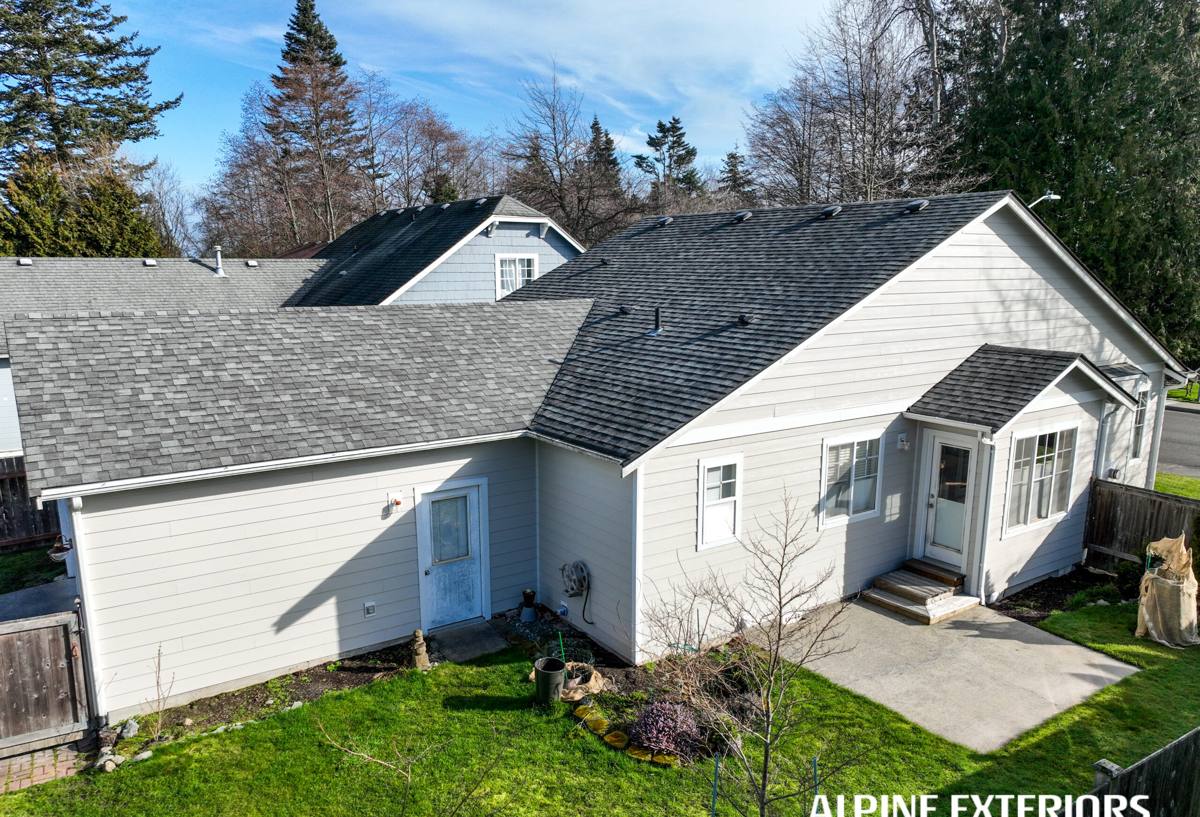
What This Climate Actually Does to Siding
Moisture That Doesn't Let Up
Whatcom County doesn't get the heaviest rainfall totals in the state, but it gets rain often, in a fine, sustained drizzle that sits against exterior walls for hours or days at a time. Combined with cool temperatures that slow drying, this means siding materials spend a large share of the year damp. Products that absorb moisture — or that swell and shrink with it — are working against the local climate every single day, not just during storms.
Moss, Algae, and the North-Facing Wall Problem
Shaded, north-facing walls in Cordata are almost guaranteed to grow moss and algae if the siding surface holds moisture at all. This isn't a cosmetic nuisance — moss holds water against the wall surface, and over years that constant dampness accelerates rot in wood-based products and stresses paint and caulking on anything not built to shed water cleanly.
Marine Air and Slow Corrosion
Being close to Bellingham Bay means homes in this area get a steady dose of salt-tinged air, even without direct waterfront exposure. That air is harder on fasteners, trim metal, and any siding product with exposed seams or joints that aren't sealed correctly. It's a slow effect, but it's a real one — and it's part of why we pay close attention to flashing and fastener choices on every job here, not just the siding panel itself.
Why We Only Install James Hardie Fiber Cement
We get asked fairly often why we don't offer vinyl, LP SmartSide, primed wood, or cedar as options. The honest answer is that after years of doing exterior work in this climate, we stopped installing products that hold up well in easier weather but start showing problems here within a decade. James Hardie fiber cement is the one product line we've found that consistently handles sustained moisture, moss exposure, and marine air without the maintenance creep those other materials eventually demand.
What Fiber Cement Gets Right for This Area
- It's non-combustible — a real advantage as wildfire smoke seasons have become more common even on the wet side of the state.
- It doesn't absorb water the way wood-based products do, so it doesn't swell, cup, or invite rot at the core.
- The factory-applied ColorPlus finish is baked on under controlled conditions, which holds color and resists the chalking and fading that field-applied paint struggles with in a wet climate.
- Hardie's HZ5 product line is engineered specifically for climates with freeze-thaw cycles and high moisture exposure — which describes Whatcom County well.
We're not going to pretend fiber cement is maintenance-free or that it's the cheapest option on day one. It costs more upfront than vinyl, and it's heavier and less forgiving to install than LP SmartSide. But we've made installing it correctly our entire specialty, and for a house that's going to sit through thirty more Whatcom County winters, that trade-off makes sense to us — and to most homeowners once they see the comparison laid out.
Siding Options Compared for This Climate
| Material | Moisture Behavior | Maintenance Over Time | Why We Do or Don't Install It |
|---|---|---|---|
| James Hardie Fiber Cement | Does not absorb water; dimensionally stable | Occasional caulk/paint touch-up on trim; panel itself is very low-maintenance | Our standard install — built for exactly this climate |
| Vinyl Siding | Sheds water on the surface but seams and J-channels can trap moisture behind panels | Low upfront, but can crack in cold snaps and fade in UV/salt air over time | Not installed — moisture trapped behind panels is a real problem in this climate |
| LP SmartSide | Engineered wood; treated to resist moisture but still wood-based at the core | Needs field-applied paint maintained on schedule; edges are the failure point if caulking lapses | Not installed — installation sensitivity is high and the margin for error is small |
| Cedar / Primed Wood | Natural material; absorbs and releases moisture readily | Regular refinishing required; highest long-term maintenance | Not installed — moss and moisture in this area shorten its service life |
How a Cordata Siding Project Actually Runs
The Inspection Comes First
Before we talk about new siding, we look at what's underneath the old material. In a climate like this, hidden rot at window trim, corner boards, and lower wall sections is common enough that we treat it as something to check for, not something to assume isn't there. Any soft sheathing or damaged framing gets addressed before a single new panel goes up — covering rot with new siding just hides the problem for a few more years.
Water Management Details
Correct fiber cement installation is as much about flashing, house wrap, and fastener placement as it is about the siding itself. Given how much moisture this area sees, we're careful about butt joint placement, kick-out flashing at roof-wall intersections, and proper clearance at grade — the details that determine whether a Hardie install lasts twenty-plus years or starts showing problems in five.
Local Crew, Local Accountability
Being based nearby in Sudden Valley means we're not driving in from out of the area for a one-time job. If a question comes up after the work is done, we're a short drive away, and we're going to see how our own work has held up through the next few winters — that's part of why we don't cut corners on the water management details that don't show up until later.
Roofing, Windows, and Decks — The Rest of the Exterior
Siding rarely fails in isolation. A roof that's shedding water poorly, windows with failed seals, or a deck ledger that's trapping moisture against the house all put stress on the siding around them. We handle roofing, window replacement, and deck work alongside siding for that reason — it's easier to solve moisture problems at the whole-exterior level than to patch one piece and hope the rest holds.
A Practical Checklist for Cordata Homeowners
- Check north- and west-facing walls for moss buildup — persistent green growth usually means moisture is being held against the surface longer than it should be.
- Look at caulk lines around windows and trim; cracked or missing caulk is an early entry point for water.
- Watch for soft spots near the bottom of walls, especially close to grade or downspouts, which is where rot tends to start first.
- Note any siding panels that look warped, bowed, or discolored in patches — a sign of moisture getting into the material itself.
- Have gutters and downspouts checked at the same time as siding — poor drainage is one of the most common causes of premature siding failure in this area.
What Replacement Typically Involves
Every home is different, and the right scope depends on what we find once the old siding comes off — that's why we don't quote sight unseen. In general terms, a full siding replacement includes removing old material, repairing or replacing any damaged sheathing, installing a proper weather-resistive barrier, and installing James Hardie panels or lap siding with correct flashing and fastening throughout. Trim, corner treatments, and color selection from Hardie's ColorPlus palette get finalized with the homeowner before installation starts.
Get a Straight Answer on Your Home
If you're noticing moss, soft spots, or aging siding on a Cordata home, it's worth getting an honest look before those small issues turn into structural repairs. We'll walk the exterior with you, explain what we're seeing, and give you a clear picture of what it would take to fix it right — no pressure, no inflated scope. Reach out for a free estimate using the form below.