 Sudden Valley Siding
 We Get Asked About Vinyl a Lot
If you've priced out siding in Sudden Valley or anywhere else around Lake Whatcom, vinyl has probably come up. It's the most common siding material sold in this country, it's inexpensive, and plenty of contractors will hang it for you without a second thought. We're not one of them. This page explains why, honestly and without the scare tactics some contractors lean on to sell you something else.
We install James Hardie fiber cement siding exclusively. That's not a marketing gimmick — it's a standard we set after years of tearing old siding off homes around Whatcom County and seeing firsthand what holds up against our climate and what doesn't. Vinyl isn't a bad product. It's just not the product we're willing to put our name behind here.
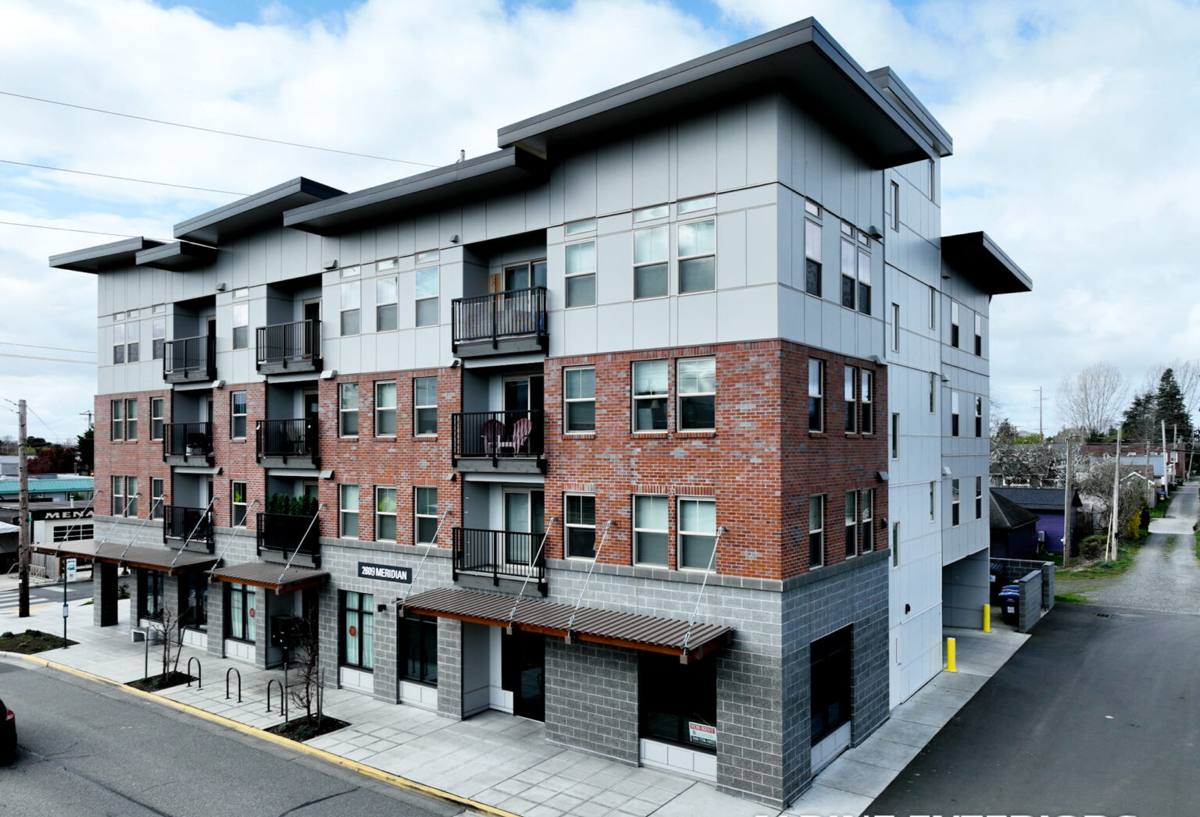
What Vinyl Siding Actually Gets Right
Fair is fair. Vinyl siding has real strengths, and we're not going to pretend otherwise:
- It's the least expensive siding option on the market by a wide margin.
- It never needs painting, and the color runs through the material rather than sitting on top of it.
- It's lightweight, which makes it fast to install and easy on labor costs.
- Modern vinyl profiles have gotten better-looking than the flat, obviously-plastic panels of decades past.
For a lot of homes in a lot of climates, that combination makes sense. Our objection isn't to vinyl as a product in the abstract — it's to what happens when that product spends thirty winters on a house sitting a few miles off Lake Whatcom, exposed to the specific combination of moisture, wind, and salt-tinged marine air that defines our corner of Washington.
How Vinyl Siding Is Actually Built and Installed
Vinyl siding is a thin, extruded PVC panel that hangs loosely on the wall — it isn't fastened tight like fiber cement or wood. It has to hang loose because vinyl expands and contracts with temperature swings far more than other siding materials. Nails go through slotted holes, not fixed points, so the panel can move without buckling. That's smart engineering for what it is, but it also means vinyl is, by design, a "curtain wall" — a decorative rain screen, not a structural or fully sealed barrier. Everything behind it — the house wrap, the flashing, the seams around windows and doors — is doing the real work of keeping water out. Vinyl is just riding on top of it.
That distinction matters more here than in a lot of the country, and it's the thread that runs through most of the reasons below.
Why Whatcom County's Climate Is Hard on Vinyl Specifically
Salt Air and Marine Moisture
Sudden Valley sits along Lake Whatcom, and the broader Whatcom County region sits in a marine-influenced climate with salt-laden air moving in off the Sound and the Strait. Salt air accelerates the breakdown of fasteners and speeds up UV degradation of plastics. Vinyl siding is a plastic product, and over a couple of decades that combination shows up as brittleness, hairline cracking at the nailing flanges, and panels that snap rather than flex when something hits them — a fallen branch, a ladder, a piece of wind-blown debris.
Driving Rain
We get sideways rain here, not just straight-down rain. Wind-driven rain pushes water horizontally into every seam, corner, and utility penetration on a wall. Because vinyl panels overlap loosely rather than seal tight, driving rain is exactly the condition vinyl handles worst. Water gets behind the panels regularly — that's expected by the manufacturers, which is why the drainage plane behind the siding is supposed to carry it back out. The problem is that vinyl gives you no way to see it happening.
A Long Moss and Mildew Season
Whatcom County's mild, wet stretch runs long — moss and algae don't need much encouragement here, and they'll colonize any siding material that stays damp for extended periods. Vinyl's tight-lapped panels create shaded, slow-drying pockets at the overlaps, especially on north-facing walls that don't get direct sun. Homeowners end up power-washing or scrubbing vinyl to keep the green tinge off, which is its own risk — aggressive washing can drive water behind panels or crack aging, brittle vinyl.
The Moisture Problem Underneath
This is the core issue, and it's worth explaining plainly rather than glossing over. Vinyl siding is not watertight, and it was never designed to be. It's a rain screen that assumes water will get behind it occasionally, and that a correctly installed water-resistive barrier and flashing system behind the panels will manage that moisture and let it drain or evaporate.
That system works fine when every flashing detail, every window, and every penetration was installed exactly to spec, and when nobody has caulked over vents or trim in a way that traps moisture instead of releasing it. In practice, on decades-old homes, that's a lot to count on. When it doesn't work — when a seam opens, a J-channel wasn't lapped correctly, or caulk fails at a window — the vinyl panel hides the problem. You don't see staining or bubbling paint the way you would with a painted surface. Water can sit behind vinyl siding for years, rotting sheathing and framing, before anyone notices anything from the outside. By the time it shows up as a soft spot or a sagging panel, the repair is often far more than a siding job.
Fading, Chalking, and Long-Term Appearance
Vinyl's color is mixed into the material, which is genuinely a strength — there's no paint layer to peel. But UV exposure over years still breaks down the pigment and the surface of the plastic itself, a process called chalking, where the surface turns powdery and dull. Darker vinyl colors fade faster and can also warp in direct summer sun, since dark colors absorb more heat than the vinyl formulation was designed to handle. On the west and south-facing exposures common on Lake Whatcom lots, that heat-and-UV combination shows up as visible waviness in the panels well before the material has "failed" in any structural sense — it just stops looking straight.
Wind, Impact, and Fastening
Because vinyl hangs loose rather than fastening tight, it's vulnerable to wind uplift in a way rigid materials aren't. Whatcom County gets its share of windstorms off the water, and older or improperly installed vinyl siding is a common casualty — panels pop off their nailing strips or crack at the corners. Vinyl is also more susceptible to impact damage than fiber cement: a thrown rock, hail, or a ladder set against the wall can crack or punch through a panel that fiber cement would shrug off. Replacing a single cracked panel sounds simple, but vinyl colors fade over time, so a patch panel bought years later rarely matches the surrounding wall exactly.
Cost Over the Life of the Siding
The upfront price gap between vinyl and fiber cement is real, and we won't pretend it isn't. Where the comparison changes is over a 20-30 year ownership window, once you factor in what each material actually costs you in maintenance, repair, and replacement cycles.
| Factor | Vinyl Siding | James Hardie Fiber Cement |
|---|---|---|
| Upfront installed cost | Lowest of common siding options | Moderate to higher, reflects material and labor |
| Painting required | Never, but color fades/chalks over time | Never with ColorPlus factory finish |
| Typical service life here | 15-25 years before visible wind, sun, and moisture wear | 30-50+ years when installed to spec |
| Moisture behind siding | Hidden until damage is advanced | Rigid panel, tighter fastening, easier to inspect seams |
| Impact resistance | Cracks or punctures under moderate force | Resists impact from debris, hail, ladders |
| Fire performance | Combustible plastic | Non-combustible material |
| Warranty structure | Prorated after early years in most cases | Non-prorated limited warranty, transferable |
None of this means vinyl is a scam or that every vinyl-sided home is a disaster waiting to happen. Plenty of vinyl homes do fine for years, particularly with mild exposure and careful original installation. It means that when we weigh the trade-offs against what our climate does to a wall over decades, the math consistently favors a rigid, engineered material over a loose plastic panel — especially on a lake-adjacent property catching wind, moisture, and shade from multiple directions.
Why We Standardized on James Hardie Instead
We made a decision a while back to stop installing multiple siding lines and focus on one product we trust completely: James Hardie fiber cement. A few reasons that decision holds up:
- Non-combustible material — fiber cement doesn't feed a fire the way vinyl or wood-based products can.
- Climate-engineered HZ product lines — Hardie manufactures different formulations for different climate zones, matched to moisture and freeze-thaw exposure rather than a one-size-fits-all panel.
- ColorPlus factory finish — a baked-on finish applied under controlled conditions, which holds color and resists fading far better than field-applied paint or vinyl's mixed-in pigment.
- Rigid, tight-fastened installation — Hardie planks fasten flat and firm against the wall rather than hanging loose, which means fewer hidden gaps for wind-driven rain to exploit.
- A strong, transferable warranty — one that isn't prorated down to nothing after the first decade.
We're not installing Hardie because it's the only decent siding on the market. We're installing it because, house after house around Whatcom County, it's the material that's still doing its job cleanly at year twenty and year thirty.
What to Check Before You Choose a Siding Contractor
Whatever material you land on, the questions below apply. Use this list with any contractor you're evaluating — including us:
- Ask them to name a siding material they won't install and explain why — a contractor with no opinion probably hasn't looked closely.
- Ask what house wrap or weather-resistive barrier they use behind the siding, not just the siding brand itself.
- Ask how they detail flashing around windows, doors, and roof-to-wall intersections — this is where most water problems actually start.
- Ask for the manufacturer's written warranty terms, not just a verbal summary, and whether it's prorated.
- Ask how they handle existing sheathing if it's found to be damaged during tear-off, and get that answer in writing before work starts.
Talk to Us Before You Decide
If you're weighing vinyl against fiber cement for a home in Sudden Valley or anywhere around Whatcom County, we're glad to walk your specific house with you — its sun exposure, its wind exposure, its moss history — and give you a straight answer, even if that answer points you somewhere other than a full re-side. Reach out for a free, no-pressure estimate and we'll tell you what we'd actually do if it were our own house.