 Sudden Valley Siding
 Exterior Contracting for Barkley Homeowners
Barkley sits close enough to Bellingham Bay and the broader Whatcom County coastline that homes here deal with a specific mix of weather stress: salt-tinged air, wind-driven rain that comes in sideways off the water, and a wet season that stretches long enough to grow moss on anything that stays damp for more than a few days. Sudden Valley Siding Company works throughout this part of Whatcom County, and Barkley is one of the areas where we see, consistently, how much the local climate shortens the lifespan of the wrong exterior materials.
We handle the full exterior envelope — siding, roofing, windows, and decks — because these systems don't work in isolation. A roof that's shedding water properly but dumping it against poorly flashed siding just moves the moisture problem instead of solving it. A new deck built against old, failing siding will need the wall behind it opened up again in a few years. We look at the whole house, not just the piece a homeowner called about.
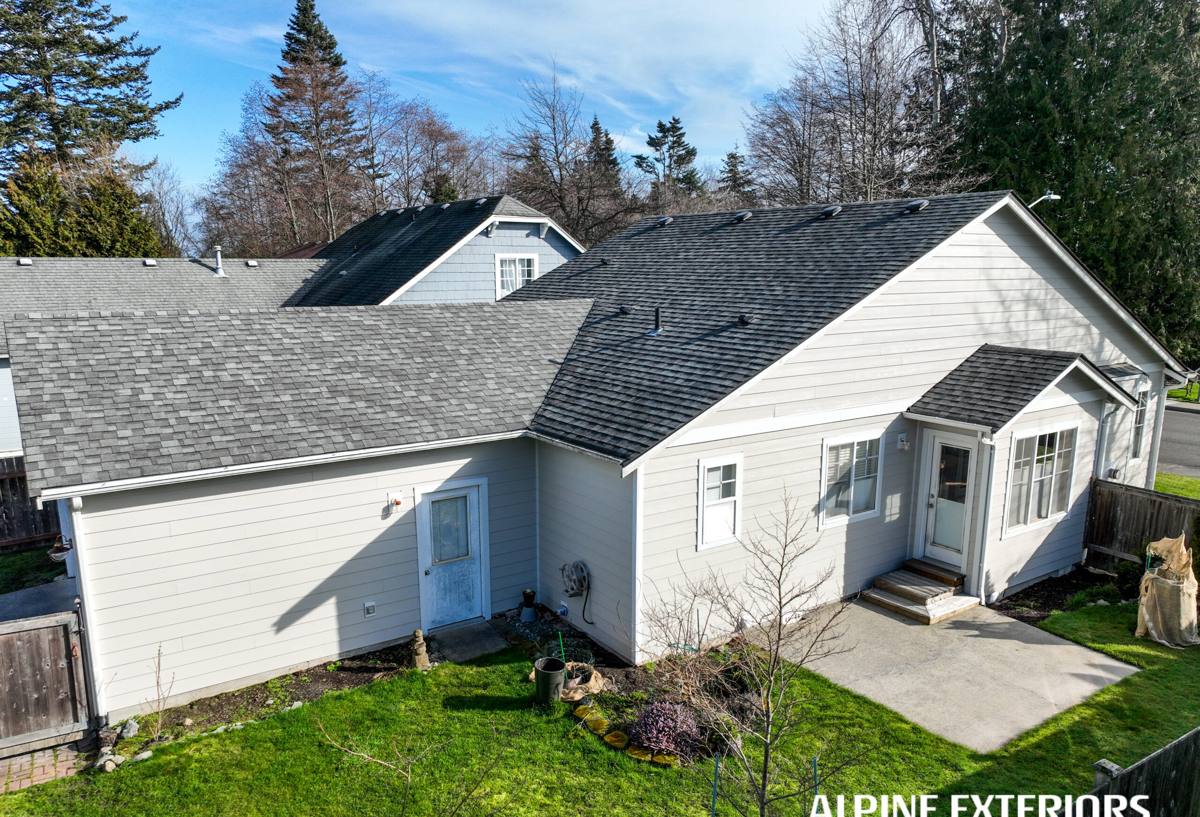
What Whatcom County Weather Does to Siding, Trim, and Roofing
Three things drive most of the exterior wear we see in the Barkley area:
Salt Air
Proximity to Bellingham Bay means a low but steady level of airborne salt. It doesn't corrode siding the way it does metal fasteners and hardware, but it does accelerate the breakdown of paint films and cheaper coatings, and it contributes to the general dirt and grime load that building exteriors have to shed. Materials with a factory-applied, engineered finish hold up to this better than field-painted surfaces, which start losing their protective gloss and adhesion years sooner near the water.
Driving Rain
Whatcom County doesn't just get rain — it gets rain pushed sideways by wind coming off the Sound and the Strait. That matters because siding isn't just a weather-resistant surface, it's part of a drainage system. Water that gets behind the cladding needs somewhere to go. Products that absorb water into their core, or that rely on caulk and paint film alone to stay sealed, are working against this climate instead of with it. Correct installation — proper flashing, house wrap integration, and drainage gaps — matters more here than in drier parts of the country.
A Long Moss Season
Shade, moisture, and mild temperatures are exactly what moss wants, and this region gives it all three for most of the year. Moss and algae growth on siding and roofing isn't just cosmetic — it holds moisture against the surface longer than it would otherwise sit there, which accelerates rot in wood-based products and speeds up granule loss on roofing. Surfaces that resist moisture absorption in the first place, and finishes that resist algae growth, need far less scrubbing and pressure washing over the life of the house.
Why We Install Only James Hardie Fiber Cement Siding
We made a decision as a company to install James Hardie fiber cement exclusively — not vinyl, not LP SmartSide, not Cemplank or Allura, not primed spruce or cedar. That's not a marketing position, it's a maintenance-and-longevity call based on what actually holds up in this exact climate.
Fiber cement is non-combustible and dimensionally stable, meaning it doesn't expand and contract with moisture and temperature the way wood-based or engineered-wood products do. Hardie's ColorPlus factory finish is baked on under controlled conditions rather than applied on-site, which gives it better adhesion and UV resistance than field paint — a real advantage against the salt air and long wet season this area sees. Hardie also engineers specific product lines (HZ5, for example) for climates with more moisture exposure, which is directly relevant to a location like Barkley.
None of this means every other product is a bad product in every application. It means that, for the conditions we install into every day, fiber cement with a factory finish is the material we're willing to stand behind with our own labor and a transferable warranty. We're glad to talk through the trade-offs of other materials honestly if you're comparing options — we just won't install the ones we don't think hold up here.
Comparing Siding Materials for a Coastal Whatcom County Climate
| Factor | Vinyl Siding | Engineered Wood (e.g. LP SmartSide) | James Hardie Fiber Cement |
|---|---|---|---|
| Moisture behavior | Doesn't absorb water, but can warp and gap, letting water behind it | Wood-based core is moisture-sensitive; relies on coatings and sealed edges | Doesn't absorb moisture into a wood fiber core; engineered for wet climates |
| Finish durability | Color molded in, but fades and chalks over time; can't be easily repainted to match | Field or factory paint, needs recoating on a cycle | Factory-baked ColorPlus finish, long recoat interval |
| Fire performance | Combustible, can melt/deform near heat sources | Combustible | Non-combustible |
| Typical lifespan with normal care | 20–30 years | Variable, sensitive to installation and moisture exposure | 30+ years, often with a strong transferable warranty |
| Appearance options | Limited texture, can look plasticky up close | Wood-grain texture, wide color range | Wood-grain or smooth texture, wide ColorPlus palette, holds detail well |
This table reflects general product characteristics, not a specific installed project — actual performance always depends heavily on installation quality, which is why workmanship matters as much as the product choice itself.
How We Approach a Siding Project in Barkley
Every job starts with a walk-around, not a sales pitch. We look at what's actually happening on the exterior — where paint or caulk is failing, where trim boards are showing rot, where moss and algae are concentrated (which usually tells us where moisture is lingering longest), and how the current siding is handling water at windows, corners, and roof-to-wall transitions.
From there:
- We check the condition of the water-resistive barrier and sheathing underneath the existing siding where it's accessible, since covering a moisture problem instead of fixing it just delays a bigger repair.
- We plan flashing and drainage details at every penetration and transition — this is where most siding failures actually start, not in the field of the wall.
- We install James Hardie panels or lap siding to manufacturer specification, including proper fastening, gapping, and clearance from grade, decks, and roof lines.
- We coordinate trim, window flashing, and any roofing or deck work touching the same wall sections so the whole assembly sheds water correctly, not just the new siding.
Roofing, Windows, and Decks — The Rest of the Envelope
Siding rarely fails on its own. In this climate, roofing, windows, and decks are the other three systems that determine how well a house handles a wet Whatcom County winter.
Roofing
A roof that's losing granules, has lifted shingles, or is holding moss against the surface is sending extra water down onto the siding and trim below it. We look at roof condition as part of any siding estimate, because ignoring it just means redoing the wall sooner.
Windows
Window flashing integration is one of the most common failure points we find when we open up old siding. Even a well-installed window can leak into the wall cavity if the flashing wasn't properly lapped with the water-resistive barrier. When we replace siding around existing windows, we check and correct this detail rather than working around it.
Decks
Decks attached to the house create a ledger connection that has to be flashed correctly, or water gets driven straight into the wall framing behind it — a very common source of hidden rot in older homes. We build and repair decks with that connection in mind, not just the visible deck surface.
Signs a Barkley-Area Home Needs Exterior Attention
- Paint that's peeling, bubbling, or chalking heavily, especially on south- and west-facing walls
- Persistent moss or dark streaking on siding or roofing that comes back quickly after cleaning
- Soft or spongy spots on trim boards, especially near the ground, window sills, or deck ledgers
- Visible gaps, warping, or buckling in siding panels or lap boards
- Caulk that's cracked or pulling away at seams, corners, and window trim
- Musty smell or visible staining on interior walls near exterior corners — often a sign moisture has already gotten behind the cladding
- Roof valleys or gutters that stay full of moss and debris longer than they should
Why a Local Crew Matters
A lot of exterior problems in this region come down to details that only make sense if you understand the local weather pattern — which direction the wind-driven rain usually comes from, how long moss-prone shaded areas stay wet, how salt air affects fastener and finish choices near the water. A crew that works Whatcom County regularly builds that judgment into every estimate and every install, rather than applying a generic approach that might be fine somewhere drier.
Being local also means we're around for warranty service and follow-up, not just the install day. Fiber cement siding is a long-term investment; it's worth having a contractor who's still local a decade from now if a repair or a warranty question comes up.
Caring for James Hardie Siding After Installation
One of the practical advantages of switching to fiber cement in this climate is how little upkeep it demands compared to painted wood or aging vinyl. A rinse with a garden hose once or twice a year is usually enough to keep salt residue and light grime from building up. Moss and algae, when they do appear, generally wipe or rinse off the factory finish more easily than they come off a porous, absorbent surface. We're glad to walk through basic care specifics for your product line and color when we install.
Get a Free, No-Pressure Estimate
If you're weighing a siding, roofing, window, or deck project on a Barkley-area home, we're happy to come take a look, tell you honestly what we see, and put together an estimate with no pressure attached. Whether you're dealing with visible damage now or just planning ahead of it, an on-site walk-through is the best way to know where you actually stand.