 Sudden Valley Siding
 Exterior Work in South Hill: A Different Set of Problems Than Most Contractors Admit
South Hill sits in the kind of Pacific Northwest microclimate that quietly wears down a house. It's not dramatic weather — no hailstorms, no hurricanes — but the combination of salt-tinged marine air, driving rain that comes in sideways off the water more often than straight down, and a moss season that can stretch from October into May adds up to real, measurable wear on exterior surfaces. Homes here don't fail because of one bad storm. They fail slowly, from years of moisture doing what moisture does when a house isn't built and finished to handle it.
We work on homes throughout the greater Whatcom County area, including the South Hill community, and the pattern is consistent: siding, trim, and roofing that were installed without accounting for this specific climate tend to show problems years before they should. Siding that's rated for a drier region, or installed with gaps in the moisture management details, ends up trapping water instead of shedding it. That's the core problem we're solving on every job.
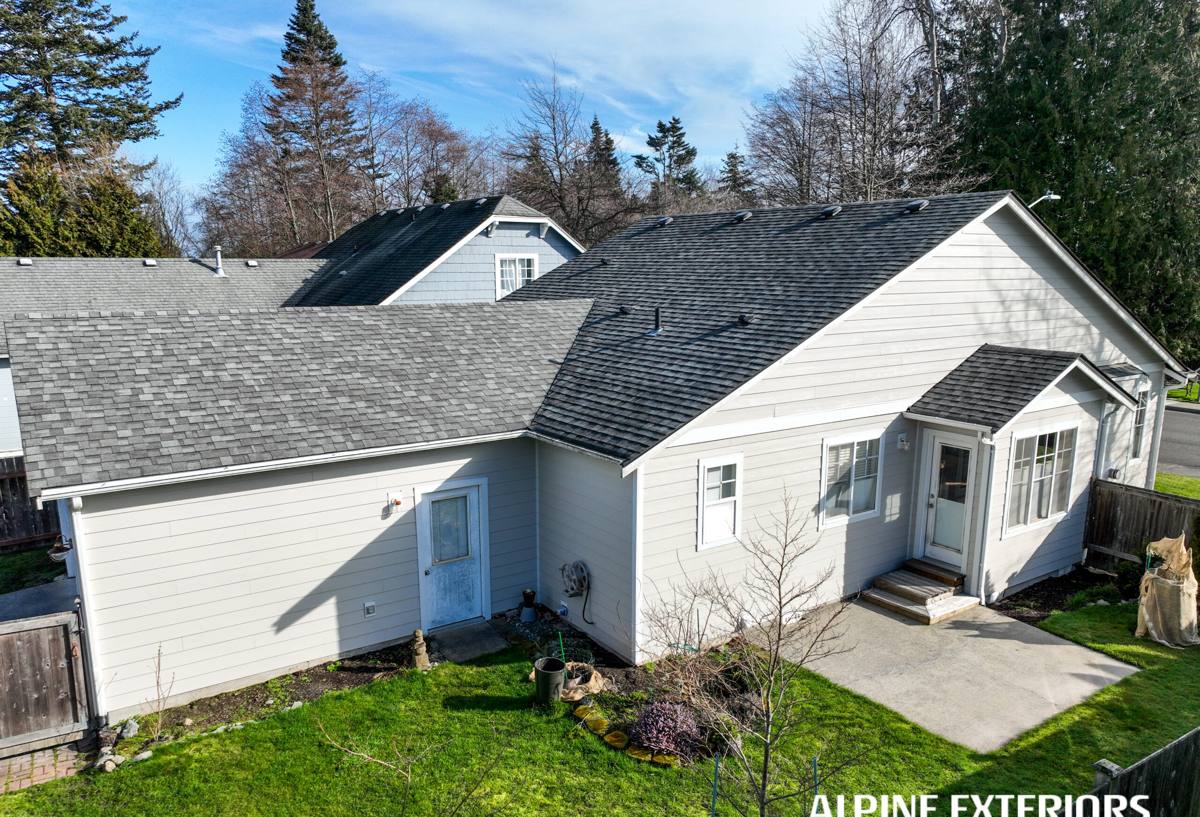
What Salt Air, Driving Rain, and Moss Actually Do to a House
Salt Air
Even homes not directly on the waterfront pick up airborne salt and moisture that accelerates corrosion on fasteners, flashing, and metal trim, and slowly degrades paint films and caulk joints. Over time, this shows up as chalking finishes, rust streaks below nail heads, and caulk that cracks and pulls away years earlier than the manufacturer's warranty would suggest.
Driving Rain
Wind-driven rain doesn't just fall on a wall — it gets pushed into laps, seams, and butt joints under pressure. Siding systems that rely on face-sealed caulk joints instead of proper drainage planes and back-priming are especially vulnerable. Once water gets behind the cladding, it doesn't dry out quickly in a climate where the next rain is rarely more than a few days away.
The Long Moss Season
Shaded north- and east-facing walls, roof valleys, and anything under tree cover stay damp for months at a stretch. Moss and algae don't just look bad — they hold moisture against the surface, which is exactly the condition that causes rot in wood-based products and accelerates finish failure on anything not engineered to resist it.
Why We Install Only James Hardie Fiber Cement Siding
We made a deliberate decision as a company to install one siding product: James Hardie fiber cement. We don't offer vinyl, LP SmartSide, Cemplank, Allura, primed spruce, or cedar, and we want homeowners to understand why, rather than just accept it on faith.
Each of those alternatives has legitimate strengths — vinyl is inexpensive and low-maintenance in mild climates, engineered wood siding like LP SmartSide has a warmer look and lower material cost than fiber cement, and cedar has genuine curb appeal that some homeowners specifically want. We're not going to pretend those products are without merit. But in a climate defined by sustained moisture exposure, each of them carries a trade-off we're not willing to build a reputation on:
- Vinyl can warp, buckle, or crack in temperature swings, and it relies almost entirely on lap-and-seal installation rather than a rigid, paintable surface — meaning any gap becomes a water path with no good way to seal it permanently.
- LP SmartSide and other engineered wood products are wood-based (strand board with a resin binder), which means their long-term performance depends heavily on caulking, painting, and edge-sealing being done exactly right and maintained on schedule. Miss a maintenance cycle in a wet climate and moisture can find the wood fiber core.
- Cemplank and Allura are also fiber cement, and structurally comparable to Hardie in many respects — but we standardized on one manufacturer's system, warranty, and factory-finish process so every job we do is consistent and backed the same way.
- Primed spruce and cedar are solid wood. They look excellent when new, but solid wood siding in a marine climate with a long wet season requires the most disciplined maintenance schedule of any option — repainting, caulk inspection, and moisture checks on a strict cycle — to avoid cupping, checking, and rot.
James Hardie fiber cement is non-combustible, dimensionally stable across our seasonal temperature and moisture swings, and comes from the factory with a baked-on ColorPlus finish rather than a field-applied paint job that starts degrading the day it's sprayed. That combination is why it's the only product we put our name behind.
Siding Materials Compared
| Material | Moisture Resistance in Wet Climates | Maintenance Cycle | Typical Finish Longevity |
|---|---|---|---|
| James Hardie Fiber Cement | Excellent — engineered for moisture exposure, doesn't rot or swell | Low — occasional wash, no repainting for many years | 15+ years factory finish, product warranty in decades |
| Vinyl | Fair — sheds water but seams and laps are vulnerable | Low, but limited repair options if damaged | Fades and becomes brittle over time; not repaintable easily |
| LP SmartSide / Engineered Wood | Moderate — depends on sealed edges and maintained finish | Moderate to high — finish and caulk need regular attention | 5-10 years between repaints typical in wet regions |
| Cedar / Primed Spruce | Moderate — natural material, moisture-sensitive if finish fails | High — strict repainting and sealing schedule | 3-7 years between repaints in marine climates |
James Hardie Product Lines and What They're Built For
Hardie makes several product lines engineered for different climate conditions, and part of doing this job right is matching the right HZ (HardieZone) formulation and profile to the specific exposure a South Hill home actually faces.
- HardiePlank lap siding — the most common choice, available in several exposure widths and textures (smooth or cedar-grain), used for the primary field of the house.
- HardieShingle — for homes where a shingle or shake look is desired without the maintenance burden of real wood shakes.
- HardiePanel — vertical panel siding, often used for accent sections, gables, or a more modern architectural look.
- HardieTrim — matching trim boards so the whole exterior envelope, not just the field siding, gets the same moisture and finish performance.
All of these are available with the ColorPlus factory finish system, which bakes on color and a clear coat under controlled conditions — a meaningfully different process than brushing or spraying paint on site, and the reason Hardie backs the finish with its own warranty separate from the substrate warranty.
What Correct Installation Actually Involves
Fiber cement siding is only as good as the installation behind it. A house can have the right product and still fail early if the details underneath are wrong. On every job we handle, that means:
- A properly detailed water-resistive barrier and drainage plane behind the siding, not just a single layer of house wrap
- Correct flashing at every window, door, deck ledger, and roof-to-wall intersection — the places water actually gets in
- Manufacturer-specified fastener patterns, clearances, and gaps, so panels can expand and contract without stressing joints
- Caulking only where Hardie's installation instructions call for it, not as a substitute for proper flashing
- Ground clearance and grade separation to keep siding out of standing moisture at the base of the wall
These details matter everywhere, but they matter more in a climate where a mistake doesn't get a chance to dry out for months at a time.
Beyond Siding: Roofing, Windows, and Decks
Siding doesn't work in isolation — it's one part of a whole exterior envelope, and we handle the other pieces that interact with it directly. Roofing failures send water down behind siding at the roofline. Window flashing done wrong leaks into wall cavities regardless of how good the siding is. Deck ledger connections are one of the most common sources of hidden rot on Pacific Northwest homes. Because we do siding, roofing, windows, and decks under one crew, we can look at a South Hill home's exterior as one connected system rather than a series of unrelated projects, which matters when the whole point is keeping water out.
What to Look for When Hiring an Exterior Contractor Locally
Whether you work with us or someone else, a few things are worth checking before you sign a contract for siding, roofing, window, or deck work in this region:
- Confirm the contractor is licensed and insured in Washington, and ask to see current documentation
- Ask specifically how they handle flashing and moisture management, not just what siding brand they install
- Get the manufacturer warranty terms in writing, separate from the contractor's workmanship warranty
- Ask how long they've been working specifically in this climate, not just in the trade generally
- Be cautious of bids that are dramatically lower than others — moisture management details are usually the first thing cut to hit a lower price
Cost Factors Homeowners Should Understand
| Factor | Why It Matters Locally |
|---|---|
| Home size and wall complexity | More corners, gables, and dormers mean more flashing detail work, which drives labor time |
| Existing siding removal and substrate condition | Hidden moisture damage found during tear-off is common in older homes and affects final scope |
| Product line and trim selection | HardiePlank vs. HardieShingle vs. panel systems, plus trim profile, affect material cost |
| Access and site conditions | Slopes, tree cover, and tight lot lines around South Hill properties can affect equipment and labor logistics |
| Scope bundling | Combining siding with roofing, window, or deck work in one project can reduce overlapping labor costs versus separate projects |
Every South Hill home carries its own combination of sun exposure, tree cover, and wind direction, which is exactly why a walk-through by someone who works in this climate regularly is more useful than a generic estimate. If you'd like a free, no-pressure look at your home's siding, roofing, windows, or decking, our team is happy to come take a look and give you an honest read on what your exterior actually needs.