 Sudden Valley Siding
 Why Acme Homes Face Different Siding Demands
Acme sits inside the broader Sudden Valley community in Whatcom County, tucked against forested slopes with plenty of tree cover and proximity to open water. That combination sounds pleasant on a summer afternoon, but it creates a tougher-than-average environment for exterior building materials. Homes here deal with more standing shade, more moisture that lingers after a storm passes, and more airborne salt than homes thirty miles inland. Siding that performs fine in a dry, open subdivision can struggle in a setting like this, and it shows up as premature caulk failure, soft trim boards, or streaked, moss-stained walls within a few years of installation.
None of this means Acme is a bad place to own a home — it's a beautiful area for exactly the reasons that make siding decisions harder. It just means the exterior envelope has to be chosen and installed with the local conditions in mind, not a generic national spec sheet.
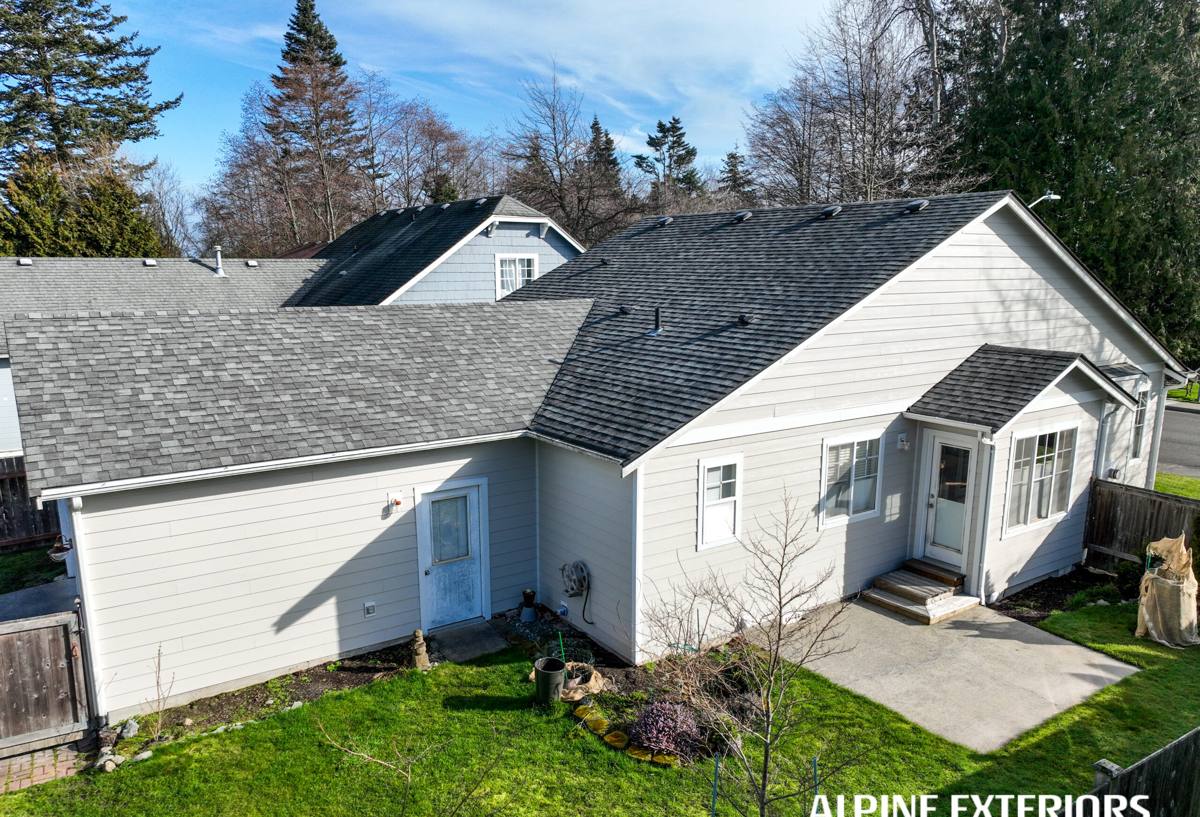
The Climate Factor: Salt Air, Driving Rain, and a Long Moss Season
Three conditions do most of the damage to siding in this part of Whatcom County:
- Salt air from nearby marine influence accelerates corrosion of fasteners, trim flashing, and any metal components on the exterior, and it degrades lower-quality paint finishes faster than manufacturers' lab tests usually predict.
- Driving rain off the water pushes moisture sideways into seams, laps, and butt joints — areas that stay dry in calmer climates get soaked here, especially on west- and south-facing walls that catch the weather head-on.
- A long moss season comes from the combination of shade, humidity, and mild temperatures that lets moss and algae establish on north-facing walls and anywhere tree canopy blocks direct sun for much of the day. Once moss gets a foothold, it holds moisture against the siding surface for weeks at a time.
Individually, each of these is manageable. Together, over a Pacific Northwest winter that can stretch from October through April, they're exactly the conditions that expose weak points in lower-grade siding products — swelling at cut edges, paint that chalks and fades unevenly, or fastener heads that bleed rust down the face of a wall.
Why We Only Install James Hardie Fiber Cement
What the Product Gets Right
James Hardie fiber cement is manufactured from cement, sand, and cellulose fiber, which makes it dimensionally stable and non-combustible. It doesn't absorb water the way wood-based products can, and it doesn't expand and contract with humidity swings the way vinyl does in temperature extremes. Hardie's ColorPlus factory-applied finish is baked on under controlled conditions rather than field-painted, which gives it more consistent coverage and better fade resistance than most job-site paint jobs. For a climate with this much rain and salt exposure, that combination of moisture resistance, dimensional stability, and factory-cured finish is a meaningful advantage.
Why We Don't Install Everything Else
We get asked regularly about LP SmartSide, vinyl, Cemplank, Allura, and primed wood species like spruce or cedar. Each has legitimate uses, and none of them are "bad" products in a vacuum. But we made a decision as a company to install James Hardie exclusively, for reasons specific to this climate:
- Engineered wood products (like LP SmartSide) use wood strand substrates that, however well-treated, remain more moisture-sensitive at cut edges and fastener penetrations than fiber cement — a real concern in a region with as much sustained rain as Whatcom County sees.
- Vinyl siding is low-maintenance and inexpensive, but it can warp in temperature swings, fade unevenly over time, and it isn't paintable if a color update is ever wanted, which limits long-term flexibility for a home that stays in a family for decades.
- Other fiber cement brands (Cemplank, Allura) compete directly with Hardie on paper, but we standardized on one manufacturer so our crews build deep, repeatable expertise in one installation system, one set of manufacturer specs, and one warranty structure — rather than splitting attention across several similar-but-different products.
- Primed spruce or cedar can look beautiful and is a legitimate traditional choice, but it demands a maintenance commitment — regular repainting and vigilant caulk upkeep — that most homeowners underestimate until moss and moisture find the first missed spot.
Standardizing on one product line also means our crews are never guessing at a manufacturer's install spec. That consistency matters more here than in a milder climate, because installation shortcuts show up faster when the weather is working against you.
How a Siding Project Works for an Acme Home
Inspection and Assessment
Every project starts with a walk-around of the home, checking for the specific failure patterns that show up in this area: soft spots near ground contact, moss buildup on shaded walls, rusted or failing trim, and any water staining around window and door openings that suggests flashing problems underneath the current siding. We also look at roof and gutter conditions, since poor drainage is often the real root cause of siding damage that looks like a product failure.
Installation Standards
James Hardie has specific installation requirements around clearances, fastener spacing, and joint treatment, and following them to the letter is what makes the manufacturer's warranty enforceable. In a high-moisture area like Sudden Valley, we pay particular attention to:
- Proper ground clearance and clearance from decks, patios, and roof lines to keep the bottom edge of the siding from sitting in standing moisture
- Correct flashing and weather barrier integration behind the siding, not just at the surface
- Manufacturer-specified fastener type and spacing to resist the corrosive effect of salt-laden air over time
- Factory-primed or ColorPlus-finished cut edges sealed per spec, since an exposed cut edge is the single most common point of moisture entry on any fiber cement job
Timeline
Most single-family siding replacements in this area run one to two weeks depending on home size, the amount of trim and detail work involved, and weather windows — we schedule around Whatcom County's rain patterns rather than fight through them, which protects both the crew's work quality and the building's substrate during the install.
Beyond Siding: Roofing, Windows, and Decks
Siding is only one piece of a home's exterior envelope, and treating it in isolation from the roof, windows, and decks often means solving one problem while ignoring the ones next to it. We handle all four because they're mechanically connected:
- Roofing failures are a leading cause of hidden water damage behind siding — a compromised roof edge or valley can be pushing moisture into a wall assembly long before it shows up on the exterior siding surface.
- Windows are a common leak point where old flashing or failed sealant lets water track down into the wall cavity, which then blisters or rots the siding and trim around the opening from the inside out.
- Decks that attach directly to the house need proper ledger flashing where they meet the siding — a common source of rot in homes throughout this region, especially where a deck sits in constant shade.
When we're on-site for a siding project, we look at all of these connection points, because a new fiber cement installation over a leaking window or an unflashed deck ledger just hides the problem for a while instead of fixing it.
Cost Factors for a Siding Project
Every home is different, but the factors that move a siding estimate up or down are consistent. Broad ranges depend heavily on home size, existing wall condition, and how much trim and detail work is involved.
| Factor | Why It Matters |
|---|---|
| Home size and wall area | More square footage means more material and labor hours, the largest single driver of total cost |
| Existing substrate condition | Rot or moisture damage found underneath old siding needs repair before new siding goes on, which adds time and material |
| Trim and architectural detail | Homes with more corners, gables, and window trim take longer to fit and finish correctly |
| Siding profile and accessories | Lap width, shake-style panels, and trim board choices affect material cost and install time |
| Access and site conditions | Sloped lots, tree cover, and limited equipment access — common around Sudden Valley — can add labor time |
| Tear-off and disposal | Removing and hauling away old siding is a real cost that's easy to overlook when comparing estimates |
We walk through each of these factors during the estimate so there are no surprises once work begins.
A Maintenance Checklist for Acme Homeowners
Even the best siding benefits from a little seasonal attention, especially in a climate this wet. A few habits go a long way toward protecting the investment:
- Rinse shaded, moss-prone walls once or twice a year with a garden hose and soft brush rather than letting moss establish and spread
- Keep gutters clear so overflow doesn't run down and saturate wall sections repeatedly during heavy rain
- Trim back tree branches and shrubs that keep siding shaded and damp longer than necessary
- Check caulking around windows, doors, and trim joints annually and have any cracked or missing sealant redone
- Walk the foundation line after major storms looking for splashback staining, which signals grading or drainage issues worth addressing early
- Have a professional inspection every few years, especially after the home passes the ten-year mark
Why a Local Crew Matters
A crew that works throughout Whatcom County and understands Sudden Valley's specific microclimate isn't guessing about clearances, flashing details, or how much moss pressure a north-facing wall will see — they've already solved those problems on homes nearby. That local knowledge shows up in small decisions during installation that a national warranty document can't capture: where extra flashing attention pays off, which walls need a closer look at ventilation, and how local weather patterns should shape the project schedule. It also means a straightforward relationship if a question ever comes up after the work is done, rather than a call center in another state.
If you're weighing siding options for a home in Acme or elsewhere in Sudden Valley, we're glad to walk the property with you and talk through what we're seeing — no pressure, no obligation. A free estimate is a good way to get a clear, honest picture of what your home actually needs.