 Sudden Valley Siding
 Exterior Work on Yew Street: A Local Crew That Knows This Corner of Sudden Valley
Yew Street sits within the Sudden Valley community on the south shore of Lake Whatcom, one of the larger residential neighborhoods in Whatcom County and one with its own private road network, homeowners association, and a housing stock that spans decades of construction. Homes here sit among mature trees, on hilly, varied terrain, and close enough to the lake that moisture is a constant factor in how an exterior holds up over time. We handle siding, roofing, windows, and decks for homes throughout Sudden Valley, including Yew Street, and the standards we build to come from what we've actually seen fail and hold up on properties like these — not from a sales brochure.
On siding, we install James Hardie fiber cement exclusively. That's a professional standard, not a brand partnership, and it's rooted in years of tear-offs and service calls on homes dealing with the same salt air, driving rain, and long moss season that Yew Street homes face every year.
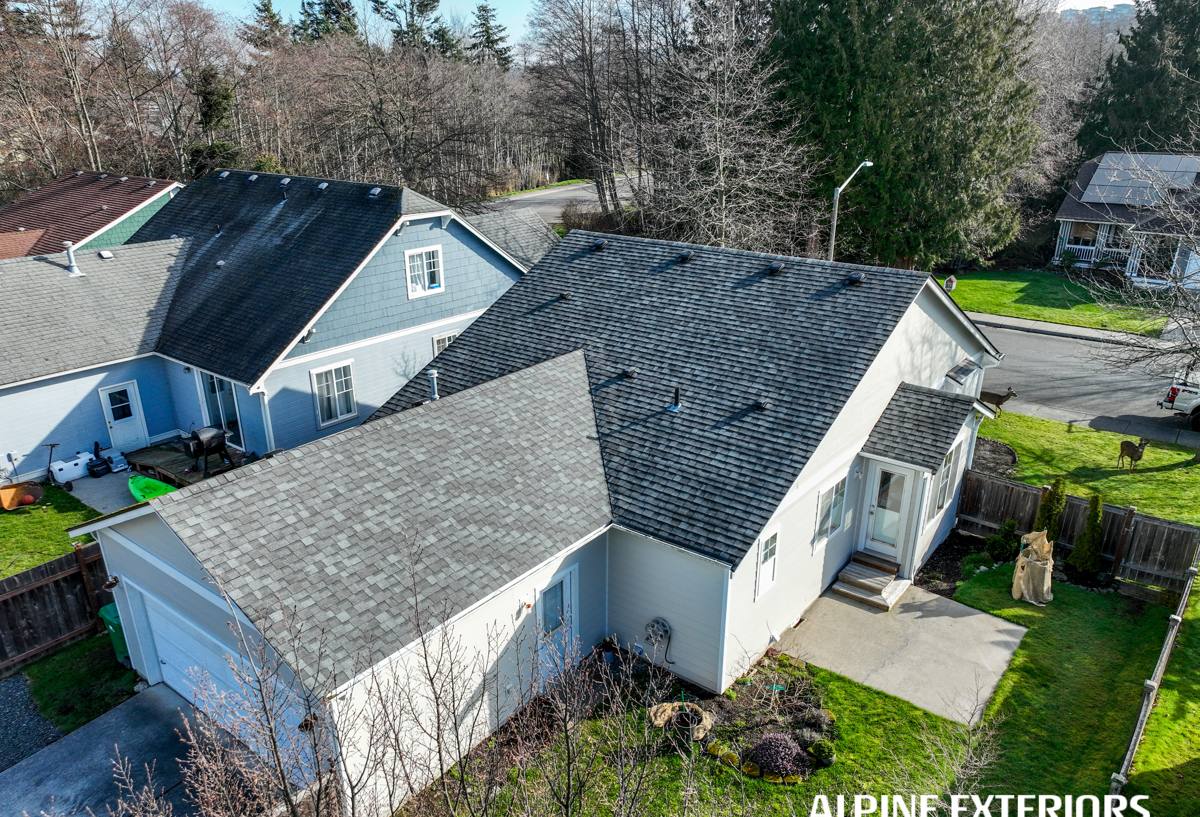
What the Local Climate Does to a Yew Street Home
Salt Air Moving Inland
Whatcom County sits close enough to Puget Sound and Bellingham Bay that airborne salt reaches inland residential areas, including communities around Lake Whatcom, and it accelerates corrosion on fasteners, flashing, and any hardware that isn't rated for a marine-influenced environment. Homeowners rarely think about salt exposure unless they live directly on the water, but it's a slow, cumulative factor that shows up first in corroding nails, streaking metal flashing, and premature wear on lower-grade hardware — long before it's visible anywhere else on the house.
Driving Rain and Wind-Loaded Walls
Whatcom County gets a long, wet season, and Sudden Valley's hilly terrain means that wind-driven rain doesn't hit every wall of a house evenly. Depending on how a lot is oriented relative to the surrounding ridgelines and tree cover, one elevation might take the brunt of a storm while another stays comparatively dry. That variability matters for how flashing, drainage planes, and siding transitions get detailed — a one-size-fits-all approach to water management doesn't hold up on a property where exposure changes from wall to wall.
A Long Moss and Mildew Season
Shade from mature trees, persistent humidity off the lake, and mild year-round temperatures add up to a moss and mildew season that runs far longer here than it would in a drier climate. Roofs are usually the first place it shows, particularly on north-facing slopes and any area where debris collects, but siding and trim pick it up too, especially on walls that don't get much direct sun. Once moss and mildew establish themselves, they hold moisture directly against building materials, which is exactly the condition that shortens the life of anything moisture-sensitive.
Why We Only Install James Hardie Siding
We used to offer a wider range of siding products. We narrowed that down after seeing, repeatedly, which materials actually held up under salt exposure, driving rain, and a long wet season, and which ones quietly developed problems a few years in.
- Non-combustible core: Fiber cement doesn't feed a fire the way wood-based siding can, which matters for safety and, in many cases, for insurance underwriting.
- Factory-applied ColorPlus finish: The color is baked on in a controlled factory process rather than applied on-site, and it holds up against fading, chalking, and moisture intrusion far longer than field-applied paint — a real advantage on walls that stay damp for extended stretches.
- Climate-engineered HZ product lines: Hardie's HZ5 formulation is built for regions with heavy moisture exposure and freeze-thaw cycling, which lines up well with the conditions around Lake Whatcom and Sudden Valley.
- Dimensional stability: Fiber cement doesn't swell, cup, or warp the way engineered wood products can after repeated wetting and drying cycles.
- Strong transferable warranty: Hardie backs its products with a substantial warranty, provided the installation follows their published specifications.
We don't install LP SmartSide, vinyl siding, Cemplank, Allura, primed spruce, or cedar. Each of those products has a legitimate place in the broader market, and plenty of homeowners are satisfied with them elsewhere. But we made a professional decision to stand fully behind one system rather than offer a lower-cost option that shifts long-term maintenance risk back onto the homeowner — particularly in a climate that doesn't give moisture-sensitive materials much of a break.
What Correct Installation Actually Requires
Fiber cement only performs the way it's engineered to when it's installed to Hardie's published specifications — correct fastener type and spacing, proper clearance from grade and roof lines, drainage detailing behind the panels where the wall assembly calls for it, and properly sealed and lapped joints. On a Yew Street property exposed to salt air and driving rain, skipping any of those details shows up faster than it would in a milder, drier climate.
Roofing for Homes Near Lake Whatcom
Roofing takes the most direct hit from this climate. Between tree debris, extended damp periods under shade, moss that establishes itself quickly on shaded or low-slope sections, and the slow corrosive effect of salt-laden air on exposed metal, a Sudden Valley roof needs underlayment, flashing, and ventilation detailing that account for all of it at once. We treat correctly lapped flashing at every penetration and roof-to-wall transition, along with ventilation that actually lets the roof deck dry between wet spells, as baseline requirements rather than optional upgrades.
- Moss returning quickly in valleys or on shaded slopes after cleaning
- Granule loss visible in gutters or downspouts
- Corroding or discolored flashing and fasteners
- Debris buildup in valleys and against roof-to-wall transitions
- Interior ceiling staining near exterior walls after a heavy or extended rain
Windows That Hold Up to Wind-Driven Rain
Window performance on a property like this comes down to flashing and installation quality as much as the window unit itself. A well-made window with poor flashing integration will still leak once the surrounding wall assembly takes on wind-driven rain repeatedly, which is a real risk on exposed Sudden Valley elevations. We pay close attention to how new window flashing integrates with the surrounding wall and siding, since that transition is one of the most common places water finds its way into a wall system in this climate.
Decks Built for Salt Air and a Long Wet Season
Decks around Sudden Valley deal with a specific combination of stresses: salt-influenced air that speeds up corrosion in fasteners and structural connectors, shade that slows drying, and falling leaves and needles that trap moisture against the deck surface. That combination accelerates rot in lower-grade decking materials and shortens the service life of hardware that isn't rated for sustained moisture and mild corrosion exposure. We use fasteners and connectors suited to this environment, and we walk homeowners through the real maintenance differences between wood and composite decking for their specific lot rather than defaulting to a generic recommendation.
Comparing Common Exterior Siding Materials in This Climate
| Material | Moisture / Salt Air Behavior | Maintenance Here | Typical Longevity |
|---|---|---|---|
| James Hardie fiber cement | Dimensionally stable; factory finish resists moisture and salt-driven fading | Low; periodic washing to control moss and mildew | 30+ years with correct install |
| Vinyl siding | Can trap moisture behind panels; seams and fasteners vulnerable to corrosion over time | Low upfront, but panels can warp or discolor under sustained damp exposure | Variable; shorter on exposed or shaded elevations |
| LP SmartSide / engineered wood | Wood-based core sensitive at cut edges and joints; moisture exposure accelerates breakdown | Moderate to high; edge sealing and caulking need regular attention | Depends heavily on installation quality and upkeep |
| Cedar / primed wood | Absorbs and releases moisture readily; salt air adds to weathering | High; needs regular refinishing and inspection | Shorter without consistent, ongoing maintenance |
Why a Local Crew Matters on Yew Street
Sudden Valley is a private community with its own road network and homeowners association, and a crew that regularly works there already understands the practical side of that — how to coordinate access, and how exposure and terrain shift from lot to lot even within the same neighborhood. That familiarity shows up in the decisions that actually affect longevity: which walls need extra drainage detailing because of their orientation to prevailing storms, how flashing gets lapped on a steep roof plane, and which hardware grade holds up best given the area's salt air and long wet season. Those are the details that separate an exterior system that lasts one hard winter from one that lasts several decades.
A Simple Checklist Before Hiring for Exterior Work on Yew Street
- Ask what siding material they install and why, and whether they stand behind it with a written warranty
- Confirm current Washington contractor licensing and active liability insurance
- Ask how they handle salt air exposure and corrosion resistance in their fastener and hardware choices
- Ask about experience working within Sudden Valley's HOA and private-road access requirements
- Get a clear, written scope of work before signing any contract
Our Process on Yew Street and Throughout Sudden Valley
We start with an on-site assessment of the existing exterior — siding, roofing, windows, or decking, depending on what's being addressed — paying close attention to how salt air, sun exposure, and drainage patterns have affected different elevations of the home, since those factors vary more from wall to wall on a hilly, tree-covered lot than on a typical open property. From there, we put together a clear, written scope and timeline before any work begins. Throughout the project, proper flashing, drainage, and corrosion-resistant hardware are treated as standard practice for this climate, not optional add-ons.
If you're weighing options for siding, roofing, windows, or a deck on a Yew Street property, we're happy to walk the exterior with you and give an honest read on what it actually needs. Reach out below for a free, no-pressure estimate.