 Sudden Valley Siding
 Siding in Deming: Built for Driving Rain, River Humidity, and a Long Moss Season
Deming sits along the Nooksack River corridor on the Mount Baker Highway, in the forested foothill country east of Bellingham where Whatcom County starts climbing toward the Cascades. It's a different setting than the flatter, more open parts of the county — homes here tend to sit closer to tree cover, closer to the river's moisture, and closer to the weather patterns that build up as marine air moves inland and meets rising terrain. That combination of driving rain, persistent shade, and a moss season that can run most of the year adds up to real, sustained stress on a home's exterior, and siding that isn't matched to those conditions tends to show it early.
We install James Hardie fiber cement siding exclusively in Deming and across the rest of our Whatcom County service area, alongside roofing, windows, and deck work. That's not a brand preference pulled off a supplier list. It's a standard we settled on after years of seeing which materials actually hold up in this kind of climate and which ones quietly fail behind a coat of paint.
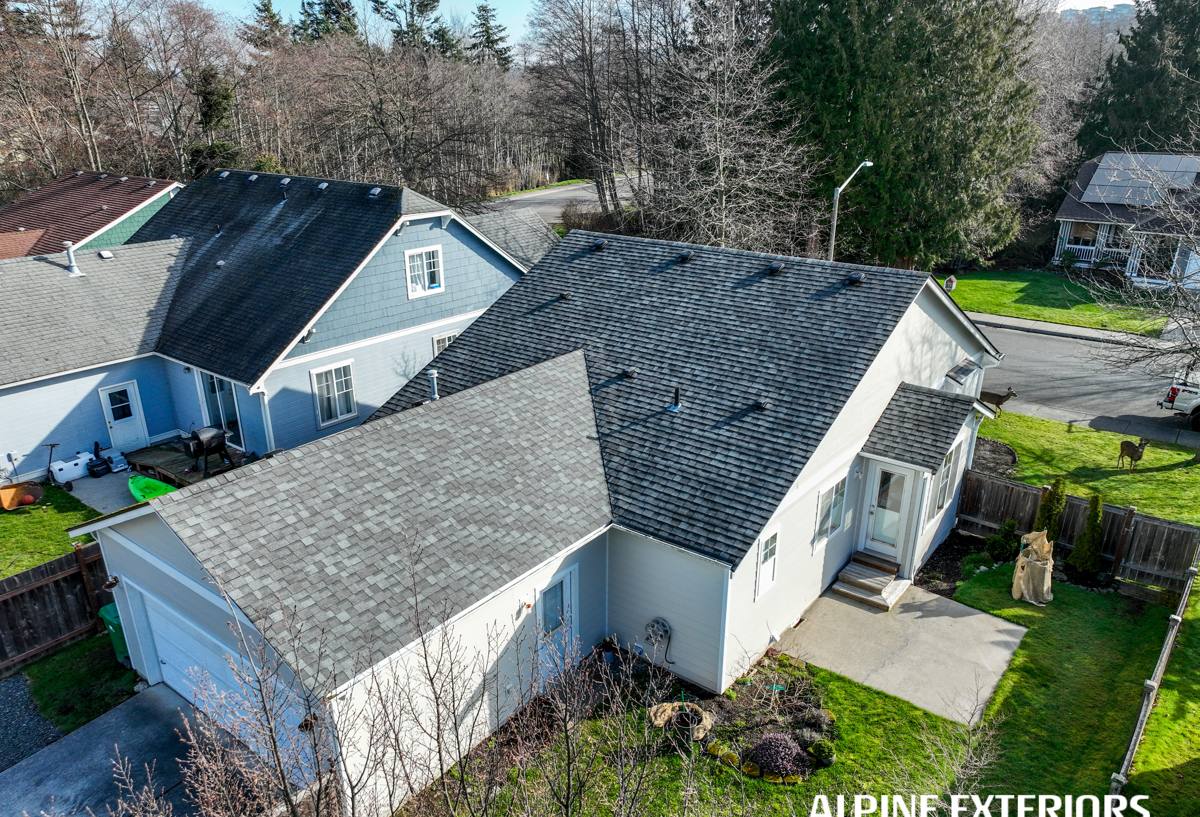
What Deming's Climate Does to a House
Driving Rain Off the Foothills
Rain in this part of Whatcom County rarely falls straight down. As weather systems move up the Nooksack valley toward higher ground, wind tends to push rain sideways into wall assemblies, trim, and lap joints — a more demanding load on a siding system than a simple annual rainfall total suggests. Siding and flashing details that would perform fine in a calmer, drier climate can still fail here specifically because water finds its way in from the side rather than straight down from above.
Tree Cover and Persistent Shade
Deming's setting along the river and at the edge of forested terrain means many homes sit under significant tree canopy, with wall faces that get limited direct sun for long stretches of the year. Shaded siding and trim stay damp longer after every rain, and materials that depend on sun exposure to dry out between storms don't get much of a chance here. That's exactly the kind of environment where moisture-sensitive siding starts breaking down years before it should.
A Long Moss and Mildew Season
Shade, humidity from the river corridor, and mild temperatures are the same recipe that produces moss and mildew growth across the wetter parts of Whatcom County, and Deming gets a full dose of it. It usually shows up first on north-facing walls and roof slopes, or anywhere debris collects and moisture lingers. Any siding material that's even slightly porous, or that holds water against the substrate, becomes a growth surface over time — often well before it's visible from the road.
Marine Air Reaches Inland Too
Even this far up the valley, the marine air that defines Whatcom County's weather still moves through — it just arrives mixed with more moisture off the terrain and river bottom by the time it reaches homes here. The practical result is the same underlying concern as closer to the coast: fasteners, flashing, and lower-grade finishes are under more sustained moisture load than a drier inland climate would produce, and materials and hardware need to be chosen with that in mind.
Why We Only Install James Hardie Siding
We used to offer a wider range of siding products. We stopped, and the reason was practical rather than promotional: what we kept finding on tear-offs and service calls in exactly this kind of shaded, wet, tree-covered environment pushed us toward one system we could fully stand behind.
- Non-combustible core: Fiber cement doesn't feed a fire the way wood-based siding products can, which matters for household safety and for insurance underwriting in wooded, rural settings like Deming.
- Factory-applied ColorPlus finish: The color is baked on under controlled factory conditions rather than brushed on in the field, so it resists fading, peeling, and moisture damage far longer than site-applied paint on a shaded wall that rarely dries out.
- Climate-engineered HZ product lines: Hardie's HZ5 formulation is built for regions with heavy moisture exposure and freeze-thaw cycling, which describes the wetter, forested parts of Whatcom County well, Deming included.
- Dimensional stability: Fiber cement doesn't swell, cup, or warp the way engineered wood siding can after repeated wet-season moisture cycling under tree cover.
- Strong transferable warranty: Hardie backs its products with one of the more robust warranty structures in the industry, provided the installation follows spec.
We won't install LP SmartSide, vinyl siding, Cemplank, Allura, primed spruce, or cedar. Each of those products has a legitimate place in the market, and plenty of homeowners are satisfied with them elsewhere. But we made a professional call that in a climate with this much sustained shade and moisture, one system we trust completely is worth more than a cheaper option that quietly shifts maintenance risk onto the homeowner a few years down the road.
What Correct Hardie Installation Involves
Material choice is only part of the equation. A James Hardie installation that actually performs the way the product is engineered to requires correct fastening patterns, proper clearances from grade and roof lines, correctly lapped and sealed joints, and house wrap and flashing details that work with the siding rather than against it. On a shaded, tree-lined property where walls stay damp longer between dry spells, those installation details matter even more than they would on an open, sunny lot. Cutting corners on any of them is one of the more common ways a good product ends up with a bad reputation.
Repair vs. Full Replacement
Not every siding problem in Deming calls for a full tear-off. Localized damage, a section that took storm or wind impact, or trim that's failed around a window can sometimes be repaired and matched into existing Hardie siding. But when moisture has been tracking behind the wall for a while — which happens more often on shaded, river-adjacent lots than homeowners expect — patching it usually just delays a bigger job. We'll tell you honestly which situation you're in rather than defaulting to whichever option happens to be more profitable for us.
Siding Cost Factors in Deming
| Factor | What It Affects | Why It Matters Here |
|---|---|---|
| Home size and wall complexity | Total material and labor | More trim, dormers, and corners mean more joints where wind-driven rain can intrude |
| Tear-off vs. overlay | Labor scope and substrate access | Tear-off reveals hidden moisture damage that's common under older siding on shaded, tree-covered lots |
| Substrate condition | Repair costs before new siding goes on | Years of trapped moisture behind failing siding can rot sheathing and framing, especially on north-facing walls |
| Tree and canopy clearance | Site prep and ongoing maintenance | Overhanging branches keep walls and roofs damp longer and add debris that feeds moss growth |
| Trim and color selection | Material cost and finish longevity | ColorPlus factory finishes hold up better than field-applied paint on walls that rarely see direct sun |
| Site access | Labor time and equipment needs | Rural and wooded lots along the highway corridor can add setup and staging time |
Exact numbers depend on the specific home and lot, which is why we walk the property in person before giving a real estimate instead of quoting off a generic price sheet.
Signs Deming Siding Needs Attention
- Moss or dark staining that returns quickly after cleaning, especially on shaded, tree-covered walls
- Soft or spongy siding, particularly low on the wall or around window and door trim
- Peeling paint, bubbling, or visible warping on siding boards
- Cracked, chipped, or missing sections after storms or wind events off the foothills
- Visible gaps at seams, corners, or trim joints where water can track in
- Rising energy bills that may point to a wall assembly no longer sealing properly
- Persistent damp smell or visible moisture staining on interior walls near exterior corners
Roofing, Windows, and Decks Alongside Your Siding
Siding rarely fails in isolation, and that's especially true on shaded, wooded properties like the ones common around Deming. A leaking roof valley clogged with needle debris, a poorly flashed window, or a deck ledger board trapping moisture against the house can all show up as siding damage even though the siding itself isn't the actual source. Because we handle roofing, windows, and decks in addition to siding, we can look at a Deming home as one connected exterior system rather than diagnosing a wall in isolation and missing the water's real entry point.
Why a Local Crew Matters
A crew that works across Whatcom County day in and day out, from the coastline to the river valleys leading up toward Mount Baker, sees how driving rain, deep shade, and a long moss season actually behave on real houses over a full year — not just how a product performs on a spec sheet. That repeated, local exposure shapes practical decisions on install day: where extra flashing attention matters most, which wall orientations stay wet the longest under tree cover, and which details are worth the extra time so a homeowner isn't dealing with a callback two winters later. Deming's forested, river-adjacent setting isn't identical to Bellingham's neighborhoods or the open lowlands closer to the coast, and a crew with real experience in this specific stretch of the county accounts for that instead of applying a one-size-fits-all approach.
Get a Free, No-Pressure Estimate
If your Deming home needs new siding, repair work, or an honest second opinion on what's actually going on behind an aging wall, we're glad to take a look. Reach out using the form below to schedule a free estimate, no pressure and no upsell script.