 Sudden Valley Siding
 Storm Damage Roof Repair Built for Deming's Weather
Deming sits where the Nooksack valley funnels wind and rain up from Bellingham Bay and out toward the foothills of Mount Baker. That geography means roofs here take a specific kind of beating: gusty windstorms that come through in waves, long stretches of steady rain that find every weak seam, and a moss season that runs longer than most homeowners expect. When storm damage hits a roof in Deming, it rarely announces itself with a dramatic hole. More often it shows up as a lifted shingle edge, a soft spot in the decking, or a slow stain spreading across a ceiling weeks after the wind actually blew.
This page covers what storm damage repair actually involves for homes in and around Deming, what a correct repair looks like versus a rushed one, and how our process works from the first call to the final inspection.
What Actually Counts as Storm Damage Here
"Storm damage" gets used loosely, but on Whatcom County roofs it usually falls into a few real categories:
- Wind damage — lifted, creased, or torn-off shingles, especially along ridges and roof edges where uplift is strongest.
- Impact damage — branches or debris from windstorms puncturing shingles or denting metal flashing and gutters.
- Water intrusion — driving rain forced sideways under shingles or through failed flashing during a hard blow.
- Moss and moisture damage — not a single storm event, but the cumulative result of a long wet season that lets moss colonies lift shingles and hold water against the roof deck.
That last one matters more here than in drier parts of the state. Whatcom County's combination of salt-laden air moving inland from the coast and near-constant moisture through fall, winter, and spring keeps moss actively growing for most of the year. A storm that would cause minor damage on a clean, dry roof can cause real damage on a roof that already has moss holding water against the shingles and decking underneath.
Signs a Deming Roof Needs Storm Damage Repair
Most storm damage isn't visible from the ground, and even less of it is visible from inside the house until water has already gotten through. Here's what we tell homeowners to check after any significant wind or rain event:
- Shingles that look curled, cracked, or missing granules in patches (not just general wear)
- Gaps at the ridge line or along roof edges where wind uplift concentrates
- Dented or bent gutters, downspouts, or metal flashing
- Debris — branches, needles, moss clumps — collected in valleys or against chimneys
- New or worsening water stains on ceilings or in the attic, especially near exterior walls
- Daylight visible through the roof deck when viewed from inside the attic
- Soft or spongy spots when walking the roof (a sign decking has already absorbed water)
If you see two or more of these, it's worth a professional inspection even if the roof "looks fine" from the driveway. Small entry points for water are exactly that — small — until they aren't.
What a Correct Storm Damage Repair Involves
1. Inspection Before Any Work Starts
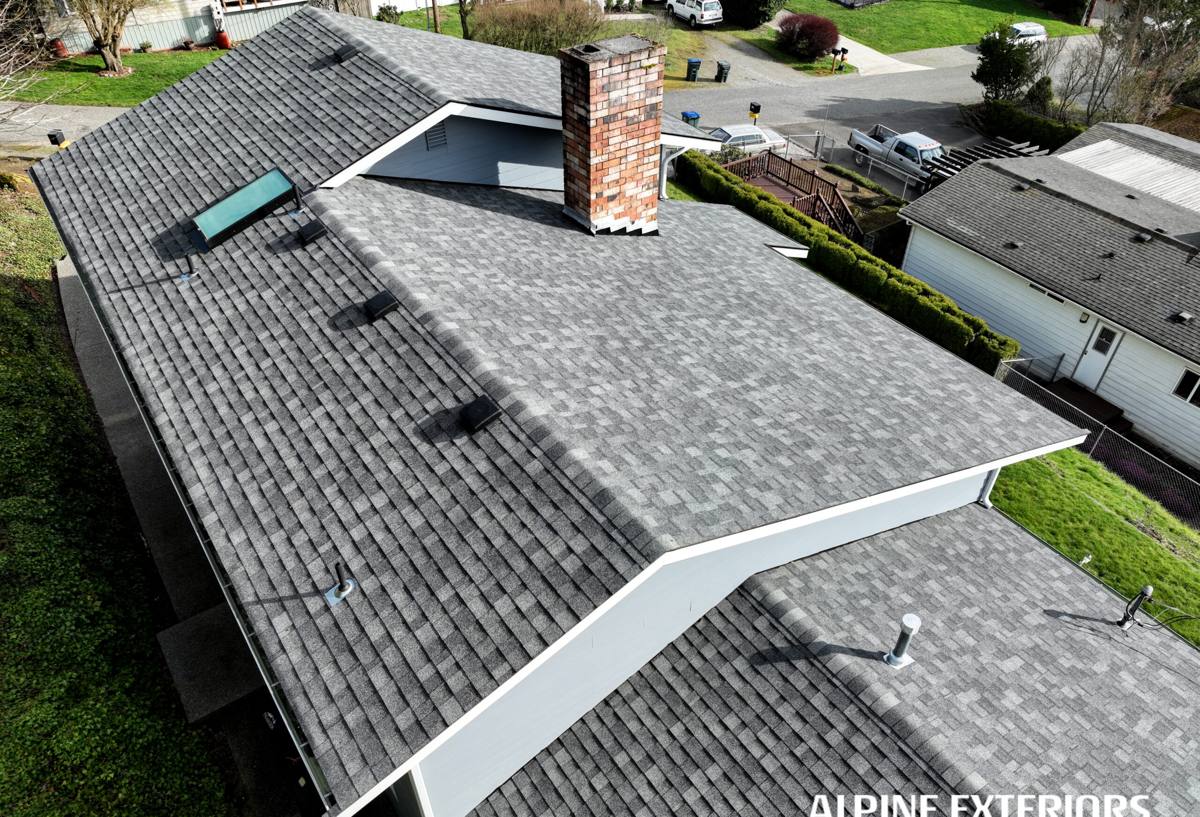
A rushed repair patches the visible problem and misses the cause. Before we touch a shingle, we check the decking underneath for soft spots, trace water stains back to their actual entry point (which is often several feet from where the stain appears), and check flashing around chimneys, vents, and skylights — these are the most common places storm damage actually originates, even when the shingles get blamed.
2. Temporary Protection When Needed
If a roof has active leaking or exposed decking, we tarp it before doing anything else. Whatcom County's rain doesn't wait for a repair schedule, and an exposed roof deck can go from "damaged" to "needs full sheeting replacement" in a matter of days during a wet stretch.
3. Matching the Repair to the Existing Roof
Patch repairs only work if the materials match — not just color, but shingle profile, exposure, and nailing pattern. A repair that doesn't match the surrounding shingles' butt joint spacing and weather exposure will fail at the seams faster than the original roof did, even if it looks fine on installation day.
4. Decking and Underlayment Check
Any spot with confirmed water intrusion gets the shingles pulled back so we can inspect — and if necessary, replace — the decking and underlayment underneath. Covering damaged decking with new shingles just hides the problem for a season or two.
5. Flashing and Sealant Work
Storm damage repair almost always includes flashing work — around chimneys, plumbing vents, skylights, and valleys. Flashing is metal, but it's the sealant and the way it's integrated with the shingles that actually keeps water out, and that's the part that fails most often after a storm.
Our Storm Damage Repair Process
- Call or request a free estimate — tell us what you noticed and when the storm event happened.
- On-site inspection — we walk the roof and check the attic, not just what's visible from the ground.
- Written scope and estimate — what needs repair, what materials will be used, and a straightforward price range.
- Temporary protection if needed — tarping any active leak points before the full repair is scheduled.
- Repair work — decking, underlayment, flashing, and shingle work matched to your existing roof.
- Final walkthrough — we show you what was done and what to watch for going forward.
Repair or Replace? Key Factors
Not every storm-damaged roof needs full replacement, but sometimes storm damage is the event that reveals a roof was already near the end of its life. Here's how we help homeowners think through it:
| Factor | Repair Usually Makes Sense | Replacement Worth Considering |
|---|---|---|
| Roof age | Under 12-15 years, otherwise sound | Approaching or past expected lifespan |
| Damage extent | Isolated to one slope or area | Spread across multiple slopes or repeated storm events |
| Decking condition | Solid, no rot found on inspection | Soft spots or rot found in more than one area |
| Moss history | Light, manageable moss growth | Heavy, longstanding moss with shingle lifting throughout |
| Prior repairs | First or second repair on this roof | Multiple past patch repairs in different spots |
We'll always tell you honestly which category your roof falls into. A repair that's likely to need another repair in a year isn't a good use of your money, and we'd rather say so upfront than let you find out the hard way.
Insurance Claims for Storm Damage
Many storm damage repairs in this area are covered, at least in part, by homeowner's insurance — but coverage depends on the cause of the damage (wind and impact are commonly covered; gradual moss and moisture damage often is not, since it's treated as a maintenance issue rather than a sudden event). We can document damage clearly with photos and a written assessment that you can submit to your insurer, and we're happy to walk an adjuster through what we found on the roof. We don't handle the claim itself — that's between you and your insurance company — but we make sure the documentation reflects what's actually there.
Why a Crew That Already Works Deming Matters
Storm damage repair isn't just a materials question — it's a logistics and knowledge question too. A crew that regularly works Deming and the surrounding Whatcom County area already knows the access routes along the Mount Baker Highway corridor, understands how weather windows work in this valley (rain moving through fast versus settling in for days), and has a realistic sense of how moss and moisture behave on roofs at this elevation and exposure. That local familiarity shows up in small but real ways: knowing to check for wind-driven damage on the specific roof faces that catch the worst of it here, and not scheduling exposed roof work during a stretch that's likely to turn wet before the job is sealed back up.
It also matters for follow-up. If a repair needs a warranty check or a second look after the next storm, you want a crew that's still local and still answering the phone — not one that did a single job in the area and moved on.
Preventing the Next Round of Storm Damage
Once a storm repair is done, a few habits go a long way toward keeping the next windstorm or wet season from causing a repeat:
- Keep gutters and valleys clear of needles, leaves, and moss debris so water has a clear path off the roof
- Trim back tree limbs that overhang the roof — falling limbs are one of the most common causes of impact damage in wooded parts of Whatcom County
- Schedule a roof check after any major windstorm, even if nothing looks obviously wrong
- Address moss early with proper treatment rather than letting it establish and lift shingles
- Have flashing checked every couple of years — it's the first thing to fail and often the last thing homeowners think to check
None of this eliminates storm risk in a climate like ours, but it does mean the next storm finds a roof in better shape to handle it.
Get a Free, No-Pressure Estimate
If your Deming home has visible storm damage, or you just want a roof checked after a recent windstorm, we're glad to take a look. There's no cost and no pressure — just a straightforward assessment of what's going on and what it would take to fix it right. Use the form below to request your free estimate.