 Sudden Valley Siding
 Windows Built for the Columbia Section of Sudden Valley
Homes in the Columbia area of Sudden Valley sit inside one of the wetter, greener corners of Whatcom County, and their windows take the brunt of it. Salt-tinged marine air off the Sound, driving rain that comes in sideways for weeks at a stretch, and a moss season that seems to start earlier every year all work on window frames, seals, and glazing in ways that a dry-climate window was never engineered to handle. When we talk about "custom windows" for this neighborhood, we're not talking about a style upgrade — we're talking about windows sized, sealed, and installed to match the actual conditions a Columbia home sees every winter.
Most production-grade replacement windows are built to standard rough-opening sizes and standard performance specs. That works fine in a lot of the country. It works less well on a home in this part of Whatcom County, where older openings are frequently out of square, siding profiles vary from wall to wall, and moisture management at the sill is the single biggest factor in whether a window job lasts ten years or thirty.
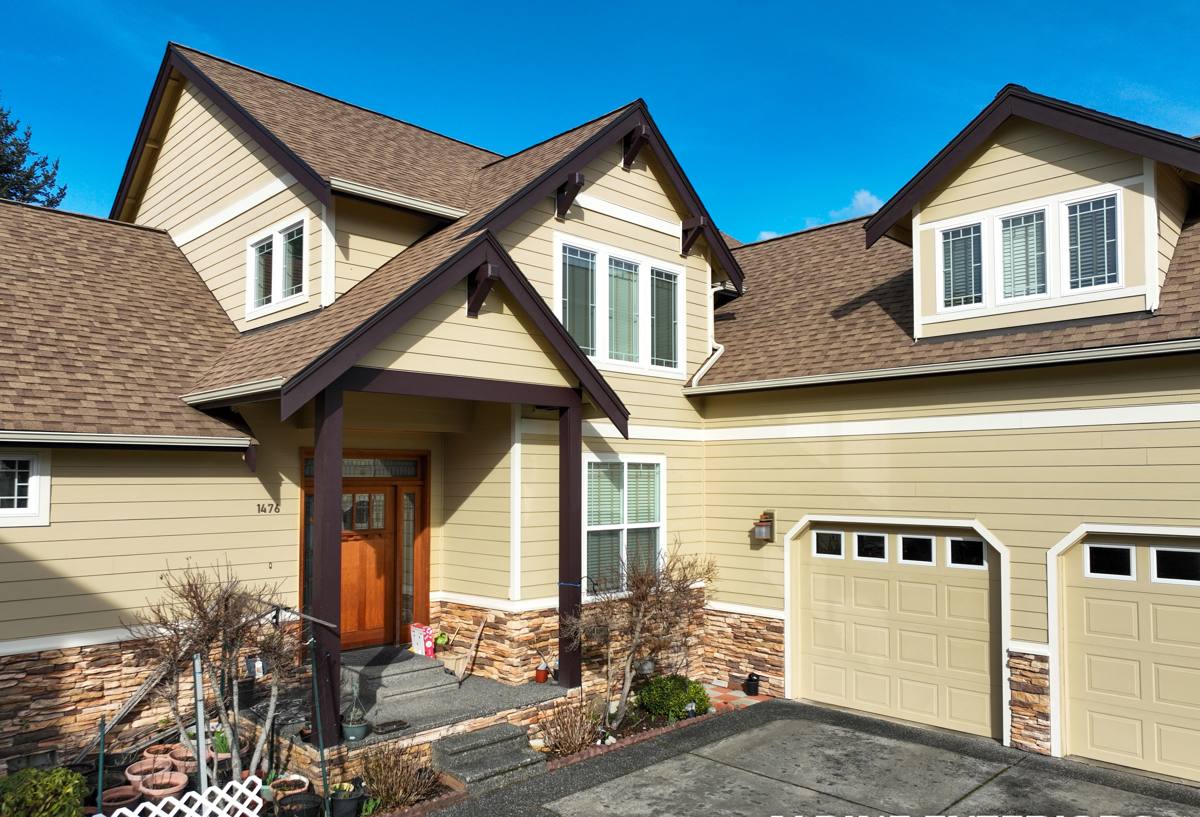
What "Custom" Actually Means on a Window Job
"Custom" gets used loosely in this trade, so it's worth being precise. On a real custom window job, three things are true:
- The window is built or ordered to the exact opening dimensions of your home, not trimmed down from a nearest-standard size
- The frame material, glazing package, and hardware are chosen to match how that specific wall performs — sun exposure, wind loading, and moisture exposure all factor in
- The flashing and sealing details are adapted to your existing wall assembly, not applied as a one-size-fits-all install
That last point matters more than most homeowners expect. A window can be the right size and the right brand and still fail early if the flashing underneath it doesn't shed water the way the wall was originally built to. This is where a lot of window problems in older Whatcom County homes actually start — not with the glass, but with what's happening behind the trim.
When Custom Sizing Is Worth It
Not every window in every home needs a fully custom order. Standard sizes are perfectly serviceable when the existing opening is square, dry, and undamaged. Custom sizing earns its cost when the opening has settled or shifted over the years, when you're changing the window's shape or configuration, or when you're correcting a previous installation that was never sealed correctly in the first place. Part of a fair estimate is telling you honestly which category your home falls into — we don't upsell custom sizing on openings that don't need it.
Signs Your Current Windows Are Losing the Fight
Because of the rain load and humidity typical to this area, window failure here tends to show up earlier and more visibly than in drier climates. Walk your home's exterior and interior and look for these signs before deciding whether you're due for repair or replacement:
- Fogging or a milky haze between the panes — a sign the seal on a double- or triple-pane unit has failed and moisture has gotten inside the glazing
- Soft or discolored wood at the sill or lower frame corners, often the first place rot shows
- Persistent moss or dark green-black staining on the frame or sill, even after cleaning
- A draft you can feel with your hand near the frame edge on a windy day
- Windows that stick, won't stay open, or have become hard to lock tightly
- Condensation forming on the inside of the glass regularly through fall and winter
- A noticeable jump in heating costs without any other explanation
Any one of these on its own might just mean a repair or a resealing job. Several of them together, especially on the same wall, usually points to a window that's past the point where patching makes sense.
Frame Material Options for This Climate
There's no single "best" window material — there's a best fit for your home's exposure, your maintenance appetite, and your budget. Here's how the common options actually compare under the rain and humidity load typical of Whatcom County:
| Frame Material | Moisture & Rot Resistance | Maintenance | Typical Cost Range | Best Fit |
|---|---|---|---|---|
| Vinyl | Does not rot; seals can degrade with age | Low — occasional cleaning | Lowest of the group | Budget-conscious replacements, rental or secondary properties |
| Fiberglass | Excellent — dimensionally stable, won't swell or rot | Low | Mid to upper-mid | Homes with heavy weather exposure, long-term ownership |
| Wood-clad | Good if maintained; exterior cladding protects the wood core | Moderate to high — exterior clad still needs periodic inspection | Upper-mid to high | Homeowners prioritizing interior appearance and willing to maintain finish |
| Aluminum | Fair — prone to condensation and thermal transfer without a thermal break | Low | Mid | Specific architectural styles; generally not our first recommendation for full-exposure walls here |
For most Columbia-area homes with real weather exposure — west- or north-facing walls, limited eave overhang, or a history of moisture issues — we steer homeowners toward fiberglass or a quality vinyl. Wood-clad windows still have a place where the look matters and the owner is committed to upkeep, but we're upfront that they carry more long-term maintenance than the alternatives, not a defect, just a trade-off worth knowing going in.
Glazing and Energy Performance
Glass selection matters as much as frame material in a climate that's wet more months than not. A few specifics worth understanding before you order:
Pane Count and Gas Fill
Double-pane windows with an argon fill are the practical standard for this region and perform well against both heat loss and condensation. Triple-pane adds meaningful performance on north- or west-facing walls that take the worst of the wind and rain, but the added cost isn't always justified on more sheltered elevations — we'll tell you where it pays off on your home specifically and where it doesn't.
Low-E Coatings
A low-emissivity coating reduces heat transfer through the glass year-round and helps cut down on interior condensation during the cold, damp months — a real issue in homes without great ventilation. It's a low-cost upgrade relative to the difference it makes.
U-Factor and Condensation Resistance
When comparing quotes, ask about U-factor (lower is better for insulation) and condensation resistance rating, not just the brand name on the sticker. In a climate this wet, condensation resistance is often the number that predicts how your windows will actually perform through a Whatcom County winter.
Our Installation Process
The install itself is where most of the long-term performance is won or lost, regardless of how good the window unit is. Our process on Columbia-area homes runs like this:
- On-site assessment of each opening — checking square, level, and the condition of the existing sill and framing before anything is ordered
- Precise measurement for custom or made-to-order sizing, accounting for any settling or irregularity in the opening
- Removal of the old window with attention to what's found behind it — we flag any rot, mold, or prior flashing mistakes before covering them back up
- Repair of any damaged framing or sheathing discovered during removal, done as its own line item so you know exactly what you're paying for and why
- Installation of proper flashing and a water-management path that directs moisture out and away from the wall, not just caulk over gaps
- Setting and shimming the window plumb, level, and square, with fasteners per the manufacturer's specification
- Insulating the gap around the frame and sealing both the exterior and interior properly — most window failures we're called to fix trace back to a sealing shortcut somewhere in this step
- Final trim, cleanup, and a walk-through so you can operate every window before we consider the job done
We don't caulk over a bad flashing detail and call it finished. If a wall needs a repair before a window can be installed correctly, we'll show you what we found and explain the fix before doing it — no surprises buried under new trim.
Working Within Sudden Valley
Sudden Valley is a community association, and depending on your section and the scope of the work, there may be architectural review or design guidelines that apply to exterior changes like window replacement. We're familiar with working inside an HOA framework and will help you understand what, if anything, needs sign-off before work starts on your home — better to sort that out at the estimate stage than after materials are ordered.
Working regularly in this neighborhood also means we already know how the local weather patterns hit specific elevations, which sections tend to hold moss longer into the season, and how driving rain off the water behaves against different home orientations. That's not something a crew coming in from outside the area picks up on the first job — it's built from doing this work here, on homes like yours, season after season.
What This Typically Costs
Window pricing depends on size, material, glazing package, and how much (if any) framing repair is needed once the old window comes out, so we won't quote a number here that doesn't mean anything until we've measured your openings. What we can tell you honestly: vinyl replacement windows tend to sit at the lower end of the range, fiberglass and wood-clad run higher, and any job that uncovers rot or a prior flashing failure will cost more than a straightforward swap — because that repair is real work, not an upsell. A written estimate after an on-site look is the only way to get a number you can actually plan around.
Ready for an Honest Look at Your Windows
If your windows in the Columbia area of Sudden Valley are fogging, drafting, or just past their years, we'll come take a look, measure what's actually there, and give you a straight assessment of what it'll take to fix it right. The estimate is free, there's no pressure attached to it, and you'll walk away knowing exactly what condition your windows and the framing behind them are actually in — use the form below to get started.