 Sudden Valley Siding
 Building a Deck That Actually Holds Up in Barkley
Barkley sits inside Sudden Valley, tucked against the timber and shoreline that make this part of Whatcom County beautiful — and also make it hard on outdoor structures. A deck here isn't just a weekend carpentry project. It's an exterior structure that has to stand up to driving rain off the lake, salt-laden air moving inland from the Sound, and a moss season that can stretch from October well into spring. A deck built the way someone might build one in a dry inland climate will show problems within a few years: soft spots, black streaking, loose fasteners, and a slick, mossy walking surface that's a genuine slip hazard. A deck built for this specific climate, on the other hand, can go decades with only routine upkeep.
This page is about that one job — deck building for Barkley homeowners — and what it actually takes to get it right here, not in a generic sense.
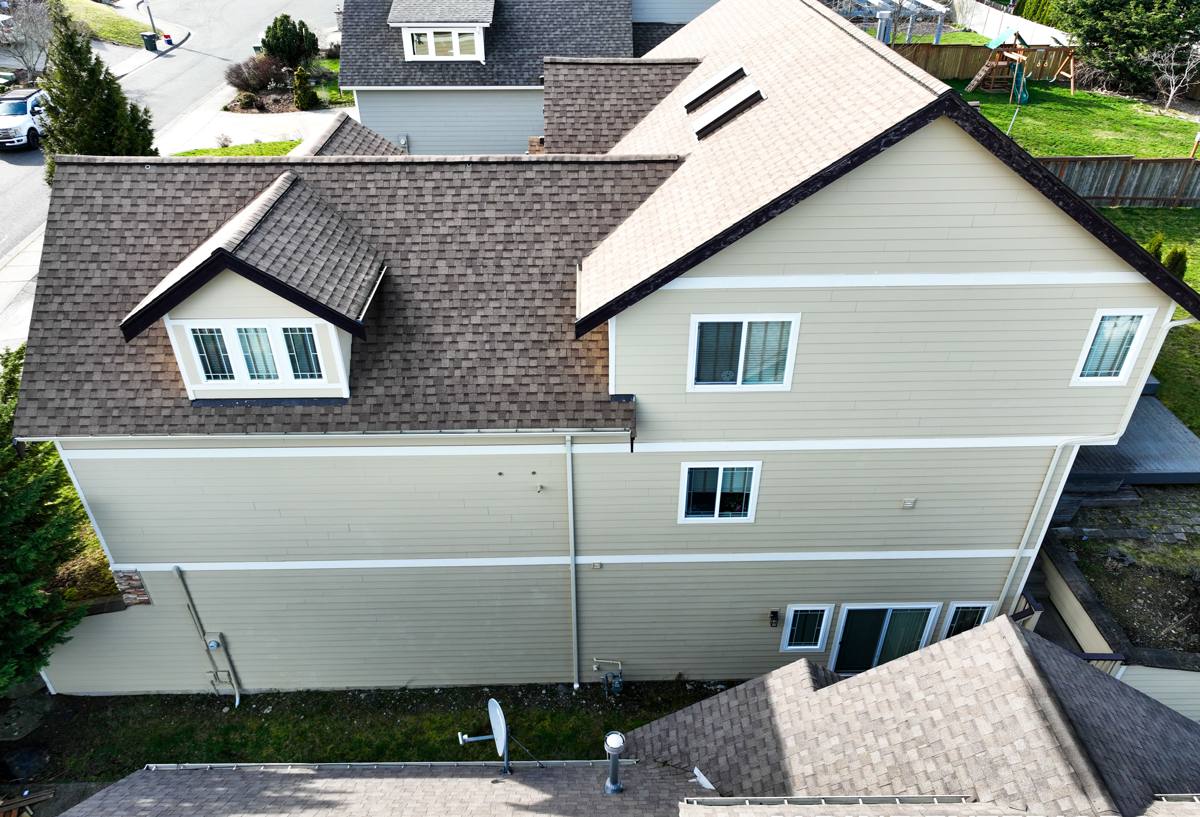
What Barkley's Climate Does to a Deck Over Time
Three things drive almost every deck failure we see in this area, and they're the same three things mentioned in nearly every local weather report:
- Moisture that doesn't fully leave. Between rain, fog, and heavy dew, wood and hardware in shaded or tree-covered yards can stay damp for days at a stretch, which accelerates rot and corrosion.
- Salt-laden coastal air. It works on any exposed metal — fasteners, brackets, railing hardware — long before most homeowners notice, especially on connectors that were never rated for it.
- Moss and algae growth. Shaded lots, tree canopy, and a long wet season give moss months to establish itself on decking boards, stair treads, and anywhere water sits instead of draining.
None of these are exotic problems — they're just the normal cost of building outdoors in this part of Washington. The fix isn't a gimmick product; it's choosing the right materials, fasteners, and drainage details from the start, and installing them correctly.
What a Correctly Built Deck Needs Here
Framing and Fasteners That Don't Fail Quietly
The framing is the part of a deck nobody sees once it's finished, which is exactly why it matters most. In a climate this wet, we treat a few details as non-negotiable:
- Ledger board flashing that actually sheds water away from the house band joist, not just a bead of caulk
- Stainless or coated fasteners and structural connectors rated for exterior, high-moisture use — not standard interior-grade hardware
- Proper joist spacing and blocking sized to the decking material, since composite and wood have different span requirements
- Footings set below frost depth and sized for the soil conditions on the lot, which can vary block to block in this area
- Airflow underneath the deck so the structure can actually dry out between rain events instead of staying saturated
Skipping any of these doesn't show up on day one. It shows up in year four or five, as soft framing or rust streaks bleeding through the decking above.
Choosing the Right Decking Surface
The surface material is where most homeowners spend the most time deciding, and it's also where climate matters most, because this is the part that's exposed to sun, rain, and moss growth directly.
| Material | How It Handles This Climate | Maintenance |
|---|---|---|
| Pressure-treated wood | Affordable and strong, but needs consistent sealing to resist moisture and moss staining | Annual cleaning and re-sealing recommended |
| Cedar | Naturally moisture-resistant and handsome, but softer and still needs periodic finish maintenance | Sealing every 1-2 years to hold color and resist graying |
| Capped composite | Strong resistance to moisture absorption and moss staining; holds up well in shaded, wet conditions | Occasional washing, no sealing or staining |
| Uncapped composite | Better than wood but more prone to surface moisture absorption and mildew than capped composite | Periodic cleaning to prevent staining |
We don't push one material on every homeowner. A shaded, tree-covered lot with heavy moss pressure is a different conversation than an open, south-facing yard that dries out between storms. Part of our job is looking at your specific site before recommending a surface.
Moss and Algae: The Long-Season Problem
Moss doesn't just look bad — on stair treads and walking surfaces it turns into a real fall hazard, and left alone it holds moisture against the board surface, which shortens the life of both wood and lower-grade composite decking. A few build decisions reduce how much moss takes hold in the first place:
- Proper gapping between boards so water drains through instead of pooling on the surface
- Grooved or textured board profiles that shed water better than smooth-faced boards in shaded spots
- Avoiding low spots or ponding areas in the framing layout
- Keeping the deck surface far enough from overhanging branches where that's practical, so it gets some sun and airflow
No deck in a wooded, wet part of Whatcom County will be entirely moss-free forever. The goal is a deck that's easy to clean and doesn't trap water in ways that make the problem worse year after year.
Our Deck Building Process
- On-site evaluation. We walk the yard, check drainage, sun exposure, tree cover, and how the deck will tie into the house, since these details drive material and framing decisions.
- Design and material selection. We talk through decking material, railing style, and layout based on how you'll actually use the space and what the site conditions call for.
- Permitting. We handle the paperwork with the local building department so the deck is built to code, not just built.
- Construction. Footings, framing, decking, and railings are installed in sequence, with moisture management addressed at every stage — not bolted on at the end.
- Final walkthrough. We go over the finished deck with you, including what maintenance it needs and when.
Permits and Code in a Sudden Valley Community
Most decks of meaningful size or height require a building permit in Whatcom County, and decks above a certain height off grade require code-compliant guardrails and stair details. Beyond county code, Sudden Valley is a private community, and many projects here also go through community design or architectural review before construction starts. That's an extra step some homeowners aren't expecting the first time they build.
We've worked through this process on other Sudden Valley properties, so we know to plan for both layers of approval up front rather than treating them as an afterthought that delays your project.
Why a Crew That Already Works in Barkley Matters
A deck builder who's worked lots in this neighborhood already knows the practical realities: which areas hold shade and moisture longer, how tree cover affects drainage and moss pressure, and what the permitting and community review process actually looks like here. That's not something you get from a crew that mainly builds in a drier, more open part of the county. It shows up in fewer surprises during the project and a deck that's built for the yard it's actually sitting in, not a generic set of plans.
Keeping Your Deck in Good Shape After the Build
A well-built deck in this climate still needs regular attention. It's not a "build it and forget it" structure anywhere in Western Washington, and Barkley is no exception.
- Sweep off leaves and debris regularly, especially in fall, so moisture and organic material don't sit on the boards
- Clean the surface at least once a year to keep moss and algae from getting established
- Check railing and stair hardware periodically for corrosion or looseness
- Reseal wood or cedar decking on the schedule the material calls for — don't wait until it's visibly gray or cracking
- Keep gutters and downspouts near the deck clear so runoff isn't dumping extra water onto or under the structure
What Affects the Cost of a Deck Project
Every deck is priced around the specifics of the site and the materials chosen, but a few factors consistently move the number the most:
| Factor | Why It Matters |
|---|---|
| Size and shape | Larger footprints and multi-level designs require more framing, footings, and labor |
| Decking material | Composite typically costs more upfront than wood but requires less ongoing maintenance |
| Height and stairs | Elevated decks need more structural support, railings, and stair construction |
| Site access and slope | Sloped lots or limited equipment access can add labor time |
| Railings and finishes | Cable, glass, or custom railing styles cost more than standard baluster railings |
We give straightforward, itemized estimates so you can see exactly what's driving the cost, rather than a single lump number with no explanation behind it.
Let's Look at Your Deck Project
If you're planning a new deck or replacing one that hasn't held up to Barkley's weather, we're glad to come take a look. There's no pressure and no cost to get our honest read on your site, your options, and a real estimate — just fill out the form below to get started.