 Sudden Valley Siding
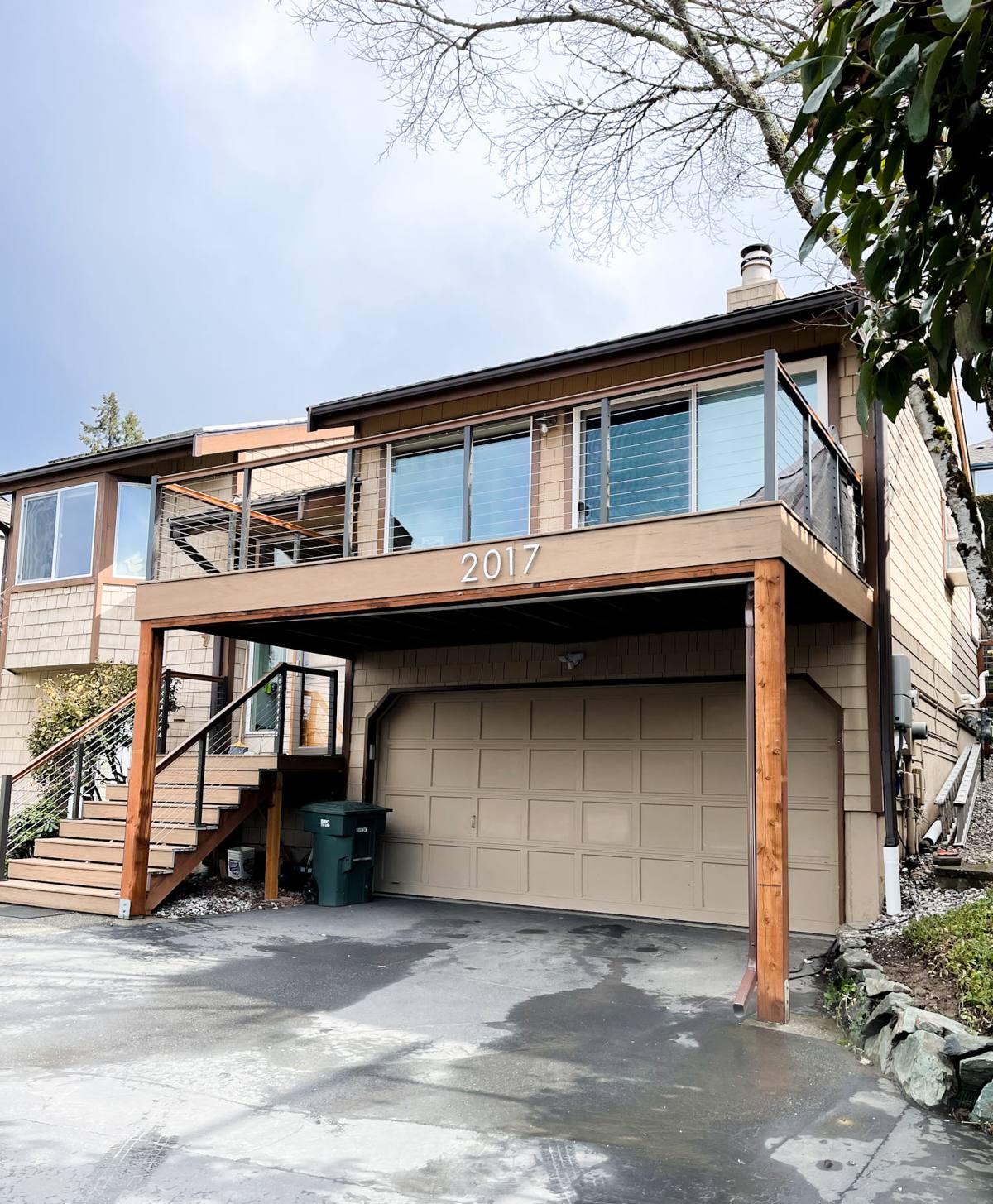
 Deck Building Built for How Cordata Actually Weathers
A deck in Cordata lives a harder life than most homeowners expect. This part of Whatcom County sees long stretches of driving rain, a marine-influenced air that carries salt and moisture even well inland, and a moss season that can stretch from fall through spring. A deck built to a generic national spec — the kind you'll find in a big-box how-to guide — is not built for that combination. It's built for a drier climate with occasional rain, not for months of standing dampness working into every joint, fastener, and seam.
We build decks specifically for this area. That means every decision, from footing depth to fastener choice to the gap between boards, gets made with Cordata's weather in mind rather than a one-size-fits-all national standard.
What Whatcom County Weather Does to a Deck
Understanding the failure points is the first step to avoiding them. Three regional conditions do most of the damage:
Moss and Organic Growth
Moss doesn't just sit on top of a deck looking green — it holds moisture against the wood or composite surface far longer than open air would allow. On horizontal surfaces like deck boards and stair treads, that trapped moisture accelerates rot in wood decking and can stain or degrade lower-grade composite over time. Moss also grows in the narrow gaps between boards, which is why board spacing and airflow underneath the deck matter as much as the decking material itself.
Driving Rain
Rain that comes in sideways, which is common here during fall and winter storms, finds its way into places a straight-down rain never would — behind ledger boards, around post bases, and into any gap where flashing was skipped or done poorly. Most of the deck failures we get called out to inspect trace back to water intrusion at the house connection, not the decking surface itself.
Salt Air
Even set back from the water, this region's air carries enough salt content to accelerate corrosion on fasteners, brackets, and hardware. Standard interior-rated screws and connectors will rust and weaken years before a properly rated exterior or coastal-grade fastener system will. This is one of the most common shortcuts we see on decks built by out-of-area crews or DIY projects — the structure looks fine on day one, but the hardware holding it together is already on a shorter clock.
Choosing the Right Decking Material for This Climate
There is no single "best" decking material — there's a best material for your budget, your maintenance appetite, and how much moss and moisture exposure your specific lot gets. Here's an honest comparison of the three options we install most often in this area:
| Material | Moisture Performance | Moss/Mildew Resistance | Maintenance Required | Typical Lifespan Here |
|---|---|---|---|---|
| Cedar | Naturally water-resistant, but surface finish wears | Moderate — needs regular cleaning | Annual cleaning and re-sealing recommended | 15–20 years with upkeep |
| Pressure-Treated Fir/Pine | Good if properly sealed and maintained | Moderate — prone to moss if not cleaned | Cleaning and sealing every 1–2 years | 15–25 years with upkeep |
| Composite | Excellent — does not absorb water like wood | Higher resistance, but still needs washing | Occasional washing, no sealing/staining | 25–30+ years, manufacturer-dependent |
Composite decking has become popular in this area precisely because it holds up to sustained damp conditions without the annual maintenance cycle wood requires. That said, we still install and repair a lot of high-quality cedar and treated-wood decks for homeowners who prefer the look and feel of real wood — as long as they understand the maintenance commitment going in. We'll walk through the honest trade-offs for your situation rather than push whichever product happens to be easiest for us to install.
The Structural Work Nobody Sees
The decking surface is maybe 20% of what determines whether a deck lasts. The rest is underneath, and it's where corners get cut. A correctly built deck for this climate includes:
Footings Set Below Frost Depth and Properly Drained
Footings need to sit on solid, well-draining ground and be sized to the deck's actual load — not guessed at. Poor drainage around footings is a slow, invisible failure mode that shows up years later as a deck that feels spongy or uneven.
Ledger Board Flashing
Where the deck attaches to the house is the single most common point of water intrusion and structural failure we see in this region. Proper flashing — installed in the correct order relative to the house's siding and water-resistive barrier — is non-negotiable. This is also exactly where deck work overlaps with siding work, which is part of why a crew that handles both tends to get this detail right.
Corrosion-Resistant Hardware Throughout
Joist hangers, structural screws, post bases, and ledger bolts should all be rated for exterior, high-moisture use — not just the fasteners you can see. Given the salt content in the air here, we treat corrosion-resistant hardware as standard, not an upgrade.
Airflow and Ventilation Underneath
A deck built low to the ground with no ventilation traps moisture underneath and speeds up rot in the framing, even if the visible decking looks fine. Proper spacing, joist protection tape, and in some cases venting details all factor into a deck that dries out between rain events instead of staying damp all winter.
Our Deck Building Process
Every deck we build follows the same sequence, adjusted for your specific lot and design:
- On-site assessment — we look at grade, drainage, sun/shade exposure, and how the deck will tie into the house before any design work starts.
- Design and material selection — sizing, layout, railing style, and decking material chosen with your budget and maintenance preference in mind, not just what looks good in a brochure.
- Permitting — we handle the permit application and coordinate any required inspections so you don't have to manage that process yourself.
- Footings and framing — footings poured or set to proper depth, framing built with corrosion-resistant hardware throughout.
- Flashing and waterproofing — ledger board and any house connection points flashed correctly before decking goes down.
- Decking, railing, and finish work — surface material installed with proper spacing and fastening for drainage and airflow.
- Final walkthrough — we go over the finished deck with you, including what maintenance it will actually need and when.
Permits and Local Code Considerations
Most decks above a certain height or attached to the house require a building permit in this area, and depending on your exact address, that permit may run through the county or a municipal building department. Requirements can also touch on setback distances, guardrail height, and stair geometry. Rather than guess at what applies to your specific property, we confirm the correct jurisdiction and pull the right permit as part of the job — this is a standard part of our process, not an add-on.
Seasonal Maintenance Checklist
Whatever material you choose, a small amount of seasonal upkeep goes a long way in this climate. A practical checklist for Cordata-area decks:
- Sweep leaves and debris off the deck surface regularly in fall — trapped leaves hold moisture and feed moss growth.
- Rinse or scrub visible moss and algae off the surface before it spreads, ideally before the wet season sets in.
- Check that gaps between boards are clear of debris so water can drain through rather than pool.
- Inspect the ledger board area at the house connection once a year for any signs of staining or soft wood.
- Look underneath the deck occasionally for standing water or poor drainage around footings.
- Re-seal or re-stain wood decking on the manufacturer or installer's recommended schedule — don't wait until it looks bad.
- Tighten or replace any visibly corroded hardware promptly rather than waiting for a failure.
What Affects the Cost of a Deck Project
Every deck is priced around the specifics of the site and design, but a few factors consistently drive cost up or down:
| Cost Factor | Why It Matters |
|---|---|
| Size and footprint | More square footage means more footings, framing, and decking material |
| Decking material | Composite typically costs more upfront than wood but less over the deck's lifetime |
| Height and grade | Taller decks or sloped lots require more substantial framing and railing |
| Railing style | Cable, glass, and custom railing systems cost more than standard baluster railing |
| Site access | Difficult access for equipment and material delivery can add labor time |
| Permitting complexity | Decks attached to the house or built above certain heights involve more inspection steps |
We give a straightforward, itemized estimate so you can see where the cost is actually going, rather than a single lump number.
Why Hire a Crew That Already Works in Cordata
Deck building isn't unique to this region in the way a foundation or roofline might be, but the details that make a deck last here are specific to this climate. A crew that builds decks year-round in a drier part of the country may not think twice about flashing details, hardware corrosion resistance, or moss-related drainage — because their decks don't face that combination of conditions. A crew that already works throughout Sudden Valley and the surrounding Whatcom County communities, including Cordata, has already made the mistakes and learned the fixes on decks just like yours. That local track record is worth more than a lower bid from a crew unfamiliar with what driving rain and a long moss season actually do to a structure over ten winters.
Common Issues We Find on Existing Cordata Decks
When we're called out to inspect or repair an older deck in this area, a handful of issues show up repeatedly: rusted or corroded fasteners that have loosened railing or framing connections, soft or rotted wood at the ledger board where flashing was missing or installed incorrectly, moss buildup on boards spaced too tightly for proper drainage, and footings that have shifted due to poor drainage around the base. Most of these are preventable with correct installation the first time, which is the standard we build to on every new deck.
If you're planning a new deck or want an honest look at whether your current one needs repair, we're happy to come out, walk the site, and give you a straightforward, no-pressure estimate. Use the form below to get started.