 Sudden Valley Siding
 Why Deming's Climate Wears Down Siding Faster Than People Expect
Deming sits back in the timber along the Nooksack River drainage, which means homes here deal with a different mix of punishment than a house out in the open. The tree canopy keeps roofs and siding shaded and damp longer after a storm passes. Add in the driving rain that rolls through Whatcom County for much of the fall, winter, and spring, plus the salt-tinged marine air that moves inland off the Sound and settles into these valleys, and you've got a climate that never really gives siding a break to dry out and reset.
The result is a long moss season — realistically eight or nine months of the year where conditions favor moss, algae, and mildew growth on anything that stays shaded and damp. On most siding materials, that growth doesn't just sit on the surface. It holds moisture against the wall, works into seams and butt joints, and slowly breaks down whatever's underneath it. A siding system that isn't built to shed water fast and resist that kind of biological growth is going to show its age in Deming years before it would somewhere drier.
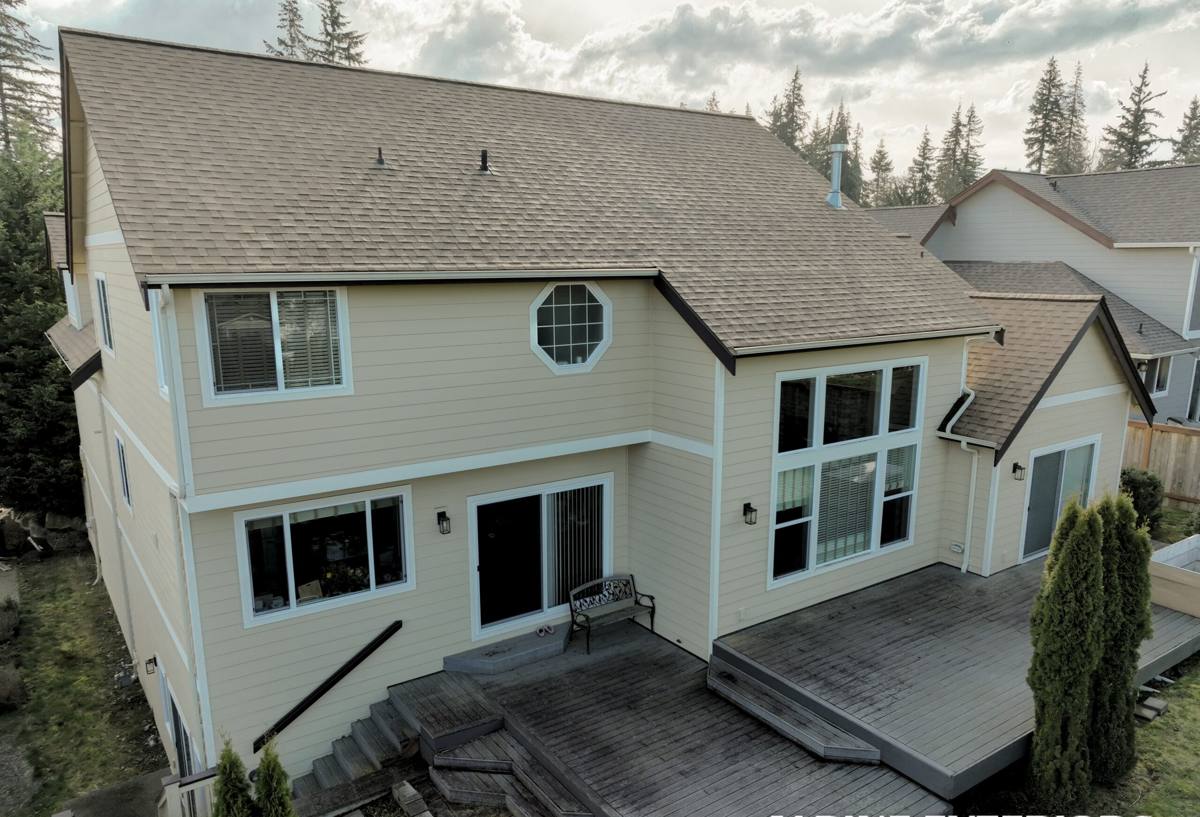
Signs a Deming Home Actually Needs Replacement, Not Just Repair
Not every siding problem calls for a full tear-off. But in this climate, a few warning signs usually mean the damage has moved past what caulk and touch-up paint can fix:
- Soft or spongy spots when you press on the siding, especially near the bottom courses and around window trim
- Persistent moss or dark streaking that comes back within weeks of being cleaned off
- Paint that's bubbling, peeling, or won't hold no matter how often it's redone
- Visible gaps, warping, or cupping in individual boards or panels
- Musty smell or staining on interior walls that back up to exterior siding
- Siding that's original to a home built more than 20-25 years ago, especially with wood or older composite products
Any one of these on its own might just need attention in that spot. Several at once, or damage that keeps recurring in the same areas after repair, usually means the underlying material has reached the end of what it can handle in this climate.
What a Correct Siding Replacement Actually Involves
It Starts Underneath the Old Siding, Not With the New Material
The siding you see is the last layer, not the most important one. A replacement done right starts with pulling the old siding off completely and inspecting the sheathing underneath for rot, soft spots, or moisture damage that's been hidden for years. In a wet climate like Deming's, it's common to find some degree of damage behind older siding, particularly around windows, doors, and any spot where flashing was missing or installed wrong the first time. Any compromised sheathing gets replaced before anything new goes up — covering damaged wood with new siding just locks the problem in.
The Weather-Resistive Barrier and Flashing Do the Real Work
A correctly installed weather-resistive barrier (WRB) behind the siding, paired with properly integrated flashing at every window, door, and roofline intersection, is what actually keeps water out of the wall assembly. The siding itself is the first line of defense against direct weather, but the WRB and flashing are what handle the water that inevitably gets past it. This is the part of the job that doesn't show up in a driveway photo but determines whether the wall stays dry for the next 30 years or starts rotting again in five.
Fastening, Clearances, and Ventilation
Fiber cement siding has specific fastening patterns, nailing zones, and minimum clearances from grade, roofing, and decking that have to be followed to keep the manufacturer's warranty valid and to keep water from wicking up into the bottom edge of the siding. Rain screen or drainage gap detailing, where called for, gives any moisture that does get behind the siding a path to drain and dry out instead of sitting against the wall. Skipping these details is one of the most common reasons a siding job that looks fine on day one fails within a few years in a climate like this one.
Why We Install James Hardie Fiber Cement and Nothing Else
We standardized this business on James Hardie fiber cement siding, full stop. That's a deliberate call, not a default. In a climate that hands siding eight or nine months of damp, shaded, moss-friendly conditions a year, the material matters as much as the installation.
Fiber cement doesn't feed moss and algae growth the way wood-based products can, and it doesn't swell, rot, or delaminate when it stays wet for extended stretches the way engineered wood products are prone to if the factory edge seal or field-cut ends aren't treated correctly. It's also non-combustible, which matters given the wildfire smoke and periodic burn-ban conditions Whatcom County has seen in recent summers. James Hardie's ColorPlus factory finish is baked on under controlled conditions and backed by its own finish warranty, so you're not relying on a field-applied paint job to hold up against years of driving rain the way you would with primed wood or field-painted alternatives.
Hardie's HZ5 product line is engineered specifically for climates with freeze-thaw cycling and high moisture exposure, which describes this part of Washington accurately. We don't install vinyl, LP SmartSide, primed spruce, cedar, or other fiber cement brands, and we're upfront about why: every one of those products has real strengths, but each also comes with a moisture, maintenance, or longevity trade-off that we don't think holds up over time in Deming's specific climate. We'd rather install one product correctly, back it with a real warranty, and stand behind it than offer a menu of options with different failure points.
Our Process, Start to Finish
| Step | What Happens |
|---|---|
| Site visit and assessment | We walk the exterior, check for moisture damage, moss buildup, and trouble spots around windows, decks, and rooflines |
| Written estimate | Scope, materials, and pricing laid out in plain terms before anything is scheduled |
| Tear-off and sheathing inspection | Old siding removed, sheathing checked and repaired or replaced as needed |
| WRB and flashing installation | New weather barrier and flashing detailed at every penetration and transition |
| Hardie siding installation | Installed to manufacturer fastening and clearance specs for correct drainage and warranty coverage |
| Trim, caulking, and touch-up | Final detail work at corners, joints, and any factory-finish touch-up needed |
| Walkthrough | We go over the finished job with you before calling it done |
What Drives the Cost of a Siding Replacement
Every Deming home is different, so we don't quote a number until we've actually looked at the house. But a few factors consistently move the price up or down:
| Factor | Why It Matters |
|---|---|
| Square footage and home shape | More wall area and more corners, gables, and dormers mean more material and labor |
| Extent of hidden damage | Rotted sheathing found during tear-off adds repair work before new siding can go up |
| Trim and detail complexity | Board and batten accents, extensive trim work, or custom color choices take more time than a plain lap siding job |
| Accessibility | Steep grades, limited driveway access, or multi-story walls affect staging and labor time |
| Existing siding removal | Some materials come off faster and cleaner than others |
| Window and door count | Each opening needs flashing work, which adds time relative to a plain wall section |
Why a Crew That Already Works Deming Matters
Deming's mix of tree cover, river-valley humidity, and steep or wooded lots isn't the same job as a flat open lot in town. A crew that's worked this specific area knows where moss tends to build up fastest, which wall orientations stay damp longest, and how to sequence a tear-off around a wet forecast without leaving sheathing exposed longer than it should be. That local familiarity shows up in small decisions throughout the job — how staging gets set up on a sloped or wooded lot, how drying time gets managed between steps, how flashing details get handled around the kind of window and roof configurations common in this area.
Before hiring anyone for a siding replacement in Deming or the wider Sudden Valley area, it's worth asking a few direct questions:
- Are you a licensed and insured contractor in Washington State, and can you show proof?
- Who is doing the actual installation — your own crew or subcontractors?
- What's your process if you find rotted sheathing once the old siding is off?
- What warranty covers the material, and what warranty covers your labor?
- Can you walk me through how you'll handle flashing at my windows and rooflines specifically?
- Have you worked in this specific area before, and do you understand the local moisture and moss conditions?
Living With Hardie Siding in a Wet, Mossy Climate
One advantage of fiber cement in a climate like this is how little ongoing maintenance it asks for compared to wood or engineered wood siding. It doesn't need repainting on a recurring schedule the way field-painted wood does, since the factory ColorPlus finish is designed to hold color and resist fading for years. A periodic gentle rinse to knock off moss and organic buildup, along with keeping gutters clear and vegetation trimmed back from the walls, is generally enough to keep it looking right. That's a meaningful difference over 20-30 years in a spot that gets this much rain and this much shade.
It's still worth doing an annual walk-around, especially heading into the wet season, to check caulking at trim joints, make sure downspouts are draining away from the foundation, and look for any moss getting a foothold in shaded corners before it spreads. Catching small maintenance items early is what keeps a correctly installed siding job performing the way it's supposed to for its full lifespan.
If your Deming home is showing any of the signs above, or you just want an honest read on where your siding stands, we're happy to come take a look. The estimate is free, there's no pressure attached to it, and you'll get a straight answer about whether you need a full replacement, a repair, or nothing at all right now — just fill out the form below.