 Sudden Valley Siding
 New-Construction Windows Are a Different Job Than Replacement
New-construction windows go in before the siding, house wrap, and trim are finished, which means the window and the building envelope get built together instead of one getting fitted into the other after the fact. That's a real advantage — it lets us flash the rough opening correctly the first time, tie the window's nailing fin into the weather-resistive barrier the way it's supposed to work, and avoid the compromises that come with squeezing a replacement unit into an existing frame. For a new build or a full addition going up in Bellingham, this is the stage where the water-management decisions get made. Get them right here and the windows stay dry for decades. Get them wrong and no amount of caulk fixes it later.
We treat new-construction installs as a sequencing job as much as a window job. The framer, the window crew, and the siding crew all touch the same opening, and the order matters. We coordinate directly with builders and GCs on timing so the wrap, flashing, and window go in in the right order — not whatever order is convenient that week.
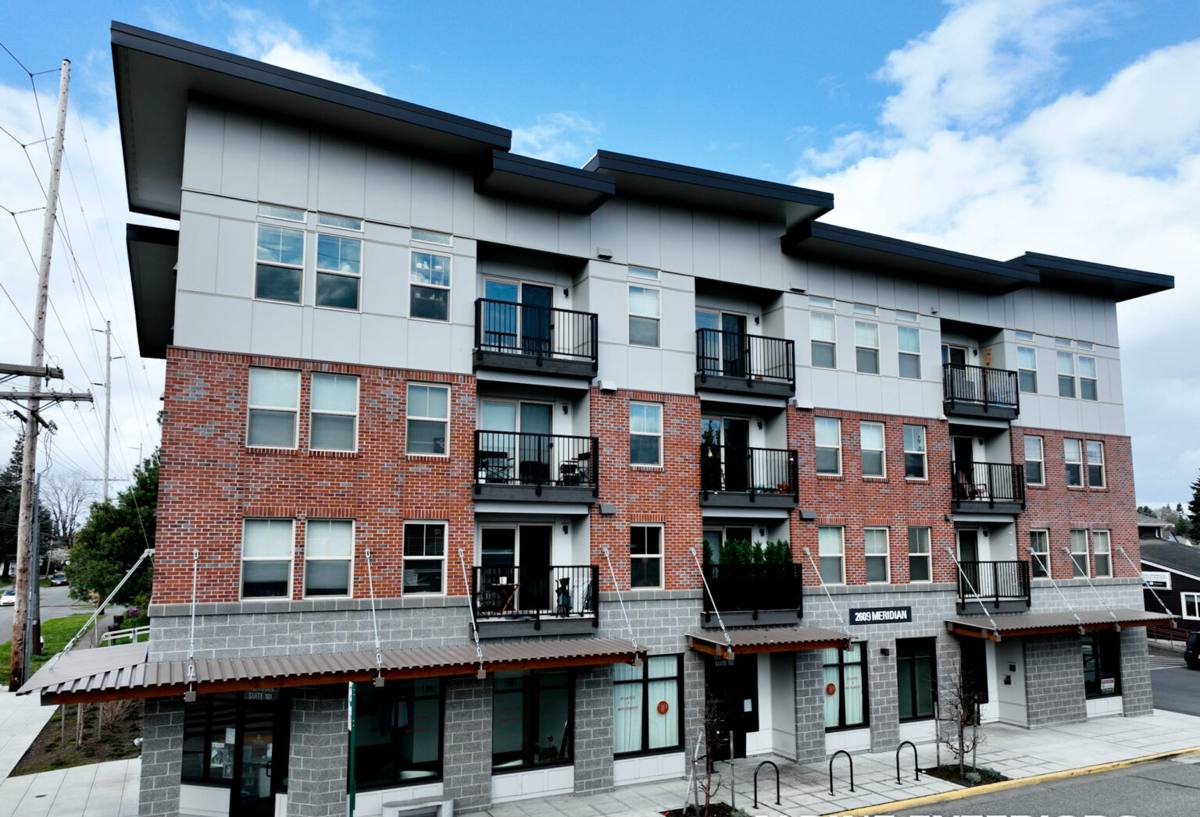
What Bellingham's Climate Actually Demands From a Window
Bellingham and the rest of Whatcom County sit close enough to the water that salt-laden air is a normal part of the environment, not an occasional event. Add in long stretches of driving rain off the Sound and a moss season that can run most of the year on shaded north- and west-facing walls, and you've got a climate that's hard on any building product that isn't detailed correctly. Windows take the worst of it because they're a hole in the wall by design — the whole job is managing what happens at that hole.
Salt Air and Corrosion
Salt-laden moisture accelerates corrosion on hardware, fasteners, and metal flashing that isn't rated for it. We spec corrosion-resistant fasteners and flashing components on builds anywhere near the water or exposed to onshore wind, and we pay attention to which hardware finishes actually hold up out here versus which ones chalk and pit within a few years.
Driving Rain and Wind-Driven Water
Wind-driven rain doesn't fall straight down — it gets pushed sideways and upward under trim and behind flanges if there's any gap in the flashing plane. New-construction framing is the one point in a home's life where we can build a fully lapped, gravity-fed water path from the top of the window down and out, with no shortcuts. That's the whole game with driving rain: water has to have somewhere to go, every time, without exception.
Moss, Shade, and Sustained Moisture
A lot of Whatcom County properties sit under tree cover or on shaded lots, and that means surfaces stay damp longer after every rain. Moss doesn't damage window glass, but it holds moisture against sills, trim, and cladding, which keeps wood and OSB sheathing wet longer than it should be. Detailing the sill pan and sealing the rough opening properly at install time is what keeps that sustained dampness from ever reaching structural wood.
Nail-Fin vs. Block-Frame Installation
Most residential new construction in this area uses nail-fin (flange) windows, but block-frame installs come up on masonry, some commercial-adjacent builds, and certain retrofit-into-new-wall situations. Each has a correct installation method, and mixing up the details between the two is one of the more common ways a new-construction install fails early.
| Install Type | How Water Is Managed | Best Fit |
|---|---|---|
| Nail-fin (flange) | Flange is integrated into a shingled flashing sequence with the WRB | Standard wood-framed residential walls — most Whatcom County homes |
| Block-frame | Perimeter sealant and separate flashing pan, no integral fin | Masonry or CMU openings, some commercial and heavy-timber construction |
On a nail-fin install, the flashing sequence has to be shingled correctly — sill pan first, then the window, then jamb flashing over the fin, then head flashing over that, so every layer sheds water onto the layer below it, never the reverse. Skip a step or reverse the order and you've built a pocket that traps water instead of shedding it.
The Part That Actually Prevents Leaks: Flashing and Sill Pans
Homeowners tend to focus on the window unit itself — brand, glass, color — but the flashing detail around it is what determines whether the wall stays dry. A sloped sill pan under the window is non-negotiable in our process. It gives any water that does get past the glazing or frame a way to drain back outside instead of sitting on the sheathing. We use flexible flashing membrane at the corners and jambs, back-dam the sill, and make sure the head flashing laps over the housewrap above it, never under it.
This is also where a lot of production-builder installs cut corners, because it's labor-intensive and invisible once the siding goes on. It's the single detail most worth paying attention to when you're vetting a new-construction window install, because it's also the one detail you can't see or fix after the wall is closed up.
Frame Material: What Fits a Whatcom County Build
Frame material affects both up-front cost and how the window handles years of coastal humidity and rain exposure. There's no single right answer — it depends on the home's style, budget, and how exposed the elevation is.
| Frame Material | Moisture Behavior | Maintenance | General Cost Position |
|---|---|---|---|
| Vinyl | Won't rot or corrode; can expand/contract with big temperature swings | Low — occasional cleaning | Lower |
| Fiberglass | Very stable dimensionally, holds up well in wet, mixed climates | Low | Mid to upper-mid |
| Wood, unclad | Needs a maintained paint/finish barrier or moisture gets in | High — regular repainting/sealing | Mid to high |
| Wood-clad (aluminum or fiberglass exterior) | Exterior face is protected; interior stays wood | Low exterior, none needed on interior | Higher |
For most new builds in and around Bellingham, we steer clients toward vinyl or fiberglass on exposed elevations, and reserve unclad wood for interiors or heavily protected areas, because bare wood exterior trim is a genuinely high-maintenance choice in a climate this wet. That's a maintenance-burden call, not a knock on wood as a material — it just needs a maintained finish to perform here, and a lot of homeowners don't want that upkeep on a west-facing wall that catches driving rain.
How We Approach a New-Construction Window Install
- Plan review: we confirm rough opening sizes, window schedule, and any structural headers before the units are ordered, so nothing gets discovered mid-install.
- Opening prep: rough openings get checked for square and level, sheathing gaps are addressed, and the WRB is run and lapped correctly before any window goes in.
- Sill pan flashing: a sloped, back-dammed pan goes in first, every time, regardless of window brand.
- Window set: the unit is set plumb, level, and square, shimmed correctly, and fastened per the manufacturer's schedule — not just "close enough."
- Jamb and head flashing: flashing tape and membrane are shingled over the nailing fin in the correct sequence, integrated with the WRB above and to the sides.
- Interior air seal: low-expansion foam or backer rod and sealant at the interior gap, which does the real work of controlling drafts and condensation — not the exterior caulk bead most people assume matters most.
- Final check: operation, hardware function, and a visual flashing check before siding crews close the wall.
Why a Crew That Already Works Bellingham and Sudden Valley Matters
New-construction window installation done right depends on understanding the specific exposure of the lot — how much wind-driven rain a west-facing wall in the neighborhood actually takes, how shaded a lot is and what that means for moss and moisture, and what inspectors in Whatcom County are actually looking for at framing and window sign-off. A crew that works this area regularly has already seen how these builds hold up five and ten years out, not just on install day. That local pattern recognition is worth more than a brand name on the window sticker.
We're based in Sudden Valley and work throughout Bellingham and the surrounding Whatcom County area, which means we're not learning the local climate on your project — we're applying what we've already confirmed works here.
Mistakes We See on New-Construction Window Jobs
- Flashing installed in the wrong order (reverse-shingled), which traps water instead of shedding it
- No sill pan, or a flat sill pan with no slope to drain water back out
- Housewrap cut and tucked behind the nailing fin instead of lapped over it at the head
- Fasteners that aren't corrosion-resistant used near the coast or on salt-exposed elevations
- Interior gaps left unsealed, causing condensation and draft complaints that get blamed on the window itself
- Windows shimmed out of square, which stresses the frame and causes premature seal or hardware failure
What to Check in the First Year After Install
Even a correctly installed window benefits from a homeowner keeping an eye on a few things during the first year, especially through a Whatcom County wet season.
- Confirm the window still operates smoothly and locks fully — settling can occasionally require a minor hardware adjustment
- Look at interior sills after heavy driving rain for any sign of moisture — this should never happen with a correct install, and it's the fastest way to catch a problem early
- Keep gutters and downspouts clear so roof water isn't sheeting down onto window heads
- Check for moss or algae buildup on sills and trim on shaded elevations, and clean it off before it holds moisture longer than it needs to
- Note any exterior caulk lines that shrink or crack and have them addressed — exterior sealant is a backup layer, not the primary defense, but it still matters
Get a Straight Answer on Your Project
If you're framing a new home or addition in Bellingham or elsewhere in Whatcom County, the window install decisions get made early and they're hard to undo once the siding is on. We're happy to walk through your plans, talk through frame material and flashing approach for your specific lot and exposure, and give you a straightforward estimate — no pressure, no upsell. Use the form below to request a free estimate and we'll get back to you.