 Sudden Valley Siding
 Metal Roofing Built for Edgemoor's Weather
Edgemoor sits close enough to Lake Whatcom and the surrounding tree cover that roofs here take a different kind of beating than roofs a few miles inland. Between salt-tinged marine air drifting in off the Puget Sound region, driving rain that comes in sideways during winter storms, and a moss season that can run eight months out of the year, an underbuilt or poorly installed roof shows its age fast. Metal roofing, done correctly, is one of the few systems that stands up to all three of those pressures at once — but "done correctly" is doing a lot of work in that sentence, and it's worth understanding what that actually means before you sign a contract.
This page covers metal roofing specifically for Edgemoor and the surrounding Sudden Valley area: what the climate demands, what a proper installation includes, and how our process works from first look to final walkthrough.
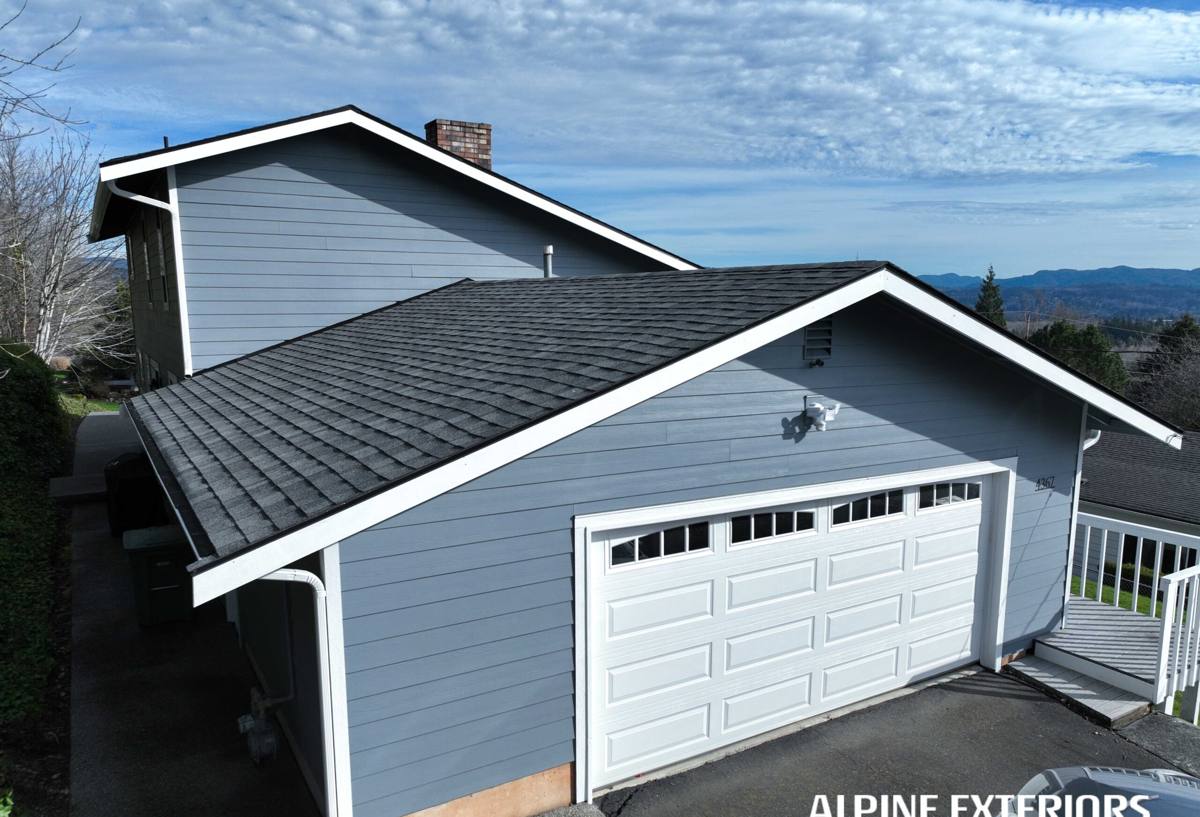
What Whatcom County's Climate Does to a Roof
Salt Air and Slow Corrosion
Homes on this side of Whatcom County get enough airborne salt and moisture that bare or poorly coated metal fasteners and flashing can start corroding years before the panels themselves show any wear. It's not dramatic — it's slow, and it usually shows up first at fastener heads and cut edges, which is exactly where a rushed installation cuts corners.
Driving Rain and Wind-Driven Water
Rain in this part of Washington rarely falls straight down. Storms off the water push it sideways into eaves, valleys, and wall-to-roof transitions. A metal roof handles sheet water beautifully — the failure point is almost always at the details: valleys, penetrations, chimney flashing, and anywhere two roof planes meet. Get those wrong and you don't get a leak someday, you get one the first hard winter storm.
Moss and Prolonged Moisture Contact
Between shade from mature trees and the long stretches of damp, mild weather typical of this region, moss pressure here is real and constant. Moss holds moisture against a roof surface, and on the wrong substrate that moisture works its way into seams and fastener penetrations over time. Metal doesn't feed moss the way organic shingle granules do, but moss can still take hold in debris that collects in valleys and against obstructions if the roof isn't detailed and maintained properly.
Why Metal Makes Sense for This Neighborhood
We're not going to tell you metal is the only right answer for every home — it isn't. But for Edgemoor's specific combination of tree cover, salt exposure, and rain volume, it has real advantages:
- Steep-slope metal sheds moss far more effectively than asphalt shingles, since there's no granule surface for spores and debris to grip
- Properly coated panels resist the slow corrosion that salt air causes to lesser materials over a 15-20 year span
- Standing seam and most quality panel profiles handle wind-driven rain without relying on gravity alone the way shingles do
- A correctly installed metal roof typically outlasts two or more shingle replacement cycles, which matters on a wooded lot where re-roofing access isn't always convenient
Panel Types and Finishes: What's Actually Different
Not all metal roofing is the same product wearing a different name. The differences matter more here than in a drier climate, because coating quality and seam design directly affect how well a roof handles years of damp, salt-touched air.
| Panel Type | Best For | Trade-offs |
|---|---|---|
| Standing seam (concealed fastener) | Most Edgemoor homes; long-term, low-maintenance performance | Higher upfront cost; requires precise installation |
| Exposed-fastener panel | Outbuildings, shops, budget-conscious projects | Fasteners are a maintenance item — gaskets age and need periodic checking |
| Stone-coated steel | Homeowners wanting a traditional shingle or shake look | More seams and layers; installation quality matters even more |
| Metal shingle/shake panels | Matching a neighborhood's existing roof aesthetic | Costs land between standing seam and exposed-fastener systems |
For most homes in this area, we steer clients toward standing seam with a quality baked-on finish, simply because the concealed fastener design removes the single biggest long-term weak point — exposed screws sitting in salt-touched, rain-soaked air for two decades.
What a Correct Installation Actually Involves
The panels are the visible part of a metal roof. The parts that determine whether it performs for 40+ years or fails at year twelve are mostly things you never see once the job is done.
Underlayment and Moisture Barrier
A synthetic, high-temp-rated underlayment goes down first, with extra ice-and-water-shield-type membrane at eaves, valleys, and any low-slope transitions where wind-driven rain is most likely to be pushed uphill under the panels.
Fasteners and Flashing
Fastener material has to match the panel metal to prevent galvanic corrosion — mixing metals is one of the most common corners cut on rushed jobs, and it's exactly the kind of mistake that shows up as rust streaks within a few years in a salt-air environment. Flashing at every valley, wall intersection, chimney, and vent gets custom-fit, not stretched from a generic stock piece.
Ventilation
Metal roofs need proper intake and exhaust airflow beneath the panels just as much as any other roof type — arguably more, given how much condensation-prone moisture this climate holds in the air. Poor ventilation traps moisture against the underside of the deck, which defeats the whole point of installing a rot- and moss-resistant roof surface.
Panel Seaming and Fastening Pattern
Standing seam panels are mechanically or hand-crimped closed along the seams. This is a skill, not a step you speed through — an inconsistent seam is a future leak point, full stop.
Cost Factors to Understand Before You Budget
We won't quote a number on a page — every roof is different — but here's what actually moves the price on an Edgemoor metal roof project:
| Factor | Why It Matters |
|---|---|
| Roof complexity (valleys, dormers, penetrations) | More detail work means more labor hours and more places that need custom flashing |
| Panel type and gauge | Standing seam in a heavier gauge costs more than exposed-fastener panels but needs far less maintenance |
| Tear-off vs. overlay | Full tear-off costs more upfront but lets us inspect and repair the deck — important on older Edgemoor homes |
| Access and tree cover | Wooded lots common in this area can add setup time and staging costs |
| Existing deck condition | Rot or moisture damage found during tear-off needs repair before panels go on — this is the most common budget variable |
Our Process
- On-site assessment — we walk the roof, check the deck where accessible, and look specifically at how the existing roof has handled moisture, moss, and wind exposure on your lot
- Honest scope and options — we explain which panel type and system fits your home and budget, and why, without upselling a system your house doesn't need
- Written estimate — clear line items, no vague allowances
- Tear-off and deck inspection — any rot or soft decking gets flagged and repaired before anything goes back on
- Underlayment, flashing, and panel installation — done to manufacturer spec, with extra attention at every valley and penetration
- Final walkthrough — we go over the finished roof with you, not just hand you an invoice
Keeping a Metal Roof Performing Long-Term
Metal roofing is low-maintenance, not no-maintenance. In a moss-heavy, tree-covered area like Edgemoor, a little seasonal attention goes a long way:
- Clear debris from valleys and around penetrations before fall rains set in
- Check gutters and downspouts for moss and needle buildup that can back water up under eave flashing
- Look for trapped moisture or debris against any roof-to-wall transition, where moss is most likely to establish
- Trim back overhanging branches where practical to reduce shade and debris load
- Have flashing and seams visually checked every few years, especially after a harsh winter
Why a Crew That Knows Edgemoor Matters
A metal roof installed by a crew that hasn't worked this specific stretch of Whatcom County tends to make generic assumptions — standard underlayment specs, standard flashing details, standard ventilation calculations — that don't always account for how much salt air, rain volume, and moss pressure this particular area sees. We work in Sudden Valley and the surrounding communities regularly, which means we're not guessing at how a roof here needs to be detailed. We know which transitions tend to take on water in a sideways storm and which shaded rooflines need extra attention to moss and debris buildup, because we've seen it on homes nearby, not in a manual.
If you're weighing metal roofing for your Edgemoor home, we're happy to take a look and give you a straight answer — including telling you if a different system makes more sense for your specific roof. Reach out for a free, no-pressure estimate using the form below.