 Sudden Valley Siding
 Building Decks for Acme's Particular Climate
Acme sits in a part of Whatcom County where the weather doesn't do anything halfway. Homes here deal with long stretches of driving rain, marine-influenced air that carries moisture and salt further inland than most homeowners expect, and a moss season that can run from late fall through spring. A deck built here isn't just outdoor furniture — it's a structure that spends most of the year wet, shaded, and under some kind of biological or mineral attack. That's the lens we build through, not as a sales pitch, but because it's what actually determines whether a deck lasts eight years or twenty-five.
We work in and around Sudden Valley regularly, and Acme comes with its own version of the same problems: tree cover that keeps decks damp longer after a storm, sloped and wooded lots that complicate footings and drainage, and a building season that's genuinely shorter than homeowners moving here from drier climates assume. None of this is exotic. It's just Whatcom County, and it rewards a deck built specifically for it.
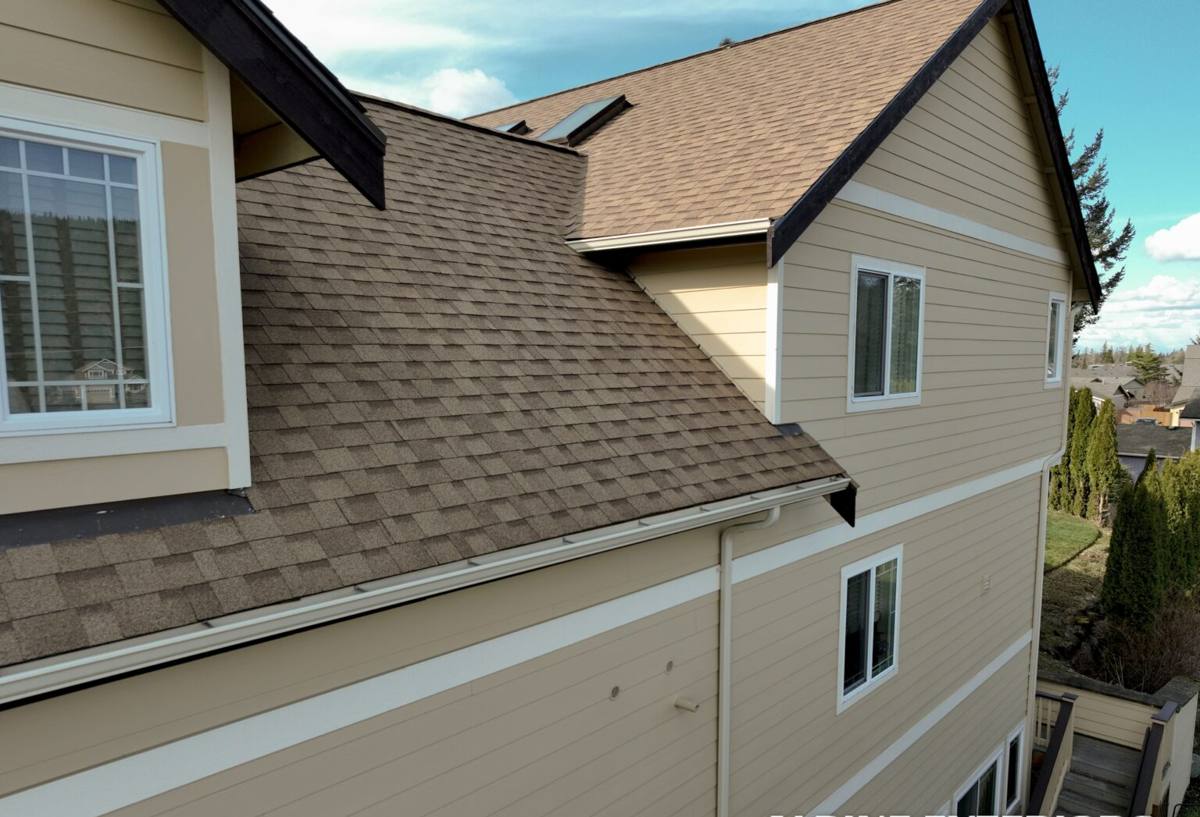
What Local Moisture Does to an Ordinary Deck
Standing water and prolonged dampness are the two things that age a deck faster than anything else. In Acme, tree canopy and hillside shading mean decks often stay wet longer after rain than a deck in an open, sunny yard would. That extra drying time is exactly what moss, algae, and wood rot need to get established.
The chain reaction we see most often
- Debris and needles collect between boards, holding moisture against the wood or composite surface
- Moss gets a foothold on shaded boards and stair treads, which makes them slick and starts breaking down the surface
- Fasteners that aren't rated for coastal/marine exposure begin to corrode, staining the decking and weakening the connection
- Ledger boards and framing members that don't have proper flashing or an air gap trap water against the house
- Footings set too shallow or without adequate drainage shift with seasonal freeze-thaw and saturated soil
Any one of these on its own is manageable. Left unaddressed together, they're how a ten-year-old deck ends up needing full replacement instead of routine maintenance.
What a Correctly Built Deck Needs Here
Framing and fasteners
We frame with pressure-treated lumber rated for ground contact where it's within range of soil or persistent moisture, and we use stainless steel or coated fasteners and structural connectors rated for coastal/marine exposure. Standard interior-grade hardware corrodes faster than most homeowners realize once it's exposed to Whatcom County's damp air year-round — the cost difference up front is small compared to redoing a ledger connection later.
Ledger attachment and flashing
Where a deck ties into the house, the ledger board and its flashing are the single most important detail on the whole project. Done wrong, water gets behind the siding or into the rim joist and you get rot you can't see until it's serious. We flash every ledger connection properly and maintain the gap codes require, every time, regardless of whether it's a small platform deck or a large multi-level build.
Footings sized for the actual soil
Acme's terrain includes sloped, wooded, and sometimes poorly-draining lots. We size and place footings based on what's actually in the ground on your property, not a generic minimum. That includes going below frost depth and accounting for how saturated the soil gets during the wet months.
Decking material chosen for shade and moss exposure
If your lot is shaded for a good part of the day, that changes which decking material makes sense. We'll walk you through this honestly rather than defaulting to whatever's easiest to install.
Decking Material Comparison for Acme Properties
| Material | How it handles moisture & moss | Maintenance | Typical lifespan here |
|---|---|---|---|
| Pressure-treated pine/fir | Resists rot when properly treated, but surface stays porous — moss and algae take hold faster in shade | Needs cleaning and re-sealing every 1-2 years to stay ahead of moss | 15-20 years with upkeep |
| Cedar | Naturally moisture- and insect-resistant, but the surface still needs care in shaded, damp spots | Periodic cleaning and oiling/sealing to keep its color and resist graying and moss | 20-25 years with consistent maintenance |
| Composite decking | Doesn't absorb water like wood, so rot isn't a concern, but moss and algae can still grow on the surface film in shade | Occasional washing; no staining or sealing required | 25-30+ years, manufacturer-dependent warranty |
| PVC decking | Fully non-organic surface, most resistant to moisture absorption and rot | Low — periodic washing only | Long service life, higher upfront cost |
There's no universally "right" answer — it depends on your budget, how much shade the deck gets, and how much upkeep you actually want to do. We'll give you our honest read on your specific lot rather than steering you toward whichever product is easiest for us to install.
Our Process for an Acme Deck Build
1. On-site assessment
We walk the property, check drainage patterns, note tree cover and shade exposure, and look at how the deck will tie into the house. This is where slope, soil, and sun exposure get factored into the design before anything is drawn up.
2. Design and material selection
We talk through decking material, railing style, and layout with your budget and maintenance preferences in mind, not just what looks good in a brochure.
3. Permitting
Deck projects in Whatcom County typically require a building permit once they pass certain size, height, or attachment thresholds. We handle that process and build to the applicable codes rather than leaving it for you to sort out or skipping steps to save time.
4. Framing and structural work
This is where the ledger flashing, footing depth, joist spacing, and fastener choice all get executed to the standard the climate here actually demands — not just to the bare minimum.
5. Decking, railing, and finish work
Boards are installed with proper spacing for drainage and seasonal movement. Railings, stairs, and any lighting or finish details are completed and everything is cleaned up before we walk it with you.
6. Final walkthrough
We go over the finished deck together, and we tell you plainly what maintenance it needs going forward based on the material you chose and how much shade your yard gets.
Mistakes We See on Older or Poorly Built Decks
A lot of the deck problems we get called out to look at in this area trace back to a handful of avoidable issues:
- Ledger boards attached without flashing, or with flashing that was installed incorrectly
- Standard hardware used instead of corrosion-resistant fasteners, leading to rust streaks and weakened joints
- Footings poured too shallow for the soil and slope, causing settling or heaving over time
- Decking boards installed tight together with no gap, which traps moisture and accelerates rot and moss growth
- No plan for water runoff underneath the deck, leaving the crawlspace or ground below constantly damp
None of these are things you'd necessarily notice at the time the deck was built. They show up years later as soft spots, rust stains, or a deck that just feels less solid than it used to.
Maintaining Your Deck Through Whatcom County's Wet Season
Whatever material you choose, a little seasonal attention goes a long way in this climate. Here's what we recommend to clients in the Acme and Sudden Valley area regardless of who built the deck:
- Sweep off leaves and debris regularly through fall, especially between boards where moisture collects
- Clean moss and algae off the surface before it gets established — it's much easier to remove early than after it's taken hold
- Check fastener heads and structural connectors periodically for rust or corrosion, especially near the ground
- Confirm water is draining away from footings and not pooling underneath the deck
- Re-seal wood decking on the schedule appropriate to the product — don't wait until it's visibly gray and weathered
- Inspect the ledger board connection at the house yearly for any signs of moisture intrusion or staining
Why Local Experience on This Type of Build Matters
A deck design that works fine in a dry, sunny climate can fail early here simply because it wasn't built with Whatcom County's moisture and moss cycle in mind. A crew that already works in and around Sudden Valley and Acme has already seen how the terrain, tree cover, and weather here actually behave over multiple seasons — not just at the time of installation. That shows up in decisions you might not think to ask about: how deep to set a footing on a sloped, wooded lot, which fastener grade actually holds up, and where drainage needs extra attention because of how the property sheds water.
It also means fewer surprises during the build. Local permitting requirements, typical soil conditions, and seasonal weather windows for pouring footings or finishing wood are all things we've already worked around repeatedly in this area.
Get a Straightforward Estimate
If you're planning a new deck or replacing one that's showing its age, we're happy to come take a look, walk the property with you, and give you an honest read on what it'll take — no pressure, no upsell. Use the form below to request a free estimate for your Acme property.