 Sudden Valley Siding
 Why Deming Decks Wear Differently Than You'd Expect
Deming sits back from the wind but not from the water. The Nooksack River valley and the heavy tree cover that define this part of Whatcom County keep decks shaded for long stretches of the day, which sounds like a benefit until you factor in what shade actually does to wet lumber: it slows drying time. A deck in an open, sunny yard can shed a morning's rain in a few hours. A deck tucked under fir and cedar canopy, which describes a lot of Deming properties, can stay damp for a day or more after a storm passes. Add the region's long stretch of driving rain from fall through spring, plus the salt-tinged marine air that moves inland off Puget Sound and settles into these valleys, and you get a climate that is genuinely tougher on exterior wood and fasteners than most homeowners assume.
We've repaired enough decks across this county to know the failure patterns aren't random. They follow the weather. Ledger boards rot where flashing was skipped or installed wrong. Joists soften from the top down where moss holds moisture against the wood. Fasteners corrode faster in shaded, damp corners than in open sun. None of this is unusual for a deck built to a normal residential standard — it's just what happens over years in a wet, shaded climate, and it's exactly why deck repair here has to be diagnosed and done differently than a repair in a dry-summer state.
The Moss Problem Specifically
Moss doesn't just sit on top of decking looking green and rustic. It holds water against wood fiber for extended periods, well past the point where the board would otherwise have dried out. On horizontal deck boards, moss growth in the shaded, low-airflow sections — under railings, in corners, along the house wall — is often the first visible sign that moisture is being trapped rather than shedding. By the time moss is thick enough to notice, the wood underneath has usually already started to soften.
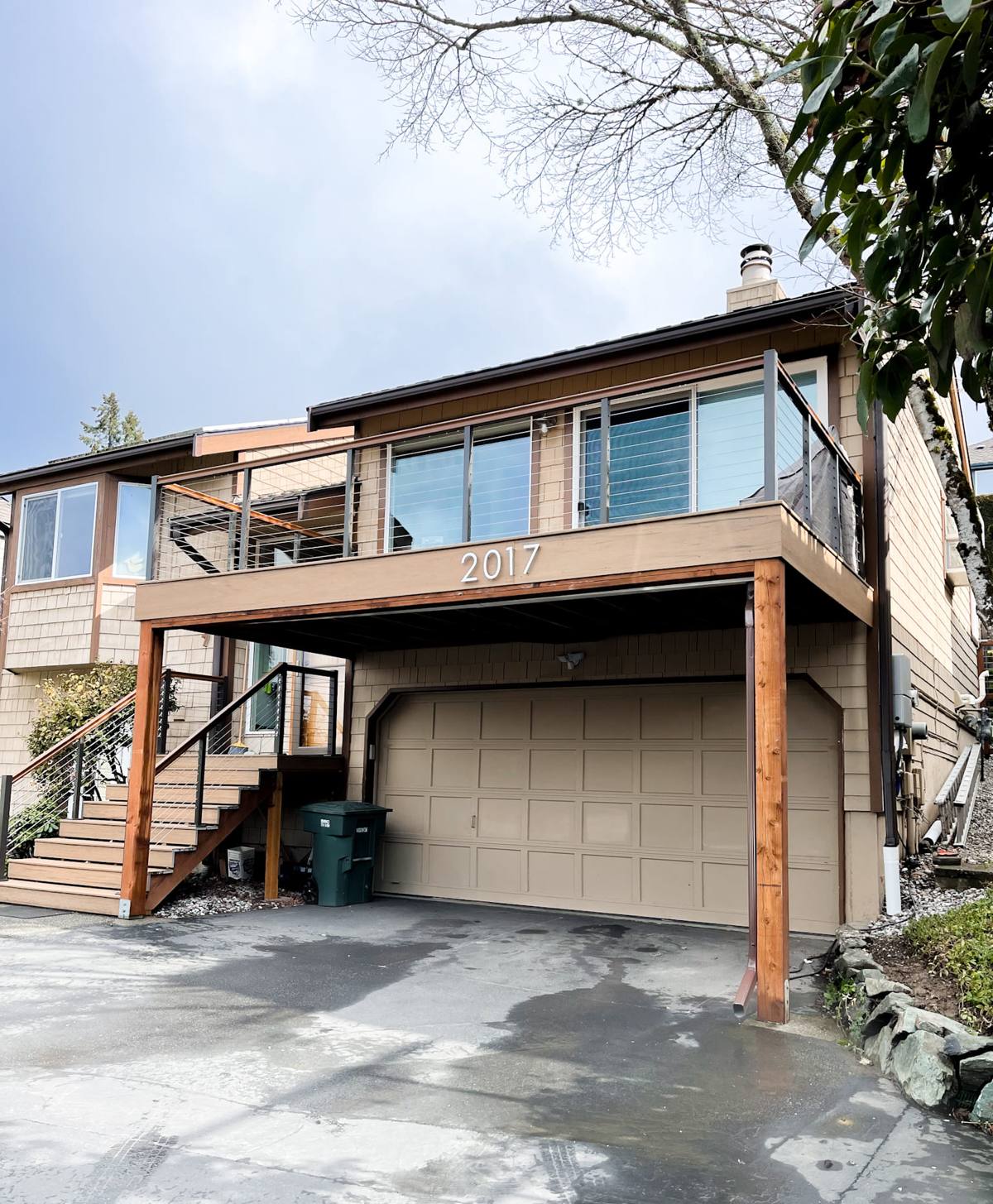
Signs a Deming Deck Needs Repair
Most deck damage doesn't announce itself with a collapse. It shows up as small, specific symptoms that are easy to dismiss individually but add up to a clear picture when you know what to look for.
- Soft or spongy spots underfoot, especially near the house or in shaded corners
- Boards that have cupped, warped, or pulled away from their fasteners
- Moss or dark staining concentrated in specific areas rather than spread evenly
- Rust streaking below fastener heads or hardware connectors
- A railing or post that flexes or wiggles when you lean on it
- Gaps opening up where the deck meets the house siding or ledger board
- Visible daylight or water staining at joist-to-beam connections when viewed from below
- A musty smell coming from underneath the deck on humid days
Any one of these on its own might be minor. Several together, or any sign near the ledger board connection to the house, is worth a proper inspection before it becomes a safety issue rather than a repair item.
What a Correct Deck Repair Actually Involves
A repair that just replaces the board you can see is often a repair that gets redone in two or three years. The point of doing this properly is figuring out why that board failed in the first place, because in this climate the cause is almost always moisture management, not just age.
Structural vs. Cosmetic Damage
We draw a hard line between the two. Cosmetic damage — surface graying, minor splintering, light moss on decking that's otherwise sound — is a maintenance issue. Structural damage — soft joists, a compromised ledger connection, corroded structural hardware, posts with rot at the base — is a safety issue that has to be fixed correctly or the deck shouldn't be used until it is. Part of an honest repair estimate is telling you clearly which category you're dealing with, not lumping everything into one number.
The Ledger Board Gets Special Attention
The ledger board — the piece that attaches the deck to the house — is the single most common source of serious structural failure on older decks, and it's almost always a flashing problem, not a lumber problem. If water has been getting behind the ledger for years, the fix isn't a new ledger board with the same missing flashing. It's removing the ledger, inspecting the rim joist and sheathing behind it for rot, correcting the flashing so water sheds away from the house rather than into it, and only then reattaching with proper structural fasteners. Skipping the flashing correction is the single most common shortcut we see in past repairs, and it's the one that causes the same failure to come back.
Fasteners and Hardware Matter More Here
In a wet, salt-influenced climate, the wrong fastener corrodes years before the wood around it fails. We use hot-dip galvanized or stainless structural hardware rated for exterior and ground-contact use, matched to whatever decking and framing material is already in place, rather than whatever's fastest off the shelf.
Our Deck Repair Process
- On-site inspection. We walk the full deck, check from underneath where accessible, probe suspect boards and joists with an awl to find soft wood that isn't visible from the surface, and check the ledger connection and flashing.
- Honest scope and estimate. You get a clear breakdown of what's cosmetic, what's structural, and what your real options are — repair the affected sections, or in some cases a fuller rebuild if the damage has spread too far to make partial repair worthwhile.
- Removal of compromised material. Rotted boards, soft joists, corroded hardware, and failed flashing all come out — not just the piece that's visibly broken, but anything the inspection found compromised.
- Correcting the cause, not just the symptom. If the failure traces back to bad flashing, poor drainage, or trapped moisture, that gets fixed as part of the repair, not left in place under new material.
- Rebuild with matched, climate-appropriate materials. New framing, decking, and fasteners go in sized and rated for this climate, matched to your existing deck where the goal is a seamless repair.
- Final check. We walk the repaired area with you, confirm it's solid underfoot, and point out anything worth watching going forward.
Repair or Replace? The Honest Cost Factors
Not every damaged deck needs to come down. But sometimes a repair estimate creeps close enough to a replacement that it's worth knowing the difference. Here's how we think through it, and how you should too.
| Factor | Repair usually makes sense | Replacement usually makes sense |
|---|---|---|
| Extent of damage | Isolated to specific boards, one post, or one section | Widespread soft spots across multiple joists or the main structure |
| Ledger board condition | Sound once flashing is corrected | Rim joist or sheathing behind it is compromised |
| Age of the deck | Under 10-15 years, built to a reasonable structural standard | Original construction is older or undersized for current code |
| Fastener condition | Isolated corrosion, easily replaced | Widespread corrosion suggesting systemic moisture exposure |
| Your plans for the deck | You're happy with the current size, shape, and layout | You've been wanting a different footprint or upgraded material anyway |
We'll always give you our honest read on which side of that line your deck falls on. A repair that's cheaper today but ignores a deck that's structurally near the end of its life isn't actually saving you money.
Materials We Use for Repairs — and Why
Matching materials to this climate is not optional. Where a repair is joining new lumber to old, we use pressure-treated framing rated for ground contact where it's near soil or persistent moisture, and we're deliberate about which decking surface goes back on top.
Wood decking is a reasonable, honest choice when it's properly finished and the homeowner is willing to keep up with resealing on a schedule that fits our wet seasons — skipping that maintenance is what leads to the moss and cupping problems in the first place. Composite decking trades that maintenance burden for a higher upfront material cost and requires careful attention to manufacturer installation specs, since improper spacing or fastening under composite boards can trap moisture against the framing below rather than solving the problem. Neither is universally "better" — it's a trade-off between upfront cost, ongoing maintenance, and how the material behaves in a shaded, wet environment specifically. We'll walk you through which fits your deck, your budget, and how much upkeep you actually want to do.
Why a Crew That Already Works Deming Matters
A repair contractor who only sees your deck once doesn't know how the sun and shade move across your specific lot through the seasons, doesn't know which parts of the yard drain slowly after a storm, and is guessing at flashing details rather than working from what actually holds up locally. A crew that's already repairing decks throughout Whatcom County shows up already knowing what a Deming deck typically needs: where moisture tends to collect, which fastener grade actually lasts here, and how to flash a ledger board so it doesn't fail again in five years. That local pattern recognition is the difference between a repair that solves the problem and one that just delays it.
Keeping a Repaired Deck Solid Longer
A good repair buys you years, but a little seasonal attention buys you more. A few habits go a long way in this climate specifically:
- Sweep leaves and debris off the deck surface before fall rains set in — trapped organic matter is what feeds moss growth
- Keep shaded, low-airflow corners clear so they get a chance to dry between storms
- Reseal or restain wood decking on the schedule your finish product calls for, not just when it looks faded
- Check underneath the deck once a year for early soft spots or staining before they spread
- Keep gutters and downspouts near the deck clear so runoff isn't draining directly onto or under it
Get a Straight Answer on Your Deck
If you're seeing soft boards, moss buildup, or a railing that doesn't feel as solid as it used to, it's worth getting eyes on it before another wet season passes. We offer a free, no-pressure estimate — we'll tell you honestly whether you're looking at a straightforward repair, a bigger structural fix, or a case where replacement is the smarter long-term move, and what each option actually involves. Fill out the form below and we'll get back to you.