 Sudden Valley Siding
 Siding Installation in Acme: Built for This Corner of Whatcom County
Acme sits in a part of Whatcom County where the weather doesn't do anything halfway. Homes here take on months of steady rain, damp air that never fully dries out between storms, and the kind of shaded, tree-lined lots that keep moss and algae growing on siding long after the rest of the region has dried out. If you're planning a siding replacement in Acme or anywhere around Sudden Valley, the product and the installation both need to be matched to that reality, not to what works in a drier climate.
This page is specifically about siding installation for Acme homes — what the local conditions demand, what a correct install actually involves, and how our process works when we're on your property. We install one product system, James Hardie fiber cement, and we'll explain why that's the case as we go.
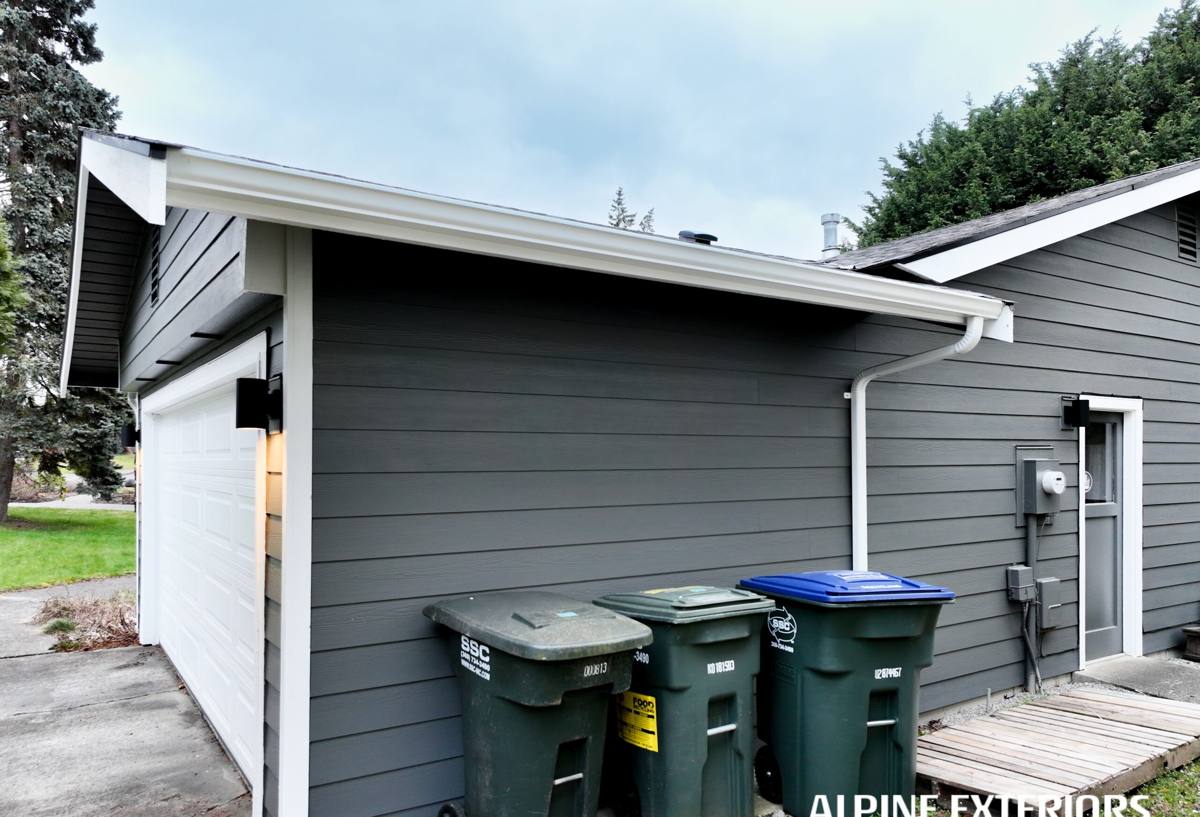
What Acme's Climate Does to Siding Over Time
Whatcom County's marine climate brings a specific combination of stresses that siding has to handle year after year:
- Driving rain: Wind-driven storms push moisture sideways into seams, laps, and trim joints, not just straight down. Any gap in the water-management details becomes an entry point.
- Long moss and algae season: Shaded, damp conditions common around Acme's wooded lots let moss and algae establish on siding surfaces and stay active for much of the year, especially on north-facing walls and under tree cover.
- Salt-influenced air: Proximity to Puget Sound and the surrounding waterways means siding in this region deals with airborne salt exposure that accelerates corrosion of fasteners and metal trim if they're not rated for it.
- Slow-drying wall assemblies: When humidity stays elevated for long stretches, any siding product that absorbs moisture takes longer to dry out between rain events, which extends the window for rot, swelling, and paint failure.
None of these factors are unique to Acme, but together they're a tougher test than most siding products were designed to pass without a lot of ongoing maintenance from the homeowner.
Why We Install James Hardie and Nothing Else
We standardized on James Hardie fiber cement siding because it's engineered to handle exactly this kind of climate without asking the homeowner to fight it every year. A few reasons this matters specifically for Acme:
It doesn't feed moss and algae the way wood-based products can
Fiber cement is not an organic wood substrate, so it doesn't provide the same food source for moss and mildew that engineered wood or untreated cedar can. On the shaded, damp lots common around Acme, that difference shows up as less surface staining and less scrubbing over the life of the siding.
It's dimensionally stable in wet-dry cycling
Fiber cement expands and contracts far less than wood-based siding as humidity swings, which means tighter joints and paint film that holds up longer under Whatcom County's freeze-thaw and wet-dry cycling.
It's non-combustible
James Hardie siding is fiber cement, not a combustible wood product, which matters for wildfire-adjacent risk in wooded, rural settings like Acme, and it's a factor some insurers weigh in coverage decisions.
The factory finish outlasts field-applied paint
Hardie's ColorPlus finish is baked on at the factory under controlled conditions, so the color and the protective topcoat go on more evenly and hold up longer than paint applied on-site in variable weather — which matters when your install window depends on catching dry days between Whatcom County storms.
We don't install LP SmartSide, vinyl, Cemplank, Allura, primed spruce, or cedar. Each of those has legitimate uses elsewhere, but we've made a professional call that James Hardie is the product we're willing to put our name behind on homes in this climate, and it's the only system we install.
What a Correct Installation Actually Involves
Fiber cement siding is only as good as the installation behind it. A lot of the problems homeowners eventually deal with — staining at seams, water intrusion, premature caulk failure — trace back to shortcuts during install, not the product itself.
Water management comes before the siding goes up
Correct installation starts with a properly lapped weather-resistant barrier, flashing at every window, door, and penetration, and drainage planes that let any moisture that does get behind the siding find its way back out instead of sitting against the wall sheathing.
Fastening and clearances matter more than they look
James Hardie specifies exact nailing patterns, fastener types, and minimum clearances from grade, roof lines, and decks. Skipping the required ground clearance or butting siding tight against a walkway is one of the most common install mistakes we see, and it's exactly the kind of detail that causes problems in a wet climate like this one.
Joints and caulking are where most failures start
Butt joints, corners, and trim intersections need to be treated correctly — proper gapping, backer rod where called for, and a quality sealant rated for the exposure. Rushed or missing caulk work is one of the fastest ways to undo the benefit of a good siding product.
Fasteners and trim need to match the coastal exposure
With salt-influenced air in the mix around Sudden Valley and the broader Whatcom County coastline, we use fasteners and flashing rated for that exposure rather than standard-grade hardware that corrodes faster near the water.
Our Process for an Acme Siding Installation
- On-site assessment. We walk the home, check the condition of the existing siding, sheathing, and trim, and look specifically for moisture damage that needs to be addressed before new siding goes on.
- Detailed estimate. You get a written scope covering product line, color, trim details, and what's included — no vague allowances.
- Tear-off and inspection. Removing the old siding lets us actually see the sheathing and framing underneath. Any rot or water damage gets flagged and repaired before we move forward, not covered over.
- Water-resistant barrier and flashing. This is the layer that does the real work of keeping Whatcom County rain out of your wall assembly, and it goes in before a single piece of Hardie board is hung.
- Siding installation to manufacturer spec. Correct fastening pattern, clearances, and joint treatment, installed by crews who install this product regularly, not occasionally.
- Trim, caulking, and final detailing. This is where a job either holds up for decades or starts failing at year three. We don't rush it.
- Final walkthrough. We go over the finished work with you before we consider the job done.
Cost Factors for Siding Installation in Acme
Every home is different, but the same handful of factors drive most of the cost variation we see on Acme projects:
| Factor | Why It Affects Cost |
|---|---|
| Home size and wall complexity | More square footage and more corners, gables, and dormers mean more cutting, fitting, and trim work. |
| Existing wall condition | Rot or water damage found during tear-off requires repair before new siding can go on, which affects both cost and timeline. |
| Siding profile and trim package | Lap width, shingle-style siding, and trim complexity all change material and labor costs. |
| Access and site conditions | Steep lots, tree cover, and limited staging space (common on wooded Acme properties) can affect labor time. |
| Color and finish selection | Factory ColorPlus finishes come at different price points depending on the line and color depth. |
We'll walk through all of this with you during the estimate so there aren't surprises once work starts.
Signs Your Acme Home May Need New Siding
- Persistent moss or algae growth that comes back quickly after cleaning
- Paint that's peeling, bubbling, or chalking faster than it should
- Soft spots, warping, or visible swelling in the siding material
- Cracked, missing, or loose caulk at joints and trim
- Visible gaps or separation at seams and corners
- Rising energy bills that suggest the wall assembly isn't performing the way it should
- Siding that's simply reaching or past the end of its expected service life
Why a Crew That Already Works Acme Matters
Siding installation isn't one-size-fits-all, even within a single county. A crew that regularly works Sudden Valley and the surrounding Acme area already knows how to sequence a job around the local rain patterns, what clearance and flashing details actually hold up on wooded, shaded lots, and how to handle sites where staging and access aren't as simple as a flat suburban lot. That familiarity shows up in fewer surprises during tear-off and a tighter, more weather-ready install once the siding goes up.
It also means we're not guessing about what this climate does to a wall assembly over ten or twenty years — we've seen it, and we build the install to hold up against it from day one.
Ready to Talk About Your Siding?
If your Acme home's siding is showing its age or you're planning ahead for a replacement, we're happy to take a look and give you a straightforward, no-pressure estimate. Use the form below to get started.