 Sudden Valley Siding
 Deck Repair in Ferndale: Built for Whatcom County Weather
A deck in Ferndale takes a different kind of beating than one twenty miles inland. Between the salt-laden air rolling off the Strait of Georgia and Puget Sound, the near-constant rain that defines a Whatcom County winter, and a moss season that can stretch from October through May, exposed wood and fasteners here age faster than manufacturers' spec sheets ever account for. We're a Sudden Valley-based crew that works decks and siding across the county, and Ferndale calls are a regular part of our week. We know what a deck looks like after five wet seasons here versus five wet seasons somewhere drier, and we repair accordingly.
This page covers deck repair specifically — not new deck builds, not siding, not fencing. If your deck has soft spots, rusted hardware, a wobbly rail, or boards that never quite dried out from last winter, this is what we do and how we do it.
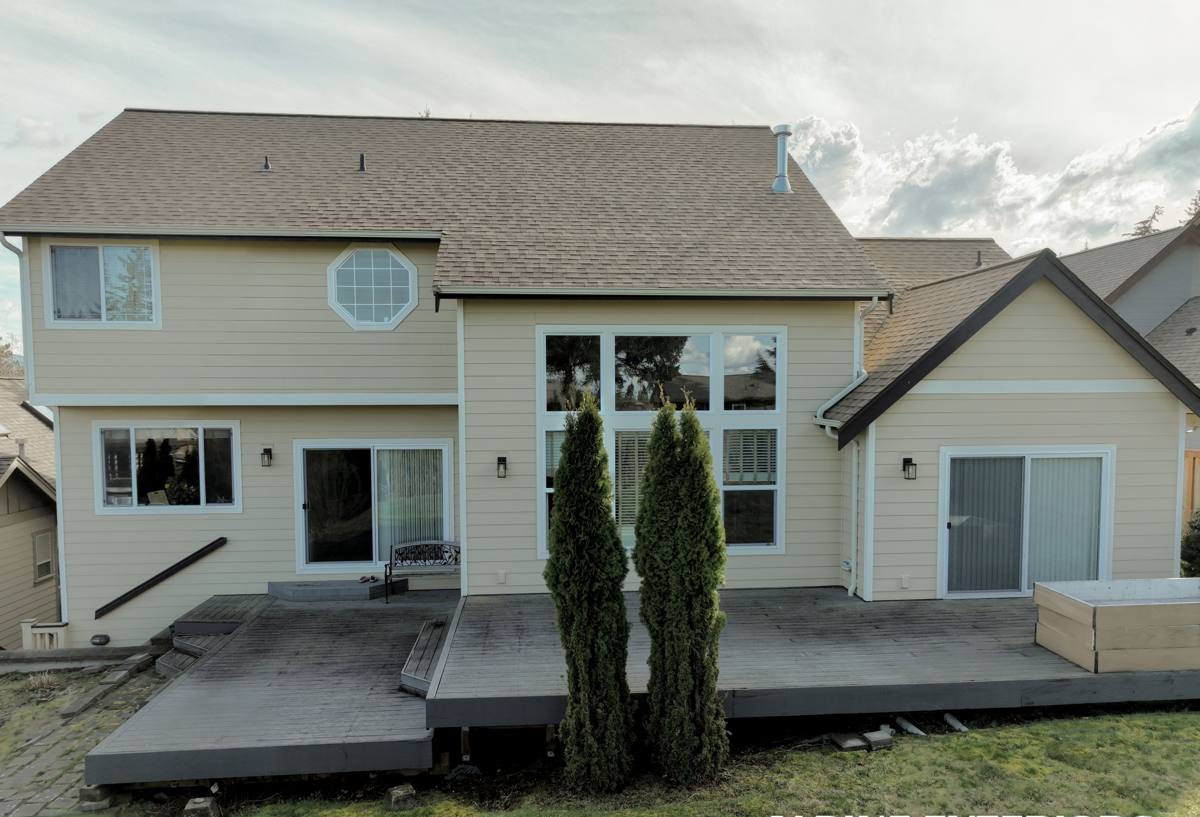
Why Ferndale Decks Fail Faster
Salt Air and Metal Fasteners
Ferndale's proximity to the water means airborne salt is a real factor, even on properties that aren't waterfront. Salt accelerates corrosion in nails, screws, joist hangers, and structural brackets — often well before the wood around them shows obvious damage. A deck can look solid on the surface while its fasteners are quietly rusting away underneath. This is one reason we always inspect hardware, not just decking boards, when we come out for a repair call.
Driving Rain and Trapped Moisture
Whatcom County rain doesn't just fall straight down — wind-driven rain gets pushed sideways under railings, into board gaps, and behind ledger boards where a deck attaches to the house. Once moisture gets trapped in those tight spots, it doesn't evaporate quickly in our climate. That's the setup for rot, and it's why so many deck failures start at the ledger board or at butt joints between boards rather than out in the open middle of the deck surface.
Moss, Algae, and Slippery Surfaces
A long, damp moss season does more than make a deck look neglected. Moss and algae hold moisture against the wood surface, which speeds up decay, and they turn a deck into a slip hazard — a real safety issue on stairs and near door thresholds. Decks that don't get cleaned or that sit in shade for most of the day are the ones we see with the worst moss buildup by late winter.
What a Correct Deck Repair Actually Involves
Deck repair gets treated like a cosmetic fix more often than it should be. Swapping a rotten board for a new one is easy. Finding out why that board rotted, and whether the damage has spread to the framing underneath, is the part that actually protects your investment and your family's safety.
Structural Inspection First
Before we replace anything, we check the parts of the deck you can't see from standing on it: the ledger board connection to the house, joists, beams, posts, and footings. A deck that feels sturdy can still have a compromised ledger connection — this is the single most common cause of serious deck failures, and it's almost always hidden behind the decking boards and rim joist.
Fastener and Hardware Condition
Given the salt air issue mentioned above, we pay close attention to joist hangers, structural screws, and any exposed metal connectors. Rusted or undersized hardware gets flagged even if the wood around it still looks fine — replacing hardware now is far cheaper than replacing framing later.
Wood Condition and Rot Mapping
We probe suspect areas — soft spots, discoloration, areas near planters or where debris collects — to find the actual boundary of rot damage rather than just replacing the board that looks worst. Rot spreads along grain lines and through end grain faster than it spreads across a board's face, so damage is often larger than what's visible on top.
Drainage and Airflow
A repair that doesn't address why water was sitting there in the first place is a temporary fix. We look at board spacing, flashing at the ledger, and whether the space under the deck has enough airflow to let wood dry out between rain events, which in Ferndale can be a matter of days, not weeks.
Our Deck Repair Process
- Walk-through and inspection — We assess the full deck, not just the area you called about, since related problems often hide nearby.
- Probe testing — We check framing, ledger, and any soft-looking boards with a probe to find true rot boundaries.
- Written scope and estimate — You get a clear breakdown of what needs repair, what's optional, and honest ranges before any work starts.
- Demo of damaged material — Only compromised boards, framing, or hardware are removed; sound material is left alone.
- Structural repair — Framing, ledger flashing, and hardware are corrected to current best practice, not just patched to match old (and possibly undersized) original construction.
- Board replacement and fastening — New boards are properly spaced and fastened with corrosion-resistant hardware suited to our coastal-influenced air.
- Final check — We confirm the deck is level, secure, and draining the way it should before we call the job done.
Common Ferndale Deck Repairs We See
| Issue | Typical Cause | What We Do |
|---|---|---|
| Soft or spongy boards | Trapped moisture, moss buildup, poor drainage | Remove and replace affected boards; improve spacing/airflow |
| Rot at ledger board | Missing or failed flashing where deck meets house | Replace ledger section, install proper flashing, reattach to code |
| Wobbly or loose railing | Rusted fasteners or rotted post base | Replace hardware and/or post base; re-secure to framing |
| Rusted joist hangers/screws | Salt air corrosion over time | Swap to corrosion-resistant structural hardware |
| Slippery, moss-covered surface | Shade, poor airflow, infrequent cleaning | Clean and treat; address underlying moisture if recurring |
| Stair stringer cracking | Age, moisture cycling, undersized original build | Sister or replace stringers; confirm proper support |
Repair vs. Replacement: How We Decide
Not every deck problem calls for a full rebuild, and not every deck is worth patching indefinitely. We look at three things: how much of the framing is structurally sound, how old the deck is relative to its expected service life in this climate, and whether the original construction had adequate flashing and drainage to begin with. A deck with isolated rot at the ledger or a handful of bad boards is usually a straightforward repair. A deck with widespread soft framing, undersized original joists, or repeated rot in multiple areas is often more cost-effective to rebuild than to keep patching piece by piece. We'll tell you honestly which category yours falls into rather than defaulting to the bigger job.
Signs You Likely Need Repair Now, Not Later
- Boards that flex or feel spongy underfoot, especially near the house or stairs
- Visible gaps, cracking, or separation where the deck meets the house wall
- Rust streaks below joist hangers or visible screws
- Railings that move or feel loose when pushed
- Standing water or slow drainage after rain instead of quick runoff
- Persistent moss or dark staining that returns soon after cleaning
- Any visible daylight or gap between the ledger board and the house siding
Materials and Fasteners We Use
Given what salt air and constant moisture do to standard hardware, we default to corrosion-resistant structural screws and hangers rated for exterior, coastal-influenced use rather than the cheapest available fasteners. For decking material itself, the right choice depends on your existing deck, your budget, and how much maintenance you want to take on going forward — pressure-treated lumber, cedar, and composite boards each behave differently once they're getting Whatcom County's rain and humidity year-round. We'll walk through the honest maintenance trade-offs of each option for your specific deck rather than pushing one product across the board.
Maintenance That Actually Extends Deck Life Here
Repair work lasts longer when it's paired with basic upkeep suited to this climate. A few habits make a real difference in Ferndale's conditions:
- Clear leaves and debris from board gaps before fall rains set in — trapped debris holds moisture against wood
- Rinse and treat moss growth before it establishes rather than after it's thick
- Keep planters and furniture legs off direct board contact, or use protective pads, to let boards dry evenly
- Check under-deck airflow isn't blocked by stored items or overgrown landscaping
- Have the ledger board and flashing checked every few years, since that's the failure point you can't see from above
Why a Local Crew Matters for This Kind of Work
Deck repair is diagnostic work as much as it's carpentry. A crew that only occasionally works this specific stretch of Whatcom County is guessing at how fast rot progresses here, what fastener corrosion actually looks like a few years in, and which drainage details matter most given our rain patterns. Because we're based in Sudden Valley and work Ferndale regularly, we're not learning the local climate on your project — we already know what a five-year-old ledger board looks like around here, and we build repairs to hold up against the next several wet seasons, not just to pass a quick visual check.
Get a Free, No-Pressure Estimate
If your deck has soft boards, a loose railing, or you just want an honest opinion on whether it needs repair or a full rebuild, we're happy to take a look. Fill out the form below and we'll get back to you with a straightforward assessment — no pressure, no upsell, just what your deck actually needs.