 Sudden Valley Siding
 Building Decks That Hold Up on Yew Street
Yew Street sits inside Sudden Valley, close enough to Lake Whatcom and the surrounding tree cover that decks here take a different kind of beating than decks a few miles inland. Homes on this stretch deal with a mix of moisture-laden air off the lake, heavy seasonal rain, and long stretches of shade under fir and cedar canopy that keep wood surfaces damp far longer than homeowners expect. A deck built with generic, catalog-spec framing and fasteners might look fine the first year or two, then start showing soft spots, rust streaks, or a slick green film underfoot by year three. We build decks for this specific stretch of Whatcom County with those conditions in mind from the framing up, not as an afterthought.
This page covers what a deck actually needs to survive and perform well on Yew Street, what a correct build involves step by step, and how we run the job from first estimate to final walkthrough.
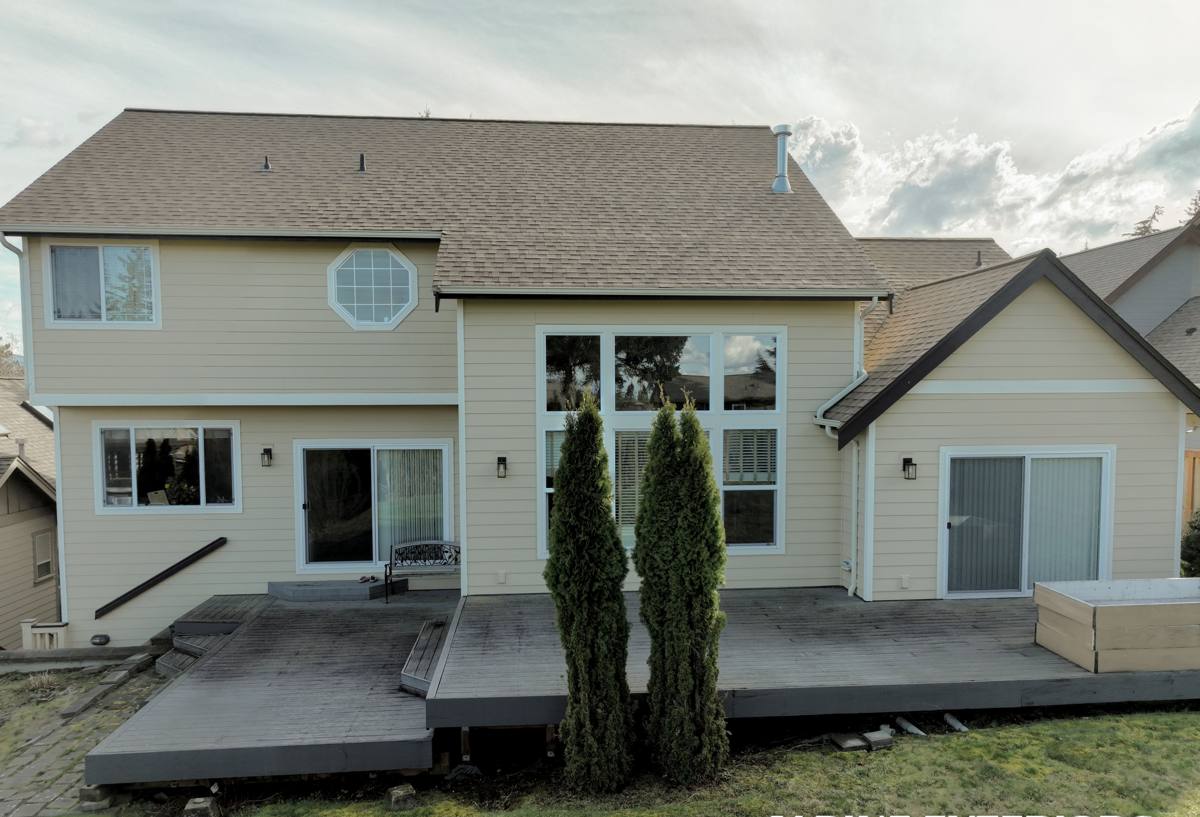
What Sudden Valley's Climate Does to a Deck
Whatcom County's marine climate is generally mild, but "mild" doesn't mean easy on wood and fasteners. Three things matter most for decks in this neighborhood:
Moisture and Driving Rain
Rain here doesn't just fall straight down — wind off the lake and through the valley pushes it sideways into ledger boards, stair stringers, and any joint where two pieces of framing meet. Water that gets driven into a poorly flashed ledger connection or an unsealed end cut doesn't dry out quickly under tree cover, and that's where rot starts, usually invisibly, under the decking boards where nobody looks.
Salt-Tinged Air
Even away from open saltwater, this part of Puget Sound country carries enough salt air on prevailing winds to accelerate corrosion on standard fasteners and hardware. Cheap or mismatched screws, joist hangers, and structural connectors will rust and weaken years before the decking itself wears out — and a deck is only as strong as its hidden hardware.
Moss and Shade
Sudden Valley's tree cover is part of what makes it a nice place to live, but it also means long moss seasons — often eight months or more of consistently damp, low-light conditions on north- and east-facing decks. Moss and algae growth isn't just cosmetic; it holds moisture against the board surface and makes decking dangerously slick, especially on stairs.
What a Deck Built for This Area Actually Needs
| Deck Element | Standard Approach | What We Do Differently for Yew Street |
|---|---|---|
| Fasteners & hardware | Basic galvanized screws and hangers | Stainless or high-grade coated fasteners rated for coastal/marine exposure to resist salt-air corrosion |
| Ledger flashing | Minimal flashing, caulk-dependent | Full metal flashing with proper lap and drainage path so wind-driven rain can't track behind the ledger |
| Decking material | Whatever's cheapest in stock | Composite, PVC, or properly sealed cedar chosen based on how much shade and moisture the specific deck location gets |
| Framing gaps | Tight board spacing | Correct gapping and airflow underneath so shaded areas can actually dry between rain events |
| Surface texture | Smooth-face boards everywhere | Textured or grooved boards on shaded stairs and landings where moss and slip risk are highest |
Our Deck-Building Process
1. On-Site Assessment
We walk the property and look at sun exposure, drainage, tree canopy, and how the proposed deck location ties into the house — especially the ledger connection point, since that's the single most common failure spot on decks in this climate. We also check existing grade and downspout drainage nearby, since standing water at the base of posts is a slow-motion problem.
2. Design and Material Selection
We talk through decking material, railing style, and layout based on how the space will actually be used and how much shade it gets. A deck tucked under heavy tree cover gets different material and spacing recommendations than one that sits in more open sun, even on the same street.
3. Permitting
Most new decks and significant deck replacements require a permit through Whatcom County. We handle the permit submission and inspection scheduling as part of the job so it's not left to the homeowner to sort out.
4. Demolition (Replacement Projects)
For deck replacements, we remove the old structure and check the ledger board, rim joist, and any framing behind it for hidden rot before building anything new. This is often where a "just replace the boards" job turns into a bigger — but necessary — repair, and we'll tell you honestly if that's the case rather than build over a compromised structure.
5. Framing
Correct joist spacing, proper post footings set below frost depth, and corrosion-resistant hardware throughout. This is the part of the deck nobody sees once it's finished, which is exactly why it has to be done right the first time.
6. Decking, Railing, and Stairs
Boards go down with proper spacing for drainage and expansion. Railings are set to current code height and baluster spacing. Stair treads get extra attention to slip resistance given how much moss pressure this area sees.
7. Final Walkthrough
We go over the finished deck with you, point out any maintenance items specific to your site conditions, and make sure everything meets code before we consider the job done.
Choosing the Right Decking Material for a Shaded, Damp Lot
There's no single "best" decking material — the right choice depends on how much sun and shade a particular deck actually gets, and how much upkeep a homeowner wants to take on.
- Composite decking: Resists moisture absorption and doesn't need staining or sealing, which is a real advantage on shaded lots where wood stays damp longer. Some composite lines can still support surface moss/algae growth if never cleaned, so it's not fully maintenance-free — just lower maintenance.
- PVC decking: Fully synthetic, doesn't absorb moisture at all, and holds up well in consistently damp, low-light spots. Tends to cost more upfront than composite.
- Cedar: A traditional, attractive choice, but it requires real commitment to sealing and periodic maintenance to perform well under heavy tree cover — skip a maintenance cycle in a shaded spot and it shows fast.
- Pressure-treated pine: The budget option. It can work fine in this climate if it's properly sealed and maintained, but it's the least forgiving material if that maintenance schedule slips.
Common Problems We See on Older Decks in Sudden Valley
When we're called out to look at an aging deck in this area — whether for repair or full replacement — the same handful of issues show up again and again:
- Rotted ledger boards from years of water tracking behind inadequate flashing
- Rusted-through joist hangers and fasteners that were never rated for the salt-air exposure this area gets
- Persistent moss growth on shaded stairs and landings creating a slip hazard
- Undersized or improperly spaced footings that have shifted with wet-season ground movement
- Railings that no longer meet current code spacing, often from older or DIY builds
Maintenance That Actually Matters Here
A well-built deck on Yew Street still needs some seasonal attention given the amount of shade and moisture involved. The key things worth doing:
- Sweep leaf and needle debris off the deck surface regularly in fall — trapped organic matter holds moisture against boards and accelerates moss growth
- Clean moss and algae off shaded boards and stairs at least once a year, before it builds up into a slip hazard
- Check that gaps between boards haven't filled with debris, which blocks drainage and airflow underneath
- Inspect visible hardware annually for rust or corrosion, especially at stair connections and railing posts
- Re-seal wood decking (cedar or pressure-treated) on the schedule the product actually calls for — not just when it starts looking gray
Why Hiring a Crew That Already Works This Neighborhood Matters
A deck contractor who mostly works drier, more open parts of Whatcom County will often default to standard framing and hardware specs that are fine for those conditions but undersized for what Yew Street's shade and salt air actually demand. We work this specific pocket of Sudden Valley regularly, so we already know which lots hold moisture longest, which orientations need extra attention to moss and slip resistance, and which fastener specs actually last here instead of rusting out early. That local pattern recognition is the difference between a deck that needs real repair work in five years and one that's still solid in twenty.
Get a Free, No-Pressure Estimate
If you're planning a new deck or need to replace one that's showing its age, we're happy to come take a look and give you an honest read on what your specific site needs — no pressure, no obligation. Fill out the form below and we'll get in touch to schedule a time.