 Sudden Valley Siding
 Windows Built for How Deming Actually Weathers
Deming sits far enough from town that a lot of the houses out here were built for a different era of window technology — single-pane wood sash, early aluminum-frame slider, or first-generation vinyl that's now twenty-plus years past its prime. None of that was built to handle what a Whatcom County winter throws at it year after year: salt-tinged marine air pushed in off the Sound, driving rain that comes sideways for days at a time, and a moss season that, honestly, doesn't fully end here. It just backs off for a few weeks in August.
That combination is hard on glass, hard on frames, and especially hard on the seals and flashing details around a window opening. When we talk about "energy-efficient windows" for a Deming home, we're not just talking about the glass package. We're talking about a whole system — frame material, seal design, and installation — that has to hold up to constant moisture cycling, not just look good on a spec sheet.
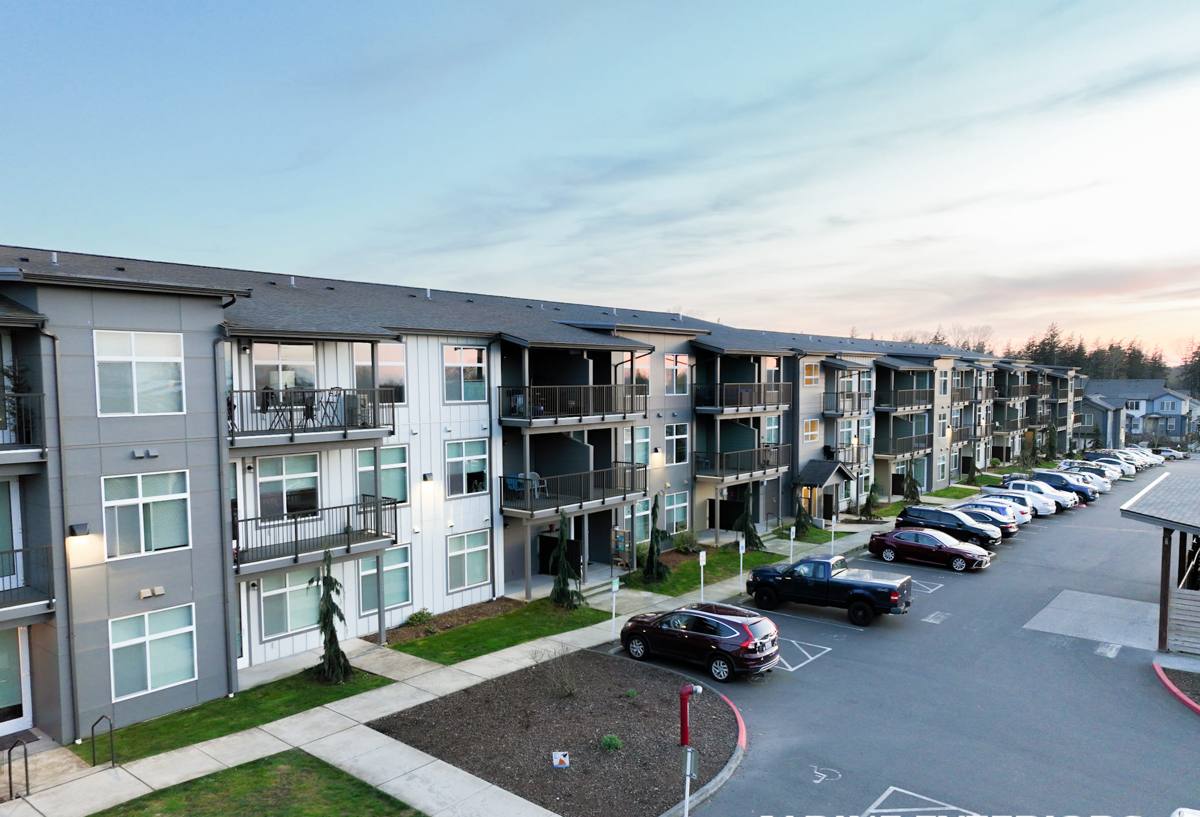
What Driving Rain and Moss Season Do to a Window Over Time
Moisture works in from the edges
Very few window failures start in the middle of the glass. They start at the corners of the frame, at the sill, and wherever the window meets the siding. Wind-driven rain finds any gap in the flashing or sealant and pushes water behind the trim, where it sits against wood sheathing that doesn't dry out quickly in our climate. Over a few seasons, that shows up as soft trim, stained interior drywall below the sill, or a frame that's started to swell and stick.
Moss and algae aren't just a roof problem
The same damp, shaded conditions that grow moss on a north-facing roof slope will grow algae and moss on window sills, mullions, and frame corners that don't get much sun or airflow. On older wood-frame windows this holds moisture directly against the material. On vinyl and aluminum it's mostly cosmetic, but it's a good early warning sign that a window isn't shedding water the way it should.
Seals fail quietly
Insulated glass units lose their argon fill and the seal between panes breaks down gradually, not all at once. By the time you see fogging or condensation trapped between the panes, the unit has usually been losing efficiency for a year or more. In a climate with our heating season, that's real, ongoing energy loss you can't see just by looking at the glass.
Signs Your Current Windows Are Working Against You
- Condensation forming between the panes (not just on the interior surface) — the seal has failed
- Visible daylight or a draft you can feel with your hand along the frame edge on a windy day
- Soft or discolored trim, sill, or interior wall finish directly below or around a window
- Windows that are difficult to open, close, or lock — frames have swelled or warped
- Moss, algae, or persistent black staining on sills or in frame corners
- Noticeably higher heating bills in rooms with older or south/west-facing single-pane windows
- Rooms that feel cold near the window even when the thermostat reads comfortable
What "Energy Efficient" Actually Means Here
Marketing language around windows gets thrown around loosely. For a heating-dominated climate like ours, two numbers matter more than any brand name on the sticker: U-factor and Solar Heat Gain Coefficient (SHGC).
| Spec | What it measures | What to look for in Whatcom County |
|---|---|---|
| U-factor | How much heat escapes through the window | Lower is better — this is the number that matters most for our winters |
| SHGC | How much solar heat passes through the glass | Moderate is usually right here — we want some winter solar gain without overheating south-facing rooms in summer |
| Air leakage | How much air passes through the assembly, not just the glass | Matters as much as the glass rating — a great IGU installed poorly still leaks air |
| Frame material | Dimensional stability and moisture tolerance | Should hold up to constant wet-dry cycling without warping or trapping water |
A window with excellent glass but a poorly sealed frame will underperform a modestly rated window installed correctly. This is why we treat the installation as at least as important as the product itself.
Frame Material Options for This Climate
We'll walk through actual trade-offs with you rather than steer you toward whatever has the best margin. Here's the honest comparison for a wet coastal climate:
| Material | Moisture behavior | Maintenance | Notes |
|---|---|---|---|
| Vinyl | Won't rot; can expand/contract with temperature swings | Low | Good value; quality varies a lot between manufacturers — corner welds matter |
| Fiberglass | Very stable, minimal expansion, sheds water well | Low | Higher upfront cost, longer service life in wet climates |
| Wood-clad | Interior wood look with an exterior weather shell | Moderate | Clad layer must be intact — any breach exposes wood to constant moisture |
| Aluminum | Poor thermal performance, prone to condensation | Low | We generally don't recommend for energy-focused replacements here |
We don't push wood-frame replacements without cladding in this climate — bare exterior wood against year-round rain is a maintenance commitment most homeowners don't want, and it's an honest trade-off worth knowing upfront rather than discovering in five years.
How We Handle the Installation
Flashing is where the job is won or lost
The window itself is only part of the assembly. We integrate window flashing with the surrounding siding using a shingle-lap sequence — house wrap, then sill pan flashing, then the window, then jamb and head flashing lapped correctly over the layer below so water is always directed outward and down, never behind the cladding. This is the single biggest factor in whether a window stays dry over the next twenty years.
Sill pans and back-dams
On every replacement we install a sloped sill pan with a back-dam so any water that does get past the exterior seal drains back out rather than pooling against the bottom of the frame. This is a small detail that's easy to skip and expensive to fix later if it's missing.
Air sealing, not just caulk
We seal the interior side of the rough opening with low-expansion foam or backer rod and sealant, sized correctly for the gap. Interior air sealing keeps warm, moist household air from migrating into the wall cavity and condensing against cold sheathing — a common cause of hidden rot that has nothing to do with the exterior weather at all.
Our Process, Start to Finish
- Walkthrough and assessment — we look at every window opening, not just the glass, including trim condition and any signs of past water intrusion
- Honest product recommendation — matched to your home's exposure, budget, and how long you plan to be in the house
- Written estimate — clear on materials, flashing details, and timeline, no vague allowances
- Removal and opening prep — old units removed carefully, opening checked and repaired if there's hidden rot before anything new goes in
- Flashing and sill pan installation — done to the sequence above, every window, every time
- Window install and air sealing — shimmed level and square, insulated, sealed interior and exterior
- Final check — operation, locks, weep holes, and exterior trim finish confirmed before we call it done
Why a Crew That Already Works Out Here Matters
Deming isn't downtown Bellingham, and that's part of the point. Homes out here tend to be older, on larger lots, with more direct wind and rain exposure and less shelter from neighboring buildings. A crew that regularly works this stretch of Whatcom County already knows what typical framing and siding conditions look like on homes of this age, what kind of flashing failures show up most often, and how to plan around weather windows instead of getting caught mid-installation by a system rolling in off the Sound. That familiarity shows up in fewer surprises once the old windows come out and the opening is exposed.
It also matters for warranty follow-through. A window installed correctly rarely needs a callback, but when something does come up — a stuck lock, a settling adjustment — it helps to be working with a crew that's local, remembers your job, and isn't dispatching from three hours away.
What Affects the Cost
We're not going to quote a number here that doesn't mean anything without seeing your house, but these are the real factors that move the price:
- Number of openings and whether they're standard sizes or custom
- Frame material chosen (vinyl, fiberglass, or clad wood)
- Condition of the existing rough opening — hidden rot repair adds time and material
- Full-frame replacement versus insert/pocket replacement
- Trim and siding tie-in complexity around each opening
- Access — second-story or hard-to-reach openings take longer
We'll walk the exterior with you, look at what's actually going on around each opening, and give you a real number based on your house — not a phone estimate.
If your Deming home has windows that are drafty, fogged, sticking, or just past their working life, we're happy to come take a look. The estimate is free, there's no pressure, and you'll get a straight answer about what your windows actually need — you can request one using the form below.