 Sudden Valley Siding
 Roof Replacement in Deming: Built for What Whatcom County Weather Actually Does
Deming sits inland from the salt water but still gets the full Whatcom County weather pattern: long, wet winters, heavy moss growth on north-facing slopes, and enough wind funneling down the Nooksack valley to test every nail and flashing detail on a roof. Add the humidity that rolls up from the coast and settles against the foothills near Sudden Valley, and you've got a climate that is hard on roofs in a specific, predictable way. A roof replacement here isn't just about swapping old shingles for new ones — it's about building a roof system that sheds moisture fast, resists moss colonization, and holds up through decades of freeze-thaw cycles and driving rain.
We've replaced roofs on homes throughout Deming and the surrounding Sudden Valley area long enough to know which failure patterns show up over and over, and which installation details actually prevent them. This page covers what that looks like in practice.
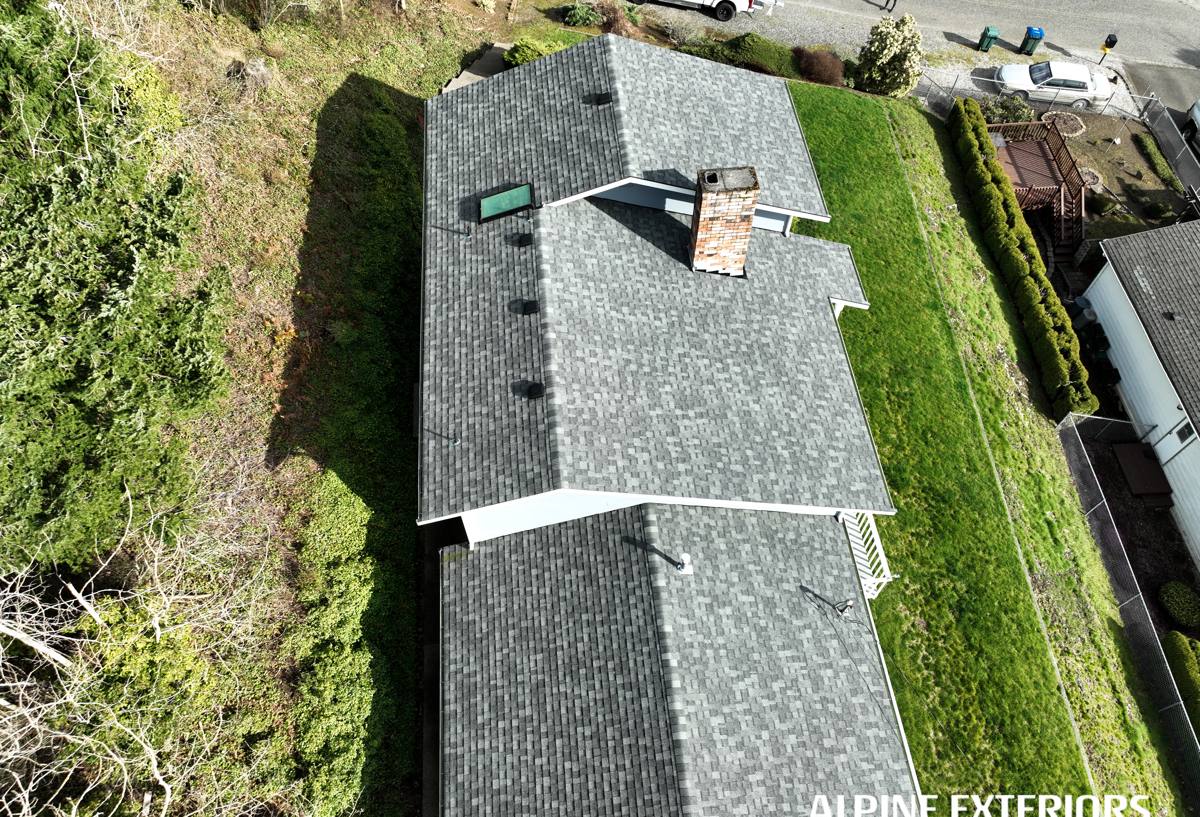
Why Deming Roofs Wear Out the Way They Do
Moss and Organic Growth
Whatcom County's moss season isn't a minor cosmetic issue — it's a structural one. Moss holds moisture against the roof surface long after rain has stopped, which accelerates granule loss on asphalt shingles and rot in wood-based roofing. On tree-shaded lots, which describe a lot of Deming properties, north- and east-facing roof slopes can stay damp for days at a stretch during winter. Left untreated, moss lifts shingle edges, which lets wind-driven rain work underneath.
Driving Rain and Wind-Driven Moisture
Rain in this region rarely falls straight down. Wind pushes it sideways and up under shingle tabs, around chimney flashing, and into any gap in valley metal. A roof that would perform fine in a drier climate can leak here simply because it wasn't detailed for wind-driven rain.
Freeze-Thaw and Temperature Swings
Deming sees more overnight frost than the immediate coastline, especially in low-lying areas near the river valley. Water that gets trapped under aging shingles or in compromised underlayment can freeze, expand, and accelerate cracking — a slow process that often shows up as a sudden leak years after the original damage occurred.
Signs a Deming Roof Needs Replacing, Not Just Patching
- Granules collecting in gutters or at downspout outlets, especially after a hard rain
- Shingles that are cupping, curling at the edges, or visibly brittle
- Moss or algae streaking that comes back within a season of cleaning
- Daylight visible through the roof deck from inside the attic
- Soft or spongy spots underfoot when walking the roof
- Flashing around chimneys, skylights, or vent pipes that's rusted, lifted, or caulked-over as a stopgap
- A roof older than 20-25 years for asphalt, or showing widespread wear rather than one isolated problem area
One or two of these on their own might mean a repair is enough. Several at once, especially combined with an aging roof, usually means repair costs start approaching replacement cost without buying you much extra life.
What a Correct Roof Replacement Involves
A roof replacement done right in this climate is a system, not a single product. Each layer has a job:
Tear-Off and Deck Inspection
We remove the old roofing down to the deck rather than layering over it. This is the only way to actually see the plywood or plank sheathing underneath — soft, delaminated, or water-stained decking has to be replaced before anything new goes down, or the new roof is sitting on a compromised base.
Underlayment
In a climate with this much sustained moisture, underlayment choice matters more than homeowners usually expect. Synthetic underlayment sheds water better than old-style felt and holds up longer to the intermittent UV exposure a roof deck sees during a multi-day tear-off.
Ice and Water Barrier at Vulnerable Points
Eaves, valleys, and any roof-to-wall transition get self-adhering waterproof membrane, not just underlayment. These are the spots where wind-driven rain and ice damming cause the most damage, and they're the cheapest place to over-build relative to the risk.
Flashing
Chimney flashing, step flashing along walls, and valley metal are where most roof leaks actually originate — not in the field of the roof itself. We replace flashing rather than reuse it, and we integrate it correctly with the new underlayment rather than relying on sealant to bridge gaps.
Ventilation
A roof deck that can't breathe traps moisture from inside the house, which rots sheathing from underneath regardless of how good the roofing material is. We check intake and exhaust ventilation balance as part of every replacement — this is a common gap in older Deming homes that were built before current ventilation standards.
Roofing Material Installation
Whatever material is chosen, correct nailing pattern, exposure, and starter course installation determine whether it performs to its rated wind resistance. We follow manufacturer specs exactly rather than crew shortcuts, because that's what keeps the material warranty valid if something does go wrong down the line.
Roofing Material Options for Deming Homes
| Material | Typical Lifespan | How It Handles This Climate | Trade-Offs |
|---|---|---|---|
| Architectural asphalt shingles | 25-30 years | Good performance with proper underlayment and ventilation; widely available in algae-resistant formulations | Needs periodic moss/algae maintenance in shaded areas |
| 3-tab asphalt shingles | 15-20 years | Lower cost option, adequate wind rating when installed correctly | Less durable and less resistant to moss/algae staining over time than architectural shingles |
| Metal roofing | 40-50+ years | Sheds moss and rain very effectively; strong wind performance | Higher upfront cost; requires a crew experienced with metal-specific flashing details |
| Wood shake/shingle | 20-30 years with maintenance | Traditional look, but organic material is inherently more moss- and rot-prone in a wet climate | Higher maintenance burden; we're honest with clients about this trade-off up front |
We don't push one material on every roof. The right call depends on the roof's slope, how much tree cover shades it, the home's architecture, and the homeowner's tolerance for maintenance versus upfront cost.
Our Process for a Deming Roof Replacement
- On-site inspection. We walk the roof and the attic, not just look from the ground, to identify deck condition, ventilation, and existing leak points.
- Written estimate. Material options, scope of work, and pricing laid out clearly — no vague allowances that turn into surprise change orders.
- Scheduling around weather. Whatcom County's rain patterns mean we plan tear-off days around forecast windows and keep the roof deck protected if conditions shift mid-project.
- Tear-off and deck repair. Old roofing removed, deck inspected and repaired as needed before anything new is installed.
- Underlayment, flashing, and ventilation work. The parts of the job that don't show but determine whether the roof actually lasts.
- Material installation. Installed to manufacturer spec so warranties stay intact.
- Final walkthrough. We go over the finished roof and answer questions before we consider the job done.
Why a Crew That Already Works Deming Makes a Difference
Roofing crews that mostly work drier climates sometimes under-detail moisture protection because they've never had to deal with the consequences. A crew that regularly works Deming and the broader Sudden Valley area already knows which roof slopes hold moss longest, how local tree cover affects ventilation needs, and which flashing details actually hold up through a full Whatcom County winter rather than just looking finished on installation day. That local pattern recognition shows up in fewer callbacks and roofs that perform the way they're supposed to for their full expected lifespan.
It also matters for scheduling and response. A local crew can get to a Deming property faster if something needs a second look after a storm, and we're not learning the area's climate quirks on your roof for the first time.
Maintenance That Extends the Life of a New Roof
- Keep gutters and downspouts clear so water doesn't back up under the shingle edge
- Have moss treated or gently removed before it spreads, rather than after it's established
- Trim back overhanging branches to reduce shade, debris buildup, and physical abrasion on the roof surface
- Check attic ventilation isn't blocked by insulation or storage after any attic work
- Schedule a periodic visual inspection, especially after major wind events
None of this replaces a well-built roof, but it protects the investment once it's in place.
What Affects the Cost of a Roof Replacement
| Factor | Why It Matters |
|---|---|
| Roof size and number of planes/valleys | More complexity means more material, more flashing detail, and more labor hours |
| Deck condition | Rotted or delaminated sheathing found during tear-off adds material and labor to replace it before roofing can go on |
| Material choice | Asphalt, metal, and wood carry different material costs and installation labor |
| Roof pitch and access | Steeper roofs and difficult access require more safety equipment and time |
| Ventilation and flashing upgrades | Bringing older systems up to current standards adds scope but reduces future problems |
We give a written estimate after seeing the actual roof rather than a phone-quote guess, because these factors vary enough house to house that a number without an inspection isn't reliable for either of us.
If your roof in Deming or Sudden Valley is showing its age or you just want an honest opinion on where it stands, we're glad to take a look. Fill out the form below for a free, no-pressure estimate.