 Sudden Valley Siding
 Deck Building in Geneva Has to Answer to the Weather First
Geneva sits in the pocket of homes in and around Sudden Valley, tucked into the trees along Lake Whatcom in Whatcom County. It's a good-looking area to live in — mature timber, hillside lots, water views from some properties — but that same setting is hard on an outdoor deck. Tree cover means shade that never fully dries out. Hillside grading means water has somewhere to run, and it usually runs toward your framing. And the broader Whatcom County climate — driving rain much of the year, a long stretch of low sun angle in winter, and marine air moving in off the Sound and the Strait — adds up to conditions that punish a deck built without those specifics in mind.
A deck built the way a builder in a dry inland climate would build it does not last here. This page is about what actually holds up on a Geneva lot, what a correctly built deck involves from the ground up, and how we approach the job when we're asked to build or replace one in this specific area.
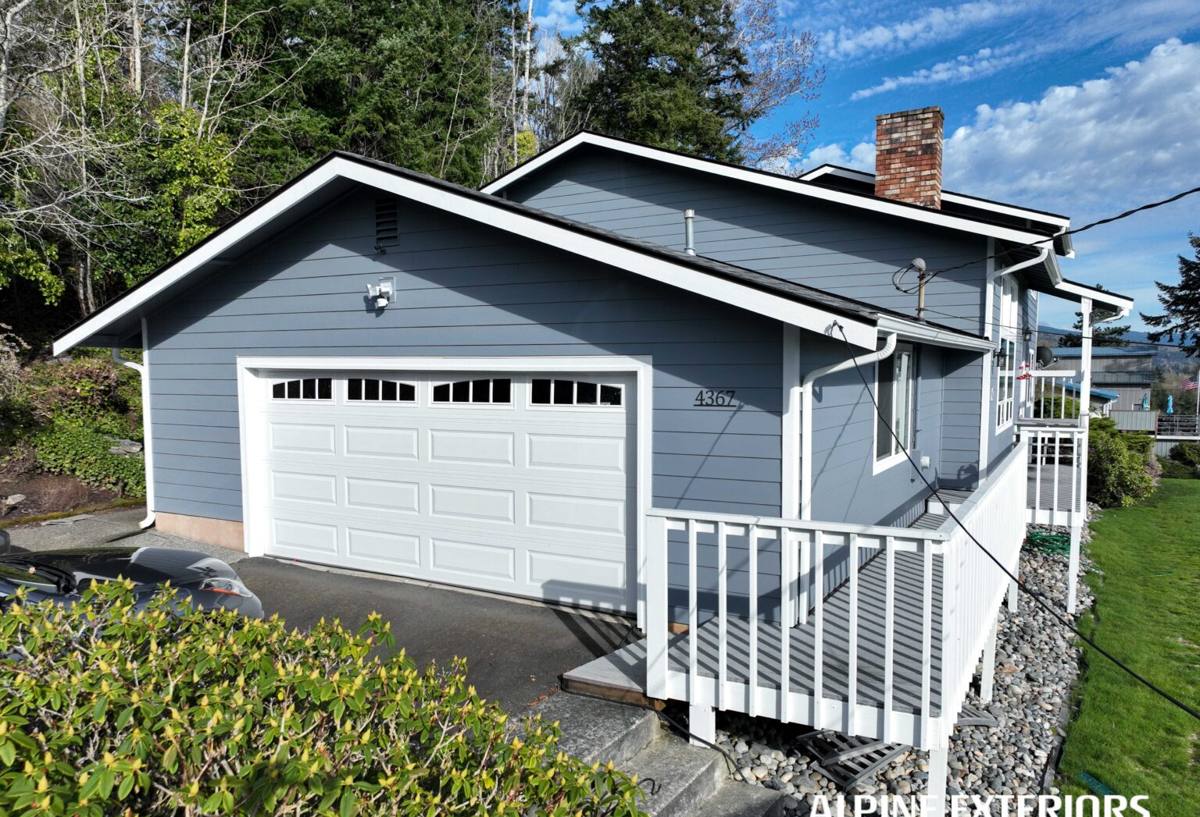
What the Local Climate Does to an Unprotected Deck
Driving Rain and Ledger Rot
The single most common failure point on decks in this region isn't the decking boards — it's the ledger board, the piece that bolts the deck to the house. Wind-driven rain gets behind ledgers that weren't flashed correctly, and the wood stays wet long after the storm passes. Once moisture is trapped between the ledger and the house wall, rot sets in quietly, often for years, before anyone notices the deck has started to pull away from the structure.
Moss, Shade, and Slow-Drying Wood
Geneva's tree cover is part of what makes the area appealing, but shaded decking dries slower than decking in the open. Add a long moss season — the stretch from fall through spring when it's cool, damp, and low-light most days — and any horizontal wood surface that isn't gapped and ventilated properly becomes a place for moss and algae to take hold. Beyond looking bad, moss holds moisture against the board surface, which accelerates rot in real wood and can leave composite boards perpetually damp and slick.
Marine Air and Hardware Corrosion
Whatcom County's proximity to the Sound and the Strait means the air carries more moisture and salt content than you'd get further inland, and that air moves through the county even at lake communities like Sudden Valley. Standard coated deck screws and lightweight brackets corrode faster in this environment than their ratings suggest. It shows up first at fastener heads and joist hangers — small rust streaks that tell you the hardware is degrading faster than the wood around it.
What a Correctly Built Deck Involves Here
None of the climate factors above are unusual for this area — they're the baseline. A deck built to hold up in Geneva needs to account for all of them from the design stage, not patch around them later. That means:
- Ledger flashing installed as a system — flashing, housewrap integration, and a drainage gap — not just a bead of caulk
- Joist tape over every top edge of framing lumber to stop water intrusion at fastener penetrations
- Hot-dip galvanized or stainless steel hardware for ledgers, hangers, and structural fasteners, sized for the coastal-influenced air common to this part of Whatcom County
- Board spacing and joist layout that allow real airflow underneath, especially on shaded sections of the deck
- Footings set below the local frost depth and sized for the soil conditions on the specific lot — hillside lots around Sudden Valley often have variable soil that a flat-lot footing spec doesn't account for
- Proper slope away from the house on any framing member that could pond water
Skipping any one of these doesn't usually cause an immediate problem. It shows up in year three or four, as soft spots near the ledger, rust bleeding through fastener heads, or a persistent moss line that pressure washing keeps coming back to.
Choosing Decking Material for a Geneva Lot
There's no single right material for every deck — it depends on how much shade the site gets, how the homeowner wants to handle maintenance, and budget. Here's how the common options actually perform under Geneva's conditions specifically:
| Material | Moisture & Moss Behavior | Maintenance | Best Fit |
|---|---|---|---|
| Pressure-treated pine | Resists rot with proper sealing, but moss and mildew will colonize the surface in shaded spots between cleanings | Needs re-sealing every 1-2 years and periodic cleaning to stay ahead of moss | Budget-conscious builds, sunnier or well-ventilated sites |
| Cedar | Naturally more rot-resistant than pine, but still an organic surface that moss will grow on in shade | Similar sealing schedule to pressure-treated; shows weathering if neglected | Homeowners who want a natural wood look and are willing to maintain it |
| Composite decking | Doesn't rot, but early-generation composites could hold surface moisture; modern capped composites shed water and resist moss better | No sealing; occasional washing to clear pollen, needles, and moss film | Shaded lots, low-maintenance priorities |
| PVC decking | Fully synthetic, sheds water well, most resistant to moss staining of the group | Lowest maintenance; periodic washing only | Heavily shaded or damp sites, long-term low-upkeep goals |
We'll walk a specific site with you and point out where shade and drainage patterns push the recommendation one way or the other — a deck under open sky and a deck under a stand of fir trees fifty feet away can reasonably end up with different material recommendations even in the same neighborhood.
Permits, Footings, and Whatcom County Code Basics
Most decks above a modest height, or attached to the house, require a building permit in this jurisdiction, and inspections typically check footing depth, ledger attachment, and guardrail construction along the way. Guardrails are generally required once a deck reaches a certain height above grade, with minimum height and baluster spacing rules that exist specifically to prevent falls. Some Sudden Valley properties, including those in Geneva, also fall under community association design guidelines in addition to county permitting, so it's worth checking both before finalizing a design.
We handle the permit submission and inspection coordination as part of the project rather than leaving it to the homeowner to sort out — it's one less place for something to get missed on a build that has to answer to both the county and, where applicable, the community association.
Our Process for a Geneva Deck Project
1. Site Assessment
We walk the lot and look specifically at grade, drainage direction, tree shade patterns through the day, and how the deck will tie into the house. On hillside Sudden Valley lots this step matters more than it would on a flat suburban site — footing placement and framing height often have to work around slope rather than against it.
2. Design and Material Selection
We talk through material options against how much maintenance the homeowner actually wants to do, then design the framing and footing layout to match the site conditions we found in the assessment.
3. Permitting
We submit the permit application and handle the inspection scheduling so the project moves on the county's timeline without the homeowner having to manage that piece.
4. Framing and Flashing
This is where the climate-specific details get built in — ledger flashing, joist tape, corrosion-resistant hardware, and footings to the correct depth. It's also the stage a rushed job cuts corners on, because it's the part that gets covered up by decking boards and never seen again.
5. Decking, Railing, and Final Walkthrough
Decking goes down with the spacing and fastening pattern the material manufacturer specifies, railings go in to code, and we walk the finished deck with the homeowner before calling the job done.
Keeping a Geneva Deck Ahead of Moss and Rot
A well-built deck still needs some ongoing attention in this climate — the difference is that a correctly built one responds well to basic upkeep instead of fighting you the whole time. A simple seasonal routine goes a long way:
- Sweep debris — needles, leaves, seed pods — off the deck surface regularly, especially in fall; trapped debris holds moisture against boards
- Rinse or lightly wash the deck surface each spring before moss gets a foothold for the summer
- Check the gap between boards periodically to make sure it hasn't filled in with debris, which blocks drainage and airflow
- Inspect fastener heads and any visible hardware once a year for early rust
- Re-seal wood decking on the schedule the product calls for — don't wait for it to look weathered
- Look at the ledger area where the deck meets the house once a year; that's the first place a moisture problem shows up
Why Hire a Crew That Already Works Geneva and Sudden Valley
A lot of deck problems in this area trace back to a design that was correct somewhere else but wrong for this climate — flashing details that work in a drier region, hardware specs that don't account for the marine-influenced air moving through Whatcom County, or a material choice that ignores how much shade a lot actually gets. A crew that already builds in Geneva and the surrounding Sudden Valley area has already seen how these lots drain, how much moss pressure a given exposure gets, and what actually holds up after a few wet winters rather than what looks fine on the day it's finished.
That local pattern-recognition is worth more than it sounds like on paper — it's the difference between a deck we build once and one that needs its ledger rebuilt in five years.
If you're planning a new deck or need to replace one that's showing its age, we're happy to walk the site and give you a straightforward, no-pressure estimate — just fill out the form below.