 Sudden Valley Siding
 Board & Batten in a Wet, Wooded Corner of Whatcom County
Acme sits in one of the shadier, more moisture-heavy pockets of the Sudden Valley area, tucked against tree-covered hillsides where the air stays damp long after a storm has passed. Homes here deal with driving rain that comes in sideways off the foothills, salt-tinged air that drifts up from the Sound on a west wind, and a moss season that, for a lot of properties, never really ends. Siding installed without those conditions in mind tends to show it within a few years — streaking, soft spots at the bottom courses, green growth in the shaded elevations. Board & batten siding, done correctly with the right materials, holds up to that combination better than almost any other style, which is part of why we get asked about it so often on Acme homes.
This page is specifically about board & batten in this neighborhood — not a general rundown of the style. What follows covers what the local climate actually demands from a vertical siding system, what a correct installation looks like, and why a crew with hands-on experience on Acme homes catches problems a crew unfamiliar with the area might miss.
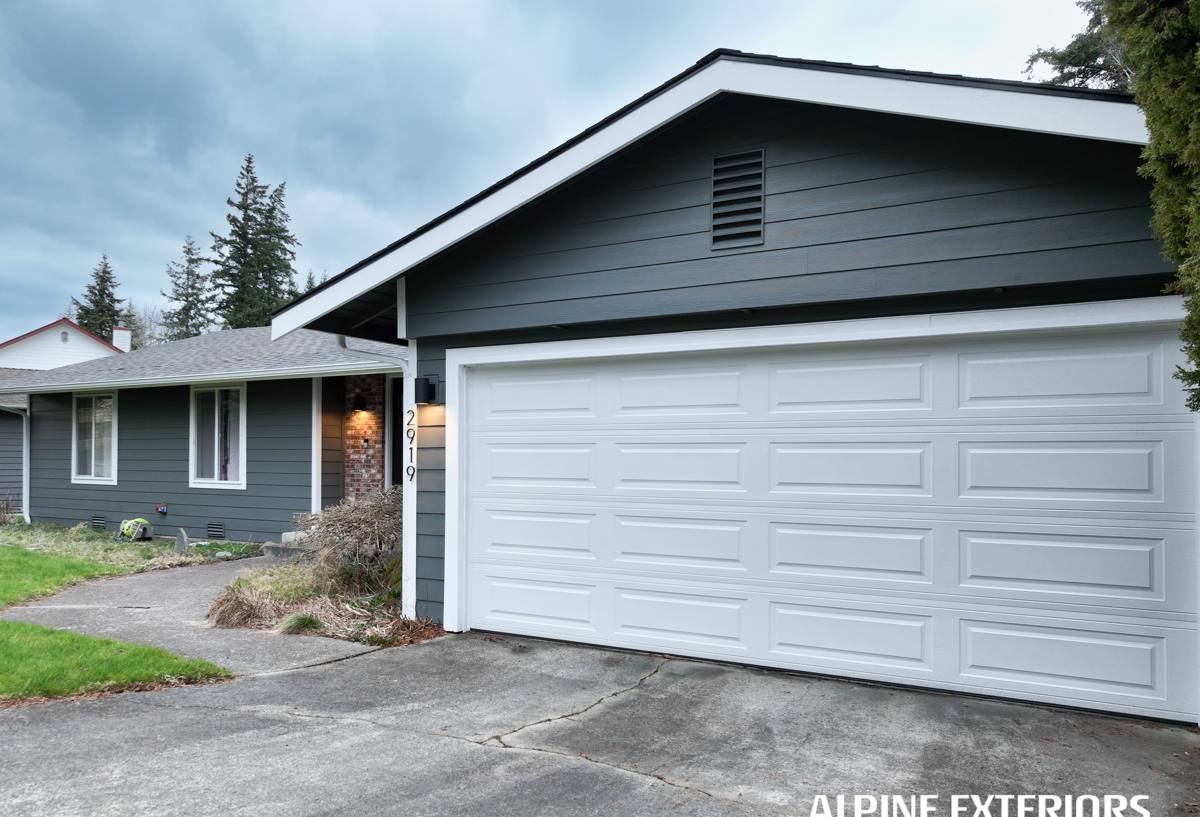
What Board & Batten Siding Actually Is
Board & batten is a vertical siding profile: wide flat panels installed side by side, with narrower strips — the battens — covering each seam. It's a look with deep roots in Pacific Northwest farmhouse and craftsman architecture, and it reads well against the wooded, rural character of the Acme area. But the profile is only half the story. What matters more is the material underneath it, because board & batten has more seams per square foot than horizontal lap siding, and every one of those seams is a place water can find its way in if the system isn't built right.
We install this style exclusively in James Hardie fiber cement — either the Hardie Board & Batten panel system or HardiePanel with HardieTrim battens over the joints, depending on the look and budget. We don't offer it in vinyl or engineered wood, and we'll explain why further down. The short version: a vertical siding style with this many seams needs a base material that doesn't swell, doesn't rot, and won't telegraph movement through the joints over time.
What Acme's Conditions Ask of a Siding System
A few things about this pocket of Whatcom County make the siding choice matter more than it might in a drier, more open location:
- Tree cover and shade. Heavier canopy means slower drying after rain, which is exactly what moss and algae need to establish on north- and east-facing walls.
- Driving, wind-blown rain. Storms coming through the valley don't just fall straight down — they push moisture sideways into wall assemblies, which is hard on any siding with weak seams or poor flashing.
- Salt-influenced marine air. Whatcom County's proximity to the Sound means the air carries salt and moisture even well inland, and that combination accelerates corrosion on fasteners and trim that aren't rated for it.
- Long wet seasons with short recovery windows. Siding here doesn't get many stretches of dry weather to fully dry out between storms, which is why moisture-tolerant material matters more than it would in a drier climate.
None of this means the siding fails fast — it means the margin for error is smaller. A product or installation detail that would be a minor issue in a dry inland climate becomes a real maintenance headache after a few Acme winters.
What a Correct Installation Involves
The Rainscreen Gap and Drainage Plane
Board & batten fails most often not because the panels themselves are bad, but because whoever installed them skipped the drainage details. A correct install includes a weather-resistive barrier, a drainage gap behind the panels (furring strips or a manufactured rainscreen product), and a clear path for any moisture that does get behind the siding to drain back out rather than sit against the sheathing. In a climate that stays damp as long as this one does, that gap is not optional — it's the difference between siding that dries out between storms and siding that stays wet against the wall.
Fastening and Flashing
Every seam, window, and door opening needs proper flashing, and every fastener needs to be corrosion-resistant given the salt content in the air. We follow James Hardie's fastening specifications exactly — correct fastener type, spacing, and embedment — because a nail that backs out or corrodes prematurely turns into a leak point years before it should.
Batten Spacing and Joint Layout
Batten placement isn't just cosmetic. Battens need to land squarely over the panel joints and be fastened into structural framing, not just into the panel below. Spacing that's inconsistent or joints that aren't backed properly create weak points where wind-driven rain can work its way in over time — exactly the kind of stress this area's storms put on a wall.
Board & Batten vs. Lap Siding: Which Fits an Acme Home
| Factor | Board & Batten | Horizontal Lap Siding |
|---|---|---|
| Look | Vertical, farmhouse/craftsman character — fits Acme's rural, wooded settings well | Traditional horizontal reveal — versatile, works on most home styles |
| Seams & joints | More seams (batten-covered); installation detail matters more | Fewer vertical joints; simpler moisture path |
| Moss & algae in shaded areas | Vertical lines shed water faster on steep runs, but battens can trap debris if not detailed well | Horizontal laps can hold moisture at the underside of each course |
| Typical use | Full elevations, accent gables, or mixed with lap for visual contrast | Whole-house siding, most common choice regionally |
| Relative cost | Generally somewhat higher installed cost due to batten material and labor | Generally the lower-cost baseline option |
Neither style is objectively "better" — the right choice depends on the home's architecture and how much of the vertical look you want. A lot of Acme homeowners end up mixing the two: board & batten on gables or a front elevation, lap siding on the rest. What matters more than the style choice is that whichever profile you pick is installed with the drainage and flashing details this climate requires.
Why We Install Only James Hardie for This Application
We get asked fairly often why we don't offer board & batten in vinyl or in engineered wood products like LP SmartSide. Both have real strengths — vinyl is inexpensive and low-maintenance in dry climates, and engineered wood machines and paints beautifully. But board & batten's seam-heavy profile is exactly where those materials show their weak points in a climate like this one. Vinyl panels expand and contract more than fiber cement, which can telegraph through batten joints over time and open gaps for moisture. Engineered wood siding relies on factory sealing and careful field caulking at every cut edge to keep moisture out of its wood-fiber core — miss one edge on a job with this many seams, and that's a callback waiting to happen.
James Hardie's fiber cement doesn't swell, doesn't rot, and holds paint and factory finish without the same moisture sensitivity at cut edges. The ColorPlus factory finish also means fewer field-painted surfaces overall, which reduces the number of places a poor caulk joint could let water in down the road. For a style with this many seams, in a climate that stays wet this long, that's the material we're willing to put our name behind.
Our Process for Acme Board & Batten Projects
- Walk and assessment. We look at drainage around the foundation, existing moisture damage, tree cover and shading on each elevation, and how the home is currently ventilated behind the siding.
- Design and material selection. We help you decide where board & batten makes sense — full elevations, gable accents, or paired with lap siding — and select the right Hardie panel and ColorPlus color.
- Tear-off and prep. Old siding comes off, sheathing is inspected and repaired where needed, and a weather-resistive barrier goes on before anything new is installed.
- Rainscreen and drainage install. The drainage gap goes in before panels, along with correctly flashed openings around every window and door.
- Panel and batten installation. Panels and battens go up to Hardie's fastening spec, with joint layout planned so battens land on structural framing.
- Final inspection and walkthrough. We check fastener lines, caulk joints, trim details, and drainage before calling the job done.
Why a Crew That Already Works This Area Matters
A lot of siding problems on homes in shaded, damp settings like Acme don't come from bad material — they come from installers applying a generic install to a site that needed extra attention to drainage and airflow. A crew that has worked this specific area repeatedly knows which elevations tend to stay shaded longest, where tree cover typically demands extra care with the rainscreen gap, and how the salt-influenced air here affects fastener and trim choices over the years. That's not something you get from a spec sheet — it comes from having done the work on homes like yours, in this exact climate, more than once.
Maintenance Checklist for Board & Batten in This Climate
- Rinse shaded, moss-prone elevations once or twice a year to keep growth from taking hold on battens and panel faces.
- Check caulk joints at window and door trim annually — even with factory-finished panels, trim caulk is the first place to fail.
- Keep tree branches and shrubs trimmed back from siding to improve airflow and speed drying after storms.
- Watch for staining or discoloration at the base of walls, which can signal a drainage or splash-back issue worth addressing early.
- Have fastener heads and trim checked periodically for corrosion, especially on elevations most exposed to wind-driven rain.
If you're weighing board & batten for a home in the Acme area, we're glad to walk the property, look at what your specific elevations and tree cover are dealing with, and give you a straightforward, no-pressure estimate — no obligation, just an honest look at what the job actually needs.