 Sudden Valley Siding
 Building a Deck That Actually Holds Up at Lake Whatcom
A deck at Lake Whatcom lives a different life than a deck in a dry climate. Between the tree cover ringing the lake, the long stretch of wet months, and the general dampness that Whatcom County holds onto from fall through spring, the wood and hardware underneath a deck are under near-constant moisture pressure. Add in the moss and algae that thrive in shaded, damp lakeside lots, and you've got a structure that needs to be built differently than a deck going up in a sunny, open backyard somewhere inland.
We build and repair decks for homes around Sudden Valley and the Lake Whatcom shoreline, and the patterns repeat: decks that were built to a generic spec — right board, wrong flashing, wrong fastener, wrong slope — start failing years before they should. This page covers what a deck actually needs to hold up here, what our process looks like, and why local experience on this specific lake matters more than it would somewhere drier.
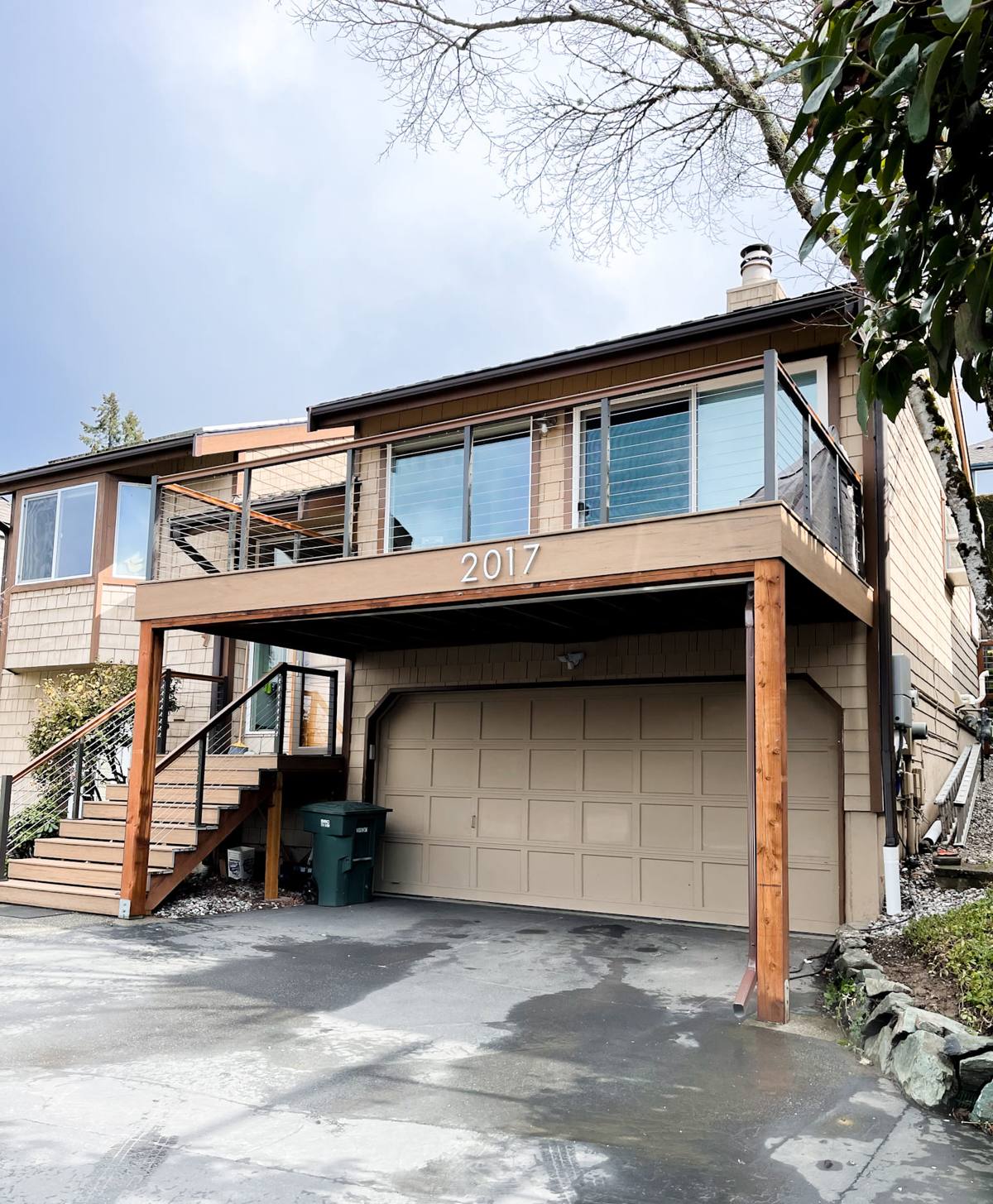
What Lake Whatcom's Climate Does to a Deck
Whatcom County doesn't get the driest kind of Pacific Northwest weather — driving rain off the marine air moves through the region for months at a stretch, and even homes set back from the water at Lake Whatcom stay damp longer into the year than you'd expect from looking at a forecast. Shade from surrounding trees keeps decks from ever fully drying between storms, which is exactly the condition moss and algae need to take hold.
- Standing moisture: Decks with poor drainage or tight board spacing trap water against the framing, which is where rot actually starts — not on the visible surface.
- Moss and algae: Shaded, north-facing, or tree-covered decks around the lake grow a slick green film faster than most homeowners expect, and it's a fall hazard on stairs and landings, not just an eyesore.
- Slow drying cycles: Because the deck rarely gets a long dry stretch, any water that does get trapped behind flashing, under ledger boards, or around post bases stays there longer — which accelerates rot compared to drier regions.
- UV is a smaller factor here than in sunnier climates — most of the damage we see at Lake Whatcom is moisture-driven, not sun-driven, which changes what actually matters in material and detailing choices.
Where Decks Actually Fail (It's Rarely the Boards)
Ledger Board Flashing
Most attached decks connect to the house at a ledger board, and that connection point is the single most common failure spot we find on older decks in this area. If the ledger isn't properly flashed to shed water away from the house's sheathing and framing, water works its way behind the board over years and rots both the ledger and the rim joist it's bolted to — often invisibly, until the deck starts to feel spongy or pull away from the house.
Joist and Beam Protection
Untreated cuts, joist hanger pockets, and beam tops are all places where water sits and soaks in. We treat cut ends and use joist tape or flashing over the tops of joists and beams so the fasteners aren't sitting in a wet pocket for months at a time.
Fasteners and Hardware
In a damp climate, the wrong screws and hangers corrode and stain the wood around them within a few seasons. Hot-dip galvanized or stainless hardware, matched to whatever wood treatment is used, isn't optional here — it's the difference between hardware that lasts the life of the deck and hardware that needs replacing halfway through it.
Footings and Post Bases
Posts sitting directly on or too close to grade wick moisture up into the wood. Post bases need to hold the post up off the concrete, and footings need to be set to the depth the local building code requires for this area's frost and soil conditions — not just deep enough to "seem solid."
Choosing Decking Material for This Climate
There's no single right answer for every lot — it depends on how much shade the deck sits in, how much upkeep you want to do, and budget. Here's how the common options actually perform under Lake Whatcom conditions specifically:
| Material | How it handles moisture & moss | Maintenance | Typical lifespan here |
|---|---|---|---|
| Pressure-treated lumber | Resists rot with proper sealing; still needs airflow underneath to avoid trapped moisture | Re-seal or stain every 1-2 years, especially in shaded areas | 15-20 years with upkeep |
| Cedar | Naturally rot-resistant, but softens the look/durability edge if left unsealed in constant damp shade | Regular sealing; moss scrubbing on shaded boards | 15-25 years with upkeep |
| Composite decking | Doesn't rot, but can still grow surface algae/moss film in deep shade — needs occasional cleaning | Periodic washing; no sealing/staining | 25-30+ years |
| PVC decking | Fully moisture-resistant surface; same surface-moss consideration as composite in shade | Low — occasional washing | 25-30+ years |
For shaded, tree-covered lots close to the water, we usually steer homeowners toward composite or PVC boards precisely because the maintenance burden of a wood deck in that much shade is real — you're not just staining for looks, you're staining to keep water out of end grain that never fully dries. On more open, sun-exposed lots around Sudden Valley, a well-built and properly maintained wood deck holds up fine and costs less up front.
Railings, Stairs, and Code Requirements
Any deck attached to a home in this county needs to meet current building code for guardrail height, baluster spacing, and stair rise/run — and most decks above a certain height off grade require a permit before work starts. We handle that process as part of the job rather than leaving it to the homeowner to sort out. On a lakeside lot, stairs down a slope to the yard or shoreline also need slip resistance factored in from day one, given how much moss and algae growth this area sees on any shaded tread.
Managing Moss and Drainage Long-Term
A well-built deck reduces moss and algae problems, but it doesn't eliminate them entirely in a climate this wet and shaded — ongoing care matters too. A few things make the biggest difference:
- Board spacing set correctly during framing so water drains through instead of pooling on the surface
- A slight slope built into the deck surface, away from the house, so water sheds instead of sitting
- Keeping nearby branches trimmed back so more light and air reach the deck surface
- Sweeping debris (leaves, needles) off regularly — trapped organic matter is what feeds moss growth in the first place
- A yearly wash-down before the wet season sets in, rather than waiting until boards are visibly slick
- Checking under-deck areas periodically for standing water or blocked drainage paths
Our Deck Building Process
- On-site assessment: We look at sun/shade exposure, slope, soil, and how the deck will attach to the house before recommending a material or design.
- Design and permitting: We handle the plan and permit process with the county so the structural details meet current code from the start.
- Footings and framing: Footings set to proper depth, framing built with treated lumber, protected joist tops, and correctly flashed ledger connections.
- Decking and railing installation: Boards spaced and sloped for drainage, railings and stairs built to code with slip-resistant treads where needed.
- Final walkthrough: We go over basic care specific to your deck's sun and shade exposure so you know what upkeep actually matters for your lot.
Why Local Experience at Lake Whatcom Matters
A deck built to a generic spec sheet can still fail early in a climate like this one — the details that matter most (ledger flashing, fastener choice, drainage slope, material selection for shade exposure) are exactly the things that don't show up until years later, after the damage is already done. Working this lake regularly means we've seen which lots hold moisture longest, which orientations grow moss fastest, and which framing shortcuts show up as soft spots five years down the road. That's the difference between a deck that needs real work at year eight and one that's still solid at year twenty-five.
Get a Free Estimate
If you're planning a new deck or need to figure out whether an existing one is still sound, we're happy to take a look and give you an honest, no-pressure assessment. Fill out the form below and we'll get back to you to schedule a time to walk the property.