 Sudden Valley Siding
 Board & Batten in South Hill: A Style That Has to Earn Its Keep
Board and batten has a strong following in South Hill for good reason — the vertical lines read as cabin-modern on a wooded lot, they pair well with stone or metal roofing accents, and the style has enough history in the Pacific Northwest that it never looks out of place next to older homes in the area. But on a home this close to Lake Whatcom, in a neighborhood that sits under heavy tree cover for most of the year, board and batten is also one of the least forgiving siding profiles if it's installed wrong. The vertical battens create dozens of extra seams and fastening points compared to a lap profile, and every one of those seams is a place water can find its way behind the cladding if the flashing and fastening details aren't right.
That's the piece a lot of siding quotes gloss over. The style is easy to sell. The install is the part that determines whether it looks good for two years or twenty.
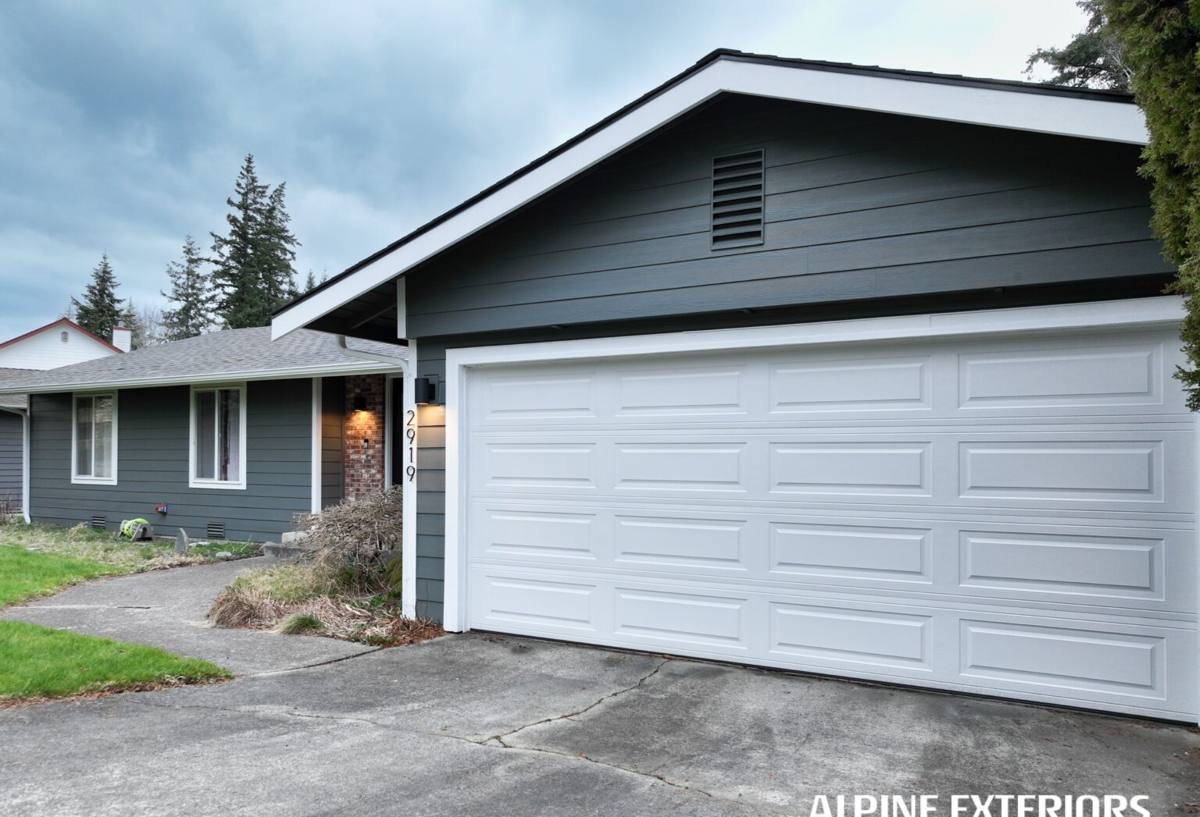
What South Hill's Climate Actually Does to Vertical Siding
Whatcom County doesn't hit homes with any single dramatic event — it wears them down gradually, and board and batten siding shows that wear differently than horizontal lap does.
Driving Rain and Wind-Driven Moisture
South Hill sees long stretches of steady, wind-pushed rain rather than short downpours. On a vertical profile, that means water runs down the face of the battens and can be driven sideways into any gap where a batten meets a panel joint or a window trim board. Without a proper drainage plane and correctly lapped flashing, that moisture works its way behind the siding instead of shedding off the face of it.
Salt Air Off the Sound
Even at a distance from saltwater, Whatcom County homes pick up airborne salt that accelerates corrosion on exposed metal — nail heads, flashing, and hardware. Fasteners that aren't corrosion-rated, or flashing that's tucked in the wrong order, start failing years before the siding itself would otherwise need attention.
The Long Moss Season
South Hill's tree canopy and lake-adjacent humidity mean moss and algae have months of damp shade to work with, not just a few weeks. Board and batten's vertical battens create narrow shadow lines and horizontal ledges at the panel joints where moss loves to establish first. On a wood-based product, that moisture retention accelerates rot underneath the growth. On a properly finished fiber cement product, it's mostly a cosmetic issue you can wash off — but only if the material underneath isn't absorbing the moisture in the first place.
What a Correct Board & Batten Install Actually Involves
Board and batten looks simple from the curb — vertical boards, evenly spaced battens — but the assembly behind it is what determines whether it survives South Hill's wet season after wet season.
Drainage Plane First
Every board and batten job starts with a weather-resistive barrier and, on most South Hill homes, a drainage gap behind the siding. That gap lets any moisture that does get past the cladding drain down and out instead of sitting against the sheathing. Skipping this step is the single most common shortcut we see on older or budget installs in this area.
Fastening and Reveal
Battens need to land over the panel seams, not just be spaced for appearance. Fastener placement and spacing follow the manufacturer's engineering — not a general contractor's habit from working with other products — because over- or under-fastening a fiber cement panel changes how it handles expansion and contraction through our wet-to-dry seasonal swings.
Flashing at Every Penetration
Window and door openings, hose bibs, light fixtures, and the base of the wall all need flashing detailed in a specific shingle-lap order so water is always directed outward and down. On a vertical profile, the base of the wall and the top of any lower roofline are the two spots most likely to leak if this is rushed.
Correct Board & Batten Installation Checklist
- Weather-resistive barrier installed and lapped correctly, no gaps or reverse laps
- Rain screen/drainage gap behind the siding on the wall assembly
- Corrosion-resistant fasteners rated for the product and our coastal-influenced air
- Battens aligned directly over panel seams, not just visually spaced
- Z-flashing or equivalent at every horizontal joint and window/door head
- Proper clearance at grade, decks, and roof-to-wall intersections
- Caulking limited to where the manufacturer specifies it — not used to patch a bad flashing detail
Why We Install Board & Batten in James Hardie Only
We install James Hardie fiber cement exclusively, and board and batten is one of the profiles where that decision matters most. Vertical siding has more seams and more exposed edges than a lap profile, so the base material's tolerance for moisture is doing more work.
HardiePanel Vertical Siding
HardiePanel is the primary panel product used under board and batten battens on most South Hill homes — a smooth or stucco-textured fiber cement sheet engineered for vertical application, factory-primed or finished with ColorPlus so the color coat is baked on rather than field-applied.
Non-Combustible and Dimensionally Stable
Fiber cement doesn't expand and contract with moisture the way wood-based panels do, which matters on a vertical profile where every seam is a potential gap. It's also non-combustible, which is a genuine consideration for wooded, lake-adjacent properties in this part of Whatcom County.
ColorPlus Finish
A factory-applied ColorPlus finish holds color and resists the fading and moss-staining that comes with our long damp season better than field-applied paint, and it comes with its own finish warranty separate from the substrate warranty.
How Board & Batten Compares to Other Siding Options
| Factor | James Hardie Fiber Cement | Wood (Cedar/Primed Spruce) | Vinyl |
|---|---|---|---|
| Moisture behavior | Doesn't rot; engineered for wet climates | Absorbs moisture; prone to rot without diligent upkeep | Doesn't rot, but can warp and trap moisture behind panels |
| Moss/algae resistance | Cosmetic only; washes off finish | Retains moisture under growth, accelerates decay | Cosmetic, but seams trap debris |
| Fire rating | Non-combustible | Combustible | Combustible, can melt/deform near heat |
| Finish longevity | Factory ColorPlus finish, long repaint interval | Field-applied paint/stain, frequent recoating | Color molded in, but fades and chalks over time |
| Install sensitivity | Moderate — manufacturer specs must be followed | High — moisture management is critical and easy to miss | Lower, but appearance and rigidity limits |
We don't install cedar, primed spruce, LP SmartSide, or vinyl on board and batten profiles. Wood-based products ask a homeowner to stay on top of caulking, painting, and moisture inspection every year in a climate that doesn't give a wall much time to dry out between rain events. Vinyl's flat, thin profile also doesn't hold the crisp shadow lines that make board and batten look right up close. Fiber cement is the one material in this comparison that's engineered for exactly the conditions South Hill sees most of the year.
Common Problems We Find on Existing South Hill Homes
When we're called out to look at an older board and batten installation in this area, the same handful of issues show up repeatedly:
- Battens caulked directly over gaps instead of properly flashed — the caulk fails long before the siding would
- Moss buildup at horizontal joints where water is slow to drain, sometimes hiding soft sheathing underneath
- Fasteners that have rusted and streaked the face of the siding, a sign the wrong fastener spec was used
- Battens installed with no drainage gap, trapping moisture directly against the wall assembly
- Wood-based panels with active rot at the base of the wall or around window sills
None of these are dramatic failures on day one. They're slow, and that's what makes them expensive — by the time they're visible from the ground, the sheathing behind them has usually been wet for a while.
Our Process for a South Hill Board & Batten Project
1. On-Site Assessment
We look at the existing wall assembly, note any moisture or rot already present, and check how the home is exposed to prevailing wind and rain given its position and tree cover.
2. Detailing the Plan Before Material Goes Up
Flashing details, drainage plane, and batten layout are worked out before the first panel is cut — not improvised on the wall. This is where most of the long-term performance of a board and batten install actually gets decided.
3. Installation to Manufacturer Spec
Panels, fasteners, and battens go up per James Hardie's engineering for our climate zone, not a generic install pattern borrowed from a different product.
4. Final Walkthrough
We walk the finished wall with the homeowner, check reveal consistency and finish quality, and go over what routine maintenance actually looks like for a Hardie board and batten wall — which, done right, is minimal.
Why a Crew That Already Works South Hill Matters
Board and batten installation isn't fundamentally different from one Whatcom County neighborhood to the next, but the exposure conditions are. A crew that's already worked homes around Sudden Valley knows which walls take the worst of the driving rain, how much moss pressure to expect under heavy tree cover, and where corrosion-resistant fastening actually earns its cost versus where it's optional. That's not something you get from a general remodeling crew doing their first fiber cement job — it comes from having stood on ladders in this specific climate, on this specific style of terrain, enough times to know where the details actually matter.
If you're weighing board and batten for a South Hill home, we're glad to take a look and walk you through what a correct install would involve for your specific wall exposures — no pressure, no obligation. Use the form below to request a free estimate.