 Sudden Valley Siding
 Roof Repair Built for Deming's Weather
Deming sits in the Nooksack River valley, in the foothills below Mount Baker, and that location gives local roofs a workload that flatter, drier parts of the country never see. Whatcom County gets a long wet season, and out toward Deming that wet season comes with extra tree cover, shaded rooflines, and cooler overnight temperatures that keep moisture sitting on shingles and shakes far longer than it would in an open, sunny yard. Add in the driving rain that blows sideways during winter storms off the Sound, and you have a climate that finds every weak seam, cracked flap, and worn-out flashing detail on a roof and turns it into a leak.
Sudden Valley Siding Company repairs roofs across Whatcom County, and Deming's mix of moisture, moss, and mature tree canopy is one of the more demanding combinations we see. This page covers what that means for a roof repair done right in this specific area — not a generic list of roofing tips, but what actually matters for homes in and around Deming.
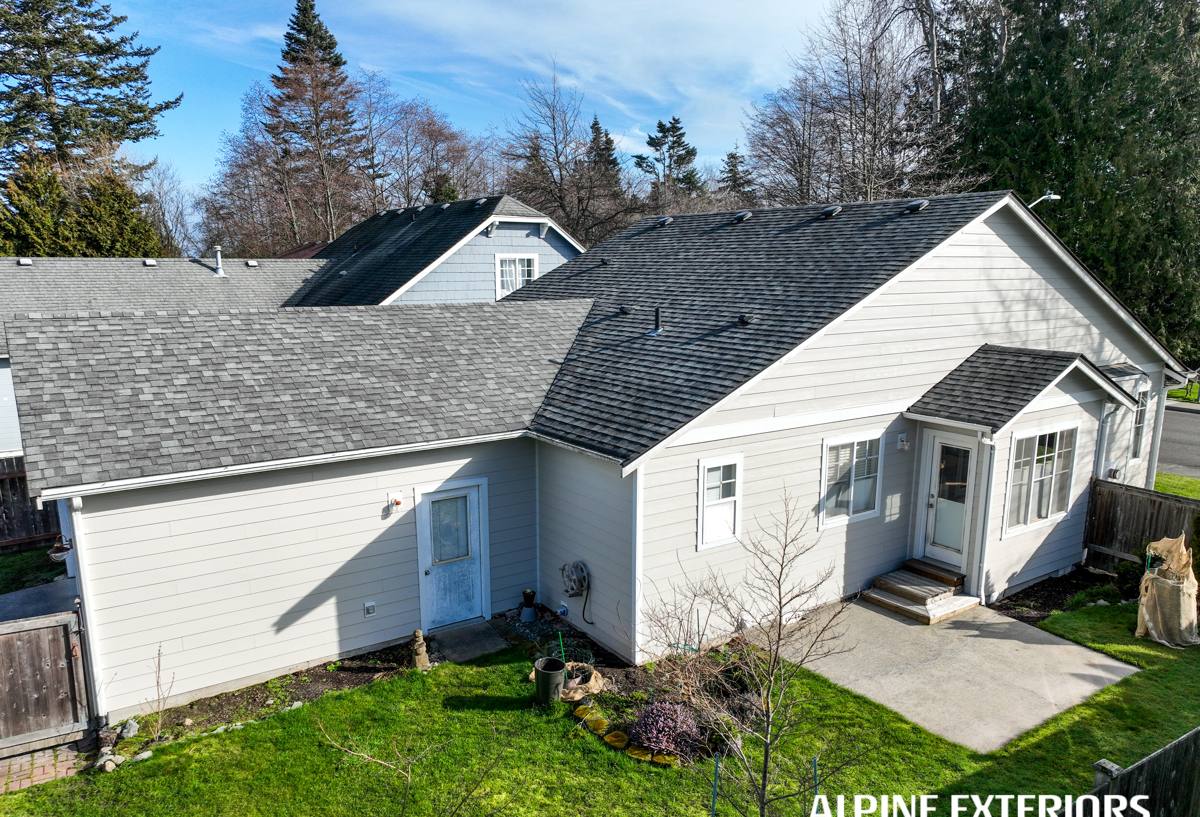
Why Deming Homes Wear Differently
Three things drive most of the roof repair calls we get in this part of the county:
- Moss and organic growth: Shaded, tree-lined lots hold moisture longer, and moss takes hold on north-facing slopes and anywhere debris collects. Moss doesn't just look bad — it lifts shingle edges and holds water against the roof deck.
- Driving rain and wind-driven water: Storms moving through the valley push rain sideways under flashing, around vent boots, and into any gap that a calm-weather roof would never expose.
- Temperature swings near the mountain: Being closer to the foothills means more freeze-thaw cycling in winter than you'd get near the water. That cycling stresses caulking, sealants, and any repair that wasn't done with the right materials for the temperature range.
None of this means Deming roofs fail faster than roofs elsewhere in the county — it means the specific failure points are different, and a repair crew needs to know where to look.
Salt Air's Role in the Bigger Picture
Closer to Bellingham Bay and the coastline, salt-laden air accelerates corrosion on metal flashing, fasteners, and gutter hardware. Deming is further inland, so that effect is milder here, but county-wide humidity and moisture patterns still mean we spec corrosion-resistant fasteners and flashing on every repair, regardless of exactly how close a home sits to the water.
Signs a Deming Roof Needs Repair
Most roof problems don't announce themselves with a dramatic leak on day one. They show up as small signals first:
- Dark streaking or green-black growth on shaded slopes, especially north- and east-facing sections
- Granules collecting in gutters or at downspout outlets
- Curling, cupping, or lifted shingle edges near valleys and eaves
- Soft or spongy spots when walking the roof deck
- Water stains on interior ceilings, especially after a windy rainstorm rather than a calm one
- Daylight visible through the attic at flashing points or roof penetrations
- Sagging in the roofline over a porch, garage, or bay window addition
Any one of these on its own might be minor. Two or three together usually means water has already found a way in, and the sooner it's addressed, the smaller the repair.
What a Correct Roof Repair Actually Involves
A roof repair that holds up in this climate is more than patching the spot where water is currently visible. Water travels — it can enter at a flashing seam ten feet from where the ceiling stain shows up. A repair done right starts with tracing the actual entry point, not just covering the symptom.
Our Repair Process
- Roof and attic inspection: We check the roof surface and, where accessible, the attic side, to trace water movement rather than guessing from the ceiling stain alone.
- Identify the real cause: Cracked flashing, failed vent boots, wind-lifted shingles, moss undermining a seam, or deck rot are all different problems with different fixes — we tell you which one it is before we start.
- Remove damaged material: Compromised shingles, shakes, or underlayment come out rather than getting patched over, so the repair ties into sound material.
- Repair or replace the deck if needed: If moisture has reached the plywood or sheathing, that gets addressed — patching shingles over a soft deck is a short-term fix that fails again within a season or two.
- Reflash and reseal correctly: Chimneys, skylights, vent stacks, and valleys get proper step flashing and sealant rated for this climate, not just a bead of caulk over the old flashing.
- Match materials: Where possible we match existing shingle or shake color and profile so the repair doesn't stand out as an obvious patch.
- Clean up and final check: Debris and old material are cleared, gutters are checked for blockage from the work, and we walk the repair with you before calling it done.
Common Deming Roof Repairs
| Problem | Typical Cause Here | What the Repair Involves |
|---|---|---|
| Leak near chimney or skylight | Failed step flashing, dried-out sealant | Remove and reflash properly, new corrosion-resistant sealant |
| Moss-related shingle lift | Shaded slopes, organic debris buildup | Moss removal, damaged shingle replacement, treatment to slow regrowth |
| Wind-lifted or missing shingles | Driving rain and storm gusts through the valley | Replace shingles, reseal tabs, check surrounding fasteners |
| Soft roof deck | Long-term hidden moisture intrusion | Cut out and replace affected sheathing before re-covering |
| Gutter and eave backup | Needle and leaf debris from tree cover | Clear debris, check for ice-dam-style eave damage, reseal eave flashing |
| Cracked or missing vent boots | UV and temperature cycling over time | Replace boot, reseal around pipe penetration |
Moss: The Ongoing Issue for Tree-Covered Lots
Moss deserves its own section because it's the single most common repair driver we see on shaded, tree-lined properties in this part of Whatcom County. Moss holds moisture against the shingle surface around the clock, even on days it isn't actively raining. Over a season or two, that constant dampness breaks down the shingle's protective granules and lifts edges enough for wind-driven rain to get underneath.
A one-time moss removal helps, but it isn't a permanent fix if the conditions that caused it — shade, debris buildup, poor airflow — haven't changed. Part of an honest repair conversation includes telling you whether moss will likely come back, and what low-cost steps (gutter cleaning frequency, trimming overhanging branches, zinc or copper strip installation) actually slow it down versus what's marketing.
Homeowner Maintenance Checklist
- Clear gutters and valleys of needles and leaf debris at least twice a year
- Trim back branches that keep a roof section shaded and damp
- Look for moss or dark streaking on north-facing slopes each fall
- Check attic insulation and ventilation if condensation shows up on cold mornings
- Have flashing around chimneys and skylights inspected every couple of years, not just when a leak appears
- Walk the roofline visually after major windstorms for lifted or missing shingles
Repair or Replace? How We Make That Call
Not every roof issue in Deming needs a full replacement, and we don't push one when a repair will genuinely hold. The honest factors we weigh:
| Factor | Leans Toward Repair | Leans Toward Replacement |
|---|---|---|
| Age of roof | Under 15-20 years, isolated issue | Nearing or past expected material lifespan |
| Extent of damage | Localized — one slope, one flashing point | Widespread granule loss, multiple leak points |
| Deck condition | Sound, dry sheathing | Soft or rotted decking in multiple areas |
| History of repairs | First or second repair call | Recurring leaks in different spots each season |
| Material availability | Matching shingle/shake still obtainable | Discontinued product, visible mismatch unavoidable |
If a repair is the right call, we'll tell you that plainly. If the roof is genuinely past the point where repair makes financial sense, we'll explain why — usually because a homeowner is about to spend repair money on a roof that will need full replacement within a year or two anyway.
Why a Crew That Already Works Deming Matters
Roofing crews who mainly work flatter, more open parts of the county sometimes underestimate how much shade and moisture change the maintenance timeline on a foothill property. A crew that's worked in and around Deming knows which slopes on a typical lot here hold moss longest, how quickly gutters clog under mature conifers, and which flashing details tend to fail first when driving rain comes through the valley. That local pattern recognition shortens the diagnosis and helps avoid repairs that look fine for a season and fail again the next.
We also carry the practical side of local work: we know the driveways, access points, and seasonal weather windows that make scheduling a repair in this area straightforward rather than guesswork.
Materials and Workmanship Standards
For repairs, we use materials rated for this climate — corrosion-resistant fasteners and flashing, sealants formulated to hold up through freeze-thaw cycling, and shingle or shake products matched as closely as possible to what's already on the roof. We don't cut corners on flashing details to save time, because flashing failures are the source of most repeat leak calls we see. A repair is only as good as the flashing and sealing work underneath the visible shingles, and that's where we spend the extra care.
What to Expect When You Call Us
We start with a roof inspection to see what's actually happening, not a sales pitch. You'll get a plain explanation of what's causing the issue, what a proper repair involves, and a written estimate before any work starts. If we think a repair isn't the right long-term answer, we'll say so — our goal is a roof that holds up through the next few wet seasons, not a quick patch that brings you back to square one.
If you're seeing moss buildup, a stain on the ceiling, or storm damage on a roof in the Deming area, reach out for a free, no-pressure estimate. Fill out the form below and we'll take a look and give you an honest read on what your roof actually needs.