 Sudden Valley Siding
 Building Decks That Actually Hold Up Around Deming
A deck in the Deming area does a different job than a deck in a dry climate. It isn't just outdoor furniture on posts — it's a structure that sits exposed to driving rain for months at a time, picks up moisture from the ground and the air, and spends a good part of the year shaded and damp enough for moss and algae to take hold. Add the salt-laden air that moves through this part of Whatcom County, and you've got a combination that's genuinely hard on fasteners, framing, and finishes if the deck wasn't built with that in mind.
We build and repair decks for homes in and around Deming and Sudden Valley, and most of the callbacks we get on other contractors' work trace back to the same handful of decisions made wrong at the start: the wrong fastener metal, no real airflow under the deck, ledger boards that were never properly flashed, or decking laid tight with no room to shed water. None of that shows up as a problem in year one. It shows up in year four or five, usually as soft framing, rust streaks, or a deck surface that's slick with moss every morning from October through April.
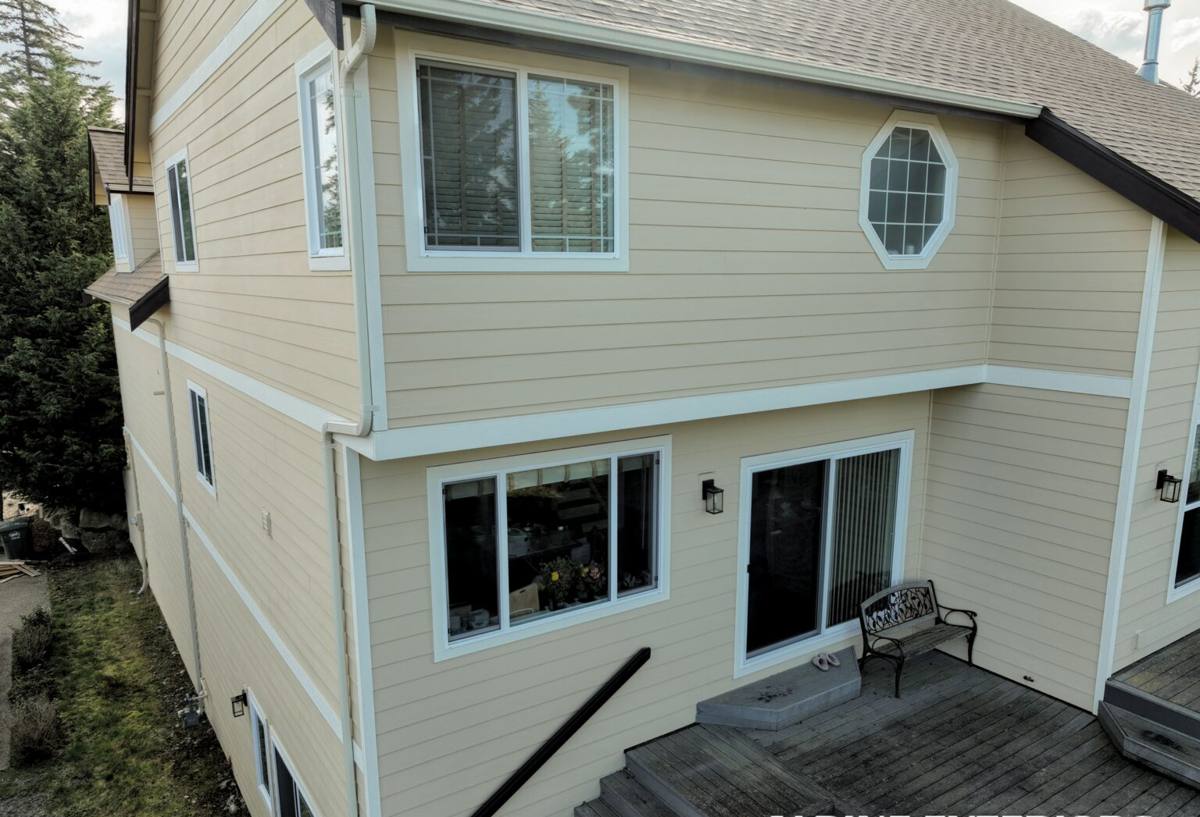
What Local Homes Need From a Deck
Before we talk materials or process, it's worth being specific about what a deck around here actually has to survive:
- Sustained wet seasons — not just rain events, but weeks of damp air that keep wood and hardware from ever fully drying out.
- Shade and moss pressure — mature trees and overcast skies mean many decks stay damp and shaded longer than the label on a stain can or composite warranty assumes.
- Corrosive air — salt-influenced moisture accelerates corrosion on the wrong-grade screws, joist hangers, and bolts, especially near fastener heads and cut ends.
- Ground moisture and slope — many lots in this area aren't flat, which affects footing depth, drainage under the deck, and how water moves away from the house.
A deck built for a dry inland climate and simply shipped up here with the same details will underperform. The fix isn't exotic — it's using the right grade of hardware, the right gap spacing, and the right ventilation, every time, not just when it's convenient.
Framing and Footings: Where Deck Failures Actually Start
Almost every serious deck problem we're called out to inspect starts underneath, not on the surface. The decking boards get all the attention, but the framing is what actually holds people up.
Footings
Footings need to be sized and set to local frost depth and soil conditions, not guessed at. On sloped or fill soil — common on lots around Deming and Sudden Valley — that sometimes means deeper or larger footings than a flat-lot deck would need. This is also where a permit and inspection process earns its keep: it forces someone besides the builder to confirm the footings are adequate before the deck gets closed up.
Ledger Attachment
If the deck attaches to the house, the ledger board connection and its flashing are the single most important detail on the whole project. A poorly flashed ledger lets water track behind it and into the house rim joist — this is a slow, hidden rot problem, not something you'll notice until framing is already compromised. We flash ledgers so water is directed out and away from the house, never trapped behind the board.
Hardware Grade
Every fastener, joist hanger, and structural screw on an exterior deck should be rated for exterior, corrosion-resistant use — and in a climate with salt-influenced air, that matters even more than the manufacturer's minimum spec. Mixing metals (for example, the wrong hanger with the wrong nail) sets up galvanic corrosion that eats hardware from the inside, long before it's visible.
Decking Material Choices
There's no single "correct" decking material — it depends on budget, how much upkeep the homeowner wants to do, and how much shade and moss exposure the site gets. Here's how the common options compare for a Whatcom County climate specifically:
| Material | Moisture & Moss Behavior | Maintenance | Typical Lifespan Here |
|---|---|---|---|
| Pressure-treated wood | Absorbs moisture; moss and algae take hold quickly in shaded spots without regular cleaning | Annual cleaning and re-staining or sealing recommended | 15–20 years with upkeep |
| Cedar | Naturally rot-resistant but still needs sealing to resist moss staining and graying | Periodic cleaning and re-sealing | 15–25 years with upkeep |
| Composite decking | Doesn't absorb water like wood, but capped composites still need cleaning where moss can grip the surface texture | Occasional washing; no staining or sealing | 25–30+ years |
| PVC decking | Fully synthetic, least hospitable surface for moss growth | Lowest maintenance of the group | 25–30+ years |
We don't push one product over another as a rule — we walk the site, look at sun exposure and drainage, and talk through what the homeowner actually wants to spend time maintaining. A heavily shaded deck under fir trees is a poor candidate for a low-maintenance wood finish promise; an open, sunnier deck can do fine with wood if someone's willing to clean and reseal it on schedule.
Spacing, Airflow, and Moss Prevention by Design
Moss doesn't grow because a material is defective — it grows where moisture sits and air doesn't move. That means a lot of moss and slip problems can be designed out before the first board goes down:
- Proper gapping between deck boards so water drains through instead of pooling on the surface.
- Adequate clearance and ventilation underneath the deck so the framing can dry out between rain events instead of staying damp for weeks.
- Grading and drainage at ground level so water moves away from posts and footings rather than collecting around them.
- Board orientation and layout that avoids low spots where standing water and debris can collect.
None of this eliminates the need for occasional cleaning — moss season here is long, and any exterior surface will need attention — but a well-built deck sheds water and dries out fast, which is the real difference between a deck that needs a yearly wash and one that's growing a green film by January.
Railings, Stairs, and Hardware Details
Railings and stair connections take a lot of structural load and see constant handling, so they're not a place to cut corners on hardware. We use corrosion-resistant fasteners and connectors throughout, with particular attention to:
- Post-to-frame connections rated for the actual lateral loads a railing sees, not just decorative screws.
- Stair stringer attachment and stringer count sized to the run, not the minimum that happens to look adequate.
- Baluster spacing and railing height that meet current code — this is a safety item, not a style preference.
Loose railings and springy stairs are almost always a sign the original build skipped structural blocking or under-sized the fasteners. It's an easy problem to avoid at build time and an annoying one to fix after the fact.
Permits, Inspections, and Doing It the Right Way
Deck permitting requirements depend on the deck's size, height, and attachment to the house, and rules are set at the county or local jurisdiction level. We handle the permitting and inspection process as part of the build rather than treating it as optional paperwork — an inspection is a second set of eyes confirming the footings, framing, and ledger connection are sound before the deck is closed up and those details disappear from view. If a contractor is offering to skip the permit on a deck that clearly needs one, that's worth asking hard questions about.
Our Deck Building Process
For a new deck or a full rebuild in the Deming and Sudden Valley area, our process generally looks like this:
- On-site assessment of the terrain, drainage, sun/shade exposure, and how the deck will attach to the house.
- Material and layout discussion based on budget, maintenance preference, and site conditions — not a one-size answer.
- Permit application and engineering where required.
- Footing and framing work, including proper ledger flashing and corrosion-resistant hardware throughout.
- Decking installation with correct spacing for drainage and airflow.
- Railing, stair, and final hardware installation to current code.
- Final walkthrough and inspection sign-off.
Why Hiring a Crew That Knows This Area Matters
A deck built to a generic national spec sheet can still fail early here — not because the materials were bad, but because the details that matter in a wetter, mossier, salt-touched climate were treated as optional. Building decks around Sudden Valley and Deming means we already know which fastener grades hold up, how much airflow a deck needs underneath to actually dry between storms, and what local drainage and permitting expectations look like. That's the difference between a deck that needs real repair work in five years and one that just needs an occasional wash.
If you're planning a new deck, replacing an aging one, or want a second opinion on a deck someone else built, we're happy to take a look. Reach out for a free, no-pressure estimate — use the form below to get started.