 Sudden Valley Siding
 Edgemoor Sits in a Tougher Spot Than Most of Whatcom County
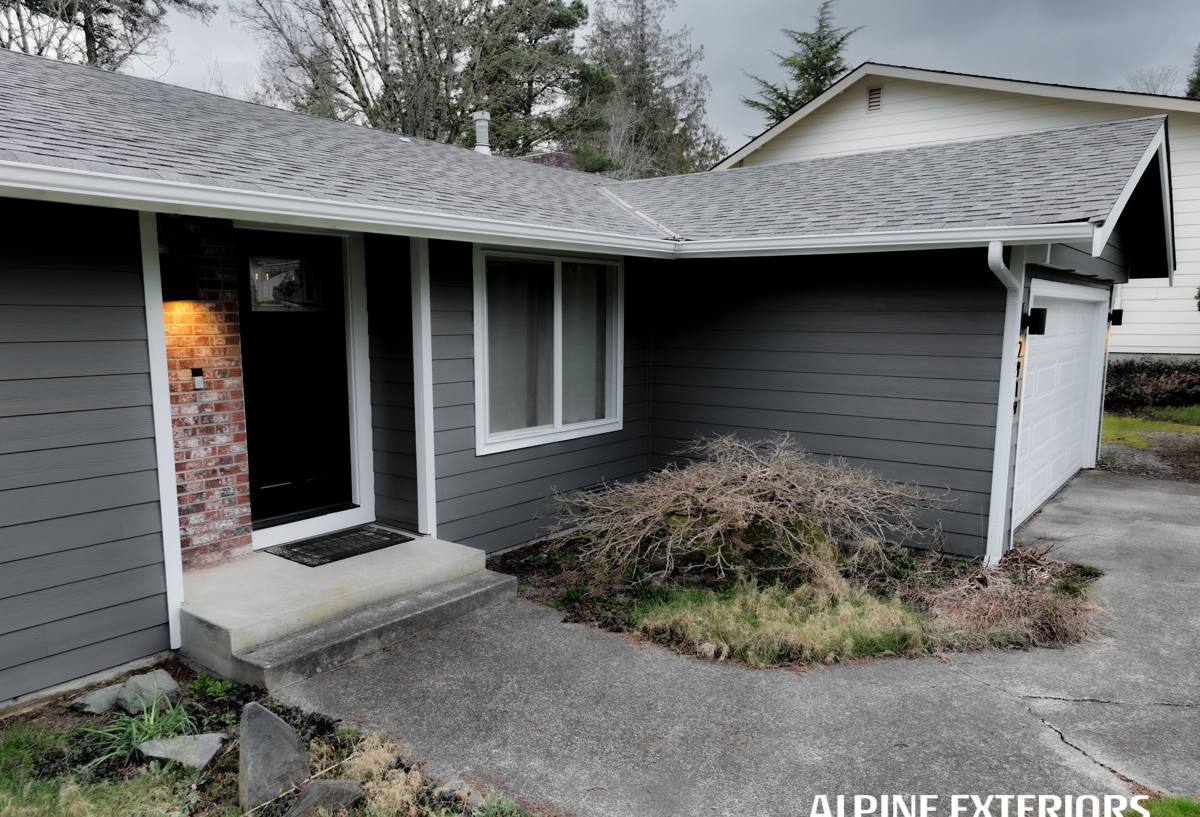
Edgemoor homes get a combination of exposures that most inland Whatcom County properties never deal with at the same time. Sitting close to Bellingham Bay means salt-laden air moving through year-round, wooded lots hold moisture and shade far longer than open ground, and the driving winter rain that hits every part of this region comes in sideways off the water. Add a moss season that can run from early fall through late spring, and you have a set of conditions that wears down siding faster and in different ways than what we see on drier, more inland streets.
This page is specifically about siding repair for Edgemoor properties — not a general repair overview. If you own a home in this neighborhood, the damage patterns, the repair sequencing, and the materials that hold up are shaped by this specific stretch of coastline and tree cover. We'll walk through what actually happens to siding here, what a repair needs to include to hold up, and why local experience matters as much as the material itself.
What Salt Air and Moisture Actually Do to Siding
Salt air isn't just a coastal curiosity — it's corrosive to fasteners, trim metal, and any siding material with exposed seams or edges. Combined with near-constant moisture from rain and shaded, slow-drying siding faces, the failure pattern in Edgemoor tends to follow a predictable path:
- Fastener corrosion — nails, screws, and trim ties that aren't rated for coastal exposure rust and stain, then loosen panels over time.
- Moisture intrusion at seams and butt joints — any gap or failed caulk joint becomes a wicking point, especially on north- and west-facing walls that dry slowest.
- Moss and algae colonization — the tree canopy common to Edgemoor's wooded lots keeps siding damp longer, and moss roots work into any surface that isn't dense and properly sealed.
- Coating and finish breakdown — UV exposure is lower here than on open lots, but constant damp-dry cycling still degrades paint and lower-quality factory finishes faster than the manufacturer's rated lifespan.
None of this means siding is doomed in this location — it means the material and the installation details have to account for these conditions from the start, and repairs have to address the actual cause of failure, not just patch the visible symptom.
Why the Material Underneath Matters as Much as the Repair Itself
We only work with James Hardie fiber cement, and Edgemoor's climate is a big part of why. Fiber cement doesn't rot, doesn't feed mold or moss the way wood fiber does, and isn't vulnerable to the swelling and delamination that engineered wood products can experience when moisture gets behind them repeatedly. Vinyl siding, by contrast, can warp under sustained damp-cold cycling and its seams are a common entry point for moisture in exactly the conditions Edgemoor sees most winters. When we repair a home here, we're not just fixing today's problem — we're evaluating whether the surrounding material will hold up to the next five wet seasons.
Common Siding Repair Issues We See in Edgemoor
Every neighborhood has its own repair patterns based on exposure, tree cover, and typical construction era. In Edgemoor, the calls we get most often fall into a few categories:
- Moss and algae staining that's progressed past a simple wash and is holding moisture against the siding face
- Rusted or failing fasteners on older wood or composite siding, visible as streaking or loose boards
- Soft or swollen panels near ground level, gutters, or downspout discharge points where water sits longest
- Failed caulking at trim, window, and corner joints, letting wind-driven rain behind the siding plane
- Cracked or split boards from age, impact, or freeze-thaw cycling in shaded, slow-drying areas
- Discoloration or chalking on painted wood or older composite siding that's lost its protective coating
Some of these are cosmetic and some are structural warnings. Part of an honest repair estimate is telling you which is which — moss staining on sound fiber cement is a cleaning issue, but soft boards near a downspout usually mean water has already gotten past the surface and into the wall assembly.
What a Correct Siding Repair Actually Involves
A repair that just swaps out a visibly damaged board without checking what's behind it is a short-term fix. On a property with Edgemoor's exposure, that approach tends to fail again within a season or two. A correct repair process includes:
1. Diagnosing the Real Cause
Before any board comes off, we look at why it failed — was it a flashing gap, a caulk failure, a grading or drainage issue sending water toward the wall, or simple end-of-life wear? Replacing siding without fixing the underlying cause just means the new material fails the same way.
2. Checking the Water-Resistive Barrier and Framing
Once siding is removed, we check the house wrap or building paper underneath and the framing itself for rot or soft spots. In a wooded, damp-prone area like Edgemoor, catching early-stage moisture damage before it spreads is often the difference between a modest repair and a much larger one.
3. Matching Material, Profile, and Finish
Repairs need to match the existing siding's profile, reveal, and color as closely as possible — James Hardie's ColorPlus finishes are factory-baked and consistent, which makes matching sections far more reliable than trying to color-match a field-painted repair.
4. Correct Fastening and Flashing for Coastal Exposure
We use fasteners and flashing details appropriate for salt-air exposure, and we follow James Hardie's installation specifications for clearances, fastener spacing, and caulking — details that matter more here than in a drier, inland location.
5. Sealing and Finish Work
Caulking at joints and trim uses products rated for the moisture cycling this area sees, and any touch-up painting or coating work is done to match the existing finish as closely as possible.
Our Edgemoor Repair Process, Step by Step
- On-site inspection — we walk the exterior, note problem areas, and check for signs of moisture behind the siding, not just on the surface.
- Honest scope assessment — we tell you plainly whether you're looking at a spot repair, a larger section replacement, or a conversation about full re-siding.
- Written estimate — clear pricing with no vague allowances, so you know what you're approving before work starts.
- Removal and inspection behind the siding — we don't skip this step, even on small jobs, because hidden moisture damage is common in shaded, coastal-adjacent lots.
- Repair or replacement with matched James Hardie material — installed to manufacturer spec, with fastening and flashing appropriate to the exposure.
- Final walkthrough — we review the completed work with you before considering the job done.
Repair or Replace? How to Tell the Difference
Not every siding problem in Edgemoor needs a full re-side, but knowing where the line is matters for your budget and for how long a repair will actually hold.
| Sign | Usually Means | Typical Approach |
|---|---|---|
| Isolated moss staining, sound boards underneath | Surface issue only | Cleaning and spot repair |
| One or two soft or cracked boards, rest of wall sound | Localized failure | Section repair with matched material |
| Repeated moisture damage in the same wall areas | Underlying drainage or flashing problem | Repair plus correction of the root cause |
| Widespread softness, warping, or fastener failure across multiple walls | Siding nearing end of service life | Full or partial re-side recommended |
| Original siding is old wood, LP, or aging vinyl with recurring issues | Material mismatch for this exposure | Conversation about replacement with fiber cement |
If more than a small percentage of a wall's siding is compromised, patch repairs stop being cost-effective — at that point, the labor to match, cut, and blend repairs approaches the cost of doing the wall properly in one pass.
What Drives Repair Cost in a Property Like This
Repair costs vary based on scope, access, and what's found once siding comes off — we won't quote a fake number here, but these are the factors that move the estimate up or down:
| Factor | Why It Matters |
|---|---|
| Extent of hidden moisture damage | Rotted sheathing or framing adds repair scope beyond the visible siding |
| Access and lot layout | Wooded, sloped, or waterfront-adjacent lots common in Edgemoor can affect staging and scaffolding needs |
| Color and profile matching | Older or discontinued siding profiles take more time to match cleanly |
| Number and location of affected areas | Scattered repairs across several walls cost more in labor than one concentrated section |
| Underlying cause corrections | Fixing flashing, grading, or drainage issues adds scope but prevents repeat failures |
Why We Only Repair and Install James Hardie Fiber Cement
We don't install or repair with vinyl, LP SmartSide, Cemplank, Allura, or primed wood siding, and Edgemoor's exposure is a clear example of why. James Hardie's HZ5 product line is engineered specifically for climates with sustained moisture and freeze-thaw cycling, which describes this part of Whatcom County well. Fiber cement resists moisture intrusion, doesn't provide the organic material moss and algae need to take hold the way wood-based products can, and holds a factory-applied ColorPlus finish that stands up to salt air and shade far longer than field-applied paint. It also carries a strong transferable warranty, which matters on a property where the next owner will want documentation that the exterior was done right.
None of this means other products are without merit — LP SmartSide and vinyl both have legitimate uses and reasonable installed cost. But we've made a standard, not a marketing claim: for the moisture and salt exposure common to this neighborhood, fiber cement installed and repaired to spec is the material we're willing to put our name behind.
Why Hiring a Crew That Already Works in Edgemoor Matters
A contractor who hasn't worked this specific stretch of coastline will often underestimate how fast moss returns, how much moisture sits behind siding on shaded, tree-covered lots, or how quickly a small caulk failure turns into a soft board when wind-driven rain has direct access off the water. Local experience means we know to check the areas that fail first here — near grade, under gutters, on shaded north walls — before they become bigger problems, and we spec fasteners and flashing details that account for the salt air rather than treating this like a standard inland repair.
It also means faster, more accurate estimates. We're not learning this neighborhood's quirks on your project — we've already seen the patterns.
Homeowner Checklist: What to Watch For Between Inspections
- Moss or algae buildup that isn't rinsing off with light cleaning
- Soft spots when you press gently on siding near ground level or under downspouts
- Visible rust streaking below nail heads or trim fasteners
- Cracked, split, or warped boards, especially on shaded or north-facing walls
- Cracked or missing caulk at corners, trim, and window edges
- Paint that's chalking, peeling, or has lost adhesion on older wood or composite siding
- Any musty smell or interior wall staining that could point to moisture behind the siding
Catching these early is almost always cheaper than waiting — a caulk fix today is a fraction of the cost of the wall repair it prevents.
Let's Take a Look
If you're seeing moss buildup, soft boards, or recurring damp spots on your Edgemoor home, it's worth having someone look before another wet season adds to the damage. We offer free, no-pressure estimates — we'll tell you honestly whether you're looking at a repair or something bigger, and what a correct fix actually involves. Use the form below to get started.