 Sudden Valley Siding
 Why Sunnyland Roofs Wear Out Faster Than the Manufacturer's Warranty Says
Every asphalt shingle sold in the Pacific Northwest carries a warranty written for a national average climate — not for a roof sitting a few miles from saltwater, under a canopy of Douglas fir and cedar, in a part of Whatcom County that stays wet from October through May. Sunnyland homes deal with three things at once that most of the country doesn't: salt-laden air off the bay that accelerates corrosion on fasteners and flashing, driving rain that comes in sideways and finds every weak seam, and a moss season that can run eight or nine months out of the year on shaded north- and west-facing slopes. None of that is dramatic on its own. Added together over 15-20 years, it's why we see roofs in this neighborhood failing from the inside — rotted decking, rusted flashing, soaked insulation — well before the shingles themselves look obviously bad from the street.
A roof replacement done for this specific climate isn't just "new shingles on an old roof." It's a chance to fix the parts of the system that actually cause the damage: ventilation, flashing, underlayment, and edge details that were often cut corners on the first time around.
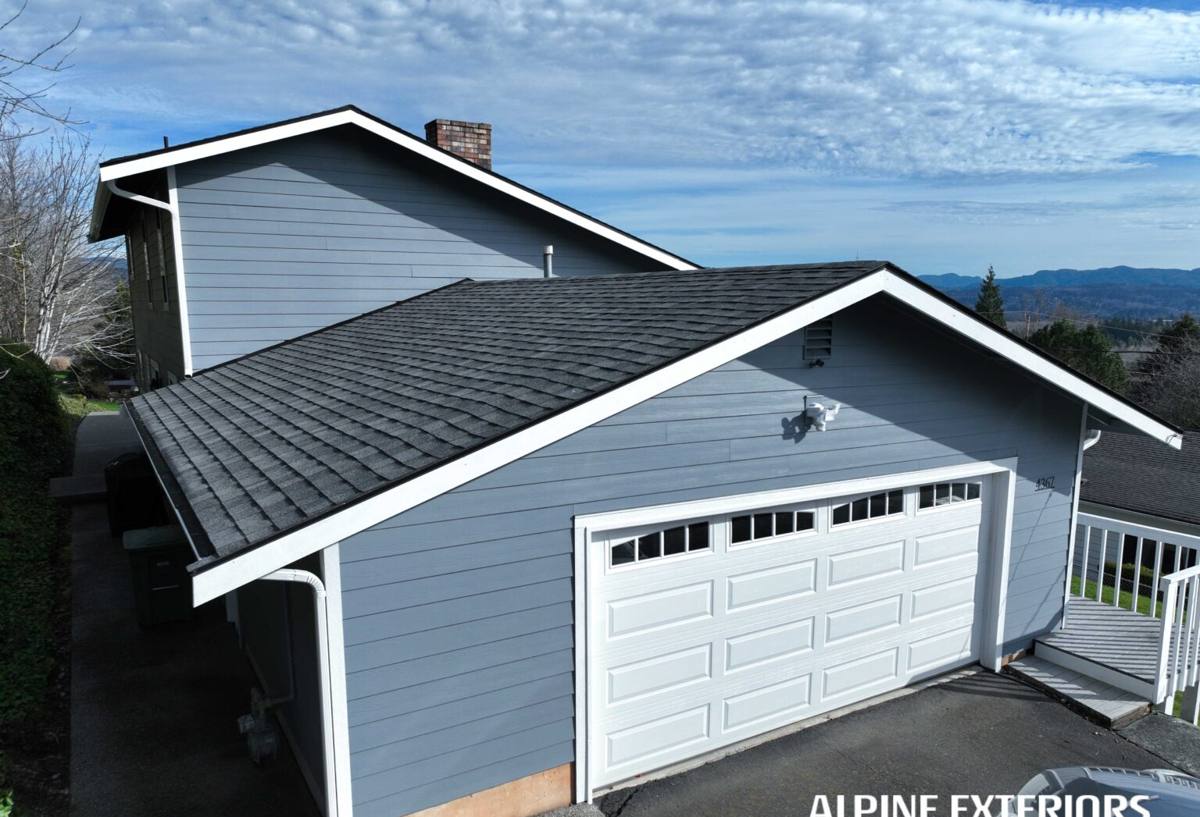
Signs a Sunnyland Roof Needs Replacement, Not Another Repair
Repairs make sense when the damage is isolated. Replacement makes sense when the roof's underlying materials — decking, underlayment, flashing — are failing as a system. Here's how to tell which situation you're in.
- Granule loss heavy enough that you're finding shingle grit in gutters or downspouts every time it rains
- Shingles that are cupping, curling, or cracking, especially on south- and west-facing slopes that get more sun-to-rain cycling
- Persistent moss or algae staining that comes back within a season or two of cleaning
- Soft spots, sagging, or visible deflection when you look down the roofline from the ground
- Daylight visible through the attic roof deck, or damp insulation and staining on rafters
- Flashing around chimneys, vents, or valleys that's rusted, lifted, or was never properly step-flashed
- A roof that's 20+ years old and has never had its ventilation or underlayment upgraded
If you're seeing two or more of these, a repair is likely to be a short-term patch on a longer-term problem. That's not a sales pitch — it's just how asphalt roofing ages once water starts getting past the surface layer.
What a Correct Roof Replacement Actually Involves
Full Tear-Off, Not a Layover
We don't install new shingles over old ones. A layover traps moisture between layers, hides deck damage, and voids most manufacturer warranties outright. A full tear-off is the only way to actually inspect the deck and start the new roof clean.
Deck Inspection and Repair
Once the old roofing is off, we check the plywood or OSB decking for soft spots, delamination, and rot — common in this climate wherever ventilation has been marginal for years. Any damaged sections get replaced before anything new goes down. Skipping this step is the single most common shortcut in cheap re-roofs, and it's the one that causes the worst hidden failures later.
Underlayment Built for Wet Winters
Given how much driving rain this area gets, we don't treat underlayment as an afterthought. Synthetic underlayment across the full roof, with self-adhered ice-and-water membrane at eaves, valleys, and around every penetration, gives the roof a real second line of defense if wind-driven rain ever gets under a shingle edge.
Flashing Done Right
Step flashing at walls and chimneys, proper valley metal, and new flashing at every vent pipe — not caulk over old rusted metal. Salt air corrodes cheap or aging flashing faster than most homeowners expect, and a flashing failure is one of the most common causes of a "mystery leak" that shows up nowhere near where the water actually entered.
Roofing Material Options for This Climate
There's no single "best" roofing material — there's the right material for your roof's slope, sun exposure, budget, and how much moss and moisture it will realistically deal with. Here's how the common options compare for a Sunnyland home specifically.
| Material | Moss/Algae Resistance | Wind-Driven Rain Performance | Typical Lifespan |
|---|---|---|---|
| Standard 3-tab asphalt | Low — no built-in algae resistance | Adequate with proper underlayment | 15-20 years |
| Architectural (laminate) asphalt | Moderate to good with algae-resistant granules | Good — thicker profile sheds water better | 25-30 years |
| Metal (standing seam) | Very good — sheds moss growth, hard surface | Excellent | 40-50+ years |
| Cedar shake | Poor without diligent maintenance — retains moisture | Fair, sensitive to installation quality | 20-30 years with upkeep |
We steer most Sunnyland homeowners toward algae-resistant architectural asphalt or metal, not because other materials are bad products, but because of honest maintenance trade-offs: cedar shake looks great but demands regular treatment to resist the moisture this area holds onto for months at a time, and standard 3-tab shingles simply don't have the granule technology to slow moss and algae growth the way modern laminate shingles do. Metal costs more up front but effectively removes moss as an ongoing problem, which matters a lot on heavily shaded lots.
Our Roof Replacement Process
- On-site inspection. We walk the roof and attic, check the deck where accessible, and note ventilation, flashing, and slope conditions specific to your property.
- Written estimate. Material options, scope of work, and a clear price — no vague allowances that turn into change orders mid-job.
- Scheduling around the weather. We plan tear-off days around dry windows and keep the roof dried-in every night the job isn't finished, so an unexpected shower doesn't turn into water damage inside your home.
- Tear-off and deck repair. Old roofing removed, deck inspected, damaged sheathing replaced.
- Underlayment and flashing installation. Ice-and-water membrane at vulnerable areas, synthetic underlayment across the field, new flashing throughout.
- Ventilation correction. Intake and exhaust balanced so the attic can actually dry out between wet spells instead of trapping moisture.
- Shingle or material installation. Installed to manufacturer spec, including proper nailing patterns and exposure — details that directly affect wind and warranty performance.
- Cleanup and final walkthrough. Magnetic sweep for stray nails, debris hauled off, and a walkthrough so you know exactly what was done.
Ventilation and Moisture: The Detail Most Roofs Get Wrong
Attic ventilation doesn't get much attention because it's invisible from the street, but it's one of the biggest factors in how long a new roof actually lasts here. Without balanced intake and exhaust, warm moist air from the house gets trapped in the attic, condenses against the cold underside of the roof deck in winter, and slowly rots the sheathing from below — a problem that has nothing to do with the shingles themselves and everything to do with airflow. In a climate as damp as Whatcom County's, an under-ventilated attic can undo the benefit of even the best roofing material. When we replace a roof, we check soffit intake, ridge or box vent exhaust, and make sure the numbers actually balance for the attic's size, not just eyeball it.
Moss, Algae, and Keeping a New Roof New
A correctly installed roof still needs basic seasonal attention in this climate — that's just reality on shaded, moisture-heavy lots. The good news is that with the right materials and a few habits, moss and algae stay manageable instead of becoming a recurring problem.
- Keep overhanging branches trimmed back so shaded areas of the roof get more light and airflow
- Clean gutters at least twice a year so water isn't backing up under the shingle edge
- Have moss physically removed (not just treated) before it works under shingle tabs and lifts them
- Use zinc or copper strips near the ridge on moss-prone slopes as ongoing, low-effort prevention
- Avoid pressure washing shingles directly — it strips protective granules and shortens shingle life
Cost Factors Worth Understanding Before You Get Quotes
We're not going to throw out a price here, because roof cost depends on real, specific factors — but knowing what drives the number helps you evaluate any estimate you receive, including ours.
- Roof size and complexity: more valleys, dormers, and penetrations mean more labor and flashing detail
- Layers to remove: a roof with a prior layover costs more to tear off than a single-layer roof
- Deck condition: hidden rot found during tear-off adds material and labor to replace sheathing
- Material choice: asphalt, metal, and cedar carry meaningfully different material and labor costs
- Ventilation and flashing upgrades: correcting undersized ventilation or old flashing is worth the added cost long-term
- Access and pitch: steep or hard-to-access roofs take longer and require more safety setup
Any estimate that skips over these variables and just gives you a flat per-square number without inspecting your roof isn't giving you a real number — it's giving you a placeholder that tends to grow once work starts.
Why a Crew That Already Works Sunnyland Matters
Roofing crews that mostly work drier inland climates tend to under-spec underlayment and ventilation because they've never had to deal with the consequences of getting it wrong. A crew that regularly works Whatcom County roofs knows which slopes hold moss longest, how much ice-and-water coverage actually makes sense given the driving rain this area gets, and what flashing details tend to fail first near the water. That local pattern recognition is the difference between a roof that's technically up to code and one that's actually built for what Sunnyland weather does to it year after year. It also means faster response if something does need attention after the job — we're not driving in from out of the area to look at a warranty question.
Get a Straight Answer About Your Roof
If you're not sure whether your Sunnyland home needs a repair or a full replacement, the honest first step is a real inspection, not a guess from the ground. We'll walk the roof, check the attic where we can, and give you a clear picture of condition and options — no pressure, no inflated urgency. Use the form below to request a free estimate.