 Sudden Valley Siding
 Deck Repair Built for Sehome's Climate
Homes in and around Sehome deal with a specific kind of weather pattern: salt-laden air drifting in off the water, long stretches of driving rain through fall and winter, and shaded, damp conditions that keep moss growing for most of the year. A deck built anywhere else in the country might go a decade without a problem. A deck here starts showing stress a lot sooner if it isn't built, sealed, and maintained with this climate in mind.
We're a local crew that works decks throughout the Sudden Valley area, including Sehome, and we see the same failure patterns over and over. This page walks through what actually goes wrong with decks out here, what a correct repair looks like, and how we approach the job so it holds up through the next wet season instead of just the next dry one.
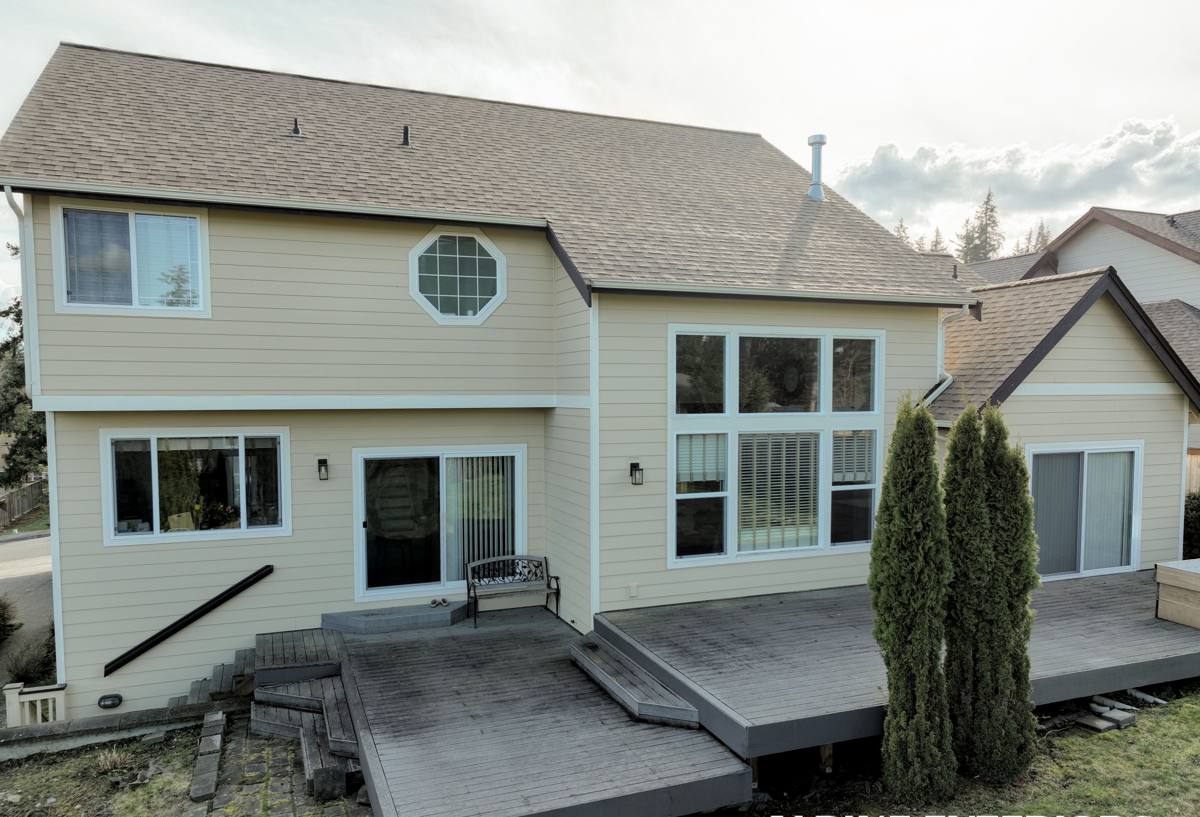
What Whatcom County Weather Does to a Deck
Wood and fasteners don't fail because of one bad storm. They fail from repeated cycles of getting wet, staying wet, and slowly drying out — over and over, month after month. A few things about this region make that cycle harder on a deck than it would be somewhere drier or warmer:
Moisture That Doesn't Fully Leave
Driving rain gets pushed sideways by wind and finds its way under railings, into end-grain cuts, and behind ledger boards where builders didn't flash the connection properly. Because our summers are mild and our winters are long and gray, decking doesn't always get enough sustained dry, sunny weather to fully release that trapped moisture before the next round of rain arrives.
Salt Air and Metal Fasteners
Salt-carrying air accelerates corrosion on screws, nails, joist hangers, and structural brackets. Once a fastener starts rusting, it loses grip strength and can streak or stain the wood around it — often the first visible clue that something underneath needs attention.
Shade, Moss, and Slow Drying
Mature trees and hillside lots common in this area keep a lot of decks partially shaded. Shade plus moisture is exactly what moss and algae need to take hold, and once established, moss holds water directly against the deck surface far longer than open sun and air ever would.
Signs a Deck Needs Repair, Not Just Cleaning
Not every stained or mossy deck needs structural work. But some warning signs mean the damage has moved past the surface and into the framing or connections that actually hold the deck up.
Soft, Spongy, or Springy Boards
If a board flexes noticeably underfoot or feels soft when you press on it, water has gotten into the wood fibers and rot has started. This is different from a board that's just faded or dirty — it's a structural issue, not a cosmetic one.
Rust Streaks and Loose Fasteners
Orange or brown streaking around screw heads usually means the fastener is corroding. If you can wiggle a deck board with your fingers, the fastener has likely lost its grip in the joist below.
Railing or Stair Movement
A railing that shifts when you lean on it, or stairs that feel less solid than they used to, often points to a loosened post connection or rotted framing member — both of which are safety issues, not just maintenance items.
Gaps, Cupping, or Cracking at Board Ends
Board ends and cut edges don't have factory sealant protecting them the way the face of the board does. That's usually where moisture gets in first, so cracking or separation at the ends is often an early indicator before the rest of the board shows damage.
What a Correct Deck Repair Actually Involves
A repair that only replaces what's visible from the top often misses the reason the damage happened in the first place. We look at the whole system, not just the board that's failing.
Below the Surface
- Joists and beams checked for soft spots, splitting, or rot, especially near ledger board connections and post bases
- Ledger board flashing inspected where the deck attaches to the house — a common source of hidden water intrusion
- Fasteners and hardware evaluated for corrosion, not just visible looseness
- Post bases and footings checked for movement, cracking, or standing water contact
At the Surface
- Damaged or rotted boards replaced with matching material and proper spacing for drainage
- Railings and stair stringers re-secured or rebuilt to current stability standards
- Moss and algae growth removed and the surface treated to slow regrowth
- Exposed cuts and end grain resealed after any board replacement
Skipping the "below the surface" step is the most common reason a deck repair doesn't last. New boards fastened to a rotting joist will fail again within a season or two, regardless of how good the new lumber looks on top.
Repair vs. Replacement: How We Decide
Homeowners often assume a soft board or two means the whole deck needs to come out. That's not usually true. We look at how much of the structure is affected, not just how it looks.
| Factor | Usually Points to Repair | Usually Points to Replacement |
|---|---|---|
| Framing condition | Joists and beams solid, isolated soft spots | Widespread rot in multiple joists or the ledger |
| Age of decking | Under 10-12 years, damage is localized | Original material near or past its expected service life |
| Fastener condition | Isolated rust, rest of hardware sound | Corrosion throughout, hangers failing structurally |
| Railing/stairs | Loose but posts and framing intact | Posts rotted at the base or undersized for current code |
| Cost comparison | Repair cost is a fraction of full rebuild | Repair cost approaches 50%+ of replacement |
We'll tell you honestly which category your deck falls into. A deck that just needs a section of decking and a few joists replaced doesn't need to be torn out — but we won't put new boards over framing we know is compromised, because that just delays the same problem and costs more the second time.
Our Deck Repair Process
- On-site inspection. We check the deck from underneath, not just from the top — including ledger flashing, post bases, and joist condition where accessible.
- Written scope and estimate. You get a clear explanation of what's damaged, what's causing it, and what it will take to fix it correctly.
- Structural repairs first. Any compromised framing, hardware, or connections get addressed before new decking goes down.
- Surface repair and matching. Damaged boards are replaced with material that matches spacing and fastening to the rest of the deck.
- Sealing and cleanup. Exposed cuts get sealed, moss-prone areas get treated, and the site is left clean.
Materials: What We Repair With and Why
Most Sehome-area decks are either pressure-treated wood or, on newer builds, composite decking. Repair materials should match what's already there — mixing materials rarely looks right and can create uneven wear or moisture behavior between old and new sections.
Pressure-Treated Wood
Still the most common decking material in this region because it's affordable and easy to repair board-by-board. The trade-off is that it needs periodic sealing or staining to keep moisture out, especially on a shaded lot where boards don't get much chance to dry between rain events.
Composite Decking
Composite boards resist rot in the board itself, but the framing underneath is still almost always real wood, and that structure needs the same inspection and protection as a traditional deck. Composite repairs also require matching the exact board profile and color line from the original installation where possible, since discontinued colors and profiles can be hard to match years later.
Fasteners and Hardware
Given the corrosion issues salt air causes here, we use fasteners and structural hardware rated for coastal or wet-climate exposure rather than standard-grade hardware. It costs a little more up front and holds up considerably longer.
Slowing Down Moss and Moisture Damage After the Repair
A repair fixes what's already damaged. Ongoing care is what keeps the next repair from happening on the same schedule. A few habits make a real difference in this climate:
- Sweep leaves and debris off the deck regularly, especially in fall — trapped debris holds moisture directly against the boards
- Keep gutters and downspouts clear so water isn't dumping directly onto or near the deck
- Rinse or gently scrub moss and algae off before it gets thick enough to hold standing water
- Reseal or restain wood decking on the schedule the product calls for, not just when it looks faded
- Check railings and stair connections once a year for looseness before it becomes a safety issue
None of this requires a contractor every time — it's routine upkeep. But it's worth doing consistently, because in a climate this wet, neglect compounds fast.
Why a Crew That Already Works in Sehome Matters
Deck problems here follow patterns that a crew working across drier or more sheltered regions might not think to check for — flashing details at the ledger, the way shade patterns on a sloped or wooded lot affect drying time, or which hardware actually holds up against salt-laden air over years, not just months. A crew that already works decks throughout the Sudden Valley area has seen these patterns repeat across enough homes to know where to look first, instead of learning it on your deck.
We also stand behind the work with someone local who's easy to reach if a question comes up after the job is done, rather than a phone number tied to an office hours away.
Get a Free Estimate
If your deck has soft boards, rust staining, loose railings, or moss that keeps coming back, we're glad to take a look and give you an honest read on what it needs — repair or otherwise. Fill out the form below for a free, no-pressure estimate from a crew that works Sehome and the surrounding Sudden Valley area.