 Sudden Valley Siding
 Why Deck Replacement in Sehome Isn't a One-Size Job
A deck built for a dry inland climate doesn't hold up the same way out here. In the Sehome area we serve as part of our Sudden Valley coverage, decks deal with a specific combination of stresses: salt-tinged air moving in off the water, driving rain that hits horizontal surfaces harder than a straight-down shower ever would, and a moss season that can stretch from fall through spring. Add in the shade many Whatcom County lots get from mature evergreens, and you have surfaces that stay damp longer than they would in most parts of the country.
None of that means a deck can't last. It means the materials, fasteners, and drainage details have to be chosen for this climate specifically, not pulled from a generic build spec. When we talk about "deck replacement" here, we mean rebuilding the whole system - framing, flashing, fasteners, and surface - so it's working with this weather instead of constantly losing to it.
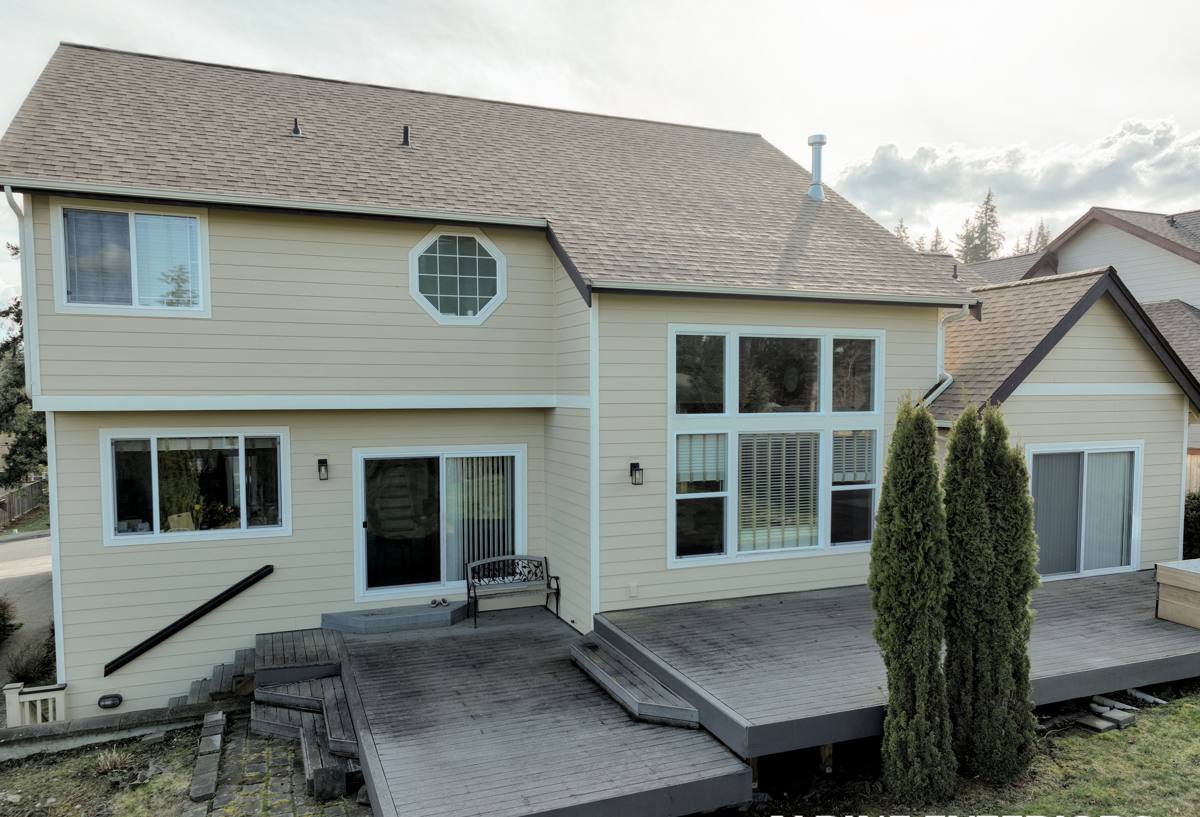
Signs Your Deck Has Reached the End of Its Life
Not every tired-looking deck needs full replacement, but a lot of them do. Here's how to tell the difference between cosmetic wear and a structure that's actually failing.
Surface-Level Warning Signs
- Boards that feel spongy or give slightly underfoot, especially near the house or at board ends
- Graying, splintering, or checking (splitting) across most of the deck surface, not just one or two boards
- Persistent moss or algae film that comes back within weeks of cleaning
- Fasteners that are rusted, popped up, or leaving black streaks down the boards
Structural Warning Signs
- Visible gaps, rot, or soft wood where the deck's ledger board attaches to the house
- Wobble or movement in the railing posts or the deck frame when you walk near the edge
- Sagging or unevenness in the deck surface that wasn't there when it was built
- Support posts sitting directly in soil or on cracked, heaved concrete footings
If you're seeing structural signs, that's a replacement conversation, not a patch-and-paint one. Surface-only wear on an otherwise sound frame can sometimes be addressed with resurfacing, but we'll tell you honestly which category your deck falls into.
What a Correct Deck Replacement Actually Involves
A deck replacement done right is a full system rebuild, not just swapping old boards for new ones on the same frame. Here's what that actually covers.
Tear-Out and Inspection
We remove the old decking, railing, and as much of the frame as needed to see what's really underneath - including the ledger connection to the house, which is the single most common failure point on Pacific Northwest decks. Hidden rot at the ledger doesn't show up until you pull the boards back.
Ledger Board and Flashing
This is where most premature deck failures actually start. If the ledger isn't properly flashed to shed water away from the house band joist, moisture works its way in behind the siding and rots the structure from the inside, invisible until it's a serious repair. Correct flashing detail here matters more than almost anything else on the job.
Framing and Footings
New joists, beams, and posts sized to current code, set on footings that actually bear on solid, frost-resistant ground rather than surface soil. We check post spacing and beam sizing against the deck's actual dimensions and use - not just what was there before.
Decking Surface and Fasteners
Whatever surface material you choose, it's installed with fasteners and clips rated for that specific product and for exterior exposure - stainless or coated fasteners, correct board spacing for drainage and expansion, and attention to end-cuts and cut edges, which is where most moisture intrusion into composite and wood boards actually starts.
Choosing a Decking Material for Sehome's Climate
There's no universally "best" decking material - there's the right material for your budget, your maintenance appetite, and how much shade and moisture your specific lot deals with. Here's how the common options actually compare in this climate.
| Material | Moss/Moisture Behavior | Maintenance | Typical Lifespan |
|---|---|---|---|
| Pressure-treated wood | Absorbs moisture; needs sealing to resist moss and graying | Annual cleaning, periodic re-staining/sealing | 15-20 years with upkeep |
| Cedar | Naturally rot-resistant but still needs sealing in shaded, damp spots | Regular sealing to maintain color and resistance | 15-25 years with upkeep |
| Composite (traditional) | Resists rot but can retain surface moisture and mildew in deep shade | Periodic washing; no staining or sealing | 25-30 years |
| Capped composite/PVC | Best moisture and moss resistance of the group; sheds surface water well | Occasional washing | 25-30+ years, often with longer manufacturer warranties |
For lots with heavy shade or that stay damp longer into spring, we lean toward recommending capped composite or PVC decking - the sealed outer layer resists the moss and mildew buildup that plain wood and uncapped composite are more prone to in this specific climate. That's a maintenance and moisture-behavior call on our part, not a knock on wood decking done and maintained properly - plenty of homeowners prefer the look and feel of real wood and are willing to keep up with sealing. We'll walk through the honest trade-offs for your situation rather than push one product line.
Footings, Drainage, and the Ground Under Sehome Decks
What's happening below the deck matters as much as what's on top of it. Whatcom County's mix of clay-heavy and glacial soils doesn't drain the same way everywhere, and a footing that sits in standing water through the wet months will move over time - which is exactly what causes the sag and wobble we described earlier.
During replacement, we check footing depth and bearing against current code requirements, not just what the original builder used decades ago. We also look at grading and drainage around the deck's perimeter - water needs somewhere to go that isn't pooling against your footings or your home's foundation. On sloped or shaded lots, this is often the difference between a deck that stays solid for 25+ years and one that starts showing movement in year eight.
Our Deck Replacement Process
- On-site assessment - we inspect the existing deck's frame, ledger, footings, and surface to determine what's actually salvageable versus what needs full replacement.
- Honest scope and material walkthrough - we explain what we found, what a correct rebuild requires, and walk through material options and their real-world trade-offs for your lot.
- Permitting - deck replacements of most sizes require a permit; we handle that process so it's done correctly and doesn't create problems when you sell the house later.
- Tear-out and structural rebuild - old materials removed, ledger properly flashed, new framing and footings installed to code.
- Surface installation - decking, fasteners, and railing installed to manufacturer spec for your chosen material.
- Final walkthrough - we review the finished deck with you, including what maintenance (if any) it needs going forward.
Keeping a New Deck Ahead of the Moss Season
Even the most moss-resistant decking benefits from a little seasonal attention here. A few habits go a long way toward protecting your investment through Whatcom County's wet months.
- Sweep leaves and needles off the deck regularly in fall - trapped organic debris is what feeds moss growth
- Rinse the surface periodically through the wet season, especially in shaded corners that don't get direct sun or wind
- Keep gutters and downspouts clear so roof runoff isn't draining directly onto or under the deck
- Check railing posts and stair connections once a year for movement or loosening fasteners
- For wood decks, re-seal on the schedule recommended for your specific product - skipping years is when moisture damage gets a foothold
- Trim back overhanging branches that keep the deck surface shaded and damp longer than the rest of the yard
Why Hiring a Crew That Already Works in Sehome Matters
A contractor who works this specific area regularly already knows how the local moisture patterns, soil, and permitting process actually play out - not just in theory, but from having done the work here repeatedly. That shows up in small decisions: how deep footings need to go on a given lot, which ledger flashing details actually hold up through a full wet season, and which material recommendations are honest fits for a shaded, damp yard versus a sunnier one nearby.
It also means a straightforward relationship with local permitting and inspection, since we're not learning Whatcom County's process for the first time on your job. For a structure that's going to be exposed to this climate for the next two-plus decades, that local experience is worth as much as the material spec sheet.
Get a Free, No-Pressure Estimate
If your deck is showing any of the signs above, or you just want an honest read on how much life it has left, we're happy to take a look. The estimate is free, there's no pressure to move forward, and you'll get a straight answer about whether you're looking at a repair or a full replacement. Fill out the form below to get started.