 Sudden Valley Siding
 Roof Replacement in Sehome: What This Climate Does to a Roof Over Time
A roof in Sehome doesn't fail because of one bad storm. It fails from years of steady, cumulative exposure — salt-laden air off the Salish Sea working on fasteners and flashing, rain that gets driven sideways under shingle edges instead of just running off, and a moss season that settles into shaded roof planes and doesn't fully let go until well into the warmer months. Add in a neighborhood with a real mix of older homes, mid-century houses, and newer infill, and you get roofs at every stage of that decline, from a shingle field that's still holding on to a roof deck that's quietly rotting underneath a surface that still looks fine from the ground.
This page is about full roof replacement specifically, not a repair patch or a general roofing overview. It covers what actually causes a Sehome roof to reach the end of its useful life in this climate, what a correct replacement involves from tear-off to final walkthrough, and what to look for in a crew before you commit to a job this size.
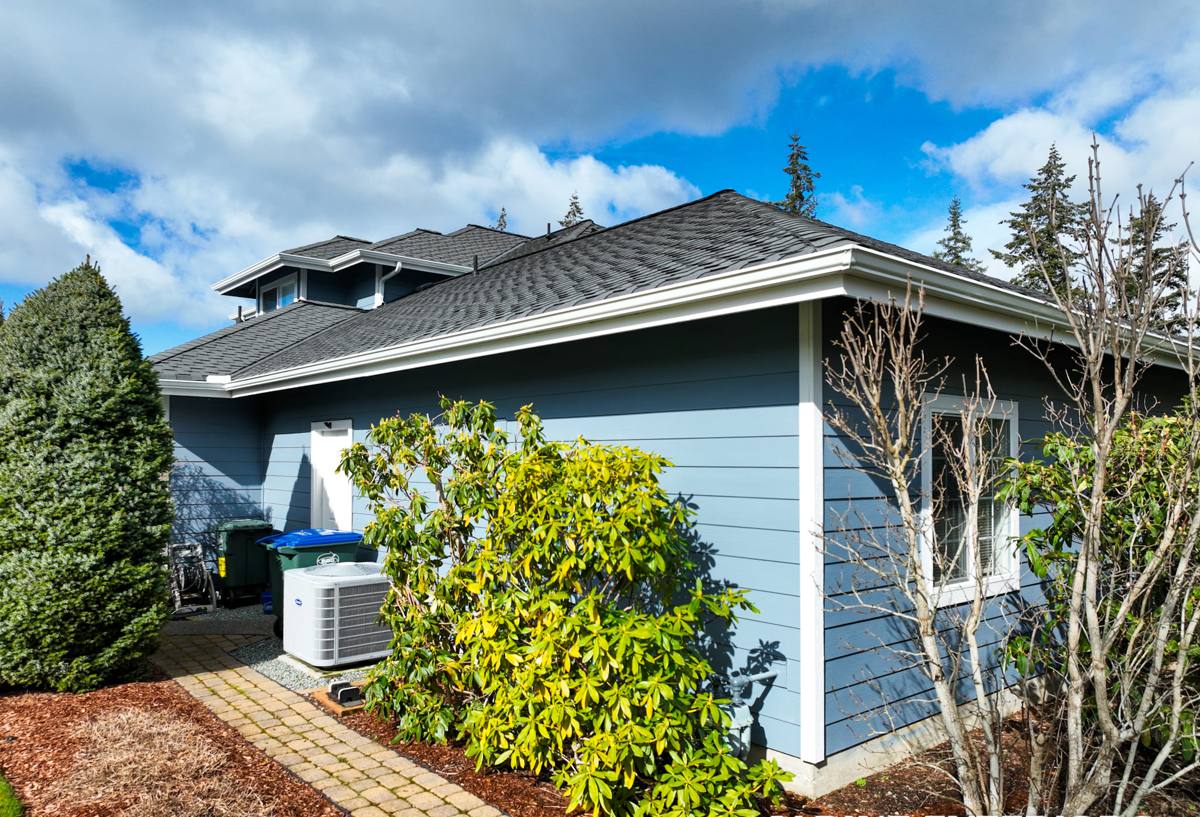
What Sehome's Climate Means for a Roof Replacement
Salt Air and Corrosion
Sehome sits well within reach of the salt-carrying air that moves through this part of Whatcom County off the water, even on properties that aren't anywhere near the immediate shoreline. That salt exposure accelerates corrosion on exposed fasteners, drip edge, and flashing metal, and it does it faster than most homeowners expect. On a roof replacement, this matters most in material selection, not just workmanship. Standard fasteners and lightweight flashing metal that might hold up fine in a drier inland climate can start showing rust streaks and early failure here within a handful of years, which is exactly the kind of hidden weak point that turns into a leak long after the crew has moved on to another job.
Driving Rain and Wind-Driven Moisture
Rain in this region rarely just falls straight down and runs off. It comes in on a wind, which pushes water sideways and even slightly upward under shingle tabs, along roof edges, and into any gap in flashing that wasn't properly lapped and sealed. A roof replacement that doesn't account for this — using underlayment and flashing details built for calmer, drier weather — ends up performing worse than its materials would suggest. This is one of the most common reasons we find water damage on a roof deck during tear-off even when the visible shingles above it still look reasonably intact.
A Long Moss Season
Mature tree cover and mild, moist temperatures add up to a moss and algae season that runs longer here than in most parts of the country. Shaded and north-facing roof planes are usually the first to show it, and once moss takes hold, it holds moisture against the roof surface, which speeds up granule loss on shingles and can work its way under lifted edges over time. A roof replacement is also a natural point to correct whatever conditions let that moss establish itself in the first place, whether that's a ventilation gap, a shaded valley that never fully dries, or a shingle product without any algae resistance built in.
Repair or Full Replacement? Reading the Signs Correctly
Not every aging roof needs a full replacement right away, and not every homeowner who calls us needs to hear that theirs does. A localized leak around one flashing detail, or a small run of damaged shingles from a fallen branch, is often a legitimate repair. The line usually comes down to how much of the roof's overall service life is left and how widespread the underlying problems actually are once you look past the surface.
- Multiple leaks in different areas, rather than one isolated spot
- Shingles that are curling, cracking, or losing granules across large sections of the roof, not just one slope
- A roof deck that's spongy or shows soft spots when walked, which usually means moisture has already reached the wood
- A roof approaching or past the upper end of its material's typical service life, especially if it was never properly ventilated
- Repeated repair calls to the same general area of the roof within a few years
- Visible sagging along the roofline or in the plane of the roof itself
When we walk a roof for an estimate, we're honest about which category it falls into. If a repair genuinely solves the problem, that's what we recommend. Full replacement gets recommended when the underlying deck, or enough of the roofing system as a whole, is far enough along that patching it just delays a bigger job at greater eventual cost.
What a Correct Roof Replacement Involves
Full Tear-Off and Deck Inspection
A real replacement starts with removing the old roofing material down to bare decking, not layering new shingles over old ones. That's the only way to actually see the plywood or OSB underneath and find rot, soft spots, or water staining that's been developing quietly, often for years, without ever showing up as an obvious leak inside the house. Any damaged decking gets cut out and replaced before anything new goes down. Skipping this step to save time just seals existing problems under a fresh surface.
Underlayment and Ice-and-Water Protection
Underlayment is the roof's real secondary water barrier, and it matters more here than in a drier climate because wind-driven rain routinely gets pushed under shingle edges rather than simply running off. We use synthetic or self-adhered underlayment across the field of the roof, with additional ice-and-water shield membrane at eaves, valleys, and other spots where water is most likely to find a way in. This layer does most of its work quietly, for decades, and it's not something you can inspect or fix again without tearing the roof back off — which is exactly why it needs to be right the first time.
Flashing at Valleys, Chimneys, and Wall Transitions
Most roof leaks in this region don't start in the open field of shingles. They start at flashing — valleys where two roof planes meet, chimney and skylight penetrations, and the places where a roofline meets a wall. Each of those needs flashing that's properly lapped into the underlayment and shingle courses as part of one continuous system, not caulked over as an afterthought once everything else is already installed. On older Sehome homes especially, we often find that original flashing details were adequate for their era but don't hold up to what several more decades of this climate have thrown at them.
Ventilation
Balanced intake and exhaust ventilation keeps the underside of the roof deck dry year-round, which slows both wood rot and moss growth from below. It's easy to overlook because it doesn't show up anywhere on the finished roof's appearance, but poor attic airflow quietly shortens a new roof's lifespan from the day it's installed. A replacement is the right time to correct ventilation that was never adequate to begin with, since the roof deck is already fully exposed.
Choosing Roofing Materials for a Sehome Replacement
Most Sehome roof replacements land on architectural asphalt shingles, and for good reason — they're a proven, well-priced product in this climate when installed correctly. But it's worth understanding where the other common options fit before settling on one.
| Material | Typical Lifespan | Fit for Sehome's Climate |
|---|---|---|
| 3-Tab Asphalt Shingles | 15-20 years | Lowest upfront cost, but a thinner profile and lower wind rating make them a weaker fit for exposed roof planes |
| Architectural Asphalt Shingles | 25-30 years | Heavier build and better wind resistance; the most common practical choice for this climate and housing stock |
| Algae-Resistant Premium Shingles | 30+ years | Worth the upcharge on heavily shaded or moss-prone roof planes |
| Standing Seam Metal | 40-50+ years | Sheds moss and moisture well and holds up strongly to corrosion when properly specified, at a meaningfully higher upfront cost |
For a lot of Sehome homes, the right call is architectural shingles with algae-resistant granules, especially on tree-shaded lots. Whether metal roofing makes sense usually comes down to how long you plan to stay in the home, how much of the roof sits under tree cover, and your upfront budget versus long-term cost per year of service life.
Cost Factors in a Sehome Roof Replacement
Two estimates for what looks like the same job can land far apart, and the gap is almost always real differences in scope rather than one contractor padding a number.
| Factor | What It Affects |
|---|---|
| Roof size and pitch | Material quantity, labor time, and staging or safety requirements |
| Deck condition found at tear-off | Whether hidden rot or moisture damage needs repair before new roofing goes on |
| Underlayment and ice-and-water grade | How well the roof resists wind-driven rain over the long run |
| Flashing scope | How thoroughly valleys, chimneys, and wall transitions are addressed |
| Material choice | Upfront cost versus expected service life and moss resistance |
| Ventilation upgrades | Long-term moisture control and how long the new roof actually lasts |
We don't quote a full replacement off a photo or a square-footage guess. We walk the roof and, when possible, the attic, so the number we give reflects the actual property rather than a generic estimate.
How Our Roof Replacement Process Works
- In-person inspection: We walk the roof and attic ourselves and document what we actually find, including deck condition where it's visible.
- Written estimate: You get an itemized bid covering tear-off, underlayment, flashing, ventilation, material selection, and cleanup, not a single lump-sum figure.
- Scheduling around weather: We build reasonable flexibility into the timeline, since wet-season delays are a normal part of working in this region.
- Full tear-off and deck repair: Old roofing comes off completely, and any damaged decking is replaced before new materials go down.
- Underlayment, flashing, and roofing installation: Each layer goes on to manufacturer specification, with extra attention at valleys, penetrations, and wall transitions.
- Final walkthrough and cleanup: We review the finished roof with you in person and do a full site and magnetic nail sweep before calling the job complete.
Why Hiring a Crew That Already Works in Sehome Matters
A crew that regularly replaces roofs in and around Sehome has already seen how salt air corrodes underspecified fasteners over time, how wind-driven rain finds its way through underlayment that wasn't lapped correctly, and which roof orientations hold onto moss longest through the wet months. That kind of repeated, local experience shapes real decisions on a job — which flashing details deserve extra attention given the age of housing stock in this neighborhood, and which shortcuts consistently show up as callbacks two or three winters later. A crew unfamiliar with this specific stretch of Whatcom County is more likely to apply generic details that don't quite match what this climate actually demands.
It also matters after the job is done. A workmanship warranty is only as good as the company standing behind it years down the line, and a contractor with an ongoing, established presence in the area is one you can actually reach if a question comes up later.
A Practical Checklist Before You Hire
- Do they perform a full tear-off with deck inspection, not a layover over existing shingles?
- Does the written estimate specify underlayment type and material product, not just "new roof"?
- Is flashing work at valleys, chimneys, and walls explicitly written into the bid?
- Do they carry current Washington contractor licensing, liability insurance, and workers' compensation?
- Can they point to recent, real roof replacement work in or near Sehome?
- Does the estimate clearly separate the manufacturer's material warranty from the contractor's own workmanship warranty?
If your Sehome roof is showing its age and you want an honest opinion on whether it needs a repair or a full replacement, we're glad to take a look and walk you through exactly what we find. Use the form below to request a free, no-pressure estimate.