 Sudden Valley Siding
 Building a Deck for Sehome's Marine Climate
A deck in Sehome does a different job than a deck in a dry inland climate. Here, the structure sits under a marine layer for much of the year, takes on salt-laden air off the water, and spends long stretches under a shaded, damp canopy where moss and algae get a foothold fast. None of that means you can't have a great outdoor space — it just means the deck has to be built with those conditions in mind from the framing up, not just picked out of a catalog for looks.
We build and repair decks throughout Whatcom County, and the decks that hold up in Sehome share the same traits: solid substructure, real drainage planning, hardware rated for wet coastal exposure, and a surface material chosen for how it behaves wet, not just how it looks in a showroom. This page walks through what that actually means for a Sehome project.
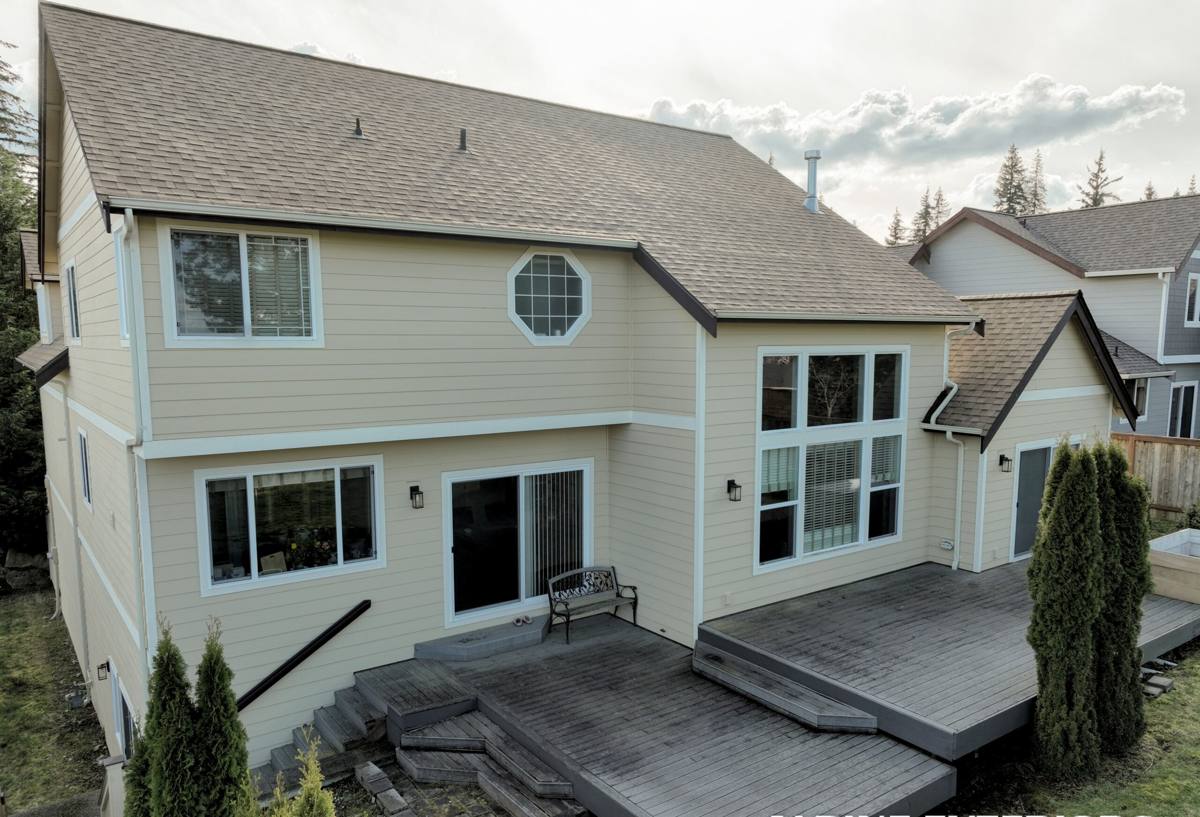
What Local Weather Does to a Deck Over Time
It helps to understand the specific ways this climate works against a deck, because it changes almost every decision in the build.
Driving Rain and Standing Moisture
Whatcom County gets long stretches of steady rain rather than short heavy downpours, which means wood and fasteners can stay damp for days at a time. Decks that don't shed water efficiently — flat joists, tight board spacing, poor slope away from the house — end up holding moisture against the structure instead of letting it dry between storms.
Salt Air Corrosion
Proximity to Puget Sound means airborne salt reaches further inland than people expect, especially with onshore wind patterns. Salt air accelerates corrosion on fasteners, joist hangers, and any exposed metal hardware. Standard interior-grade screws and connectors corrode faster here than they would in a drier, inland town.
Moss, Algae, and Shade
Long moss season is a real factor on decks under tree cover or on the shaded north side of a house. Moss holds moisture against the deck surface, feeds on organic buildup in board gaps, and makes horizontal surfaces slick and slippery — a real safety issue on stairs and landings, not just a cosmetic one.
Choosing the Right Decking Material
There's no single "best" decking material — there's a best fit for how a specific deck will be used, shaded, and maintained. Here's how the common options actually perform in this climate.
| Material | Moisture Behavior | Moss/Algae Resistance | Maintenance |
|---|---|---|---|
| Pressure-treated wood | Absorbs water; needs gaps and airflow to dry between rains | Moderate — needs regular cleaning | Annual cleaning, periodic sealing/staining |
| Cedar | Naturally moisture-resistant, but still wood | Better natural resistance, still grows moss in deep shade | Periodic cleaning and finish maintenance |
| Composite decking | Does not absorb water into the board itself | Still needs surface cleaning; some caps resist algae better than others | Low — occasional washing |
| PVC decking | Fully water-resistant material | Good resistance, but surface texture matters for slip | Low — occasional washing |
For a shaded, damp Sehome lot, we lean toward materials and finishes that don't trap moisture in the board itself, paired with a board profile and gap spacing that lets water drain through rather than pool. For sunnier, more open lots, a well-maintained wood deck is still a perfectly good, honest choice — it just asks more of the homeowner in upkeep.
Framing and Substructure — Where Most Deck Failures Start
The part of a deck nobody sees is the part that determines whether it lasts fifteen years or forty. Most deck problems we get called out to repair aren't surface problems — they're framing problems that eventually show up on the surface.
- Joists sized and spaced correctly for the actual span and load, not just "what's up code minimum"
- Ledger board attached and flashed properly where the deck meets the house — this is the single most common source of hidden rot we find
- Corrosion-resistant hardware rated for coastal/wet exposure, not standard interior fasteners
- Footings set to the correct depth and bearing for our soil and frost conditions
- Airflow underneath the deck so the structure can actually dry out between rain events
A deck can look finished and still be sitting on a ledger connection that's slowly rotting behind the siding, or on joist hangers that are quietly corroding from salt exposure. That's why we treat the substructure as the real project — the decking boards are just what you walk on.
Drainage and Moisture Control
Given how much rain this area gets, drainage isn't an afterthought — it's a design decision made before a single board goes down.
A correctly built deck sheds water away from the house foundation, not toward it. Board spacing is set to let water pass through rather than collect. Where a deck sits over living space or a patio below, proper under-deck drainage systems keep that lower area usable and dry. And where the deck meets the house, flashing and gap detailing keep water from working its way behind the siding — a failure point that causes damage well beyond the deck itself if it's done wrong.
Our Deck Building Process
Every project runs through the same sequence, whether it's a full rebuild or new construction:
- On-site assessment — we look at sun/shade exposure, existing structure condition if there's a deck to replace, drainage patterns, and how the space will actually be used.
- Design and material selection — sizing, layout, and material choice based on the site's specific exposure, not a generic template.
- Permitting — we handle the permit process through the appropriate local jurisdiction before any work starts.
- Demolition (if applicable) — removal of the old structure with attention to what condition the ledger connection and framing were actually in.
- Framing and structural work — footings, ledger attachment and flashing, joists, and corrosion-resistant hardware.
- Decking and finish work — board installation, railing, stairs, and any finish or sealing appropriate to the material.
- Final walkthrough — we go over the finished deck and what maintenance it actually needs going forward.
Permits and Local Requirements
Deck construction in Whatcom County typically requires a building permit once a deck exceeds certain size or height thresholds, and railing height and guard requirements apply once a deck sits above a certain elevation. If the property is within an HOA or covenant community, there may be additional design review requirements on top of the county permit. We handle the permit application and inspection scheduling as part of the project so homeowners aren't stuck navigating that process alone.
Maintenance That Actually Matters Here
The maintenance a deck needs in Sehome is different from the maintenance it would need in a drier climate — the priority is moisture and moss management, not just appearance.
- Clear leaves and debris out of board gaps before they hold moisture through the winter
- Wash off moss and algae buildup at least once a year, more often in heavily shaded areas
- Check railing posts and stair connections for looseness, which is often an early sign of moisture getting into a connection point
- Inspect the ledger board area where the deck meets the house for any staining, soft spots, or gaps in flashing
- Re-seal or re-stain wood decking on the schedule appropriate to the product — don't wait until it's visibly graying
- Keep gutters and downspouts near the deck clear so runoff isn't dumping extra water onto the structure
Why Hire a Crew That Already Works in Sehome
A deck built for a dry climate and a deck built for this one aren't the same project, even if they look identical from the driveway. Fastener choice, ledger flashing detail, board spacing, and material selection all shift when you're accounting for salt air, sustained rain, and a long moss season. A crew that works this specific area regularly has already seen where decks fail here and builds to avoid those exact failure points, rather than applying a generic approach and hoping it holds up.
We also know the practical side — what the local permitting process actually requires, what inspectors here are looking for, and how to sequence a project around this region's weather windows so framing isn't left exposed to a stretch of rain longer than necessary.
Get an Estimate
If you're planning a new deck or need to replace one that's showing its age, we're happy to take a look and give you a straightforward, no-pressure estimate. Use the form below to get started.