 Sudden Valley Siding
 Fiber Cement Siding in Sehome: Matching the Material to the Climate
Sehome is one of the established neighborhoods in the Bellingham area we serve out of Sudden Valley, with a mix of older homes and newer infill sitting close to Sehome Hill. A lot of that housing stock has already had at least one round of siding replacement, and some of it is coming due for another. Whatcom County's climate is a big part of why: salt air moving in off the water, driving rain that hits walls sideways rather than falling straight down, and a moss season that can run most of the year on shaded lots. Any siding material installed on a Sehome home needs to hold up against all three, not just look good on install day.
This page is specifically about fiber cement siding for Sehome homes: what the climate demands from the material, what a correct installation actually involves, and why we've standardized on one product system rather than offering a menu of options. We install James Hardie fiber cement exclusively. That's a professional standard shaped by years of tear-offs and service calls in this exact climate, not a sales angle, and it applies the same way on a small Sehome bungalow as it does on a larger newer build.
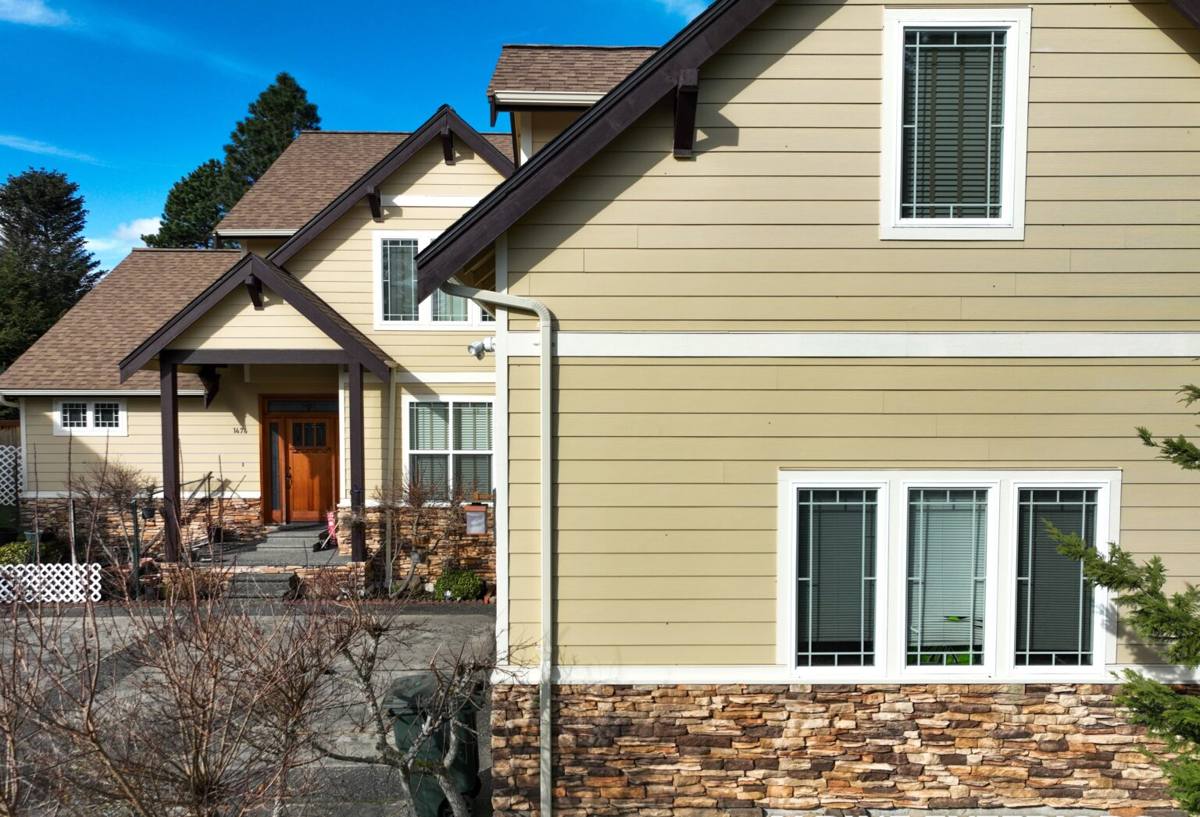
What This Climate Does to Siding in Sehome
Salt Air and Corrosion
Sehome sits inland of the immediate waterfront but still well within reach of the salt-laden air that moves through the Bellingham area off the Salish Sea. Salt accelerates corrosion on fasteners, flashing, and any exposed metal trim, and it wears down lower-grade finishes faster than they'd wear in a drier climate. That matters for siding choice as much as for the hardware behind it, since a finish that chalks or fades quickly under salt exposure will make a home look tired years before the underlying material actually fails structurally.
Driving Rain and Wall Moisture
Rain in this region usually arrives on a wind, not straight down, which pushes moisture into wall assemblies, window flashing, and siding laps rather than just running off a roof edge. That means the water-resistive barrier, flashing details, and joint treatment behind the siding matter as much as the siding material itself. A good product installed without proper drainage detailing behind it will still let moisture in over time, and a mediocre installation can undo the benefits of an otherwise good material. Both halves of the equation need attention on every job.
A Long Moss Season
Mature tree cover and mild, damp temperatures add up to a long moss and mildew season across the Bellingham area, and Sehome's tree-lined streets are no exception. North-facing walls and anywhere airflow is limited tend to grow moss and algae first. Materials that are even slightly porous, or that hold moisture against the substrate, become growth surfaces over time, and once moss or algae takes hold it holds even more moisture against the wall, which accelerates whatever damage was already starting underneath.
Why We Only Install James Hardie Fiber Cement
We used to offer a wider range of siding products. We stopped, and that decision came from years of service calls, inspections, and tear-offs on homes in this specific climate, not from a supplier arrangement.
- Non-combustible core: Fiber cement doesn't feed a fire the way wood-based siding products can, which matters for both homeowner safety and insurance considerations.
- Factory-applied ColorPlus finish: The color is baked on in a controlled factory process rather than brushed on in the field, so it resists fading and moisture intrusion far longer than site-applied paint.
- Climate-engineered HZ5 formulation: Hardie's HZ5 product line is built for regions with heavy moisture exposure and freeze-thaw cycling, which describes Whatcom County's climate well.
- Dimensional stability: Fiber cement doesn't swell, warp, or cup the way engineered wood products can after repeated wetting cycles that never fully resolve on a shaded lot.
- Strong transferable warranty: Hardie backs the product with one of the stronger warranty structures in the industry, as long as installation follows their published specifications.
We don't install LP SmartSide, vinyl siding, Cemplank, Allura, primed spruce, or cedar. Each of those has a place in the market, and plenty of homeowners are satisfied with them elsewhere. But we've made a professional call that in a climate with this much sustained moisture and salt exposure, we'd rather stand behind one system fully than offer a cheaper option that quietly shifts long-term maintenance risk onto the homeowner down the road. That standard applies the same way on a Sehome job as it does anywhere else we work.
What a Correct Fiber Cement Installation Actually Involves
Tear-Off and Substrate Inspection
Fiber cement performs exactly as well as the wall behind it. Before any new siding goes up, we remove the old material and inspect the sheathing for rot, soft spots, or prior moisture damage, which is common on older Sehome homes that have already been through one or two siding cycles. Skipping this step and installing over a compromised substrate just traps the same problem under a new surface, where it keeps working on the framing unseen.
Water-Resistive Barrier and Flashing
A correctly installed water-resistive barrier, lapped properly from the bottom up, along with flashing at every window, door, and roof-to-wall transition, is what actually keeps wind-driven rain out of the wall assembly. This is the step that matters most in a climate where rain doesn't fall straight down, and it's also the step that's easiest to rush on a job priced for speed rather than correctness.
Fastening, Clearances, and Joints
Hardie's specifications call for specific fastener types and spacing, correct clearance from grade, roofline, and decks, and properly treated joints between boards. Getting these details right is what allows the material to move and shed water the way it's engineered to. Shortcuts here, undersized fasteners, tight clearances, or unsealed joints, show up as problems years later even though the siding itself was the right product for the job.
Caulking and Finish Details
Joint caulking, trim details, and touch-up on any field-cut edges protect the factory finish at the seams, which is where a ColorPlus finish is most exposed to weather. Done correctly, these details are nearly invisible and durable for years; done poorly, they're where the first signs of wear tend to show up, usually as a hairline gap that darkens with moisture before anyone notices it.
Choosing the Right Hardie Product Line and Profile
Hardie makes several siding profiles, and the right one depends on the home's style and how it sits on its lot. On a mixed streetscape like Sehome's, where older bungalows sit near newer infill, matching profile to house style matters both for appearance and for how the assembly manages water on a given elevation.
| Product | Best Fit | Why It Fits This Climate |
|---|---|---|
| HardiePlank lap siding | Most single-family homes, traditional and mid-century styles | Classic lapped profile sheds wind-driven rain effectively when installed with correct overlap |
| HardiePanel vertical siding | Modern builds, accent walls, gable ends | Fewer horizontal joints means fewer potential water entry points on exposed elevations |
| HardieShingle | Craftsman-style and detail-heavy facades | Factory-finished shingle profile without the moisture retention of real wood shakes |
| HardieTrim | Window and door surrounds, corner boards, fascia | Matches the siding's stability and finish so trim doesn't fail before the field material does |
ColorPlus finishes come in a range of tones that work well against Whatcom County's muted, forested backdrop, and because the color is factory-applied, it holds its look through a full wet season without the early fading that site-applied paint on other materials tends to show. We walk through profile and color choices with the home's existing trim, roofline, and neighboring houses in mind, not just a swatch in isolation.
How the Job Runs, Start to Finish
- On-site assessment of the existing siding, substrate condition, and any problem areas specific to the home's orientation and shade pattern
- Written scope and product selection, including profile, color, and trim details
- Tear-off of old siding and inspection or repair of sheathing before anything new goes up
- Water-resistive barrier installation and flashing at every window, door, and transition
- Fiber cement installation to Hardie's fastening and clearance specifications
- Caulking, trim, and finish detail work
- Final walkthrough with the homeowner before the job is considered complete
What Fiber Cement Siding Costs in Sehome
| Cost Factor | What It Affects |
|---|---|
| Home size and number of stories | Total material and labor hours required |
| Tear-off vs. install over existing sheathing | Whether substrate repair is needed before new siding goes up |
| Profile and trim complexity | Lap siding vs. panel vs. shingle accents, plus window and corner trim detail |
| Substrate condition | Rot or moisture damage found once old siding comes off adds repair scope |
| Color and accessory selection | Standard ColorPlus palette vs. specialty colors or trim packages |
Exact numbers depend on the specific home and what we find once the old siding is off, which is why we walk each property before giving a real estimate rather than quoting from a generic price list. A home with sound sheathing and a straightforward lap-siding scope costs meaningfully less than one that needs substrate repair or detailed trim work, and we'd rather tell you that up front than surprise you mid-project.
Signs Your Current Siding Is Already Failing
- Soft or spongy spots when pressed, especially low on the wall or around window trim
- Visible warping, cupping, or swelling on any siding boards
- Paint that's peeling or chalking faster than it should on shaded, north-facing walls
- Moss or dark staining that returns quickly after cleaning
- Gaps opening up at joints, corners, or trim edges
- Rust staining running down from fastener heads
- Rising energy bills alongside visible drafts near siding and trim lines
Why Hiring a Crew That Already Works Sehome Matters
A crew that installs fiber cement siding across the Bellingham area day to day, not occasionally, sees how salt air, wind-driven rain, and moss actually behave on real walls through a full year, not just how a product performs on a spec sheet. That repeated exposure shapes practical decisions on a Sehome job: how much attention a shaded, north-facing wall needs versus a sun-exposed one, how prior siding cycles on an older home tend to have left the substrate, and which fastening and flashing details are worth the extra time so the homeowner isn't dealing with a callback two winters later. A contractor who only occasionally works in this specific climate is more likely to apply generic details that don't quite match what this part of Whatcom County actually puts a wall through, and those small gaps in judgment are exactly what shows up as a problem a few winters down the line.
If your Sehome home needs new siding, or you're trying to figure out whether what's on the wall now can be repaired or should be replaced, we're glad to take a look and give you a straightforward, honest assessment. Reach out using the form below to schedule a free, no-pressure estimate.