 Sudden Valley Siding
 Why Metal Roofing Behaves Differently on a Sehome Home
Sehome sits close enough to the water and the wet, mossy timber country of Whatcom County that a roof here earns its keep in ways a roof in a drier climate never has to. Metal roofing has become a popular answer for homeowners in this area precisely because it handles standing water, wind-driven rain, and long stretches of shade better than most other materials. But "metal roofing" is not one product — it is a family of systems, fastener strategies, and coatings, and the wrong combination for this climate will show its weaknesses within a handful of winters. This page covers what actually matters when you're putting a metal roof on a house in Sehome: what the local weather asks of it, what a correct installation looks like, and how to tell a system built to last from one that just looks good on the day it goes up.
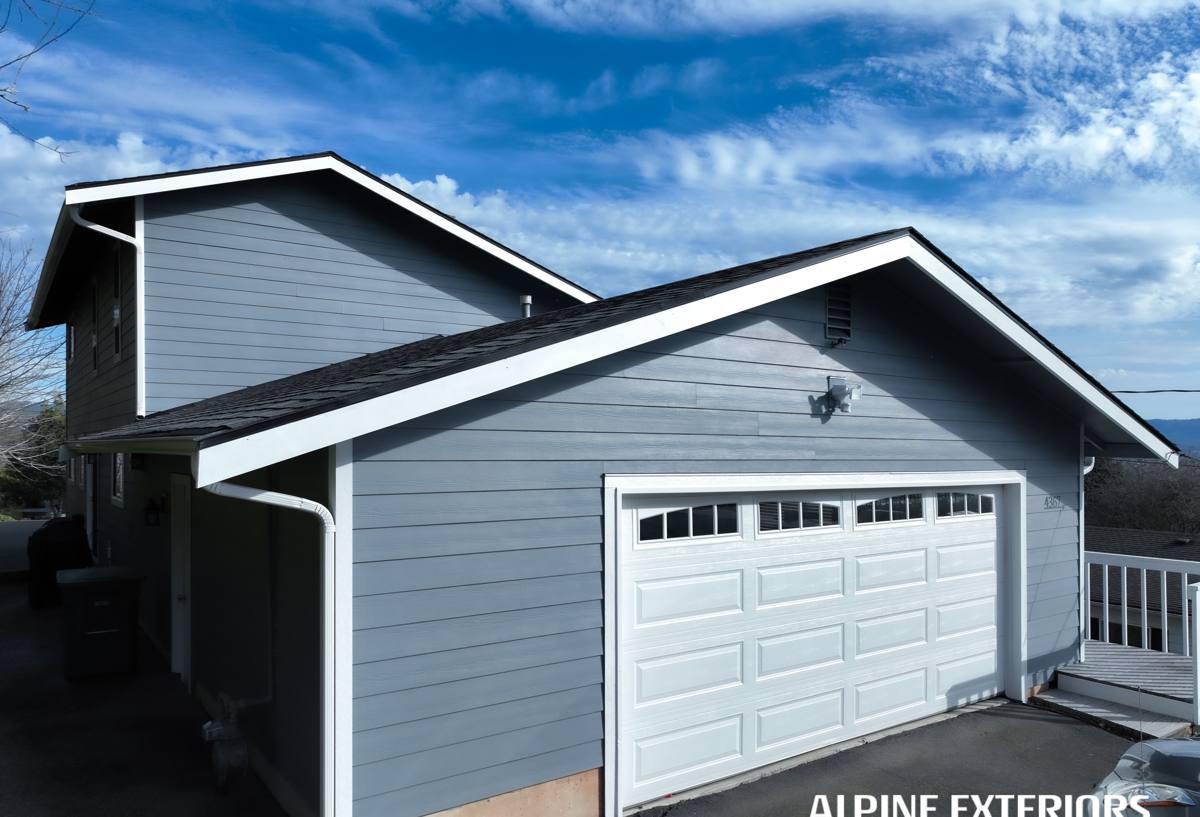
What Salt Air, Driving Rain, and Moss Actually Do to a Roof
Salt Air and Slow Corrosion
Homes within reach of marine air don't get rusted out overnight — the damage is slow and it concentrates in the details most homeowners never look at: cut edges, fastener heads, and exposed flashing seams. Any bare or poorly coated metal edge becomes the starting point for corrosion, which is why panel coating quality and how the trim is cut and sealed matter more here than in an inland climate. A roof that would perform fine forty miles east can fail early near the water simply because the coating spec or the flashing detail wasn't matched to the exposure.
Driving Rain and Wind-Driven Water
Whatcom County storms don't always drop rain straight down. Wind pushes it sideways and uphill under laps, ridge caps, and around penetrations that would stay dry in a calmer climate. A metal roof depends on lap geometry, sealant placement, and underlayment doing the work that gravity alone can't guarantee during a sideways rain event. Skipping proper underlayment or using minimal fastener sealing is the single most common reason we find hidden leaks on metal roofs that "look" fine from the ground.
Moss and Trapped Moisture
Shaded, tree-lined lots around Sehome hold moisture longer through the fall and winter, and moss doesn't need much of a foothold — a little grit and organic debris in a panel seam or valley is enough. On metal, moss itself doesn't eat the panel the way it can degrade some other roofing materials, but it holds water against the surface far longer than the roof would otherwise stay wet, and it clogs valleys and gutters, which backs water up under laps. Roof design that limits low-slope valleys and debris traps matters as much as the panel choice itself.
What a Correctly Installed Metal Roof Actually Involves
A metal roof is only as good as the layers underneath it and the details at every edge. This is where most quality differences between installs actually live — not in the panel itself.
Deck Inspection and Prep
Before any panel goes down, the deck should be checked for soft spots, delamination, and proper fastening. Metal roofing telegraphs an uneven or spongy deck more visibly than shingles do, and it gives fasteners nothing solid to bite into if the sheathing underneath is compromised.
Underlayment Built for This Climate
A synthetic, high-temp-rated underlayment with self-sealing capability around fasteners is the baseline for this region, not an upgrade. In areas prone to wind-driven rain or ice damming near eaves and valleys, a fully adhered ice-and-water membrane in those zones adds a second line of defense that pays for itself the first time water gets under a lap.
Fastener Strategy
Exposed-fastener panels rely on a gasketed screw driven correctly — not overdriven, not underdriven — into solid framing, with a fastener pattern matched to the panel manufacturer's wind and expansion specs. Concealed-fastener systems like standing seam avoid exposed penetrations almost entirely, which is a real advantage in a wet, corrosive-leaning environment, at a higher installed cost.
Flashing, Valleys, and Penetrations
Chimneys, skylights, vent stacks, and valleys are where the overwhelming majority of metal roof leaks originate — almost never the flat field of the panel. Correct step flashing, properly lapped valley metal, and sealant compatible with the panel coating (some sealants react badly with certain metal finishes over time) are non-negotiable details in a climate that gives water every opportunity to find a way in.
Ventilation
Metal sheds heat and cold differently than asphalt, and without balanced intake and exhaust ventilation, moisture can condense on the underside of the panels from the attic side rather than the weather side. In a consistently damp climate like this one, that's just as damaging as a leak from outside, and it's often overlooked because it doesn't show up until moisture damage is already underway.
Choosing the Right Metal System for This Area
Not every metal roofing system is a good fit for a wet, shaded, salt-influenced property. The table below reflects how the common options actually perform under Sehome's conditions, not just their general reputation.
| System | Fastener Type | Moisture Handling Here | Relative Install Cost | Best Fit |
|---|---|---|---|---|
| Standing Seam | Concealed clips | Excellent — no exposed penetrations for water to find | Higher | Full reroofs, exposed or high-wind lots, long-term ownership |
| Exposed-Fastener Panel | Gasketed screws through the panel | Good if fasteners are correctly driven and re-checked over time | Moderate | Outbuildings, budget-conscious reroofs, simpler rooflines |
| Stone-Coated Steel | Concealed, shingle-style profile | Good; coating adds a wear layer but valleys still need careful detailing | Higher | Homeowners wanting a traditional shingle look with metal's durability |
We don't push one system on every roof. Roofline complexity, how much shade and debris the roof sees, and how long the homeowner plans to stay in the house all factor into which of these makes sense.
How Our Process Works, Start to Finish
We keep the process straightforward and don't ask homeowners to guess at what happens next.
- On-site assessment — we walk the roof (or inspect from a lift when pitch or condition calls for it), check the deck, ventilation, and existing flashing, and take note of any moss, moisture staining, or trouble spots.
- System recommendation — based on the roof's exposure, shading, and your goals, we recommend a panel system and explain the trade-offs in plain terms, not sales language.
- Written estimate — a clear scope covering tear-off (if applicable), underlayment, flashing details, ventilation work, and the panel system itself, with a written timeline.
- Tear-off and deck prep — old roofing removed, deck inspected and repaired as needed before anything new goes down.
- Underlayment and flashing installation — the layer that actually keeps water out, installed to the standard the climate demands, not the minimum code allows.
- Panel installation — fastened or seamed to manufacturer spec, with attention to expansion allowances so the panels aren't fighting themselves as temperatures swing.
- Final walkthrough — we go over the finished roof with you, point out anything you should know for maintenance, and answer questions before we consider the job done.
Maintenance: What Actually Needs Attention After Installation
A correctly installed metal roof is low-maintenance, not zero-maintenance. In this climate, a short annual check prevents almost every avoidable problem.
- Clear valleys, gutters, and any low points of needles, leaves, and moss buildup, especially after fall leaf drop
- Look for moss or algae staining concentrating in shaded areas and address it before it holds moisture against the panel long-term
- Check that fastener heads (on exposed-fastener systems) still look sealed and haven't backed out or lost their gasket
- Inspect flashing around chimneys, vents, and skylights for sealant that's cracked, shrunk, or pulled away
- Confirm attic ventilation isn't blocked by insulation, storage, or nesting debris
- After any major windstorm, do a visual check for lifted panel edges or dislodged ridge caps
Mistakes We See Most Often on Metal Roofs in This Region
Most metal roof problems we're called to diagnose trace back to a small number of recurring shortcuts:
Undersized or Skipped Underlayment
Some installs use a minimal underlayment spec to save cost, which works fine until the first serious wind-driven rain event pushes water past the panel laps.
Valleys Treated as an Afterthought
Valleys carry more water and more debris than any other part of the roof. A valley that isn't wide enough or properly lined is where moss, needles, and standing water concentrate first.
Mismatched Fasteners or Sealants
Using the wrong fastener coating or a sealant that isn't chemically compatible with the panel finish can cause premature failure at exactly the points that are hardest to inspect after the fact.
Ignoring Ventilation
A beautiful panel job on top of a poorly ventilated attic just moves the moisture problem from the outside of the roof to the inside of it.
Why a Crew That Already Works in Sehome Makes a Difference
Roofing specs written for a national average climate don't always account for a property that sits under tree cover half the year and takes wind off the water the other half. A crew that regularly works Sehome and the surrounding Sudden Valley area has already seen which flashing detail holds up through a real Whatcom County winter and which one doesn't, which valley widths actually keep up with moss and debris load here, and which coating specs are worth the upgrade given this exposure. That's not a marketing point — it's the difference between a roof that gets re-flashed in year six and one that doesn't need attention for decades. Familiarity with local permitting expectations and typical roof pitches in the area also keeps the estimate and timeline realistic instead of optimistic.
If you're weighing a metal roof for a home in Sehome or elsewhere around Sudden Valley, we're glad to come take a look, walk you through what your specific roof needs, and give you a straightforward, no-pressure estimate using the form below.