 Sudden Valley Siding
 Window Replacement Built for Bellingham's Weather, Not Just the Sale
Bellingham sits close enough to Bellingham Bay and the Salish Sea that salt-laden air is a daily fact of life for anything installed on the outside of a house. Add in the long stretch of driving rain that runs from fall through spring, plus the shaded, damp conditions that let moss and algae take hold on north-facing walls and rooflines, and you have a climate that is genuinely tougher on windows than most manufacturers' warranty language accounts for. A window that performs fine in a dry, sunny market can fail here in under a decade if it wasn't specified and installed with this exact environment in mind.
This page covers window replacement specifically for homes in and around Bellingham. If you're comparing options, trying to figure out whether you need replacement or just repair, or want to know what a correct installation actually involves before you sign anything, this is written for you.
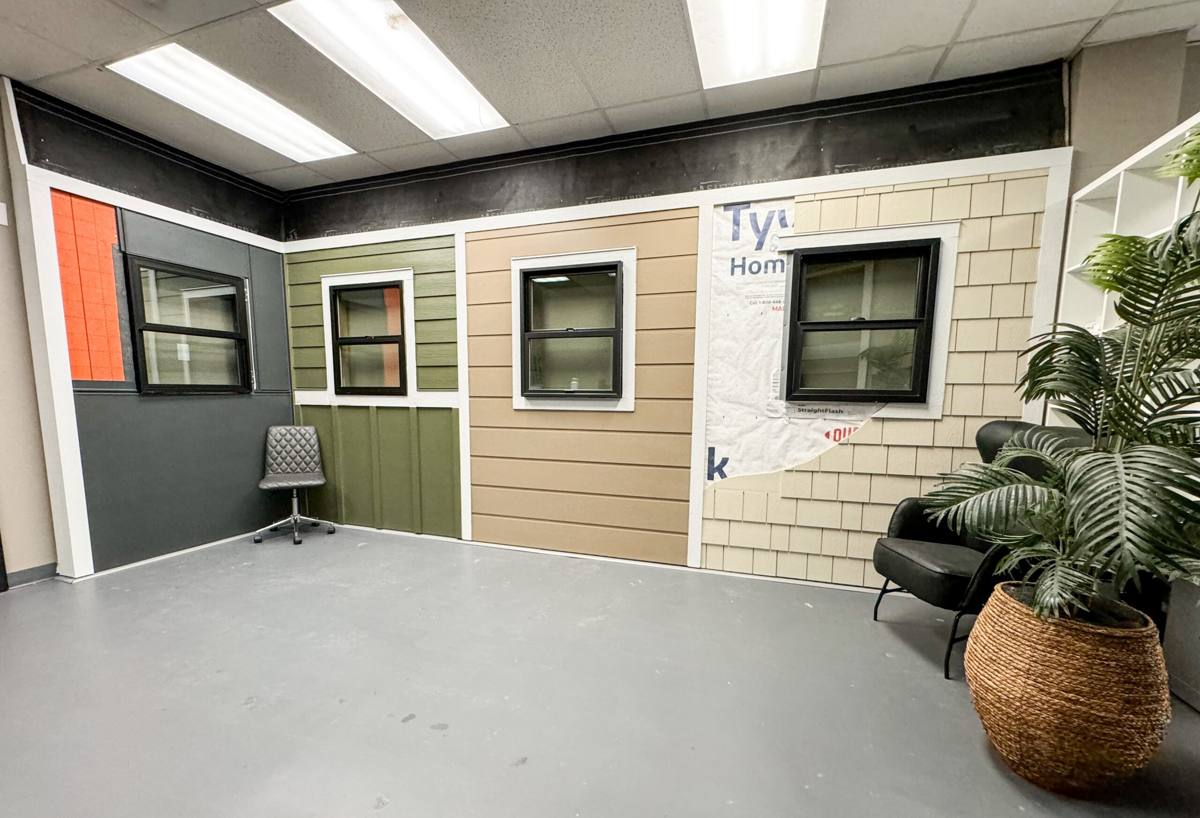
Why Local Climate Conditions Change the Job
Salt Air and Hardware Corrosion
Airborne salt doesn't just affect homes right on the water. It travels on wind and settles on window hardware, fasteners, and metal cladding across a wide radius. Over time it accelerates corrosion on lower-grade hinges, locks, and balance systems, and it can pit and dull unprotected aluminum. This is why hardware quality and finish matter as much as the glass package when we're speccing a window for this area.
Driving Rain and Water Intrusion
Whatcom County doesn't just get a lot of rain, it gets a lot of wind-driven rain, which behaves very differently at a window opening than a straight-down shower. Wind-driven water gets pushed sideways and upward into gaps that would stay dry in a calmer climate. That means flashing details, sill pans, and sealant work matter more here than in drier regions. A window that's beautiful but poorly flashed will eventually leak, and by the time you see a stain on the interior wall, water has usually been getting into the framing for a while.
Moss, Algae, and Shaded Exposures
Homes tucked under tree cover or on north- and east-facing walls stay damp longer after storms, which is exactly the environment moss and algae need to establish themselves on sills, trim, and frame joints. Once organic growth gets a foothold in a seam or corner, it holds moisture against the window and the surrounding wall assembly, which speeds up rot and finish failure. Regular window trim and sills need finishes and details that shed water and dry out quickly, not ones that trap it.
Signs a Bellingham Home Actually Needs Replacement
Not every problem window needs full replacement. Some issues are solvable with repair, reglazing, or hardware service. Here's a practical way to sort it out before you spend money on the wrong fix.
- Fogging or a visible haze between panes — this means the seal has failed and the insulated glass unit needs replacing, which usually makes sense to pair with new frames if the window is older
- Soft or spongy wood at the sill or lower corners — a sign moisture has already reached the framing, not just the finish
- Windows that are difficult to open, won't stay up, or have broken balances — sometimes a hardware fix, sometimes a sign the frame has shifted
- Persistent drafts you can feel with your hand near the frame on a windy day — points to failed weatherstripping or a gap in the original installation
- Visible daylight or gaps around the frame from outside — usually means the flashing or sealant has broken down
- Rising energy bills with no other explanation and older single-pane or early dual-pane glass still in place
- Paint or finish that keeps failing on the trim no matter how often it's redone — often a sign of ongoing moisture behind the surface
- Visible moss or algae buildup in the frame joints or sill that keeps coming back after cleaning
If you're only seeing one or two of these and the window is relatively young, repair is often the honest answer and we'll tell you that. Replacement makes sense once you're dealing with moisture in the framing, multiple failed seals, or windows old enough that parts are hard to source.
What a Correct Window Replacement Job Actually Involves
The window unit itself is only part of the job. In a climate with this much wind-driven rain, the installation details are what determine whether the job lasts fifteen years or two. A correct replacement includes:
Opening Inspection Before Anything Goes In
Once the old window is out, the opening gets inspected for hidden rot, prior water damage, or framing that's out of square. This is the point where problems that caused the original failure get found and addressed, rather than sealed over.
Proper Flashing and a Sloped Sill Pan
Water needs a deliberate path out of the opening, not just a caulk bead to hope it stays out. That means flashing tape integrated with the house wrap in the correct shingle-lap order (so water sheds down and out, never into a seam), and a sloped sill pan under the window so any water that does get past the frame drains back outside instead of pooling against the wood.
Air Sealing and Insulation Around the Frame
The gap between the new window frame and the rough opening gets sealed with an appropriate low-expansion foam or backer rod and sealant, not just stuffed with fiberglass. This closes the draft paths that account for a lot of the comfort and energy complaints in older installations.
Exterior Trim and Sealant Details
The final sealant joints at the trim are what face the weather every day. These need to be tooled correctly and use a sealant rated for exterior movement and UV exposure, since a cracked sealant joint is one of the most common ways water gets back into an otherwise good installation.
Choosing a Window Material for This Climate
There's no single "best" window material — the right choice depends on your home's exposure, budget, and how much upkeep you want to do. Here's an honest comparison for Whatcom County conditions specifically.
| Material | How It Handles Salt Air & Rain | Maintenance | General Cost Position |
|---|---|---|---|
| Vinyl | Won't corrode or rust; performs well in salt air | Low — occasional cleaning | Most affordable |
| Fiberglass | Very stable in temperature swings and moisture; strong long-term performer near the coast | Low | Mid to upper range |
| Wood (clad exterior) | Good if the cladding and flashing details are done correctly; exposed wood needs protection from driving rain | Higher — finish and seal upkeep | Upper range |
| Aluminum | Prone to condensation and, without a quality finish, more susceptible to pitting in salt air over time | Moderate | Varies widely |
For most Bellingham homes, vinyl and fiberglass are the practical middle ground: both resist the corrosion issues salt air causes in bare metal, and both hold up well under repeated wet-dry cycles without the ongoing finish maintenance that clad wood requires. Where we steer clients away from certain builder-grade aluminum or thin composite frames, it's because those products are more sensitive to the installation and long-term moisture exposure this specific climate delivers — not because the material is inherently bad everywhere.
What Affects the Cost of a Window Replacement Project
Costs vary enough by home and window count that we won't publish a number here that would be misleading — but these are the factors that actually move the price:
| Factor | Why It Matters |
|---|---|
| Number and size of windows | Larger openings and more units mean more material and labor |
| Frame material chosen | Vinyl, fiberglass, and clad wood carry different unit costs |
| Condition of the existing opening | Hidden rot or framing repair adds time before the new window can go in |
| Glass package | Double- vs. triple-pane and low-E coatings affect both cost and performance |
| Access and site conditions | Second-story or hard-to-reach windows take more time and equipment |
| Trim and finish work | Matching existing trim profiles or upgrading exterior trim adds scope |
Our Process, Start to Finish
We keep this straightforward on purpose:
- Free on-site estimate. We look at your existing windows, check for moisture or framing issues, and talk through what's actually needed versus what's optional.
- Written proposal. You get a clear scope covering materials, the number of openings, and what's included — no vague line items.
- Scheduling around the weather. Given how much rain this area sees, we plan installs to minimize how long any opening is exposed and work in sections rather than opening up the whole house at once.
- Installation with proper flashing and sealing. Covered in detail above — this is the step that determines whether the job lasts.
- Walkthrough and cleanup. We check operation on every window with you before we consider the job finished, and clear debris and packaging from the site.
Why a Crew That Already Works in Bellingham Matters
Window replacement done well is a local trade, not a catalog product. A crew that regularly works homes in Bellingham and the surrounding Whatcom County area has already seen how salt exposure, wind-driven rain, and shaded, moss-prone walls affect installations here — which framing details tend to fail first, which exposures need extra attention at the sill, and which finishes hold up under the region's specific wet-dry cycle. That's the kind of judgment that doesn't come from a manufacturer's install guide alone; it comes from doing the work in this exact climate, on this exact housing stock, repeatedly.
It also matters for accountability. A local crew is easy to reach if a question comes up after the install, and has a reputation in the community worth protecting — not a call center in another state.
Get an Honest Look at Your Windows
If you're not sure whether your windows need full replacement, repair, or nothing at all yet, we're happy to take a look and give you a straight answer. Fill out the form below for a free, no-pressure estimate — we'll assess what your home actually needs given its exposure and condition, not what's easiest to sell.