 Sudden Valley Siding
 Building a Deck That Actually Holds Up in Ferndale
A deck in Ferndale has to do more work than a deck in a dry inland climate. Between the salt-tinged air coming off the water, the long stretches of driving rain, and a moss season that can run most of the year, this part of Whatcom County is genuinely hard on outdoor wood structures. We've built and repaired decks throughout the area long enough to know exactly where a typical build goes wrong here, and it's almost never the decking boards themselves — it's the framing, fasteners, and drainage details underneath that most homeowners never think to ask about.
This page is specifically about new deck construction for Ferndale properties. If you're dealing with a deck that's already failing, the fixes are different — but everything below applies whether you're planning a small platform off a back door or a full multi-level deck built for entertaining.
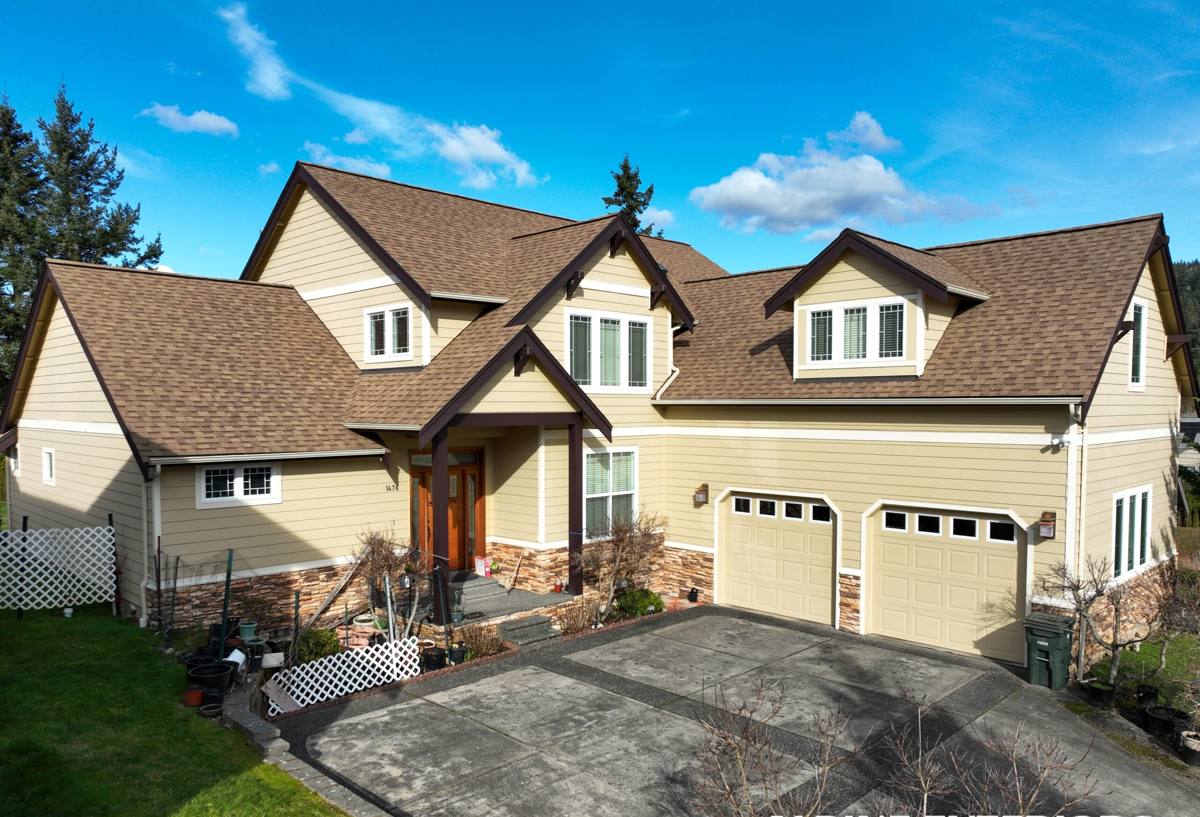
What Ferndale's Climate Does to an Improperly Built Deck
Ferndale sits close enough to the Salish Sea that salt-laden air is a real factor in how fast metal corrodes and how quickly wood takes on moisture. Combine that with Whatcom County's wet season — long stretches of steady, wind-driven rain rather than short downpours — and you get conditions that punish shortcuts.
The three things we see cause the most damage on decks that weren't built with this climate in mind:
- Fastener corrosion. Standard or under-rated screws and joist hangers rust and weaken in salt air, sometimes within a few years, long before the wood around them fails.
- Trapped moisture. Ledger boards, joists, and decking that don't have proper flashing, spacing, or drainage stay damp for days after a storm, which accelerates rot and invites moss and algae.
- Moss and organic growth. Ferndale's mild, wet winters and shaded yards give moss a long season to establish itself. On decking, moss holds moisture against the wood surface and makes boards slick and dangerous underfoot.
None of these are exotic problems. They're the predictable result of building a deck the same way you'd build one in a dry climate, using generic hardware and skipping details that don't matter much elsewhere but matter a lot here.
Choosing the Right Decking Material
There's no single "best" decking material — the right choice depends on your budget, how much upkeep you want to do, and how much the deck is exposed to weather and shade. Here's how the common options actually compare for a Whatcom County property:
| Material | Upfront Cost | Maintenance | Moisture Behavior | Typical Lifespan |
|---|---|---|---|---|
| Pressure-treated pine | Lowest | Annual cleaning; needs sealing every 1-2 years | Resists rot when sealed; can cup or split if neglected | 15-20 years with upkeep |
| Cedar | Mid-range | Sealing or staining every 1-2 years to hold color and resist moisture | Naturally moisture- and insect-resistant, but still needs a sealed finish in this climate | 15-25 years with upkeep |
| Composite / capped composite | Higher | Occasional washing; no sealing or staining | Doesn't absorb water or rot, but surface moss/algae still needs washing off | 25-30+ years |
We'll walk through these trade-offs honestly during your estimate. Composite costs more up front but removes the sealing/staining cycle entirely, which matters if you don't want a recurring maintenance chore in a climate that gives you plenty of other outdoor upkeep already. Cedar and pressure-treated lumber cost less initially but need you to stay on top of sealing — skip a year or two here and the moisture exposure catches up fast.
A Note on Fasteners and Hardware
Whatever decking material you choose, the hardware holding the structure together matters just as much. In a salt-air environment, we use stainless steel or high-corrosion-rated coated fasteners and joist hangers rather than standard galvanized hardware. It costs a bit more, but replacing corroded hardware on a deck that's otherwise sound is a needless expense we'd rather help you avoid from the start.
The Structural Elements Homeowners Don't See
The decking surface is what you notice, but the framing underneath is what determines whether the deck is safe and how long it lasts. A few details we treat as non-negotiable on every build:
Footings and Frost Depth
Post footings need to be set below the local frost line and bear on solid, undisturbed soil. Ferndale's soil and drainage vary block to block, so we evaluate each site rather than assuming a standard footing depth will work everywhere.
Ledger Board Flashing
Where a deck attaches to the house, the ledger board is one of the most common failure points on decks built without proper flashing. Water running down the siding needs a clear path away from that connection, not a path into it. We flash this connection so water sheds away from the house framing rather than collecting behind the ledger.
Joist Protection and Drainage Gaps
We use joist tape or an equivalent moisture barrier on top of framing members to keep standing water off the wood, and we set board spacing to let water drain through rather than pool on the surface. Decking laid too tight looks clean on day one and holds water by the second wet season.
Railings, Stairs, and Code Requirements
Any deck more than a modest height off the ground needs a code-compliant guardrail system, and stairs have their own rise, run, and railing rules. These aren't areas to guess at:
- Guardrails on elevated decks generally need to reach a minimum height, with baluster spacing tight enough that a small child can't pass through.
- Stair stringers need to be sized for the actual load and span, not just "close enough."
- Handrails on stairs with multiple risers are typically required, graspable, and set at a specific height range.
We build to current code as a baseline, not as an upsell — a deck that fails inspection or, worse, fails structurally because a railing was undersized isn't a deck we'd put our name on.
Our Deck Building Process
Every property is a little different, but the sequence of a proper deck build doesn't change:
- Site visit and design. We look at the ground, drainage, sun/shade exposure, and how you actually plan to use the space before recommending a layout or material.
- Permitting. We handle the permit application and coordinate any required inspections.
- Footings and framing. Footings are dug and set to proper depth, then the structural frame goes up with corrosion-rated hardware throughout.
- Flashing and moisture protection. Ledger flashing, joist tape, and drainage details are installed before decking ever goes down — this step is invisible once finished but it's the one that determines longevity.
- Decking, railings, and stairs. Surface material, guardrails, and stairs are installed to code.
- Final walkthrough and inspection. We review the finished deck with you and make sure any required final inspection is scheduled and passed.
Permits in Ferndale and Whatcom County
New deck construction almost always requires a building permit, and the specific requirements depend on the deck's height, size, and attachment to the house. Permit rules and inspection scheduling are handled through the applicable local jurisdiction, and requirements can change, so we confirm current requirements before we start rather than relying on what applied last year. Skipping this step is one of the more common ways a homeowner ends up with problems later — whether that's a failed home inspection at resale or an insurance issue after storm damage.
Maintenance That Actually Extends a Deck's Life
A well-built deck still needs some yearly attention in this climate. What actually matters:
- Sweep debris and standing leaves off the surface regularly — trapped organic matter holds moisture and feeds moss growth.
- Wash the deck surface at least once a year to remove algae and moss buildup before it gets established.
- Reseal or re-stain wood decking on the schedule appropriate to the product — usually every 1-2 years in this climate.
- Check railings and stair connections periodically for looseness, which can signal hardware corrosion or wood movement.
- Keep gutters and downspouts near the deck clear so runoff isn't dumping extra water onto or under the structure.
- Trim back vegetation that keeps the deck surface shaded and damp longer than necessary after rain.
None of this is difficult, but it does need to actually happen. A deck that's ignored for several wet seasons in a row will show it, regardless of what it was built with.
Why Hiring a Crew That Already Works Ferndale Matters
A deck built to a generic national standard isn't necessarily built for this specific climate. Crews who work Whatcom County regularly already know which fastener grades hold up near the water, how deep footings need to go on the soil types common in this area, and which permitting details local jurisdictions actually check for. That local familiarity shows up less in what the deck looks like on day one and more in how it holds up after five, ten, and fifteen wet seasons.
We're not interested in cutting corners that save time now and cost you a rebuild later. If you're planning a new deck in Ferndale, we'd be glad to walk your property, talk through material options honestly, and put together a straightforward estimate — no pressure, no upsell script. The form below is the easiest way to get that conversation started.