 Sudden Valley Siding
 Composite Decking Built for Sehome's Marine Climate
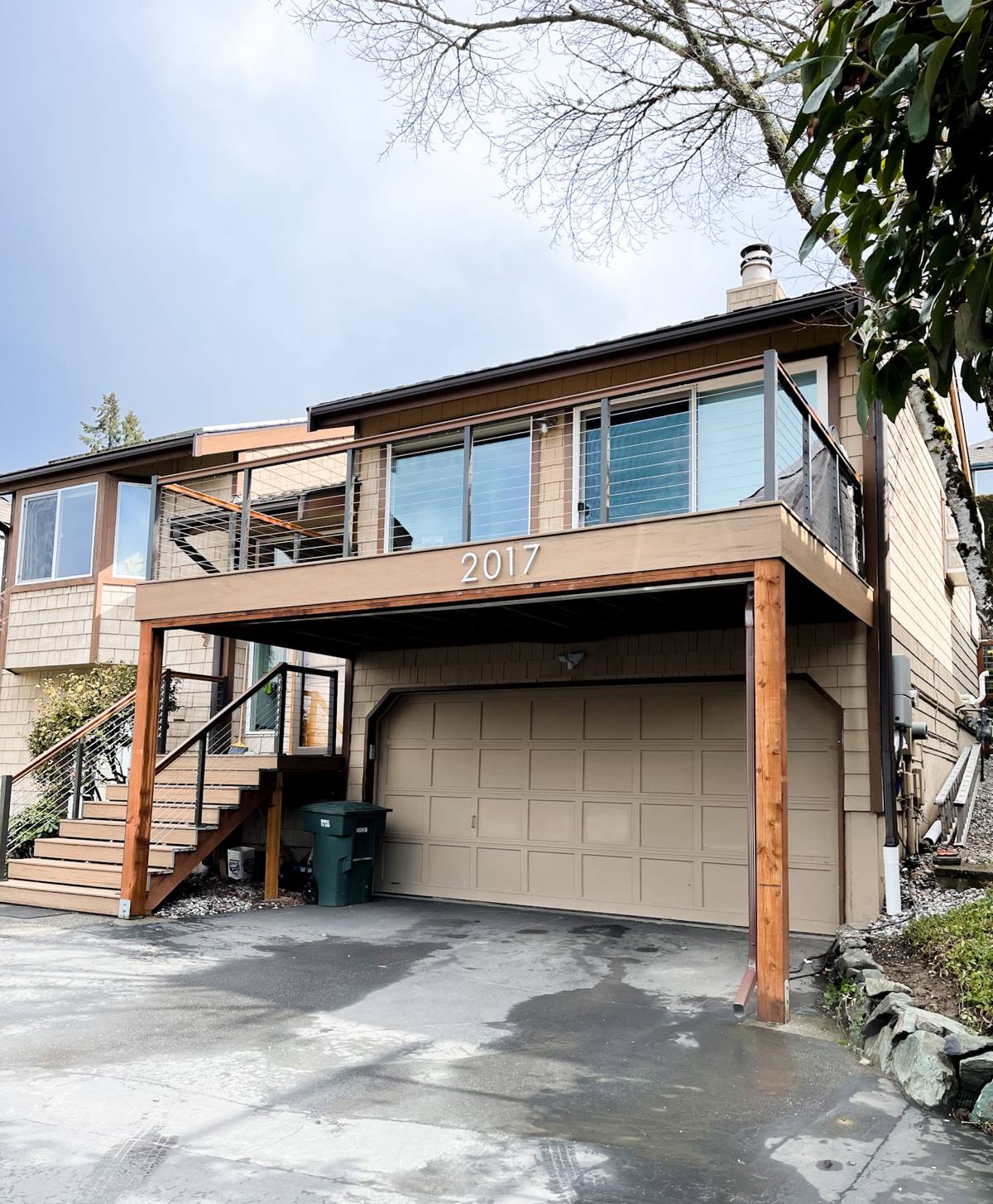
Sehome sits close enough to the water and to Whatcom County's marine weather patterns that a deck here lives a different life than a deck built inland. Salt-tinged air, driving rain off the Sound, and a moss season that can run half the year all work on wood and hardware in ways that show up as cupping, black staining, and soft spots within a few winters if the deck wasn't built with those conditions in mind. Composite decking, installed correctly for this specific climate, is one of the most reliable ways to get a deck that still looks and performs well after a decade of Whatcom County weather.
This page is about one thing: composite decking, done right, for homes in and around Sehome. Not a general decking overview — the specific choices that matter when the deck has to survive salt air, sideways rain, and months of shade-driven moss growth every year.
Why Whatcom County Conditions Wear Down the Wrong Deck
Three things conspire against decks in this part of Washington, and they compound each other.
Salt Air
Airborne salt accelerates corrosion on any exposed metal fastener, joist hanger, or bracket. On a deck built with the wrong hardware, or hardware that was never rated for coastal exposure, you get rust streaks bleeding into the decking and weakened connections years before the boards themselves show wear.
Driving Rain
Rain here rarely falls straight down. Wind-driven rain gets pushed sideways into ledger connections, under poorly flashed rim joists, and into any gap where water can find a path. A deck that isn't detailed for horizontal water intrusion will trap moisture in the framing long before the surface boards ever hint at a problem.
Moss Season
Shaded, north-facing, or tree-covered decks in Sehome can stay damp for months at a stretch. That's exactly the environment moss and algae need. On wood decking, moss holds moisture against the fibers and accelerates rot. On composite decking, moss is mostly a surface and drainage issue — but only if the deck was built with airflow and slope in mind. A composite deck laid flat on a poorly ventilated substructure will grow moss just as readily as a wood one.
What a Correct Composite Deck Installation Involves
Composite boards themselves are only part of the equation. Most composite deck failures we get called to inspect trace back to substructure and detailing mistakes, not the decking material itself.
Substructure and Framing
Composite boards are heavier than wood and behave differently under load and temperature swings. Joist spacing needs to match the manufacturer's span rating for the specific product, not generic lumber spacing. In a wet climate, we also favor treated or composite-compatible joist tape and corrosion-resistant fasteners throughout, not just at the visible surface.
Ventilation and Drainage
Airflow underneath the deck is what keeps the substructure dry between rain events. That means correct height off grade, gaps where the deck meets siding or foundation walls, and a slope away from the house at the ledger. Skipping this is the single biggest reason decks in shaded, wet yards develop moss and mildew problems even with "low-maintenance" composite boards.
Fastening and Board Spacing
Composite boards expand and contract with temperature more than wood does. Gapping between boards has to account for that movement, and hidden fastener systems need to be installed to the manufacturer's spec so boards don't buckle or pull loose after a few seasons of freeze-thaw and heavy rain cycling.
Flashing at the House
Every deck attached to a house is a potential water entry point at the ledger board. Proper flashing — installed under the siding or house wrap, not just caulked over the top — is what keeps driving rain from working its way into the wall framing behind the deck attachment. This is invisible once the deck is finished, but it's the detail that determines whether the connection stays dry for twenty years or causes a hidden rot problem in five.
Composite vs. Other Decking Materials for This Climate
| Material | Behavior in Salt Air & Rain | Moss/Algae Resistance | Maintenance |
|---|---|---|---|
| Composite decking | Doesn't absorb water into the board itself; core is resistant to rot | Surface can host moss if shaded and poorly drained; cleans off easily | Periodic washing; no staining or sealing |
| Pressure-treated wood | Absorbs moisture, prone to cupping and splitting near the coast | Holds moisture, more prone to moss and mildew staining | Regular staining/sealing, board replacement over time |
| Cedar | Naturally rot-resistant but still absorbs water; softens with age | Better than treated pine but still needs care in shade | Periodic sealing to maintain appearance and resistance |
| PVC/vinyl decking | Fully water-resistant but can be brittle in cold snaps | Similar surface cleaning needs to composite | Low, but limited color/texture options |
We install composite decking as our standard recommendation for Sehome because it strikes the best balance for this climate: it won't absorb and hold moisture the way wood does, it doesn't rot from the inside out, and it holds up to repeated wet-dry cycling without the annual sealing or staining that wood decks demand. That said, we're straightforward with homeowners about the trade-offs — composite has a higher upfront material cost than treated lumber, and a poorly installed composite deck will show the same moisture and moss problems as a poorly installed wood one. The material only performs as well as the installation underneath it.
Our Process From Estimate to Finished Deck
- On-site assessment. We look at sun exposure, drainage slope of the yard, proximity to trees or fences that create shade, and the condition of the existing structure if we're replacing a deck.
- Product and layout discussion. We walk through composite board options, color and finish choices, and layout — including where hidden fasteners, stair placement, and railing will go.
- Substructure evaluation. If we're building on an existing frame, we inspect joists, ledger flashing, and footings before committing to build on top of them. Framing that's already compromised gets addressed, not covered up.
- Installation. Framing and flashing first, then ventilation gaps and drainage slope, then composite board installation to manufacturer spacing and fastening specs.
- Final walkthrough. We go over basic care for the specific product installed and point out anything homeowners should watch for as the deck settles through its first wet season.
Moss, Mold, and Maintenance in a Wet Climate
Composite decking is genuinely lower maintenance than wood, but "low maintenance" doesn't mean "no maintenance" in a climate like Whatcom County's. A short seasonal routine keeps a composite deck looking and draining the way it should.
- Sweep debris — leaves, needles, seed pods — off the deck regularly, especially in fall, so it doesn't trap moisture against the boards.
- Wash the deck surface once or twice a year with a soft-bristle brush and a mild soap and water solution to prevent moss and algae from establishing.
- Keep gutters and downspouts near the deck clear so runoff isn't dumping directly onto or under the deck surface.
- Check that vegetation around the deck perimeter isn't blocking airflow underneath — trim back plants that keep the substructure shaded and damp.
- Inspect railing posts and stair connections annually for any looseness, which can signal a fastener or framing issue worth catching early.
- Avoid pressure washing on high settings directly into board seams, which can force water into areas it shouldn't reach.
Cost Factors for a Sehome Composite Deck
| Factor | Why It Affects Cost |
|---|---|
| Deck size and shape | Square footage and complexity of angles/curves drive material and labor |
| Substructure condition | Existing framing that needs repair or replacement adds cost before decking goes down |
| Height and stairs | Elevated decks and multi-level stairs require additional framing, railing, and code compliance work |
| Board tier and color | Composite lines vary by capstock quality, warranty length, and color/texture options |
| Railing and fastening system | Hidden fastener systems and composite or metal railing options price differently than basic builds |
| Site access | Sloped yards, tight side-yard access, or tree removal needs can add labor time |
We give honest, itemized estimates rather than a single flat number, because two decks of the same square footage can have very different scopes once framing condition and site access are factored in.
Why Hiring a Crew That Already Works Sehome Matters
A contractor who works regularly in Sehome and the surrounding Sudden Valley and Whatcom County area has already seen how local conditions play out over years, not just at the time of installation. We know which yards hold shade and moisture long into the afternoon, which sites catch more wind-driven rain off exposure to the water, and which framing shortcuts show up as callbacks two or three winters later. That local pattern recognition shapes decisions on ventilation, flashing, and hardware selection before a single board goes down — decisions that a crew unfamiliar with this specific climate might not think twice about.
It also matters for accountability. We're not a crew passing through the area for one job — we're based here, we stand behind our work locally, and if something needs attention after the install, we're not far away.
Ready to Talk Through Your Deck Project?
If you're planning a new composite deck or replacing an aging wood deck in Sehome, we're happy to take a look and walk you through what a correctly built deck involves for your specific site — no pressure, no obligation. Use the form below to request a free estimate and we'll get back to you to schedule a time to come out.