 Sudden Valley Siding
 Asphalt Shingle Roofing in Acme: Built for What This Climate Actually Does to a Roof
Acme sits in a pocket of Whatcom County where three things work against a roof at the same time: salt-laden air moving in off the water, long stretches of driving, wind-blown rain, and a moss season that can run most of the year in shaded spots. None of these are exotic problems. But together, over years, they explain almost every early roof failure we get called out to inspect in this area. A shingle roof that's installed correctly and maintained with this climate in mind will comfortably outlast the wear-and-tear roofs that were installed the same way you'd install one in a dry inland town.
This page is specifically about asphalt shingle roofing for homes in and around Acme — not a general roofing overview. If you own a home here, the goal is to understand what your roof is actually up against, what a correct installation looks like, and what ongoing care keeps you from paying for the same repair twice.
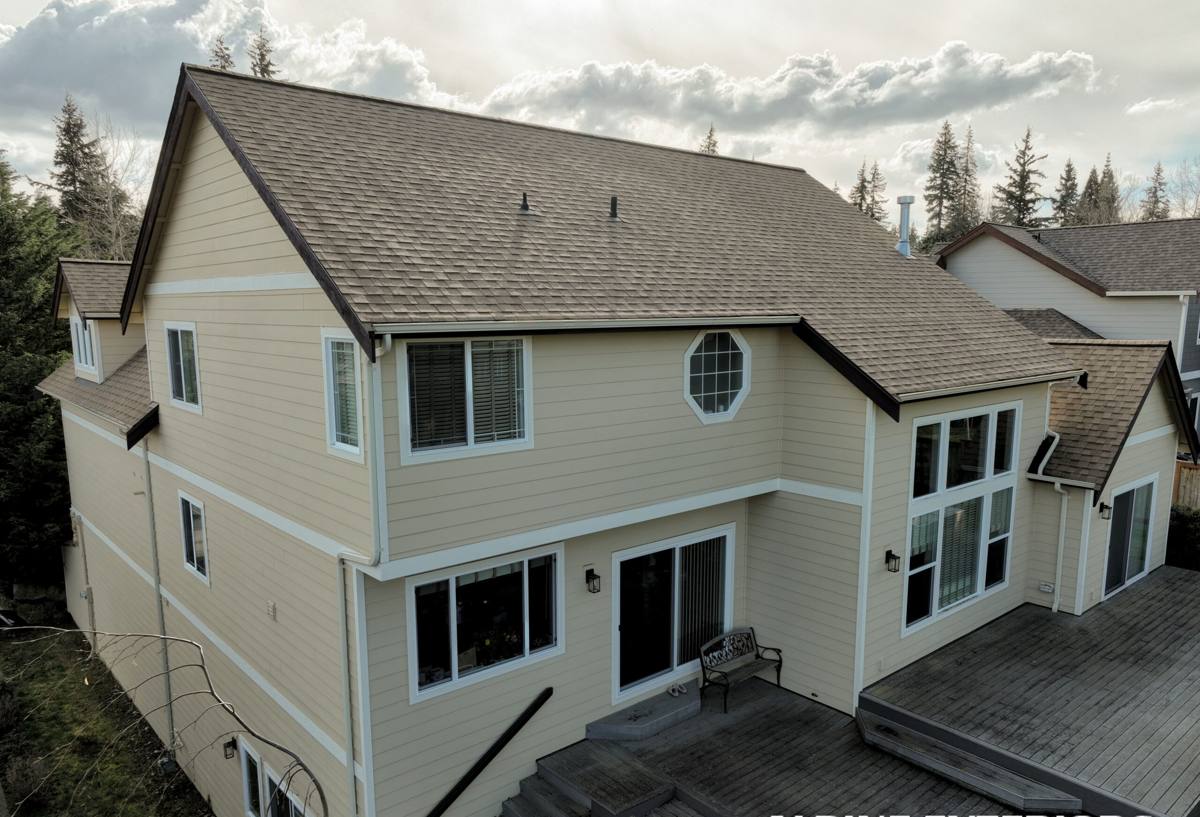
What Salt Air, Rain, and Moss Do to a Roof Over Time
Salt Air
Homes closer to the water pick up airborne salt that settles on roofing metal — flashing, drip edge, vent caps, nail heads — and accelerates corrosion. On a shingle roof, the shingles themselves aren't the weak point; the exposed metal components are. Once flashing starts to pit and rust, water finds a path underneath it long before the shingles show any obvious damage.
Driving Rain
Whatcom County rain isn't always gentle straight-down rain. Wind-driven storms push water sideways and upward under shingle edges, into valleys, and around anything that penetrates the roof — vents, chimneys, skylights. A roof that would be fine in a calmer climate can leak here if the underlayment, flashing laps, and fastening pattern weren't done with wind-driven rain specifically in mind.
Moss Season
Shaded, north-facing, and tree-covered roof sections in Acme can stay damp for weeks at a time in the cooler months, which is exactly what moss needs to take hold. Moss isn't just cosmetic. As it grows, it lifts shingle edges, holds moisture directly against the roofing material, and works its way into the granule surface. A roof that looks "mossy but fine" from the ground is often losing granules and moisture protection well before any leak shows up inside the house.
What a Correct Asphalt Shingle Roof Job Actually Involves
A shingle roof is a system, not a single product nailed to your house. Skipping or shortcutting any layer of that system is where premature failures come from — and it's usually invisible until years later when a leak shows up somewhere that seems unrelated to the actual weak point.
Tear-Off and Deck Inspection
We remove the old roofing down to the deck rather than layering over it. This lets us actually see the plywood or OSB underneath, check for soft spots, rot, or delamination from long-term moisture, and replace only the sections that need it — not the whole deck, and not none of it if it's needed.
Underlayment and Moisture Barrier
Underlayment is your backup layer if wind or ice ever gets water under the shingles. In a climate with this much wind-driven rain, we treat underlayment coverage — including at eaves, valleys, and around penetrations — as a place where cutting corners simply isn't worth it. This is invisible once the job is done, which is exactly why it matters who's doing it.
Flashing
Flashing around chimneys, skylights, sidewalls, and roof valleys is where most leaks actually originate, not the open field of shingles. Given the salt air in this area, we pay close attention to the metal itself and how it's lapped and sealed, since corroded or poorly lapped flashing is the single most common repair we see on roofs that are otherwise in decent shape.
Ventilation
Proper intake and exhaust ventilation keeps your attic space at a temperature and humidity level that doesn't cook shingles from underneath or trap moisture that feeds mold and accelerates deck rot. Ventilation is easy to overlook because it doesn't show up on the roof's surface, but it directly affects how long your shingles actually last.
Shingle Installation and Fastening
Correct nail placement, count, and pattern matter more in a windy, wet climate than in a mild one — under-fastened shingles are a common cause of wind lift and blow-off during coastal storms. We install to the fastening spec that holds up to local wind exposure, not the bare minimum a manufacturer allows.
Choosing the Right Shingle for a Moss-and-Rain Climate
Not every asphalt shingle is a good fit for a shaded, damp roof section. Algae-resistant (AR) shingles, which use copper-releasing granules to slow moss and algae growth, are worth the modest upcharge on most Acme homes — especially on north-facing or tree-shaded roof planes. Standard shingles will perform fine on sun-exposed, well-ventilated sections, so we typically look at each roof plane rather than assuming one shingle spec fits the whole house.
| Shingle Type | Best Suited For | Trade-Off to Know |
|---|---|---|
| Standard 3-tab | Simple roofs, sun-exposed planes, budget-conscious projects | Shorter lifespan, less wind resistance, no algae resistance |
| Architectural (laminated) | Most Acme homes; better wind rating and appearance | Higher material cost than 3-tab, still needs AR granules for shaded areas |
| Algae-resistant (AR) architectural | Shaded, tree-covered, or north-facing roof planes | Modest cost premium; copper granules fade effectiveness gradually over the shingle's life |
| Impact-rated / high-wind rated | Exposed sites closer to open water or hilltop exposure | Higher upfront cost, may qualify for insurance considerations |
We'll walk your specific roof and tell you honestly where a standard shingle is fine and where the AR upgrade is worth paying for — we're not going to sell you a premium product on a section of roof that doesn't need it.
Our Process, Start to Finish
- Roof assessment — We inspect the whole roof, not just the area you're worried about, including flashing, ventilation, and deck condition where accessible.
- Written estimate — You get a clear scope of work and pricing before anything starts, including what shingle and underlayment we recommend and why.
- Tear-off and deck check — Old roofing comes off, the deck gets inspected, and any needed repairs are identified and confirmed with you before proceeding.
- Underlayment and flashing installation — The moisture barrier and all flashing go in to spec, matched to this region's wind and rain exposure.
- Shingle installation — Shingles are installed with the fastening pattern appropriate for local wind exposure.
- Final walkthrough and cleanup — We walk the finished roof with you, and the site is cleared of debris, nails, and old material.
Signs Your Acme Roof Needs Attention
- Visible moss or dark streaking on north-facing or shaded roof sections
- Granules collecting in gutters or at the base of downspouts
- Curling, cracked, or lifted shingle edges
- Rust staining near flashing, vents, or chimney metal
- Daylight visible through the attic roof deck
- Soft or spongy spots when the roof deck is accessible from the attic
- A roof that's 18-20+ years old and hasn't had a professional inspection recently
Any one of these on its own isn't necessarily an emergency, but they're worth a professional look before the next big storm season rather than after.
Maintenance That Actually Extends Roof Life Here
In a climate this wet, maintenance isn't optional if you want a shingle roof to hit its full expected lifespan. The two highest-value habits are keeping gutters and valleys clear of debris that traps moisture, and addressing moss growth before it works its way under shingle edges — not just after it becomes visibly heavy. Overhanging branches that keep a roof section shaded and damp longer than necessary are also worth trimming back where practical. None of this replaces a proper inspection, but it meaningfully slows the two biggest local threats: trapped moisture and moss.
What Drives the Cost of a Shingle Roof in This Area
| Factor | Why It Matters |
|---|---|
| Roof size and complexity | More valleys, dormers, and penetrations mean more flashing work and labor time |
| Deck condition | Rot or soft decking found at tear-off adds material and labor to replace it properly |
| Shingle grade chosen | Standard vs. architectural vs. algae-resistant vs. impact-rated shingles vary in material cost |
| Existing layers | Removing multiple old layers takes more labor and disposal than a single-layer tear-off |
| Access and pitch | Steep or hard-to-access roofs require more safety setup and time |
| Ventilation upgrades | Adding or correcting intake/exhaust venting is sometimes needed and adds modest cost |
We don't quote a roof over the phone or from a satellite photo — pricing depends on what we actually find on your specific roof, and we'd rather give you an accurate number than a fast one.
Why a Crew That Already Works Acme Matters
A roofing crew that regularly works this specific area already knows which roof orientations in Acme tend to hold moss, which exposures take the worst of the wind-driven rain, and what a correctly detailed roof needs to hold up here long-term — instead of relying on generic specs meant for a drier or calmer climate. That local familiarity shows up in small decisions throughout the job: where extra underlayment coverage is worth it, which shingle spec makes sense for a shaded plane versus a sun-exposed one, and how flashing should be detailed given the salt air. It's the difference between a roof that's technically installed to code and one that's actually built for what Sudden Valley and Whatcom County weather will throw at it over the next 20-plus years.
If you're weighing a repair versus a full replacement, or just want an honest read on where your roof actually stands, we're glad to come take a look. Request a free, no-pressure estimate using the form below — we'll walk the roof, tell you what we see, and give you a clear, written recommendation with no obligation.